47warlord
-
Line Dancers
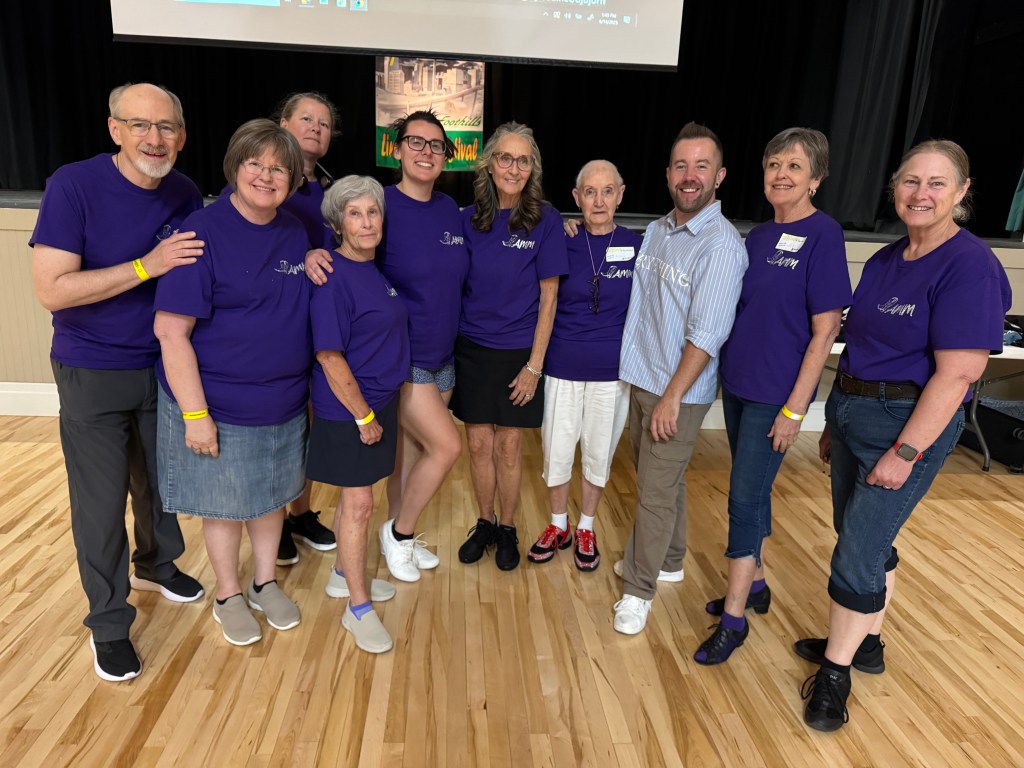
Elaine and I were in High River for a line dancing conference in mid-June. Here is our group from Spokane who travelled up to Alberta to join about 250 other dancers for a fun weekend. The guy who’s not in purple is Gary O’Reilly, a well-known line dance choreographer and outstanding teacher who is known,…
-
Maggie’s
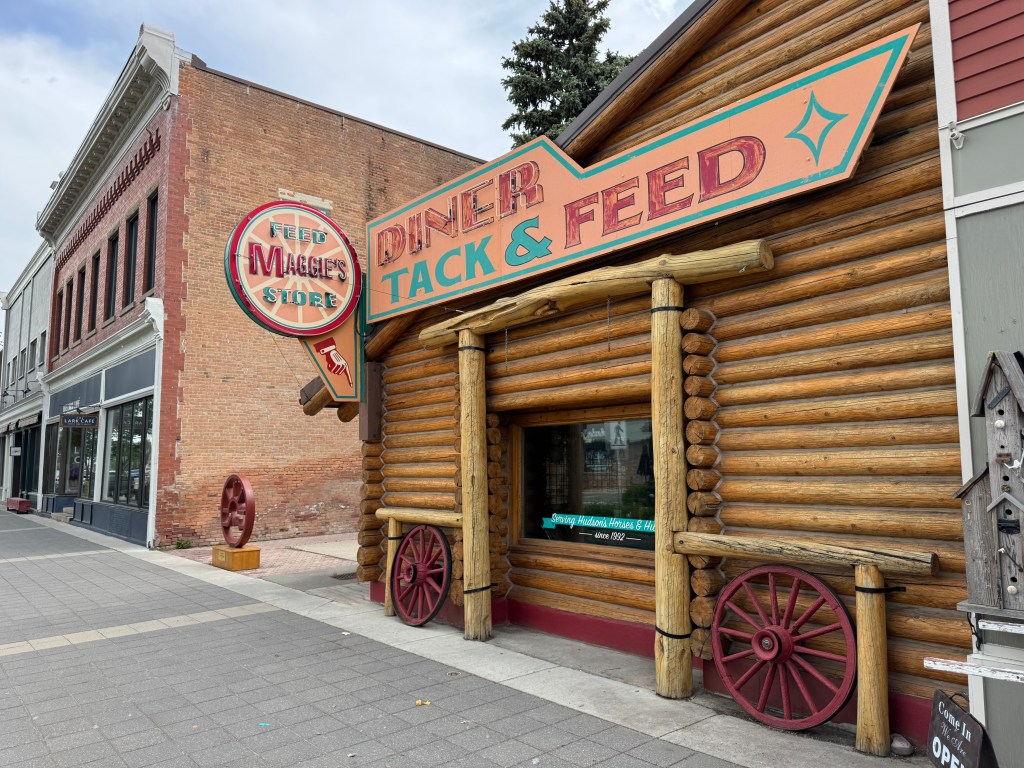
Maggie’s Diner Tack & Feed in High River says “Serving Hudson’s Horses & Humans since 1992”. For those who have been watching the drama Heartland (now in its 18th season!), this is a frequent setting for filming in the fictional town of Hudson. No meals actually for sale here, but you can see what happens…
-
High River Post Office
This stately brick building on one of the main streets of High River, Alberta has served a variety of roles, including Post Office and bank. The steps up to the front door helped keep it (mostly) above the once a decade floods that fill the streets of High River. Must be how it got its…

-
Original Cowboy
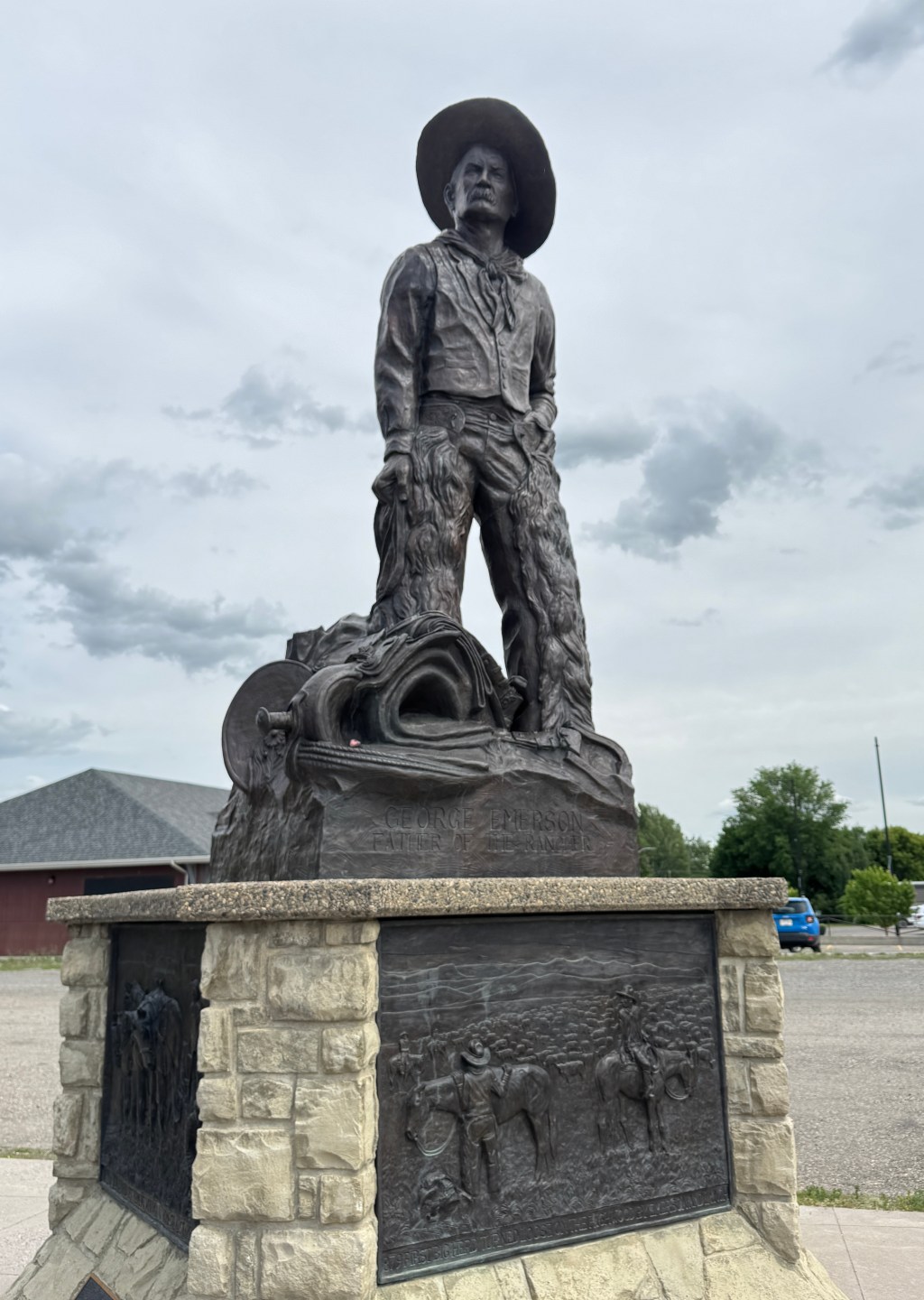
George Emerson drove a herd of cattle into southern Alberta in 1879 to start the ranching era in western Canada. The town that developed around those ranches, High River, honored him with this statue.
-
Pastel Pink
The little pink flowers in our front yard, including a few bleeding hearts, attract bees and appreciative looks at the end of spring.

-
Sunny Waters
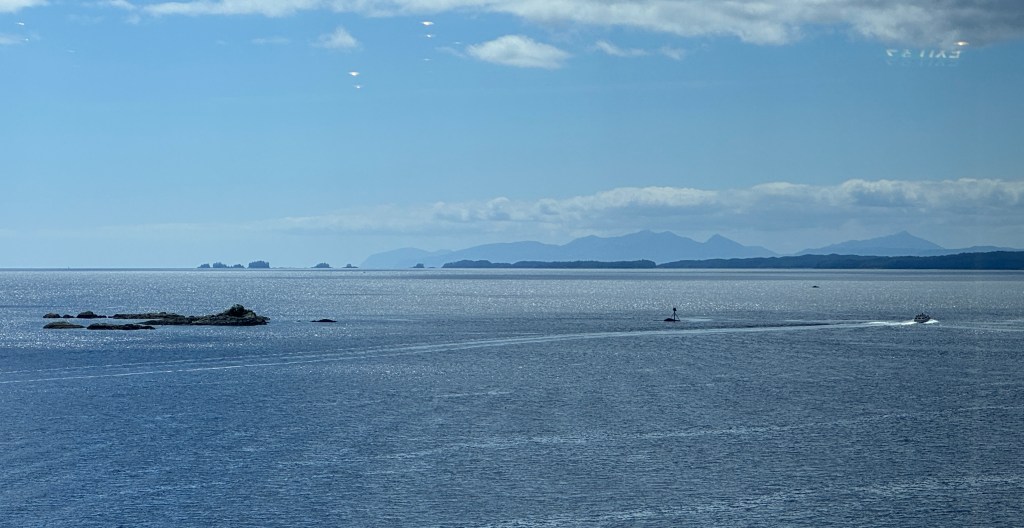
Heading southwest out of Ketchikan past Annette Island on the right, our ship sails out toward the sunny Pacific on the way back to Seattle.
-
Canned Salmon
Salmon canneries kept Ketchikan’s residents employed for decades, including Elaine’s mom as a teenager. The fish were big, but not quite this big.

-
Boardwalk Smiles
Elaine and I stand on the end of Creek Street’s boardwalk above the rapids. We wore jackets, but actually saw the sun in Ketchikan that day!

-
T-shirts
A Creek Street store hung some of their t-shirts out for viewing. Eagle, bear, moose, whale and wolf — there is still plenty of wildlife to be found around Ketchikan!

-
Creek Street
Ketchikan’s historic district was lively during the 1920s until Prohibition and the banning of prostitution shut it down. Revitalized in the 1970s and 80s, it’s colorful shops now host tourists on the wooden boardwalks.

-
Log Rolling
The Great Alaskan Lumberjack Show finishes with log rolling contests, where the last man on the log wins. There is a lot of splashing, running forward and backward, and cheering by the crowd of Ketchikan visitors.

-
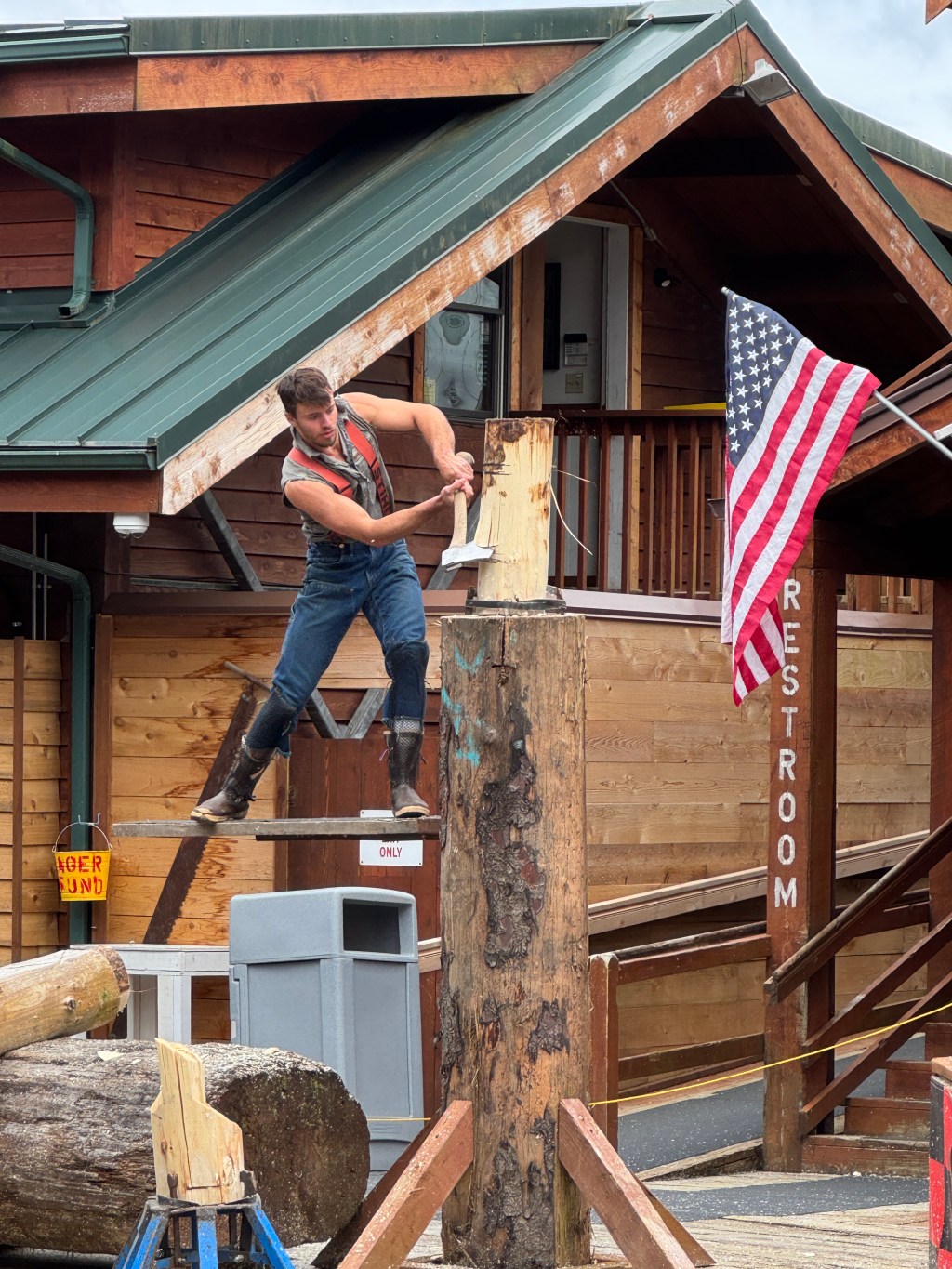
Lumberjack Show
Our favorite activity in Ketchikan is the Great Alaskan Lumberjack Show, where competitors for the American and Canadian “teams” try to chop logs, saw slices, and climb poles the fastest. Plenty of corny jokes and cheering, since half of the crowd is on the American side and half on the Canadian.
-
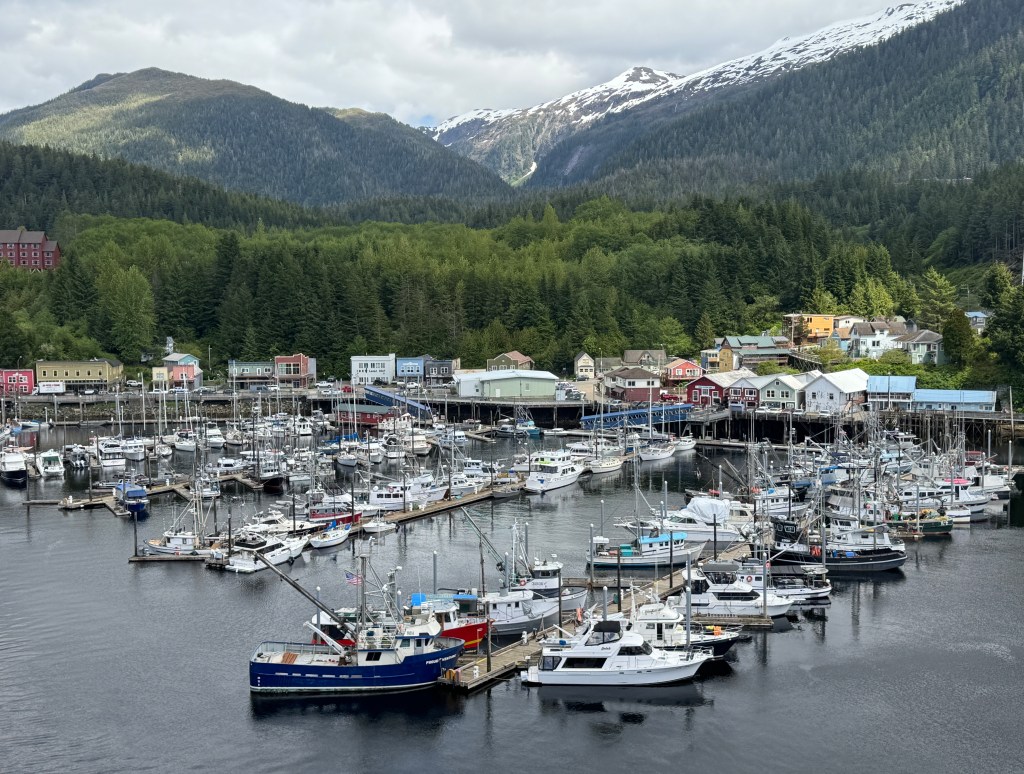
Ketchikan Harbor
Arriving in Ketchikan, our cruise ship docked next to the harbor full of fishing boats. Elaine’s grandfather was a fisherman in Ketchikan in the 1920s after arriving from Norway.
-
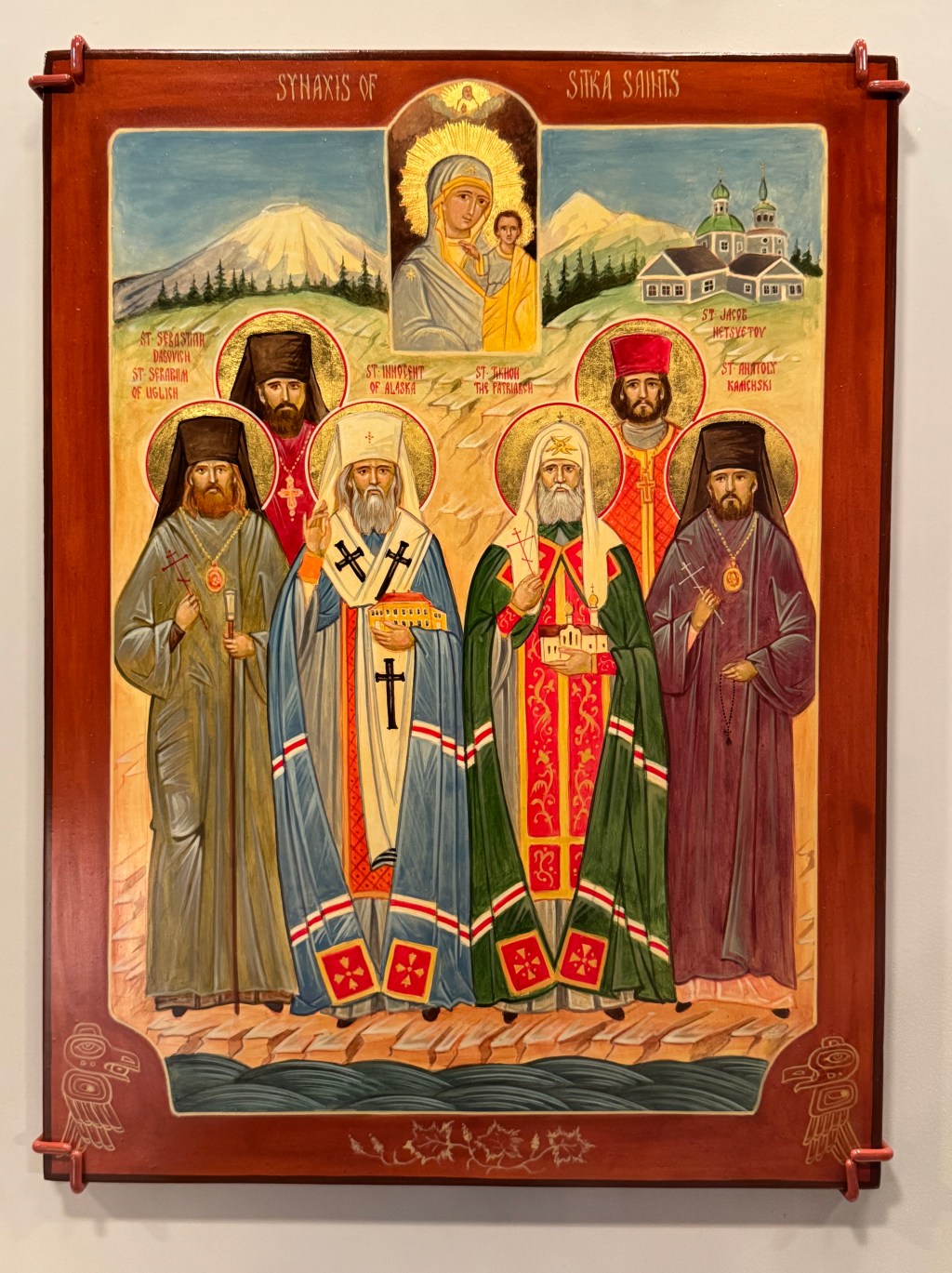
Sitka Saints
This icon from the Bishop’s Residence shows six saints who lived or served in Sitka — St. Seraphim of Uglich, St. Sebastian Dabovich, St. Innocent Enlightener of Alaska, St. Tikhon the Patriarch, St. Jacob Netsvetov, and St. Anatoly Kamensky. To believers, icons are windows to heaven.
-
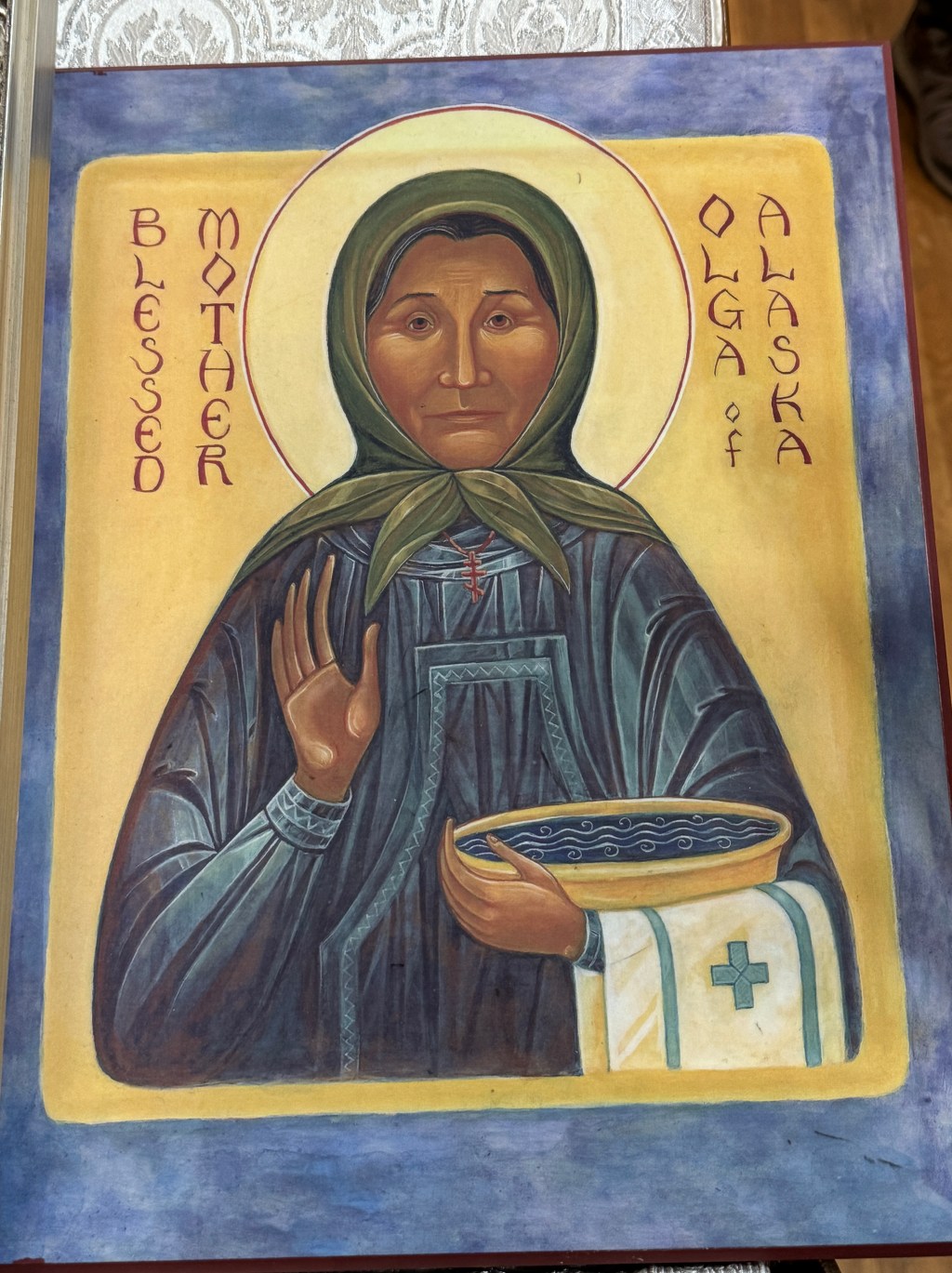
Blessed Olga
This icon in St. Michael’s Cathedral is of Blessed Olga Michael, a native Alaskan (Yup’ik) midwife who lived along the Kuskokwim River from 1916 to 1979. A healer known for her gentle manner and care for those who had suffered abuse, she is venerated in the region where she lived and her story has touched…
-
Screen of Icons
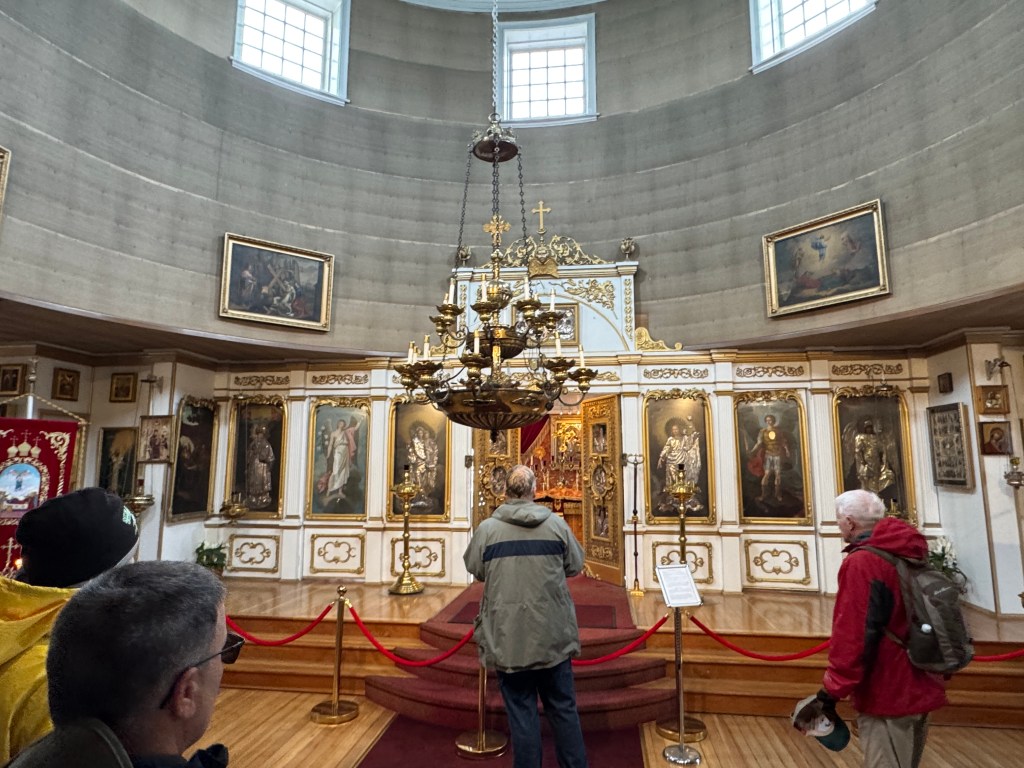
The focus for anyone entering St.Michael’s in Sitka is the screen of icons in the front of the cathedral. Gold decoration, paintings of saints, lighted candles and the sound of Russian hymns made it a rich sensory experience.
-
St. Michael’s Cathedral
A National Historic Landmark, St. Michael’s Russian Orthodox Cathedral in the center of Sitka is the most prominent symbol of Russia’s colonial presence in Alaska. Built in 1848, it burned down in 1966, but almost all of the liturgical treasures were saved (by an human chain of townspeople who carried them to safety) and the…

-
Wallpaper
The Russian Bishop’s House in Sitka included this sample of the colorful wallpaper that covered the building’s walls in the early 1800s.

-
Lovebird Drum
This Eagle/Raven “Lovebird” design decorates a drum in the Sitka National Historical Park museum.

-
Green
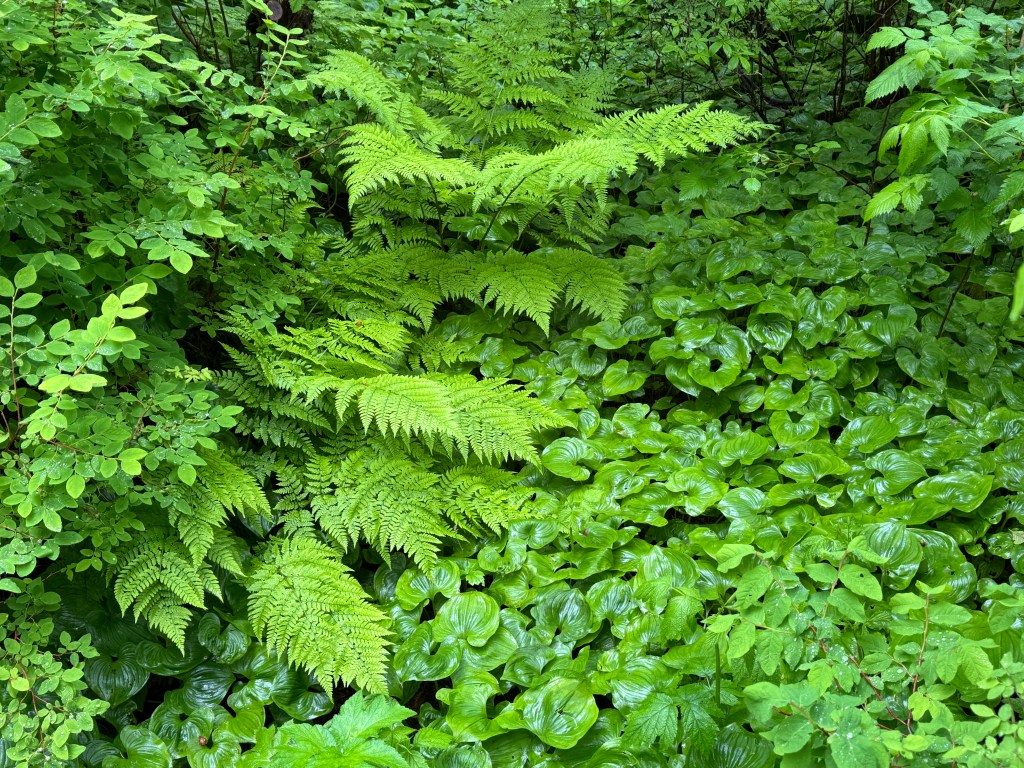
Walking through the rainforest by Sitka, it’s no surprise that lots of things are green. This view of the ground cover has plenty of different textures.
-
Trader Legend Pole
Native carvers placed a white man on top of this pole with images representing thievery under him. It’s a reminder of a dishonest Sitka trader — not the best way to be remembered!

-
Yaadaas Crest Pole
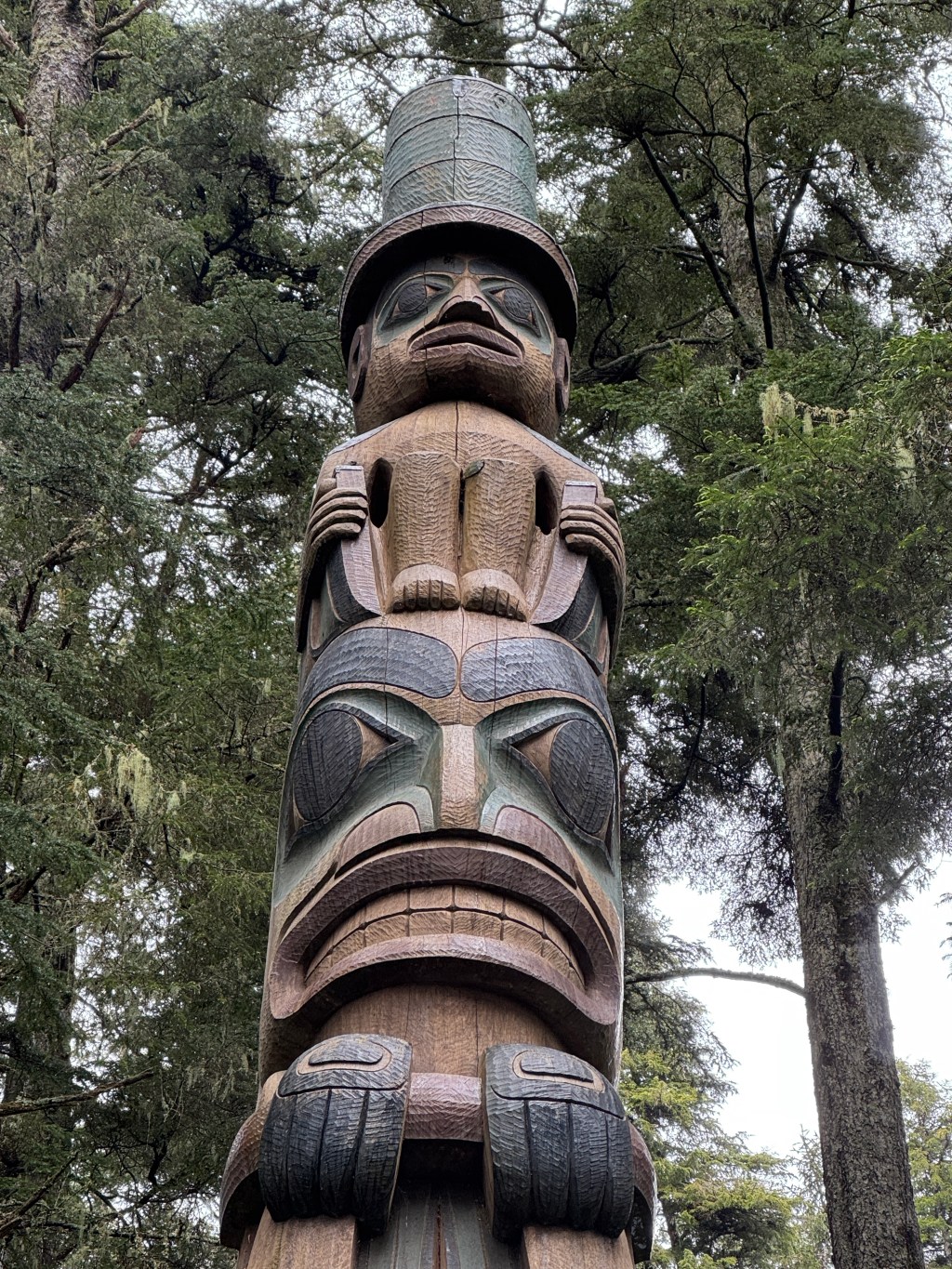
One of the sights walking through the rainforest near Sitka. This replica of the totem pole that stood at the corner of the Yaadaas clan house in Old Kasan represents the symbols of that clan.
-
Raven Crest Pole
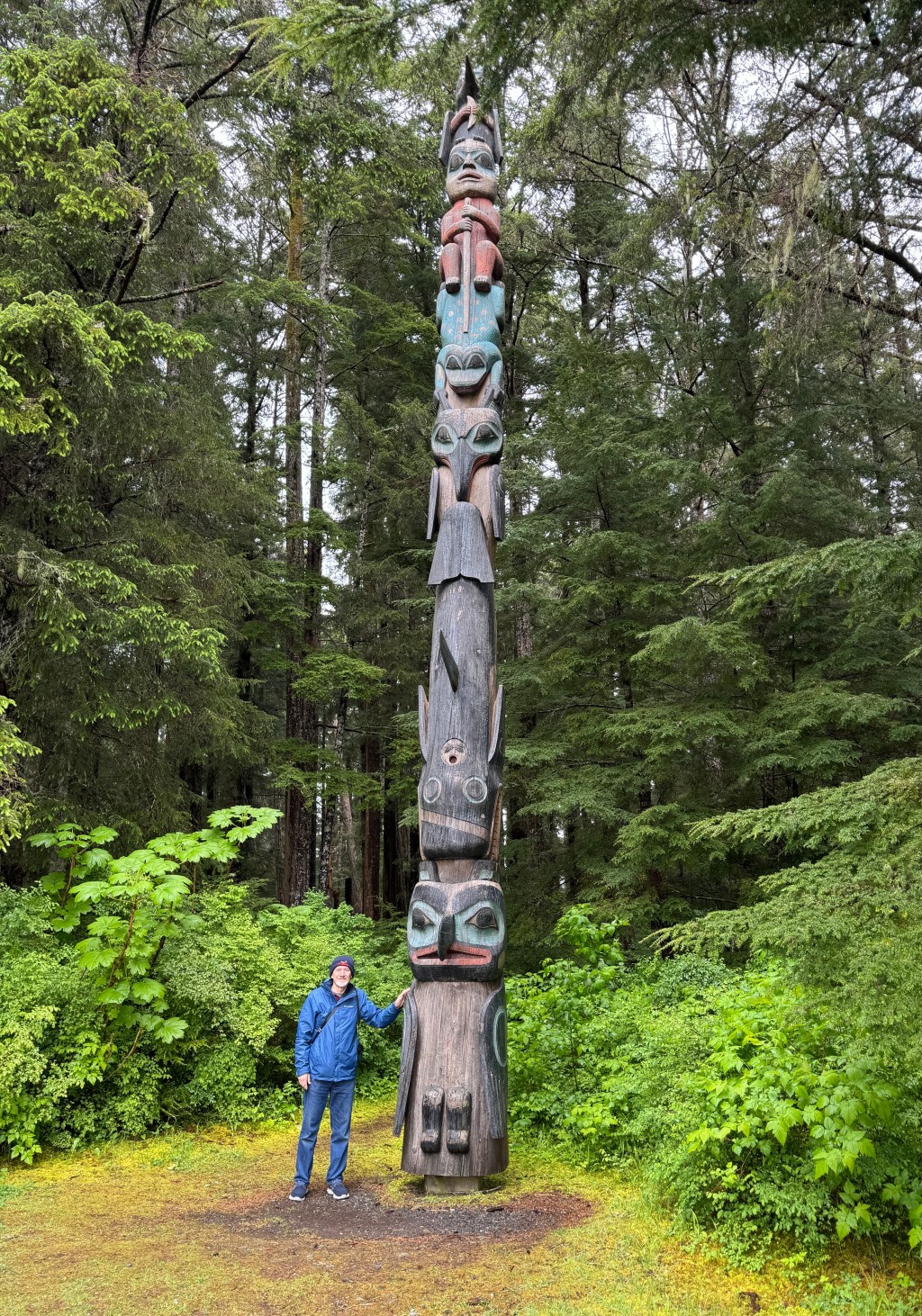
Visiting Sitka’s National Historic Park, I found several replicas of original totem poles — this one created in Tuxekan Village in 1903. Can you identify the creatures below the Raven?
-
Dawes Glacier
Located at the southeast end of Endicott Arm, Dawes Glacier has 200-foot tall cliffs of deep blue ice that calved several chunks into the water while we watched. An amazing sight as the sun peeked through the clouds overhead.

-
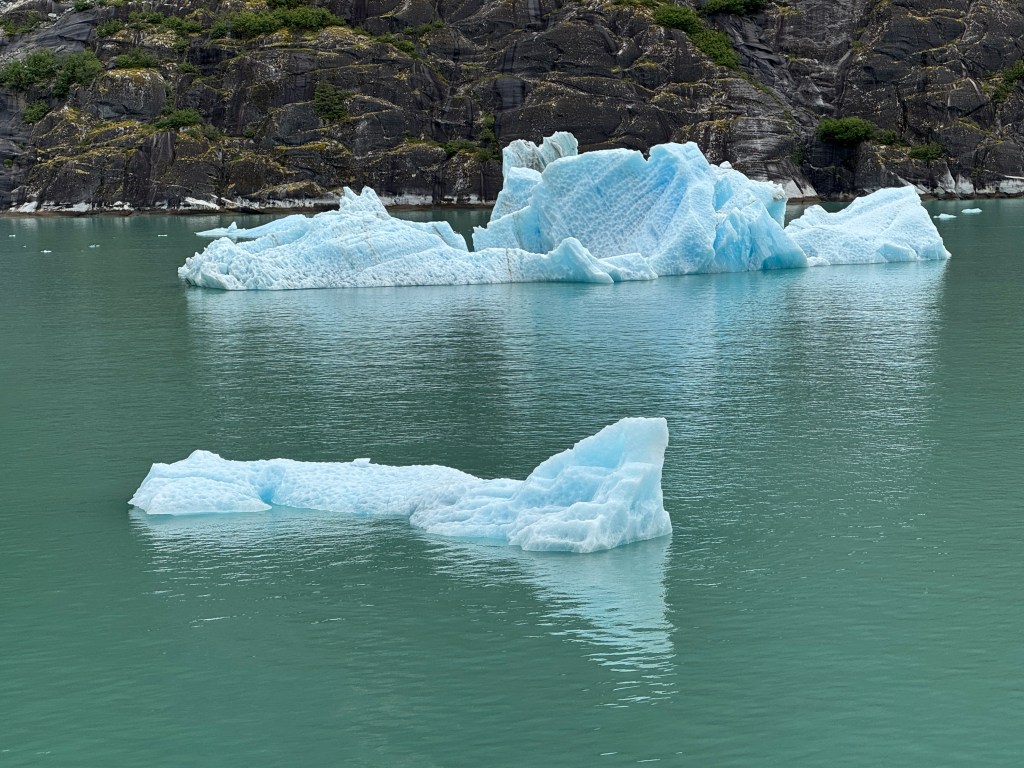
Bergy Bits
These icebergs floating down Endicott Arm from Dawes Glacier will probably melt before they get to the Pacific Ocean. They are deep blue because the ice is so dense that it only reflects blue light.
 Words Are Inadequate