-
Gates of Paradise
These gilded bronze doors on the Florence Baptistery were created by Lorenzo Ghiberti in the 1400s. Michelangelo reportedly called these panels, depicting Old Testament scenes, the “Gates of Paradise.” (Like other outdoor artworks, the originals are in a nearby museum to protect them from pigeons and acid rain.)

-
Duomo
The facades of the Duomo Cathedral and neighboring bell tower are rectangles of white, green and pink marble. It’s so big that it’s difficult to see more than just a part of it in the relatively small open spaces around one of the largest churches in the world.

-
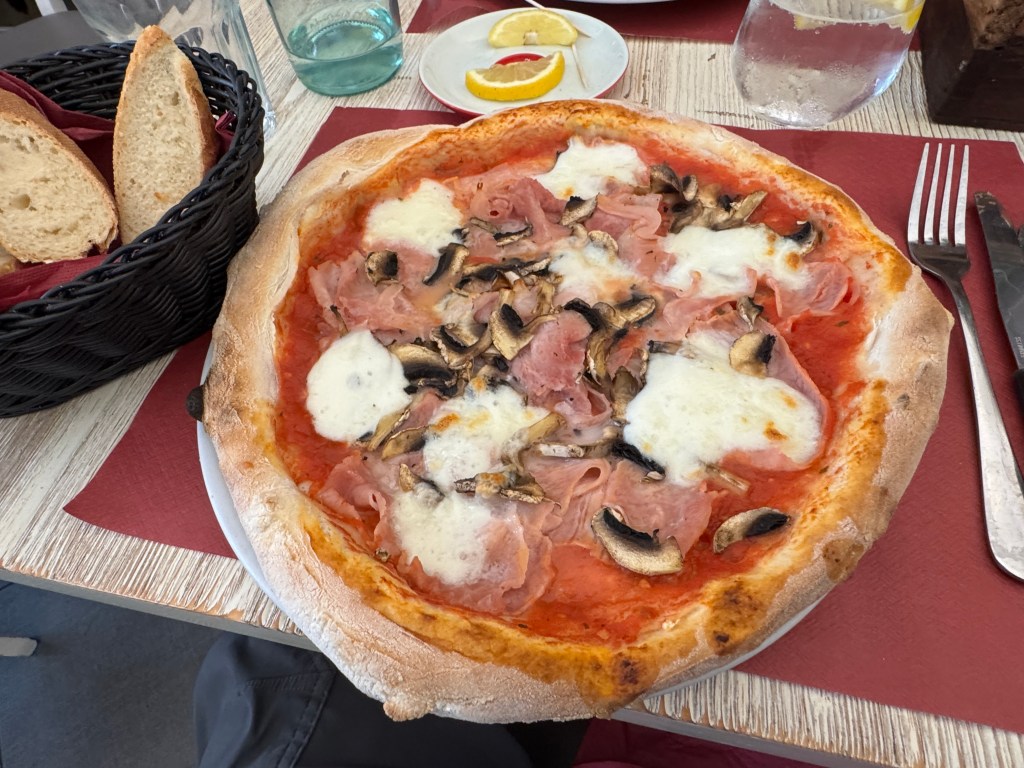
Pizza
Walking through Florence, we found a restaurant that was popular with both locals and visitors. I ordered a pizza with mozzarella, prosciutto and mushrooms, and this was the delicious result. Hungry?
-
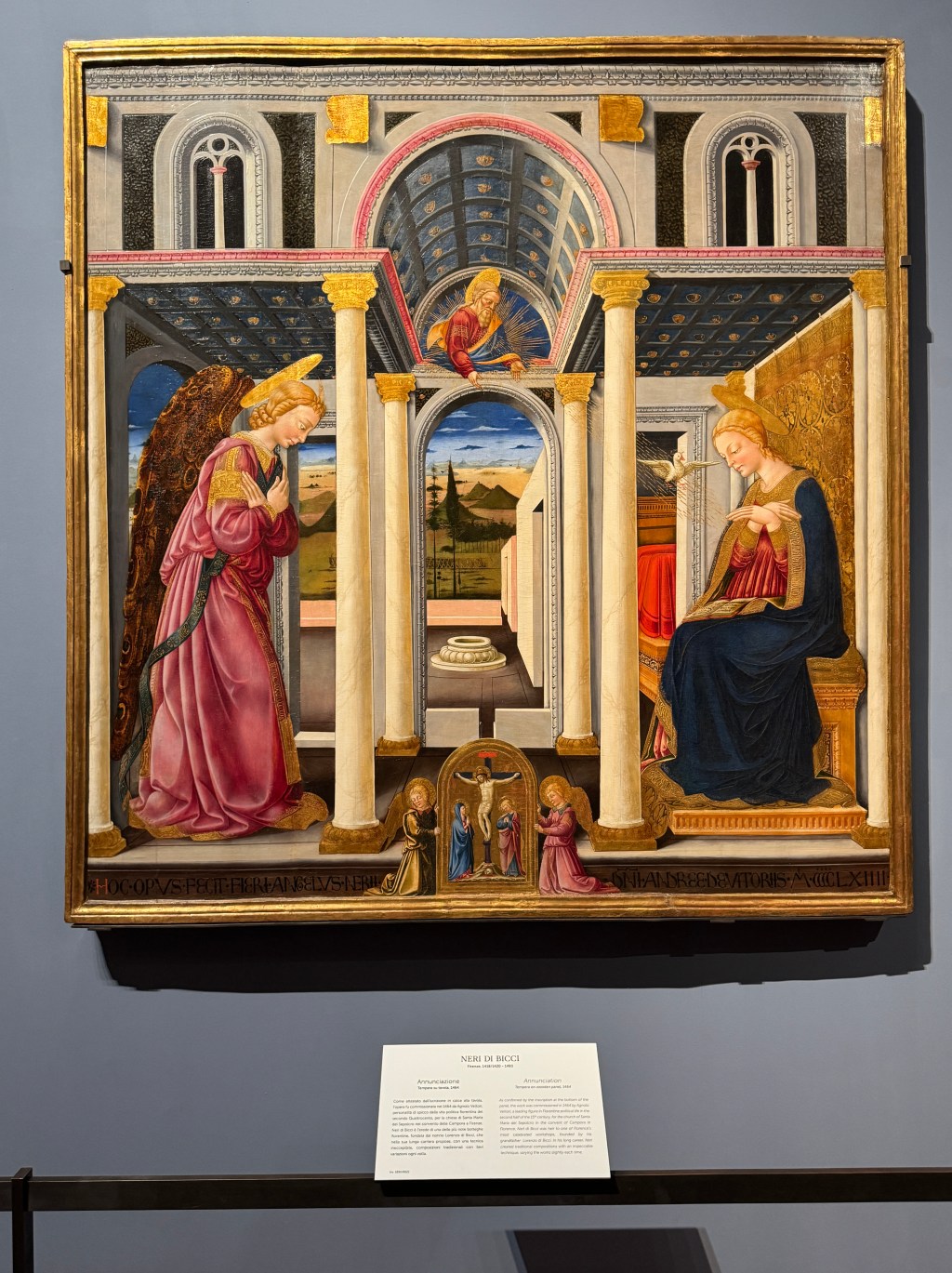
Annunciation
This 1464 painting by Neri di Bicci in the Accademia Gallery has the classic geometry of Renaissance artwork, setting the Angel Gabriel’s visit to Mary in a Greek temple. Follow the lines of the ceilings to find the perspective’s vanishing point in the painting’s center.
-
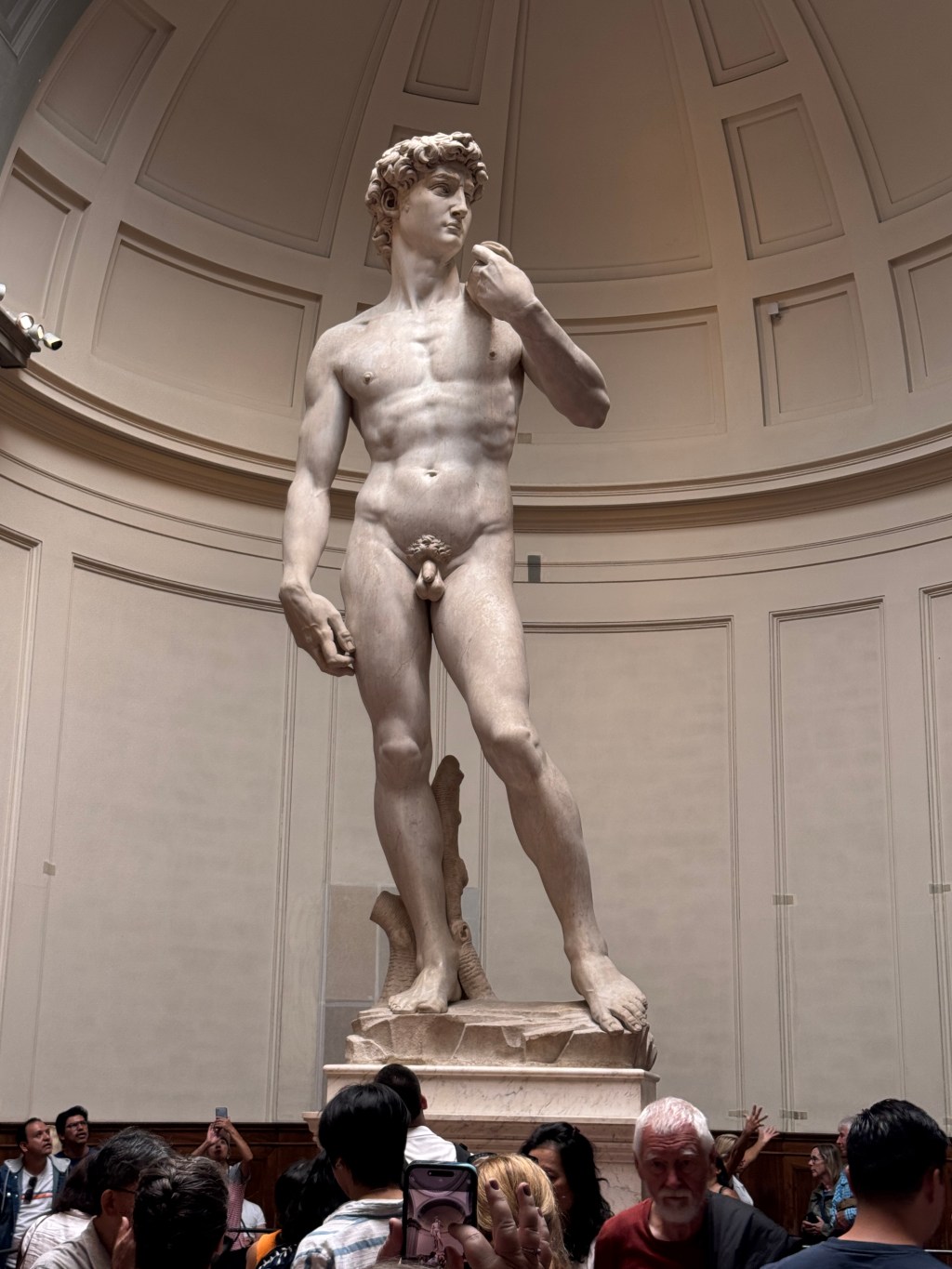
David
No visit to Florence, Italy is complete without seeing Michelangelo’s David. At 19 feet tall, he stands above the swirling crowd just as he rises above every other Renaissance sculpture as both a symbol of the Florentine Republic and of human potential.
-
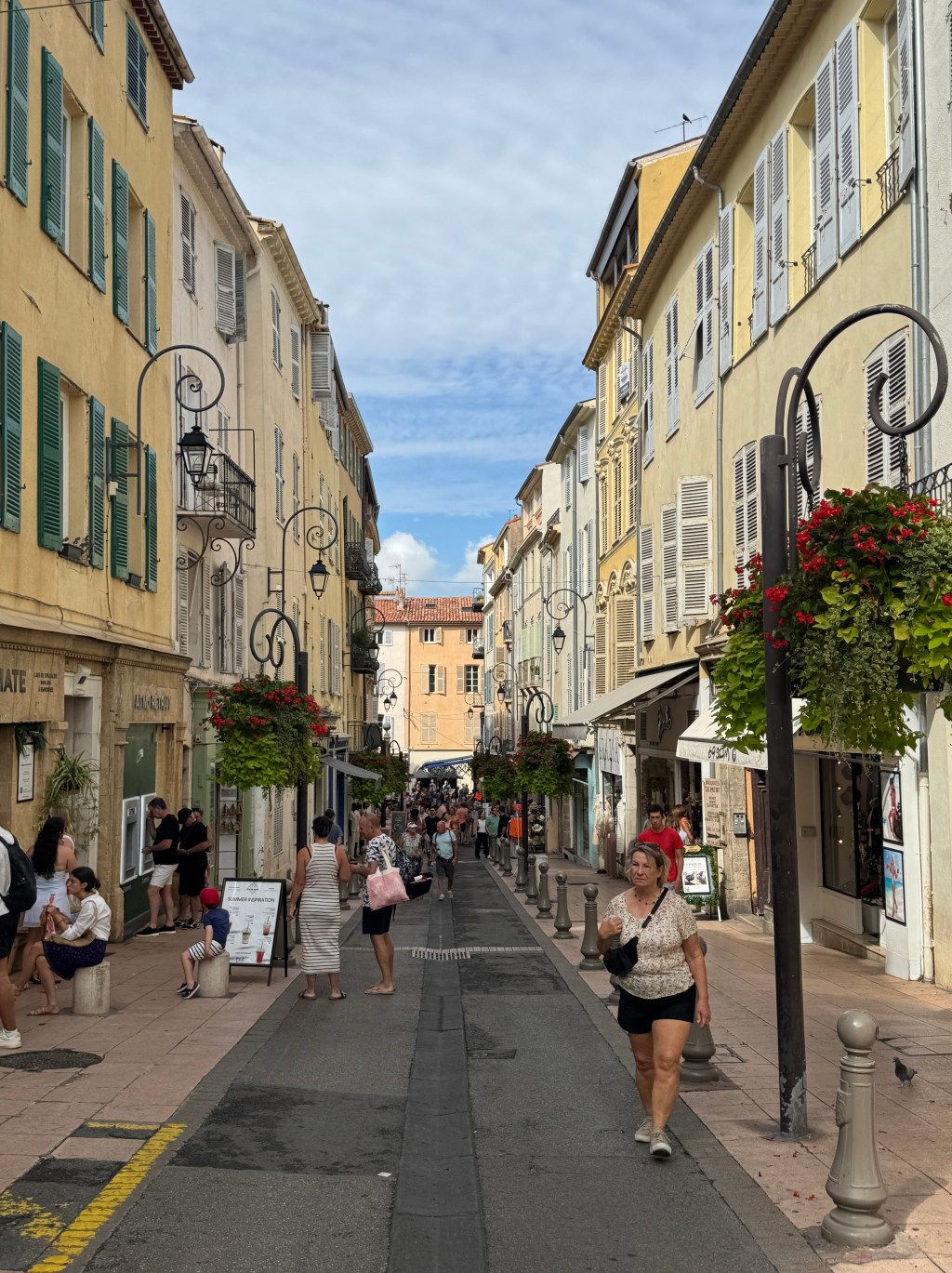
Antibes Alley
This charming alley was one of the busier shopping streets in Antibes, as well as a pleasant shady stroll on a sunny day.
-
Crème-Filled Croissants
Every port we visited had some variation on sweet cream in a crunchy pastry. In the market in Antibes, they were croissants with vanilla, lemon or chocolate cream fillings.

-
French Riviera
Beginning our Norwegian cruise around the western Mediterranean Sea, we visited the French Riviera town of Antibes. The harbor was full of yachts, but 210 years ago it was this quiet coast where Napoleon landed to launch his last campaign that ended at the battle of Waterloo.

-
Ramblas
A warm summer evening is the time for Barcelonans to greet their neighbors and walk their dogs along the tree-lined Ramblas boulevards. We wandered through the Poblenou neighborhood, getting a feel for urban life in a very livable European city.

-
Sardana Dances
A highlight of our stay in Barcelona was watching a traditional Sardana dance on our last evening there. In the past it has been a form of Catalonian protest, but now mostly a fun community activity in a public square.

-
Church Music
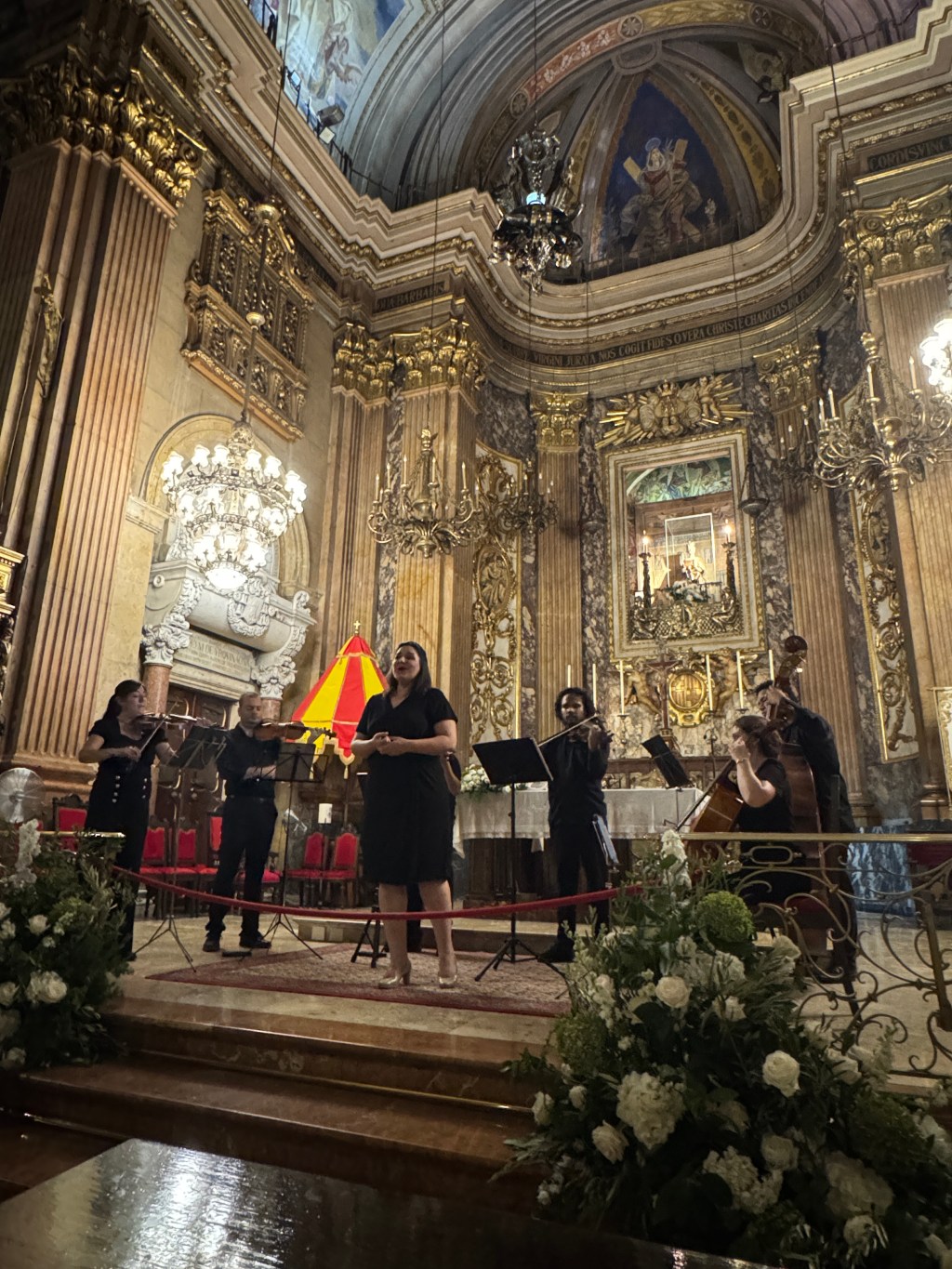
View from our front row seats to the concert in the Basilica of our Lady of Mercy. She had a beautiful voice that echoed throughout the baroque interior.
-
Classical Concert
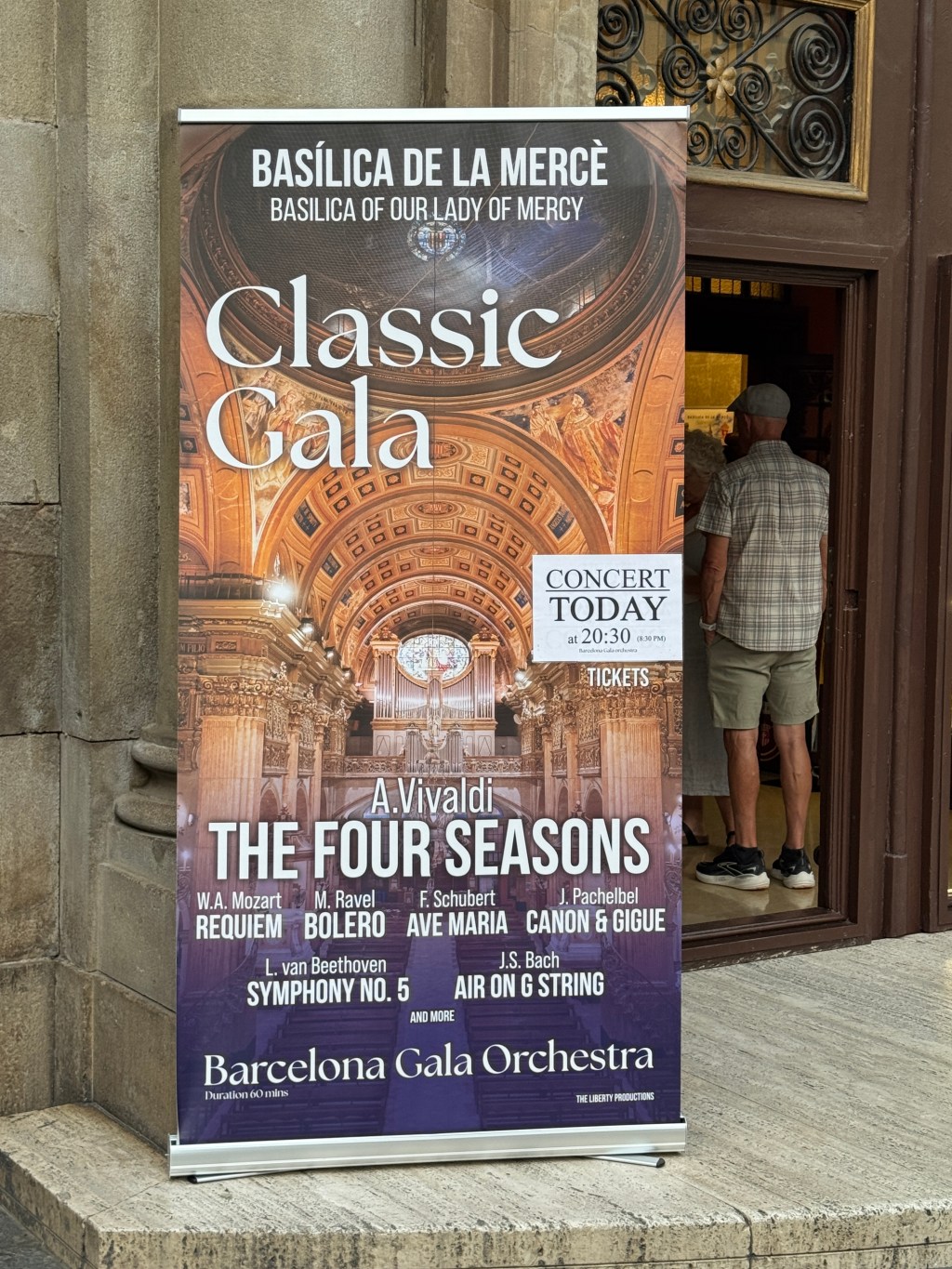
Where better to enjoy the greatest hits of the 18th century than in a baroque church in the old town of Barcelona. We ordered tickets in advance for the string ensemble and solo soprano who put on a great concert.
-
Cloister Guards
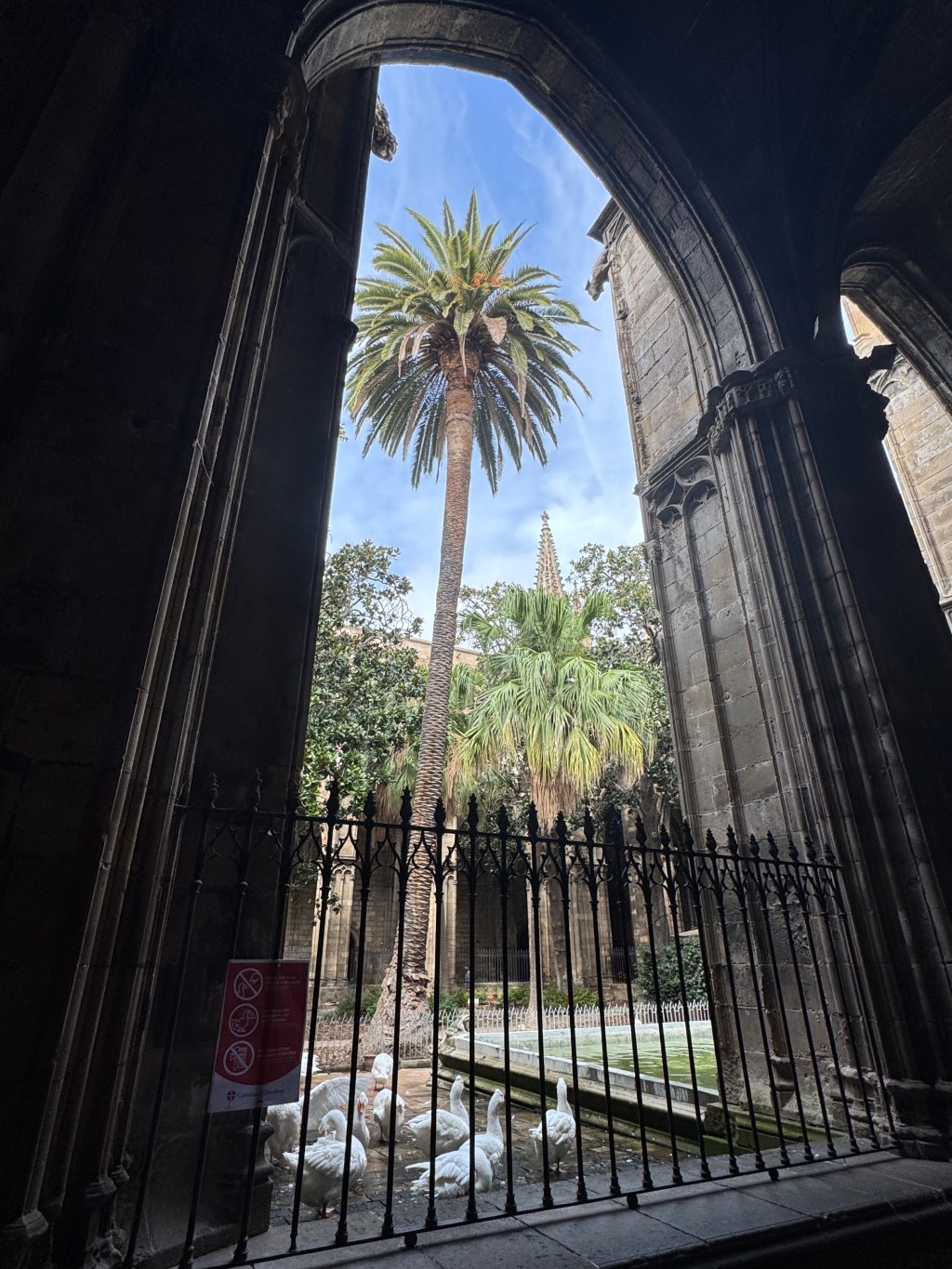
The courtyard next to the Barcelona Cathedral features a flock of geese, always 13 of them for over 500 years, whose honking acted as an alarm before modern security systems. Rich merchants paid to be buried in the floor of the Cloister walkway, their headstones showing shoes or baking bread to identify their trades.
-
Choir of Nobles
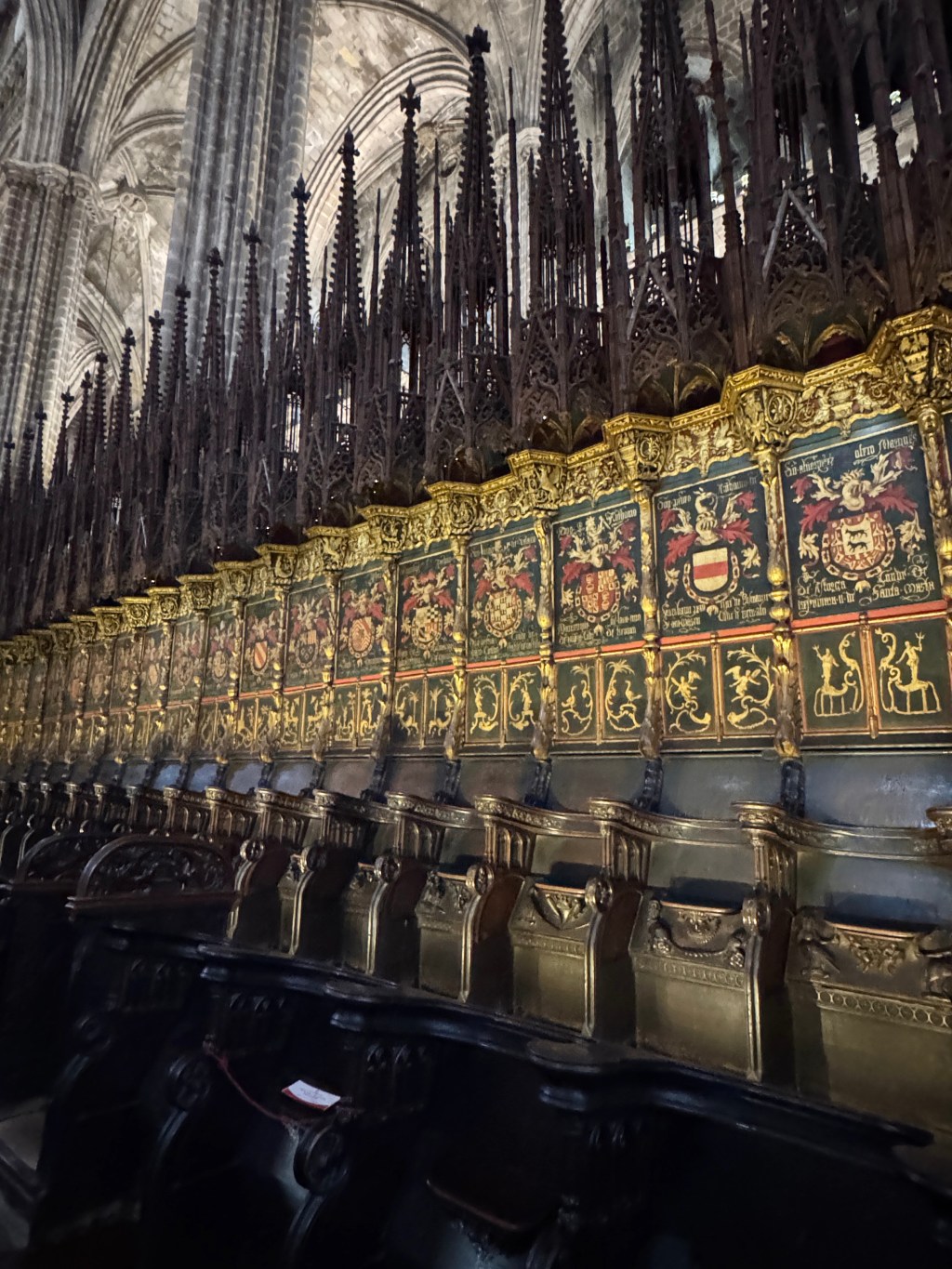
These ornately carved stalls in the Cathedral’s choir display the coats of arms of the Knights of the Golden Fleece. They gathered here in 1518 to plan how to defend Europe from the Turks. (They ignored the activities of a German monk named Luther, who turned out to be a bigger challenge.)
-
St. Jordi
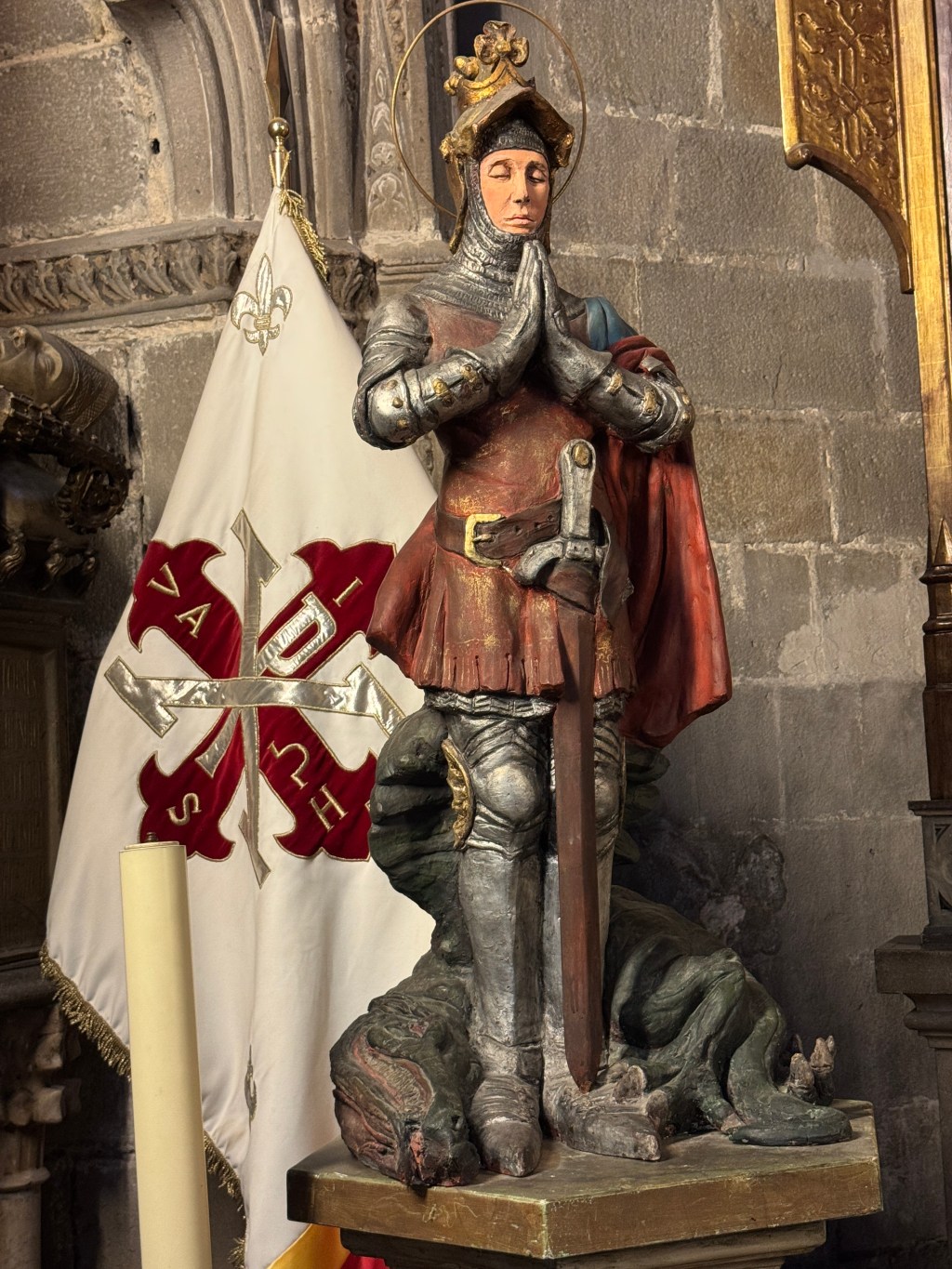
St. George (Jordi in Catalan) is the patron saint of Catalonia, so it’s no surprise to see him in the Barcelona Cathedral standing over his defeated foe. Jordi is also the most popular boy’s name in the region.
-
Barcelona Gothic
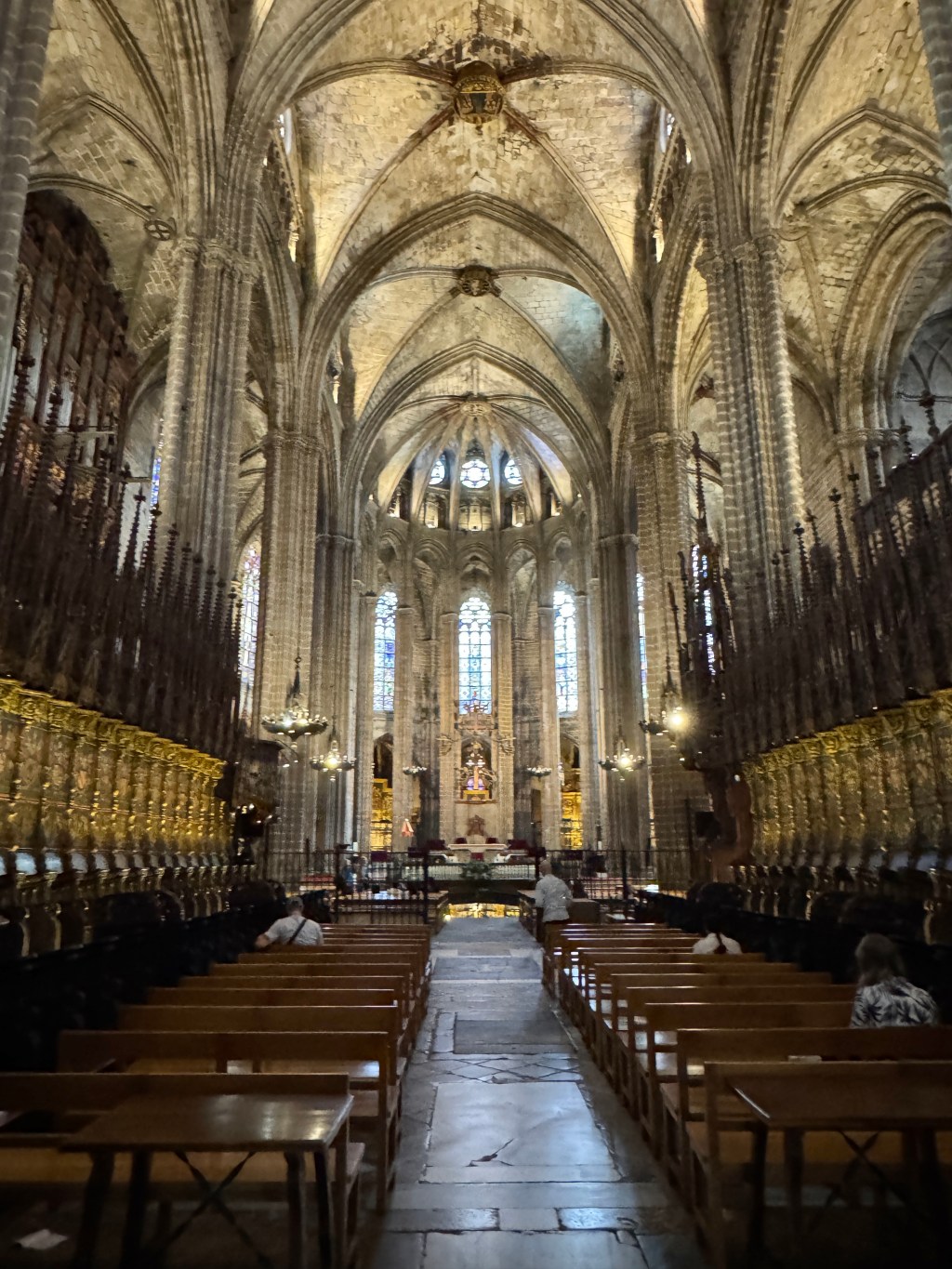
Centuries away from the Sagrada Familia, in both time and style, is the other major church in Barcelona, the Cathedral. Begun in 1298 and built over 150 years on the site of previous cathedrals, the towering arches enclose a “choir” of wooden seats for a more intimate worship experience.
-
Crucifiction
Exiting the Sagrada Familia, you pass under the Passion Facade where stern, block-like sculptures portray Christ’s torture and execution. Following Gaudi’s instructions, they were created by Josep Maria Subirachs and finished in 2005. The Roman soldiers kind of look like stormtroopers.

-
Our Daily Bread
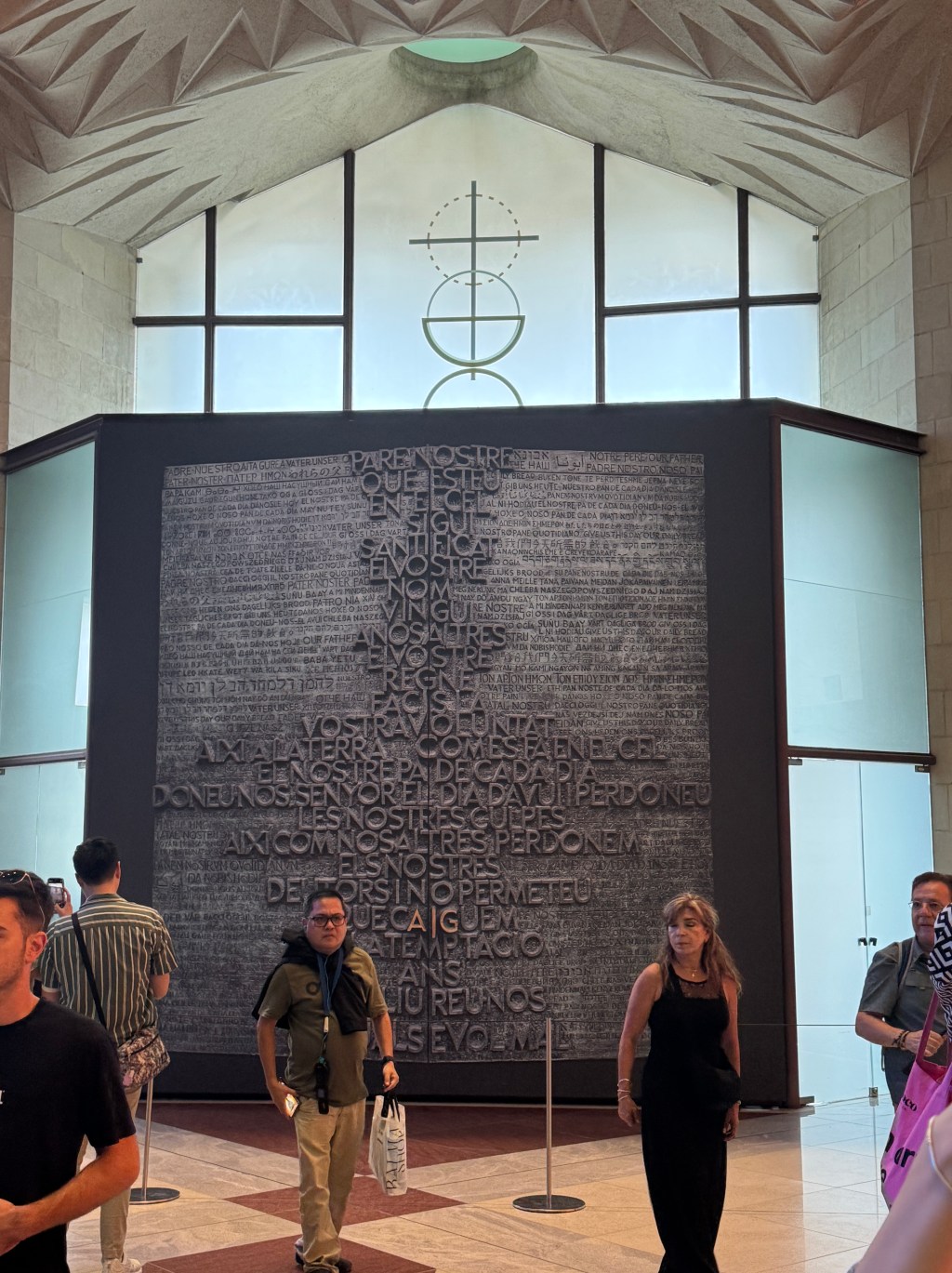
The main doors to the basilica, although no one can enter through them yet, have the Lord’s Prayer engraved on them in Catalan and 50 other languages.
-
The Altar
On a more human scale is the altar with a contemporary-looking crucifix below a canopy that has stalks of wheat growing up and clusters of grapes hanging down – representing the bread and wine of the Last Supper. The effect seems to defy gravity, a moment suspended in space and time.

-
The Canopy
Looking up 200 feet, the branching columns in Sagrada Familia weave up into the canopy of concrete “leaves”, medallions and windows. It looks random, but every part is perfectly fitted and beautifully proportioned.

-
The Forest
Stepping through the side doors, you gaze across the 200-foot long transept to the opposite doors through a forest of enormous columns that rise up and branch out to gracefully hold the incredible weight of the roof. Gaudi wrote, “Nothing is invented; it’s written in nature.”

-
Simeon
This grouping on the Nativity facade shows the prophet Simeon blessing the baby Jesus in the Jerusalem temple. All of the work on this fascade was completed before Gaudi’s death in 1926.

-
Nativity Facade
Our tour of Sagrada Familia (Holy Family) began on the right side entrance that celebrates the birth of Christ with a whirl of statues of angels, wise men and shepherds around Joseph, Mary and Jesus.

-
Under Construction
In 1883, Barcelona architect Antoni Gaudi began creating a new basilica combining nature and religion on a massive scale. Over 150 years later, work continues as the central “Jesus” tower (of 18 total spires) rises toward its eventual 560-foot height as the tallest church on earth!

-
Casa Batllo
This remarkable building was created by Art Nouveau architect Antoni Gaudi, which means we are in Spain in the Catalunya capital of Barcelona. Was Gaudi making a reference to St. George’s dragon with the scaly roof and scull-like balconies of its victims? It’s open to interpretation.

-
Subscribe
Subscribed
Have a WordPress.com account? Log in now.

