Italy
-
Straits of Messina
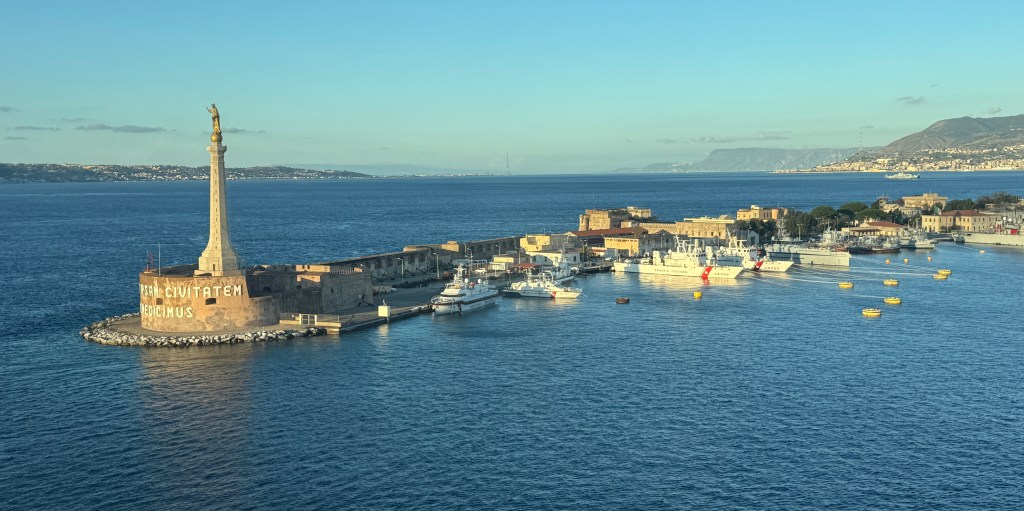
Mary, protector of Messina, blesses the city’s harbor from the end of a long jetty. In the background are the Straits of Messina, with Sicily on the left and the mainland of Italy just a mile and a half away on the right. Ferries cross it in just 20 minutes.
-
Puppet Museum
Puppet theater is a classic form of Sicilian entertainment, and we toured a museum of puppets in Messina maintained by a single family of puppeteers. Here the king and his knight share a conversation, while other displays had three-foot tall knights sword fighting or posed to show off their impressive armor.

-
Ceiling Details
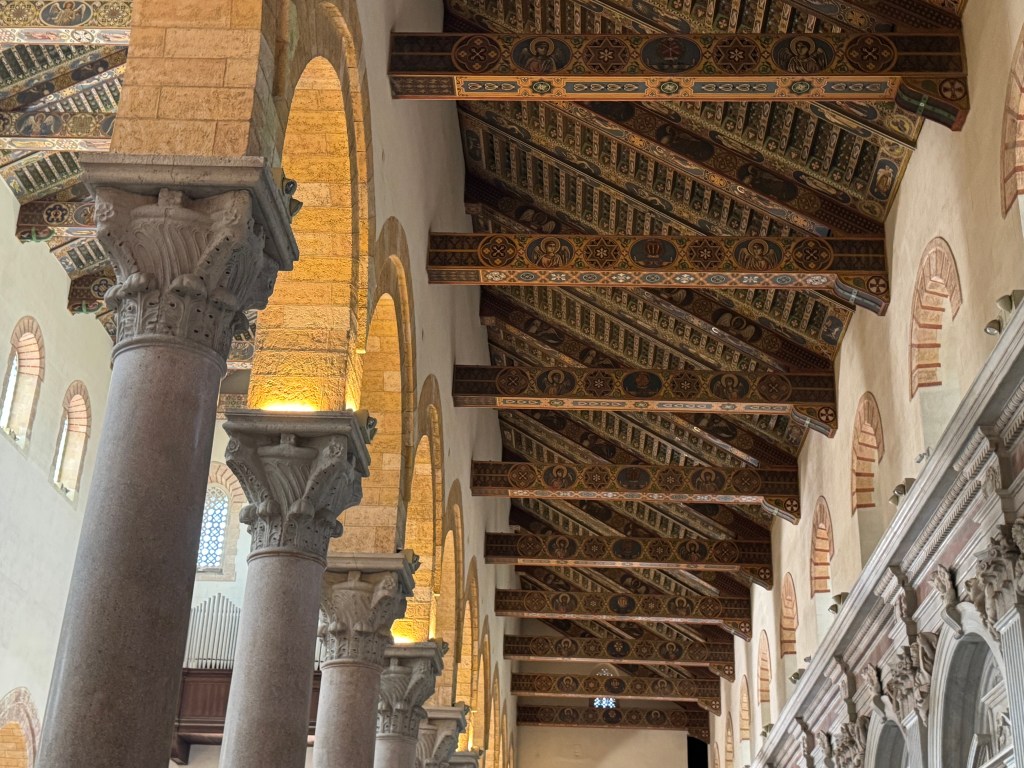
The restored ceiling in Messina’s Cathedral shows beautiful painted details that elaborate on the original design. European cathedrals invite you to gaze upward with their towering columns, but the details of their often intricate ceilings are worth meditating on as well.
-
The Nave
The main hall of the Messina Cathedral is over 800 years old, but the decorative ceiling and almost all of the mosaics are 20th century reconstructions after earthquake and bomb damage took a heavy toll.

-
Interactive Clock
Messina’s Cathedral bell tower of moving statues marks the time and entertains visitors. According to legend, Dina and Clarenza (large figures) helped repel an attack in 1282 by ringing bells, which they do each 15 minutes. The rooster flaps its wings and loudly crows three times at Noon.

-
Messina Cathedral
A monumental fountain of Orion fills part of the square in front of Messina’s Cathedral and bell tower. The Cathedral was almost entirely rebuilt after the 1908 earthquake and again after a fire caused by Allied bombing in 1943.

-
Earthquake
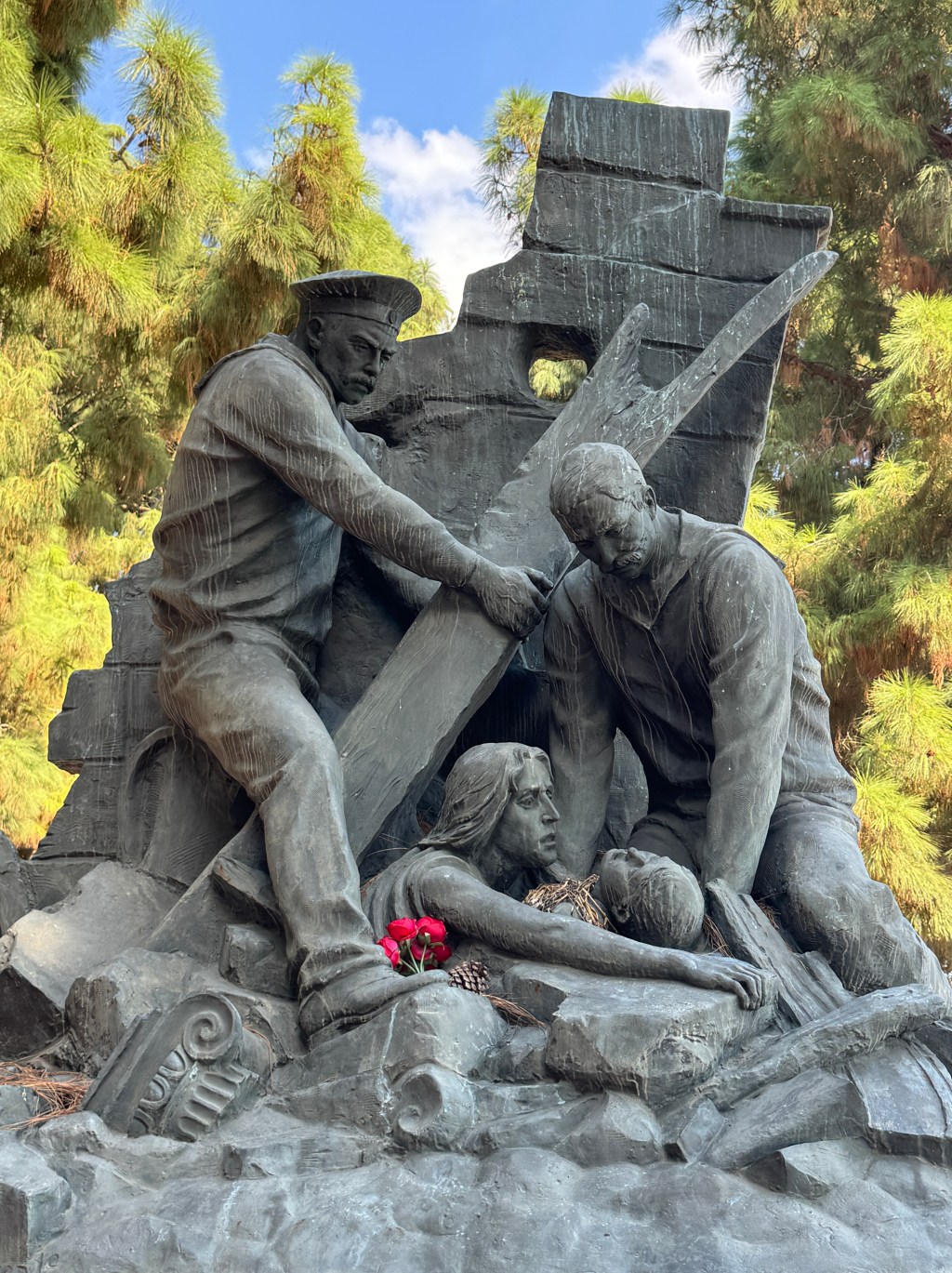
An early morning earthquake in 1908 destroyed nearly all of Messina and killed 60,000 residents. This memorial honors the Russian marines on a ship in the harbor who were the first rescuers to begin pulling people out of the ruins. The red roses show that the event is still fresh for local residents.
-
Neptune
This fountain of Neptune built in 1557, looks out to the Straits of Messina where the mythological monsters Scylla and Charybdis once threatened mariners such as Odysseus. Scylla was a six-headed creature that preyed on passing sailors, while Charybdis was a massive whirlpool that sank many ships.

-
Messina
Messina, the city on Sicily that looks across to the Italian mainland, climbs the hills above the harbor with churches and buildings that have been rebuilt after the twin 20th century disasters of a major earthquake and heavy bombing during World War II.

-
Naples at Night
Pulling away from the cruise ship pier, the palaces, churches and public buildings along the Naples waterfront glow with a warm light.

-
Castel Nuovo
Only in Italy would a castle erected in 1279 be referred to as the “new castle.” It’s imposing size and scenic location overlooking the harbor makes it one of the architectural landmarks of Naples.

-
Passageway
This covered portico on the north side of the Royal Palace has become a busy sidewalk for Neapolitans headed to nearby stores and theaters at the end of the day.

-
Colored Marble
This close up image of a round table in the Royal Palace of Naples highlights a remarkable collection of colored marble pieces. It was smaller works of art like this that really showed the opulence of an 18th century royal court.

-
Queen’s Throne Room
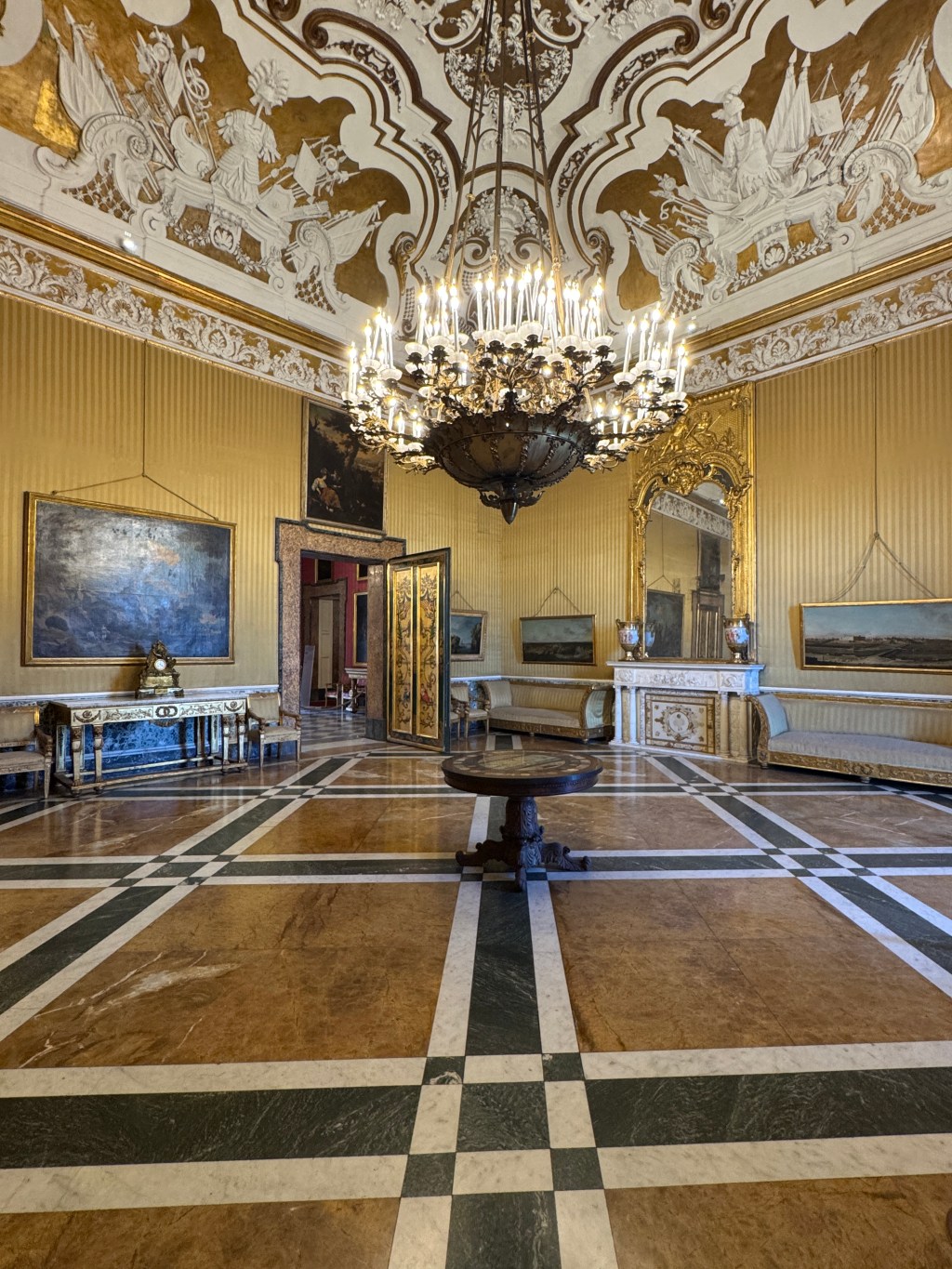
As the Queen of Naples’ throne room in the Royal Palace, the white stucco on gold ceiling and the dramatic marble floor design would have created a suitably regal setting.
-
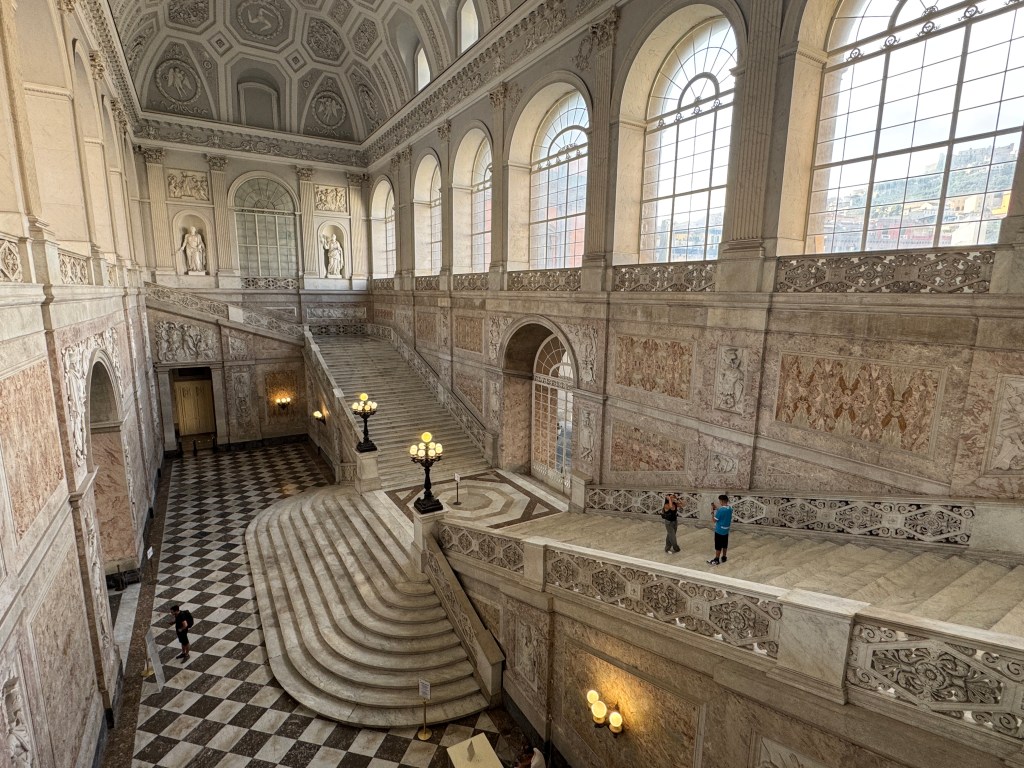
Royal Palace Stairway
The Royal Palace of Naples (walking distance from our cruise ship) was home to the Bourbon kings for more than a century before the unification of Italy. Not many buildings have a double grand staircase to compete with this one.
-
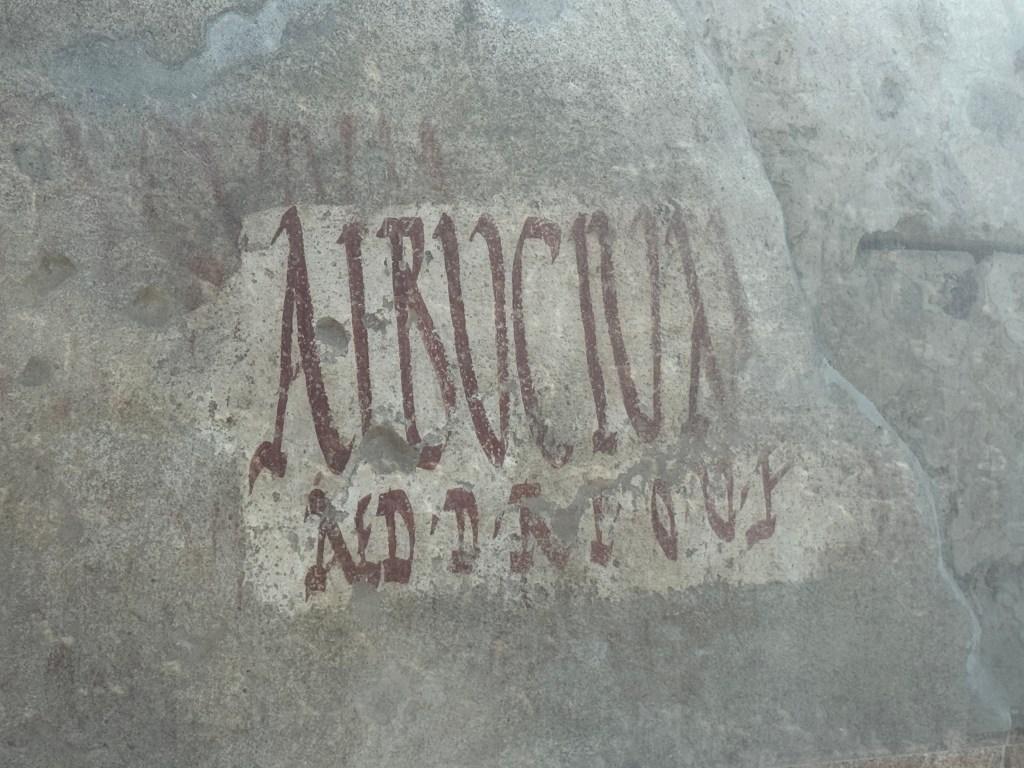
Vote For Albucium
Election slogans like this one appeared on the walls of shops, houses and public buildings as a common part of political campaigns for municipal offices in Pompeii.
-
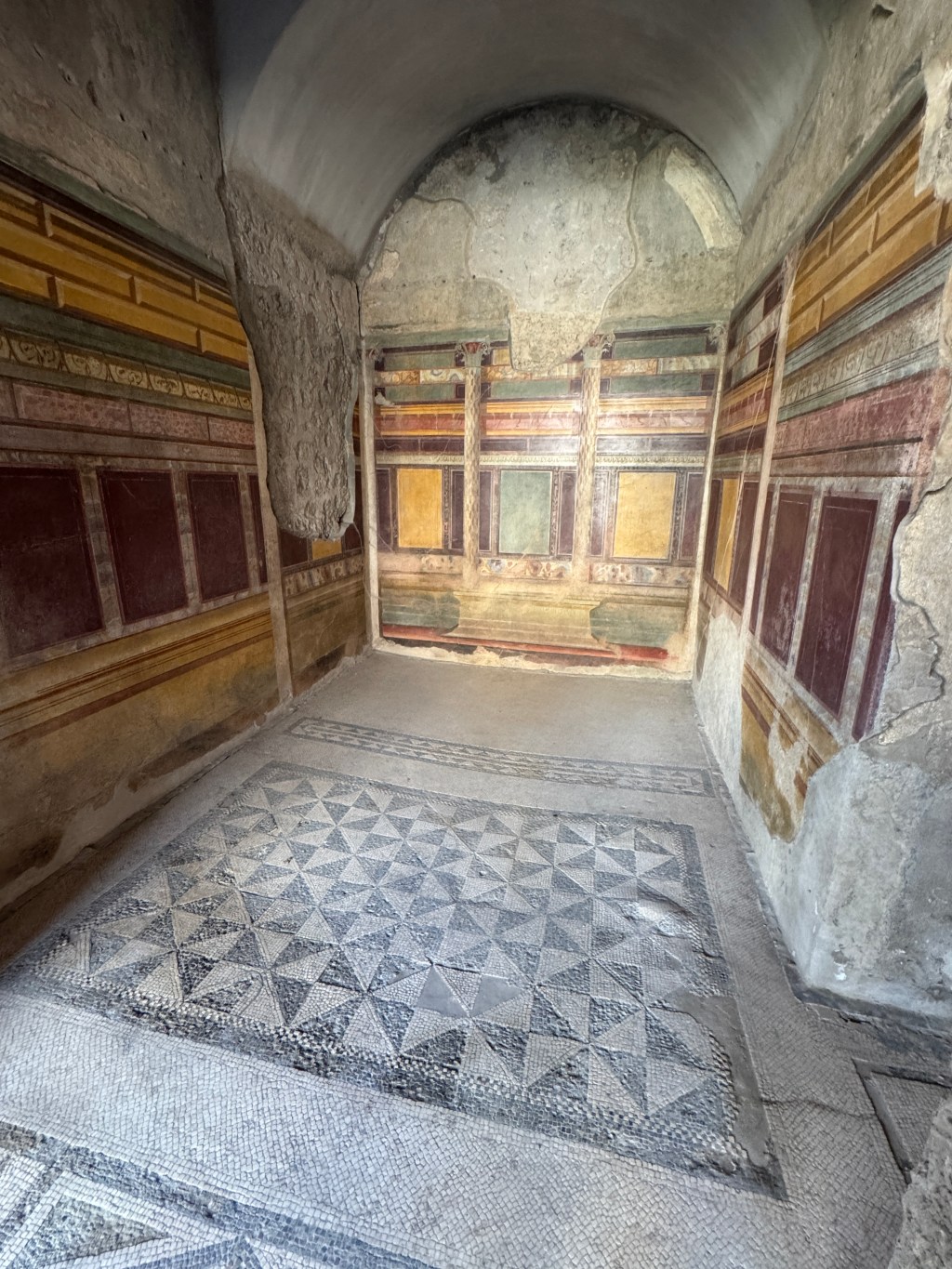
Frescoes and Mosaics
Rooms off the garden in the back of L. Albucius Celsius’ house still preserve colorful frescoes on the walls and geometric mosaics on the floors. This residence was excavated in 1893 and was named “House of the Silver Wedding” in honor of the Italian royal couple’s 25th anniversary.
-
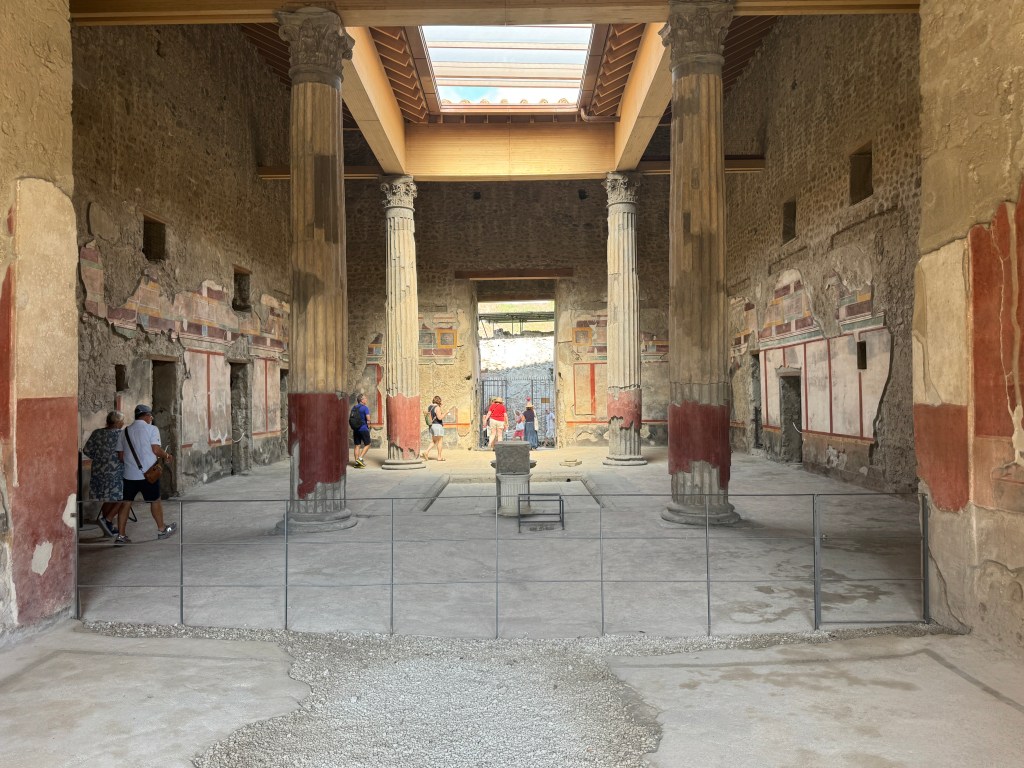
Atrium
The impressive house of L. Albucius Celsus has a large atrium with an impluvium (shallow pool) for collecting rainwater. The bottoms of the columns show the red stucco that originally covered the full columns.
-
Pompeiian Street
Paved with blocks of basalt, Pompeii’s streets included raised stepping stones for pedestrians to cross the often filthy streets. Notice the deep ruts in the stones where metal cart wheels ground down the basalt.

-
Forum Baths
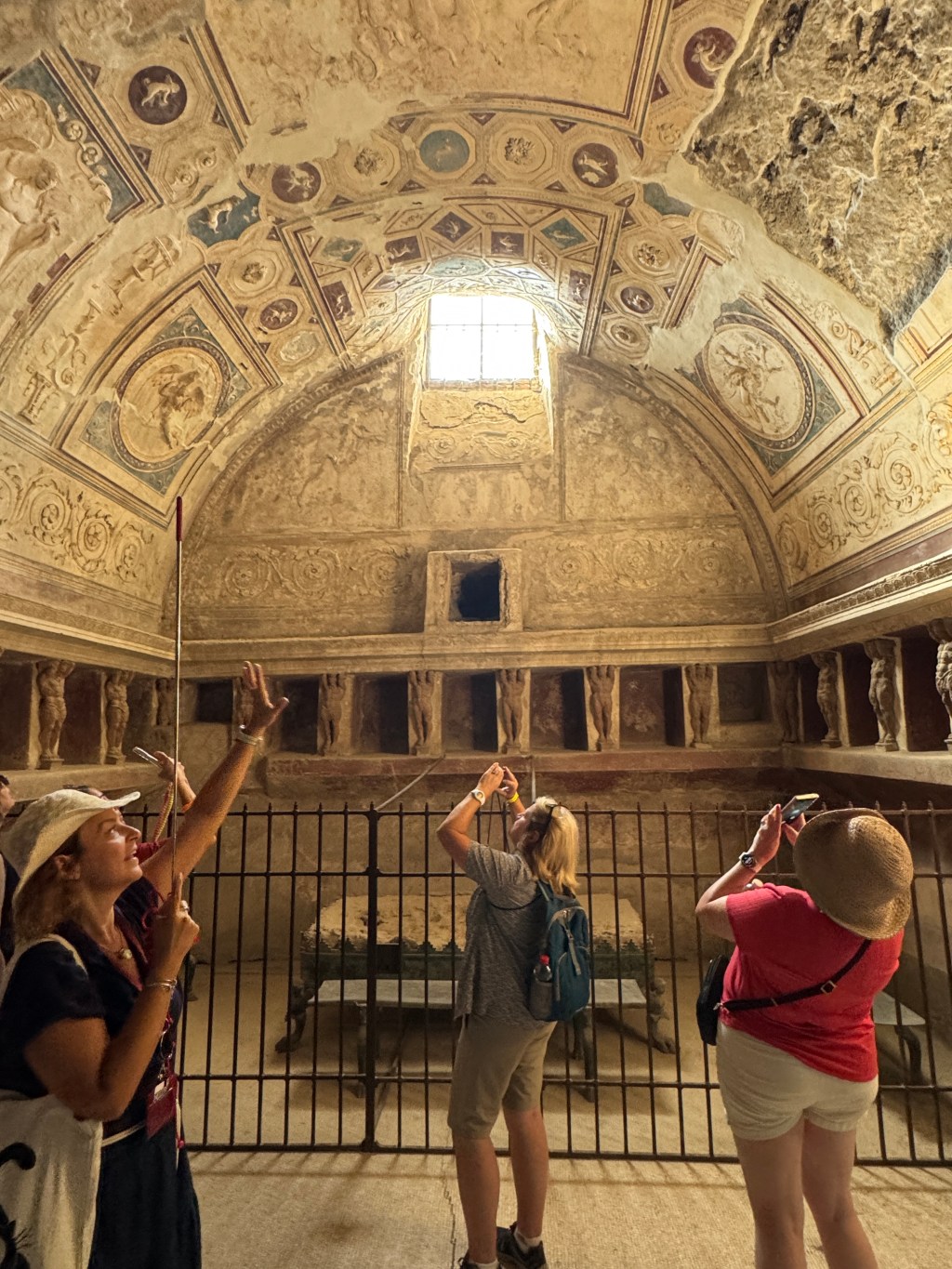
Built in about 80 BC as a popular meeting place for Pompeii residents of all social classes, the Forum Baths had separate spaces for men and women. The tepidarium featured paintings of gods and mythology on the ceiling and clay figures framing niches on the walls for clothing.
-
Temple of Apollo
Entering Pompeii with our archeologist guide, one of the first ruins we pass is the Temple of Apollo, a small structure surrounded by a two-story colonnade. The original bronze statue of Apollo is visible on the right.

-
Vesuvius
Entering Naples harbor at sunrise, the red sky behind nearby Mount Vesuvius offers a reminder of the volcano’s deadly eruption in 79 AD that buried the city of Pompeii, our destination for today’s tour.

-
Obelisk
Looking down a Roman street toward the obelisk that stands at the top of the Spanish Steps. The obelisk was made by Romans during the early Empire in imitation of Egyptian ones and decorated nearby gardens until it was moved here in 1789.

-
Roman Traffic
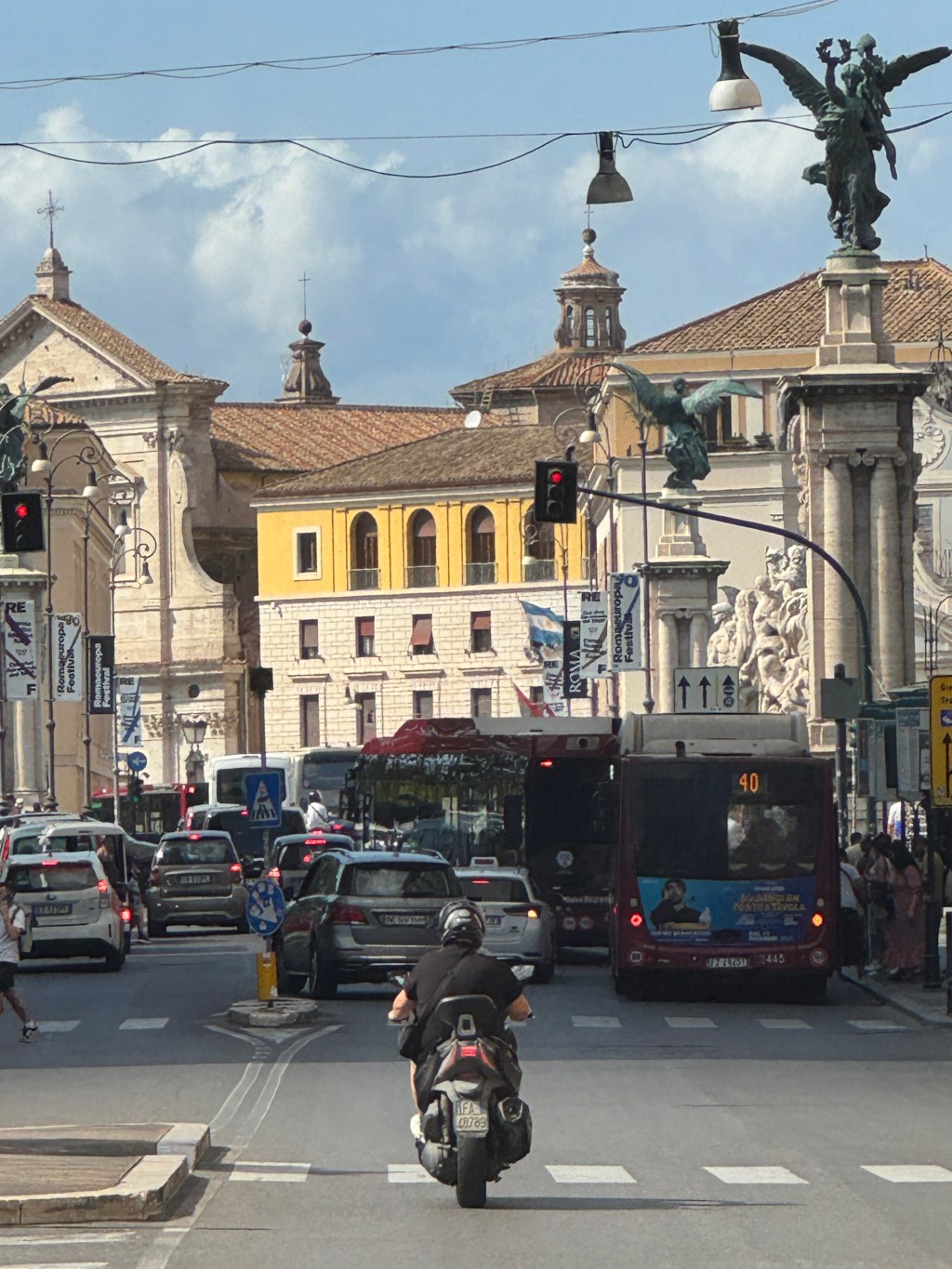
This image brings together three features of modern Rome – monuments and statues (more than any other city in the world), Roman Catholic churches (seemingly one on every other corner), and chaotic traffic (combining tourist busses, assertive drivers, and motorcycles zipping through it all).
-
Colosseum
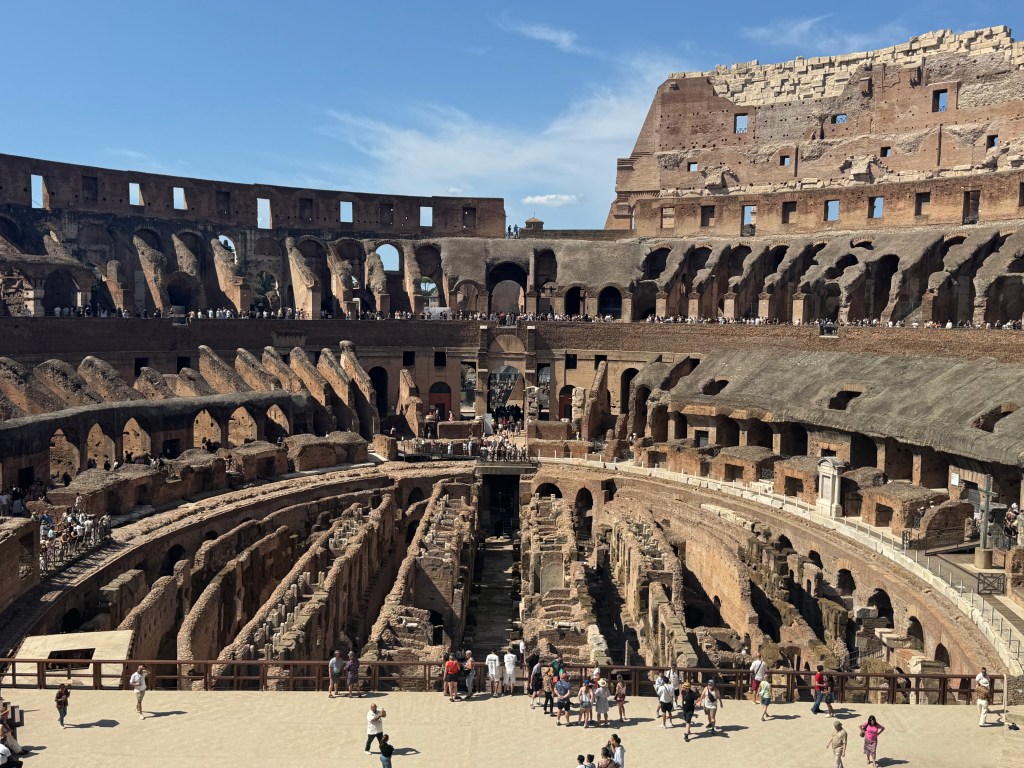
The largest ancient amphitheater, the Roman Colosseum was built in 72-80 AD and still overwhelms the visitor with its size. Earthquakes and stone robbers have left it without the limestone seats and steps that made it a gleaming white inside. The floor in the foreground once extended across the full oval floor.
 Words Are Inadequate