Italy
-
Brick-Covered Arches
Looking into the Roman Colosseum, you can see the various layers of brick-covered concrete arches that held up the seats for more than 65,000 spectators. Gladiators, executions, dramas and even mock sea battles filled the stadium during the Roman Empire.

-
Roman Forum
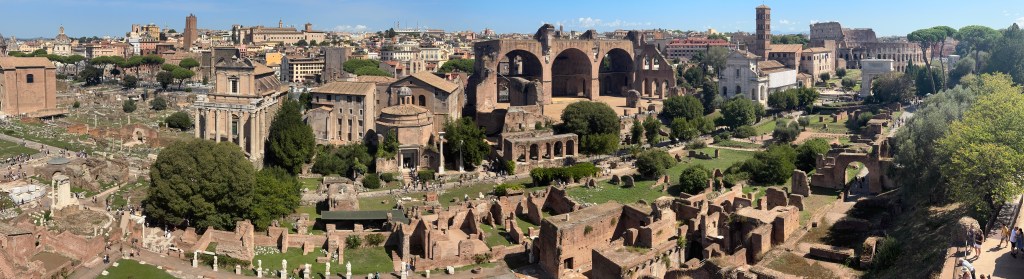
A panoramic view of the Roman Forum from the ruins on Palatine Hill. The Colosseum is at the far right, while the large three-arched ruins in the middle is the Basilica of Maxentius. That’s where the boxing matches during the 1960 Olympics were held and Cassius Clay received his gold medal.
-
Triumphal Procession
The Arch of Titus at the edge of the Roman Forum celebrates the victory by Titus and his father Vespasian over the Jewish Rebellion in 70-71 AD. The panel shows Roman soldiers carrying a menorah from Herod’s Temple, which became a symbol of the Jewish diaspora and eventually of the State of Israel.

-
Columns
These columns and the building behind them was originally the Temple of Antoninus and Faustina before becoming a Roman Catholic church dedicated to the martyr St. Lawrence (San Lorenzo), who was believed to have been sentenced to death at this location in the Roman Forum.

-
Capitoline Hill
Entering the Roman Forum, you look across a field of fallen columns and broken brick walls through the iconic pines of Rome up toward the more modern structures on the Capitoline Hill. The large white monument honors King Victor Emmanuel II, although our guide called it “the wedding cake.”

-
The View
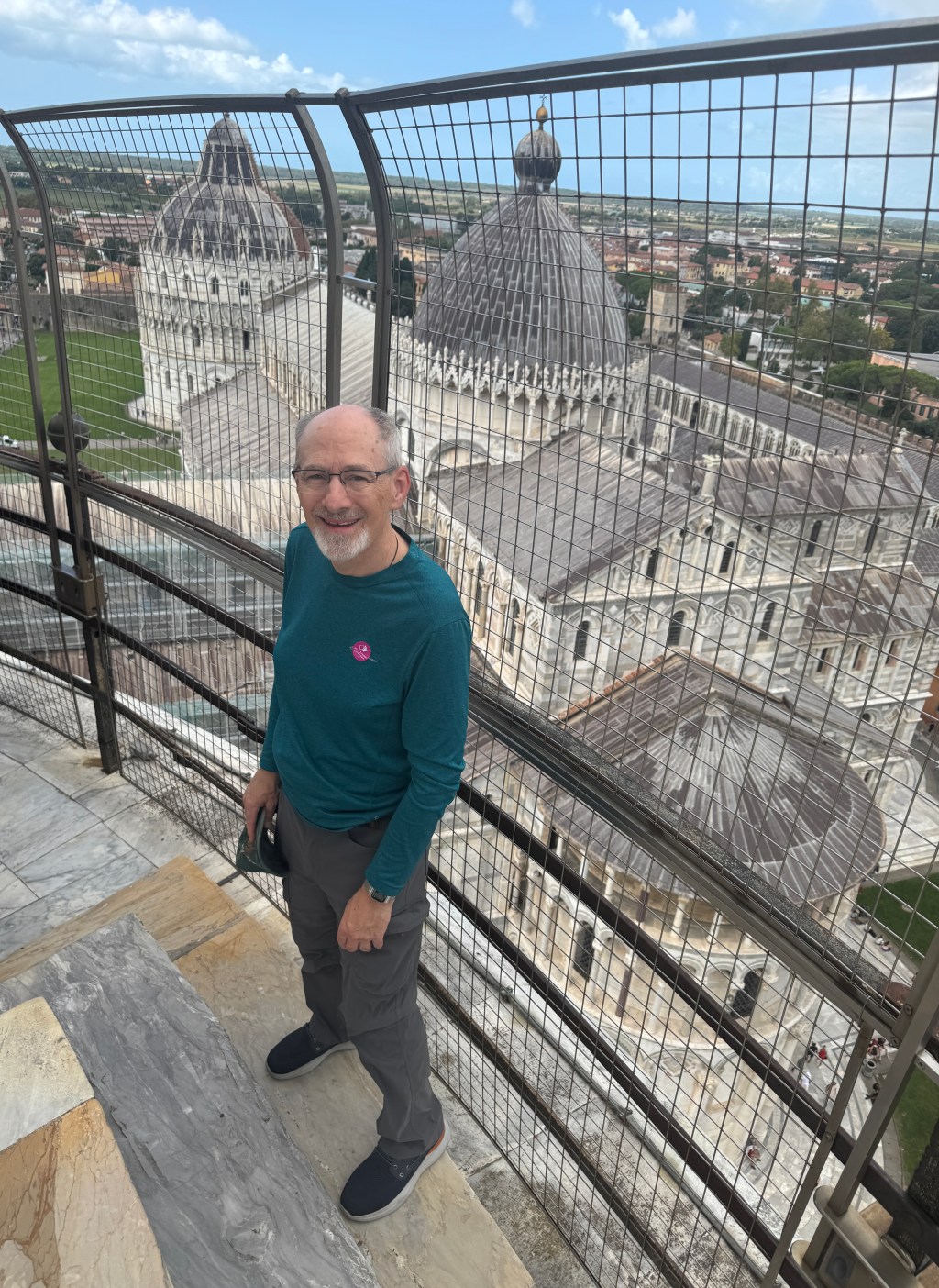
On the top platform of the Leaning Tower, I’m about 170 feet above the Pisa Cathedral (on the right) and the Baptistery (left). This is where Galileo dropped two differently weighted cannonballs in the late 1500s to show that their speed was independent of their mass – the scientific law of free fall.
-
Bell Tower
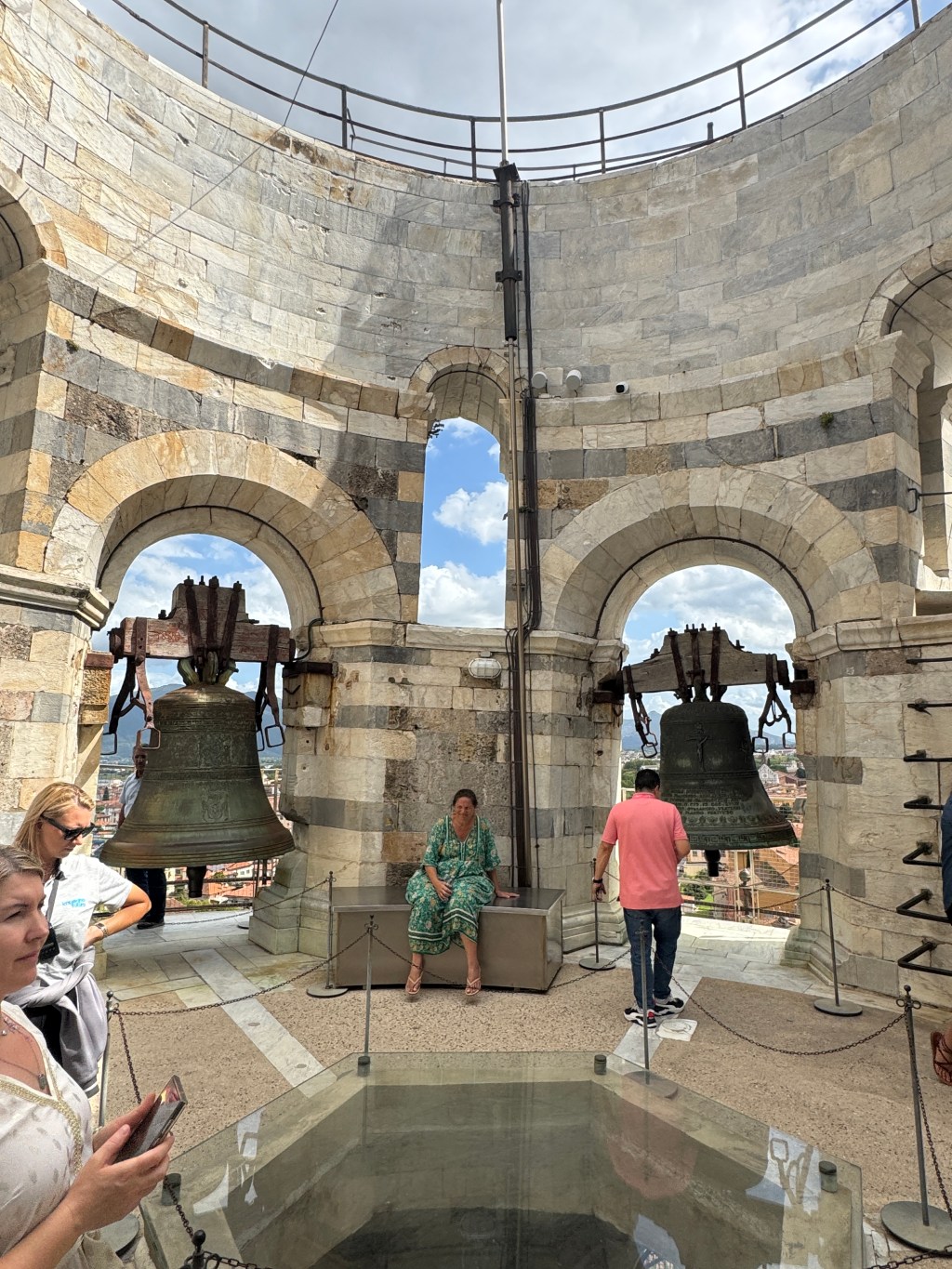
The Leaning Tower, the freestanding bell tower for the Pisa Cathedral, has an open platform on top for the bells, which can’t be rung for fear of resonance that could damage the tower. You don’t notice the tilt as much on top, even though one side is 2’ 8” higher than the other.
-
Slanted Stairs
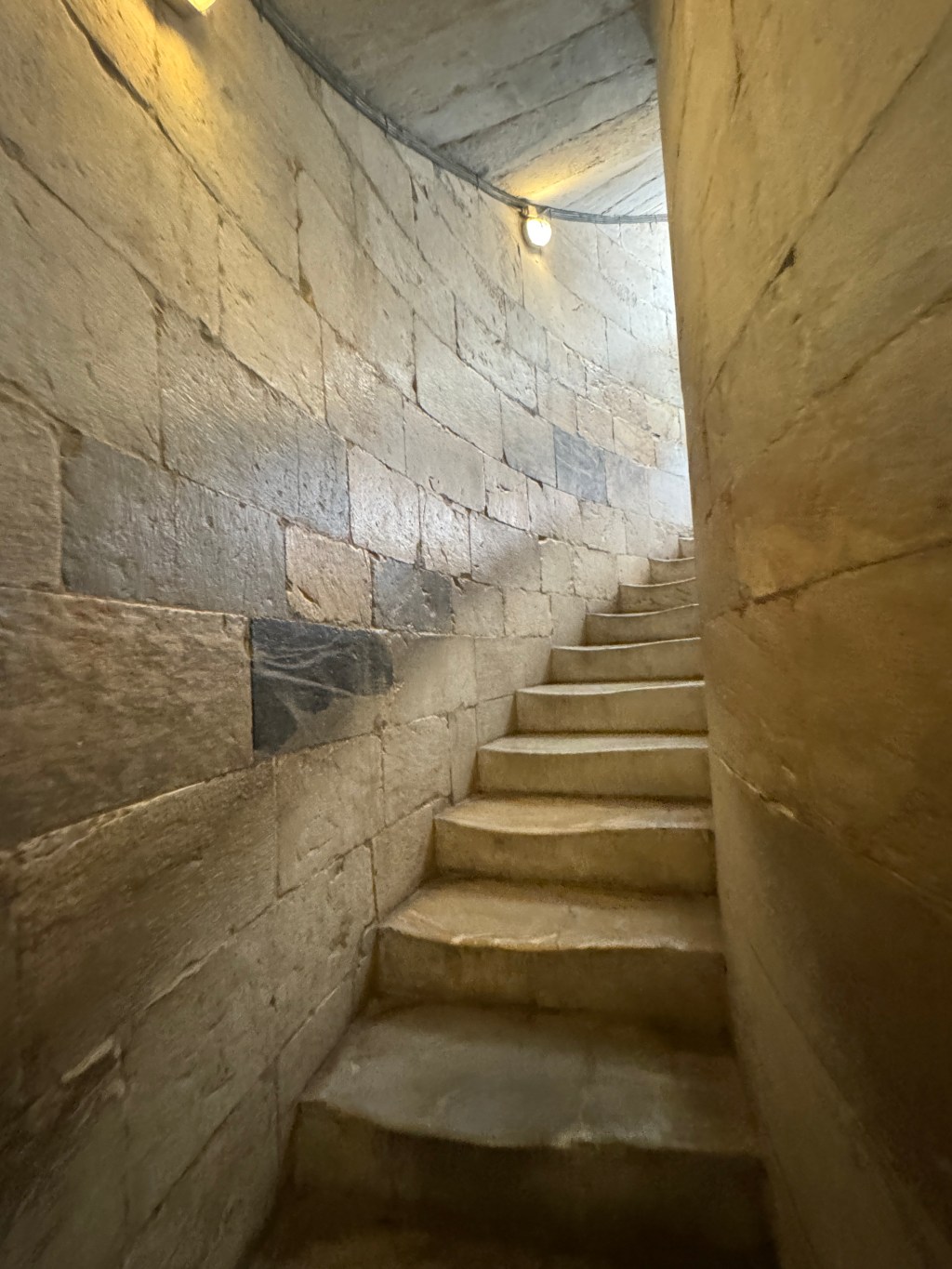
The circular stairs that lead up (and down) the Leaning Tower are well worn marble. As you climb, half of the time you are leaning into the wall and half of the time you are leaning out into the path of people going the opposite direction!
-
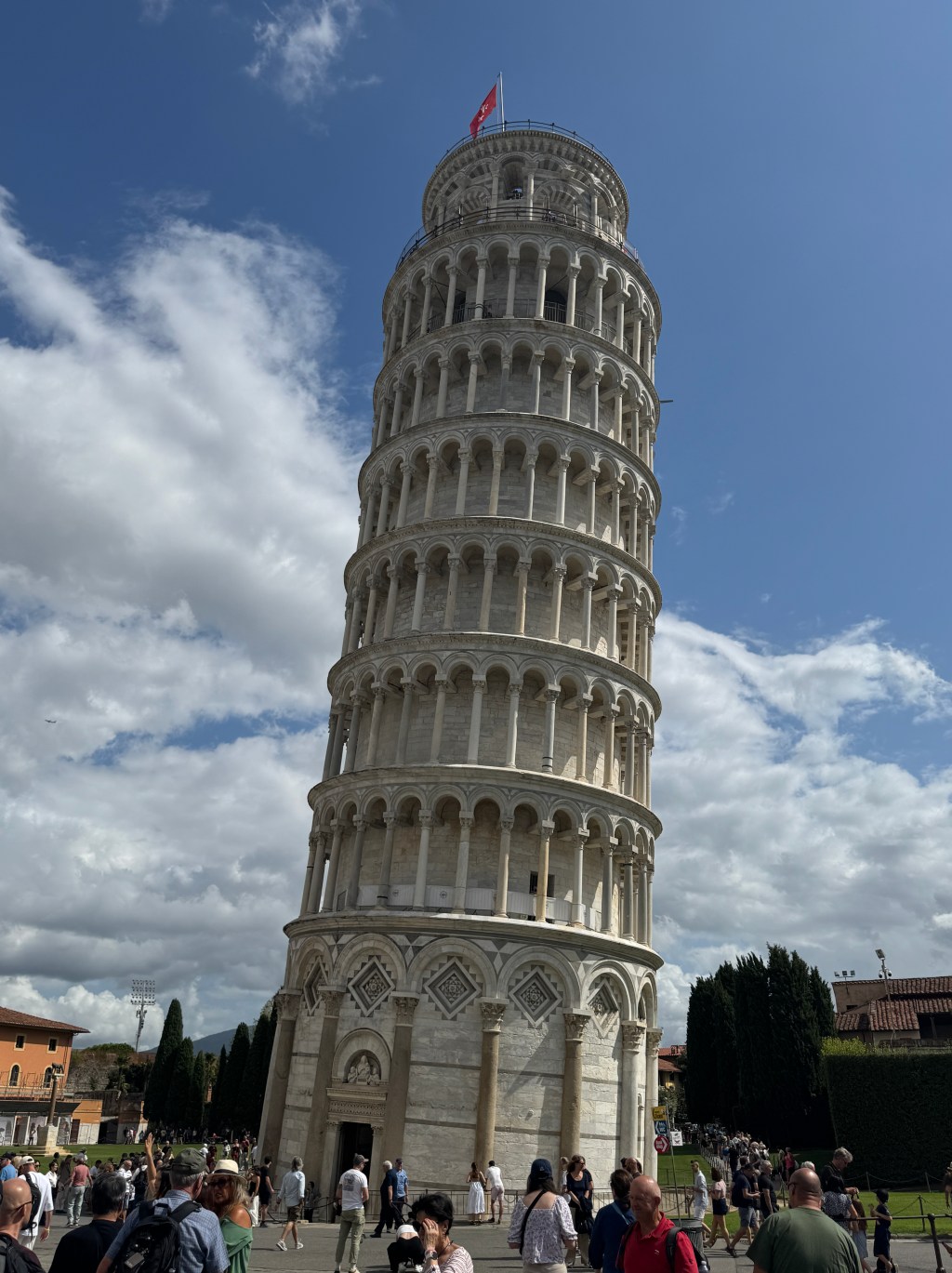
Leaning Tower
Unstable soil meant that the famous Leaning Tower started leaning even as it was being built; by 1990 it had grown to 5.5 degrees of tilt. After digging out 70 tons of dirt from under the higher side, the tower has stabilized at just under 4 degrees of tilt and visitors can climb it again.
-
Marble Floors
Pisa’s Cathedral has sections of marble inlaid floors that create wonderful geometric patterns from the 11th century.

-
Christ Enthroned
The luminous mosaic in the apse above the altar features Christ with Mary and St. John. It evokes the style of Byzantine and Norman churches, which the Pisans would have seen during their trading voyages to Sicily. It survived a fire in 1595 that damaged much of the cathedral.

-
Pisa Cathedral
Completed in 1092, Pisa’s striking cathedral mixes Romanesque and Islamic styles, including enormous granite columns taken from the mosque in Palermo, Sicily as spoils of war. The wooden ceiling adorned with gold leaf dates from the 17th century.

-
Pisa
Unlike crowded Florence, Pisa has an open square around its cathedral, with the Baptistery (foreground) and bell tower (far right) creating an inviting space known as the “Square of Miracles.” Pisa was a prominent maritime republic in the 10th to 13th centuries before its defeat by rival Genoa in 1284.

-
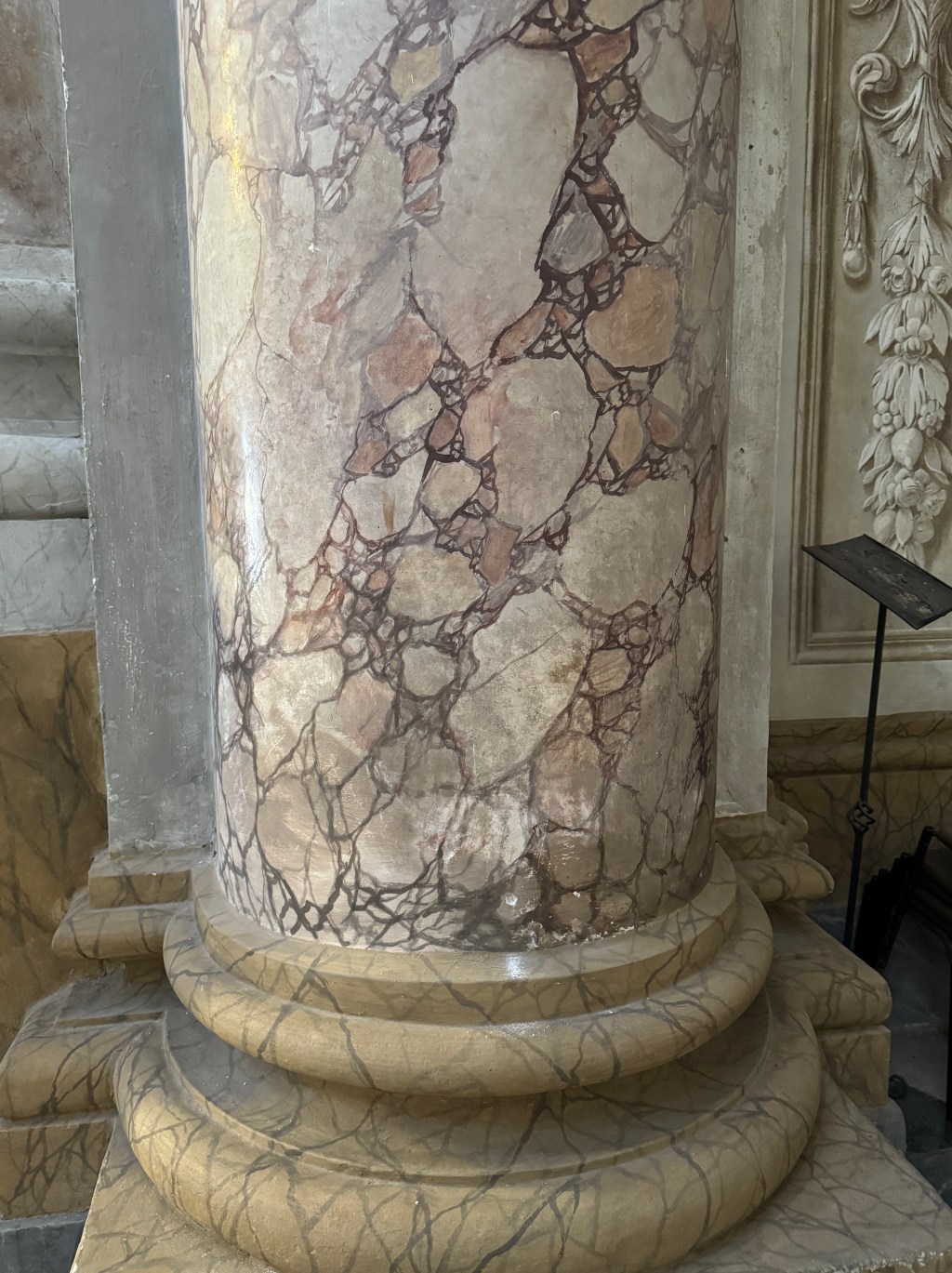
Fake Marble
Not being as rich as Florence or Pisa, Livorno’s churches had to economize. One way was to paint wooden columns to look like fine marble, as they did for the columns and walls in Santa Caterina church. From a distance, it looks pretty good.
-
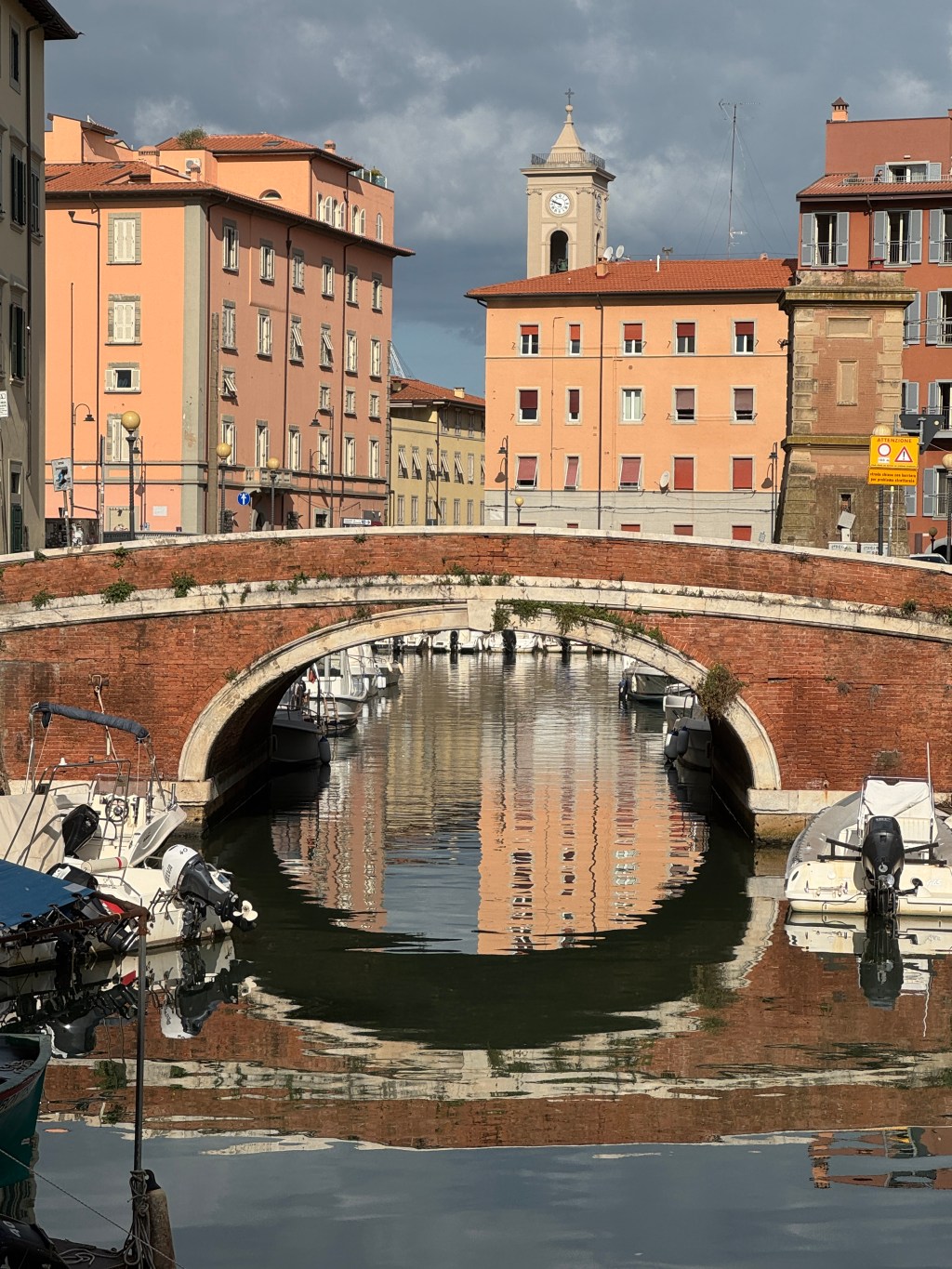
Livorno
The port for Florence, Livorno has lovely canals and an interest in past. The Medici rulers of Florence created the town from scratch, offering no taxes, religious toleration, and amnesty for any crimes to anyone that would move there. The current citizens are proud to be the sons and daughters of pirates!
-
Ponte Vecchio
The old bridge over the Arno River (Ponte Vecchio) was originally the home of butcher shops, who tossed their scraps into the river. But since the Medici rulers had to cross the foul-smelling bridge each day, they decided to replace the butchers with jewelers, who are still there today.

-
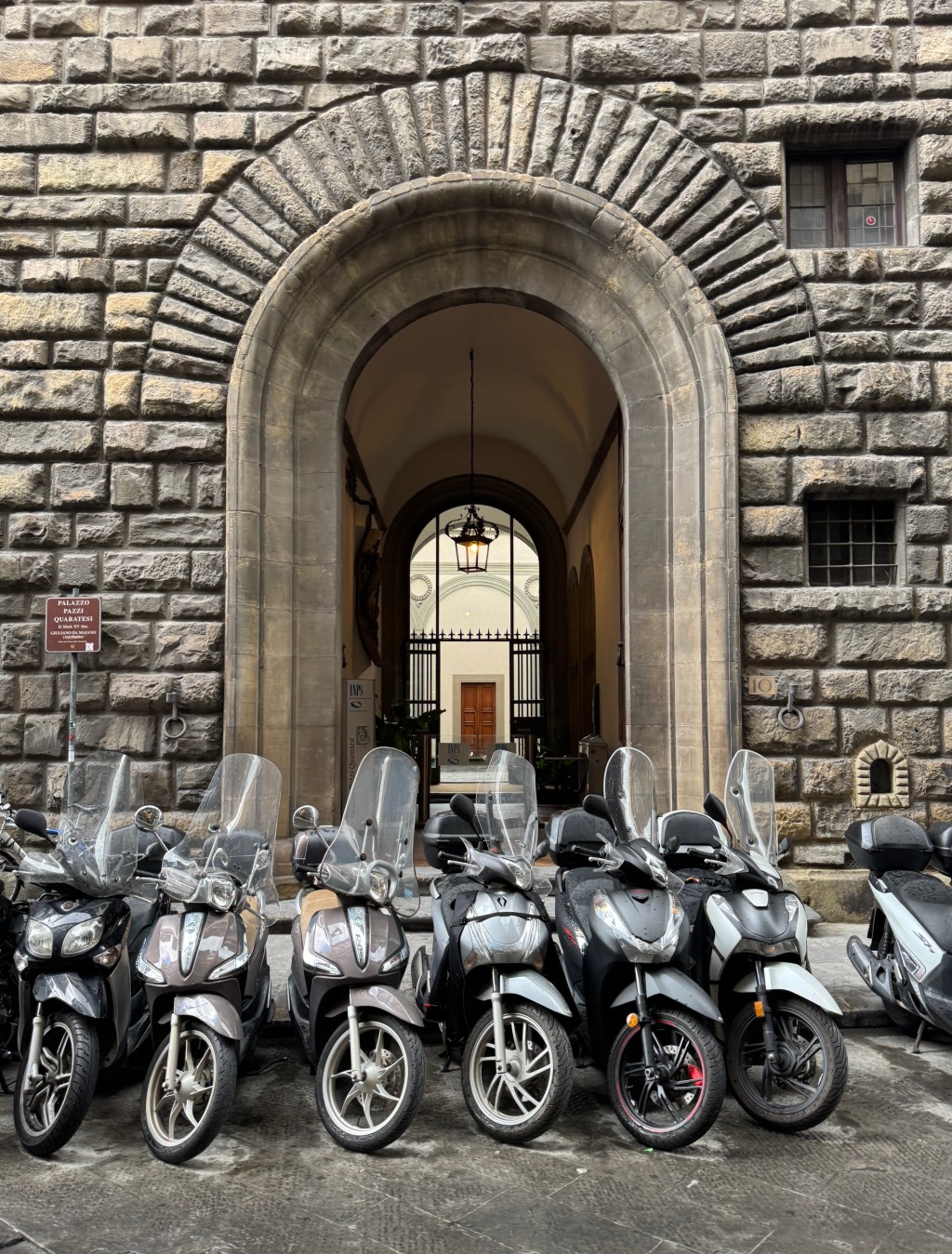
Archway
With narrow streets and lots of pedestrians, it’s easier to get around downtown Florence on a motorcycle. These bikes are parked in front of an old “palace” gateway with a central courtyard in the background. Amazing stonework!
-
Gates of Paradise
These gilded bronze doors on the Florence Baptistery were created by Lorenzo Ghiberti in the 1400s. Michelangelo reportedly called these panels, depicting Old Testament scenes, the “Gates of Paradise.” (Like other outdoor artworks, the originals are in a nearby museum to protect them from pigeons and acid rain.)

-
Duomo
The facades of the Duomo Cathedral and neighboring bell tower are rectangles of white, green and pink marble. It’s so big that it’s difficult to see more than just a part of it in the relatively small open spaces around one of the largest churches in the world.

-
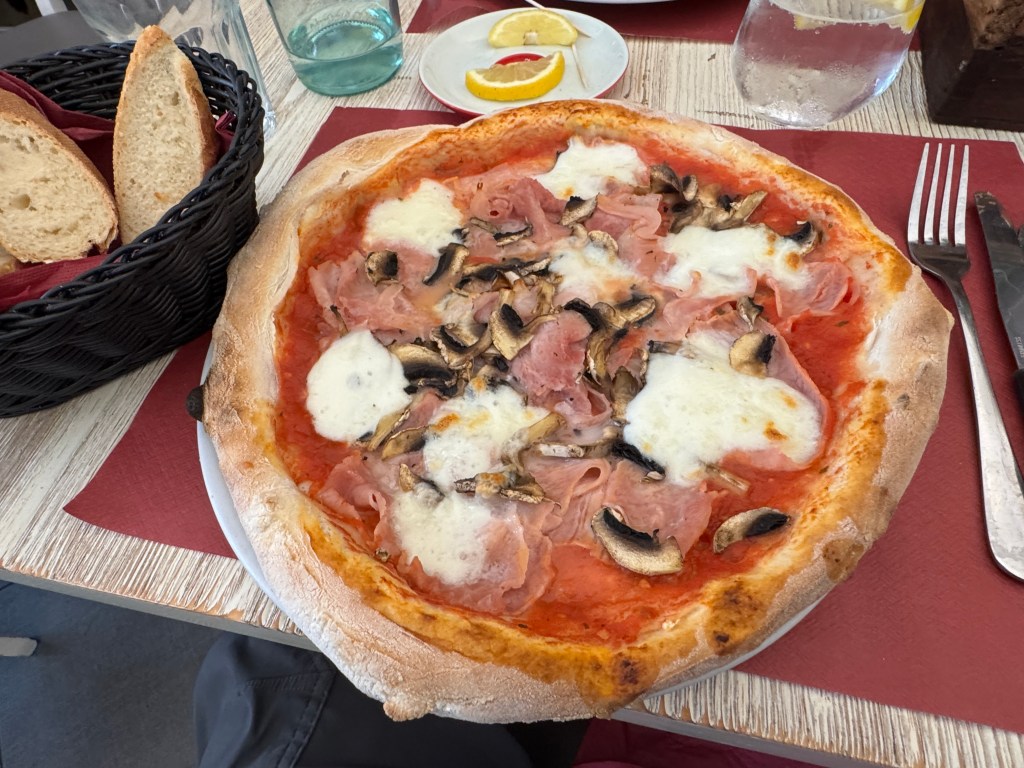
Pizza
Walking through Florence, we found a restaurant that was popular with both locals and visitors. I ordered a pizza with mozzarella, prosciutto and mushrooms, and this was the delicious result. Hungry?
-
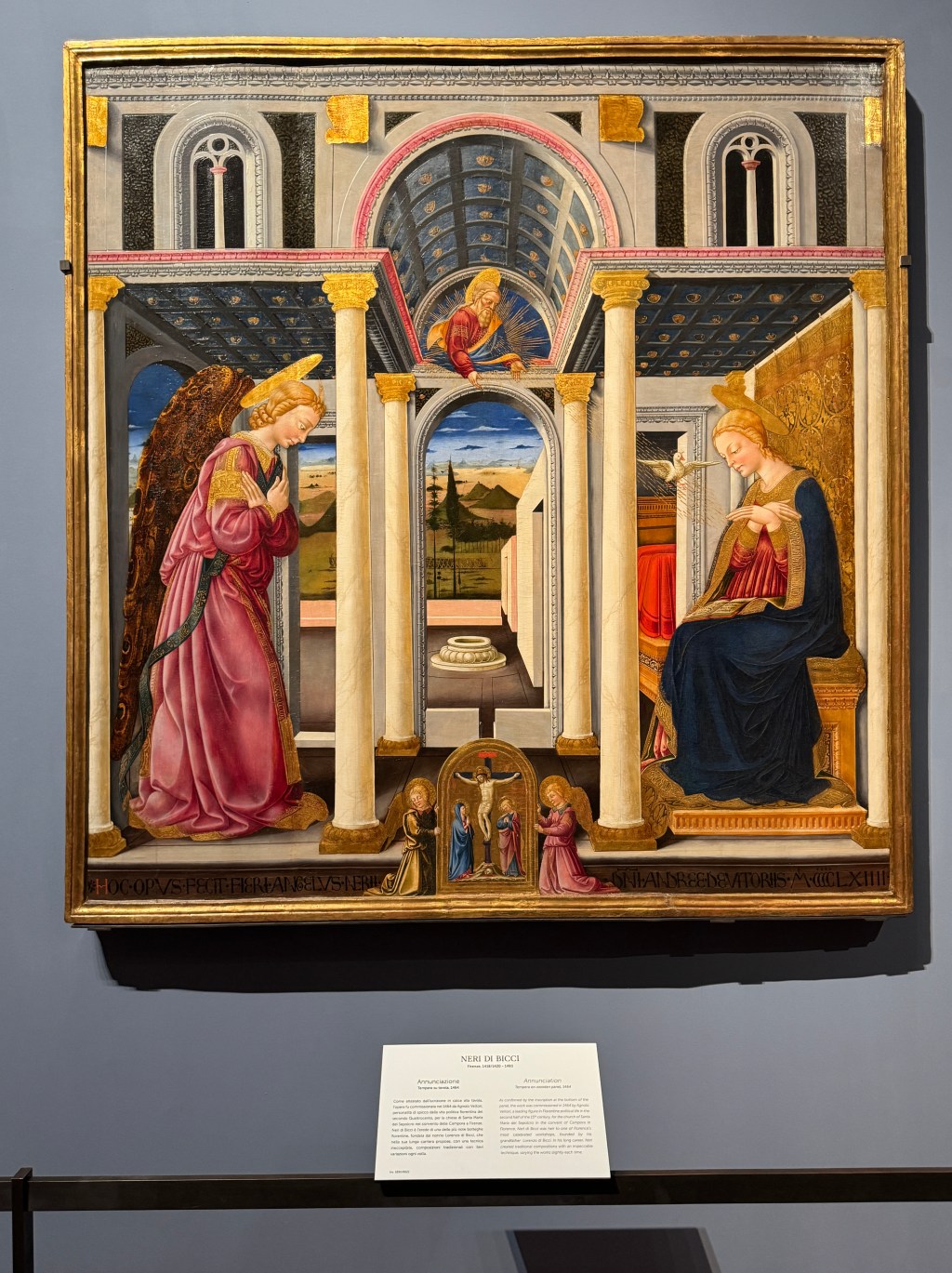
Annunciation
This 1464 painting by Neri di Bicci in the Accademia Gallery has the classic geometry of Renaissance artwork, setting the Angel Gabriel’s visit to Mary in a Greek temple. Follow the lines of the ceilings to find the perspective’s vanishing point in the painting’s center.
-
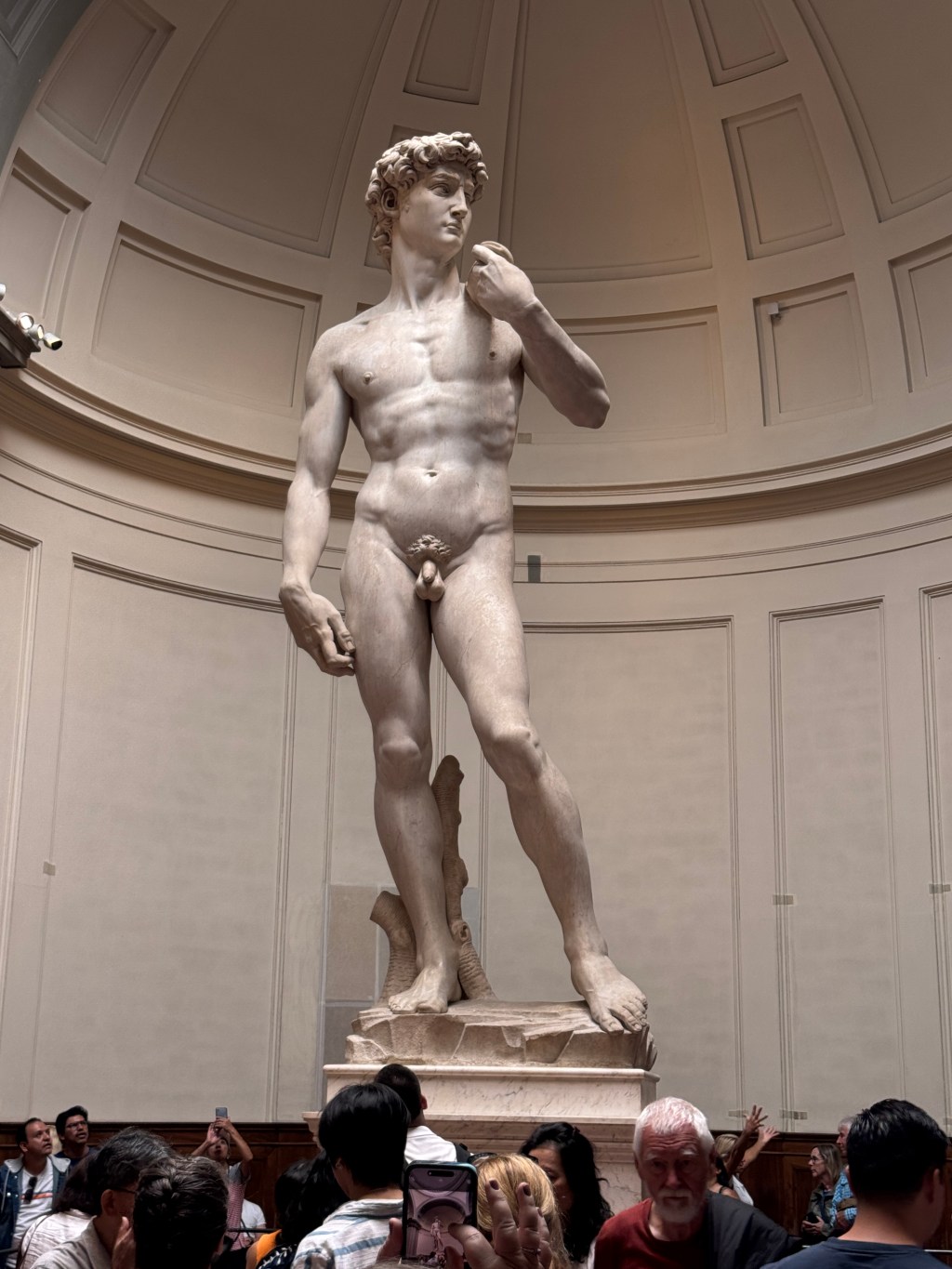
David
No visit to Florence, Italy is complete without seeing Michelangelo’s David. At 19 feet tall, he stands above the swirling crowd just as he rises above every other Renaissance sculpture as both a symbol of the Florentine Republic and of human potential.
 Words Are Inadequate