Malta
-
Malta Harbor
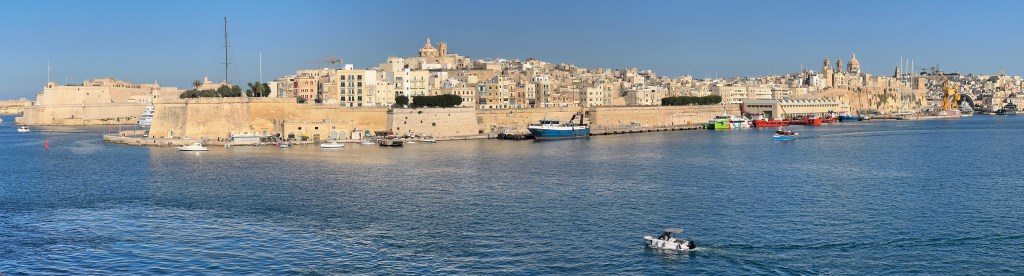
Malta’s Grand Harbor was controlled by the Knights of Malta from 1530 to 1798, when a French fleet under Napoleon occupied the island. They were blockaded by the British Royal Fleet in 1800, which made Malta a colony and a major naval base. These days the harbor hosts more cruise ships than warships.
-
Range Rover
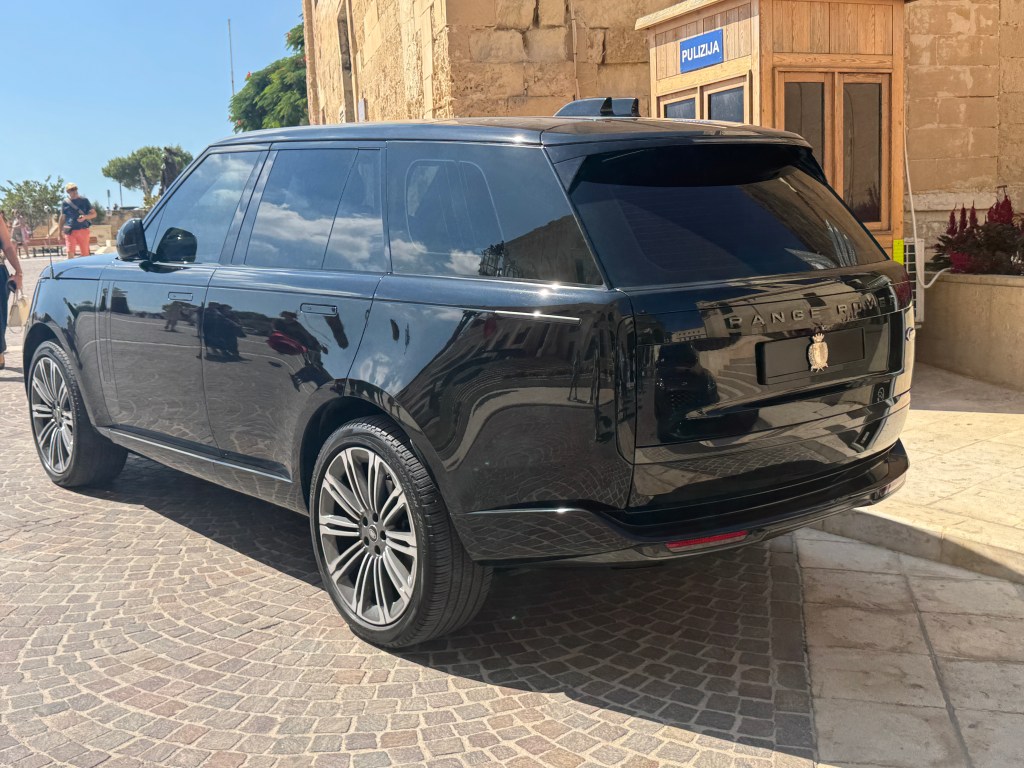
This looks seems a typical SUV on a street in Valletta, but look at where the license plate should be. That’s the coat of arms for Malta. You know it’s a small country when the Prime Minister’s car is parked out on a public street.
-
St. Jerome
The Italian artist Caravaggio created this painting of “St. Jerome Writing,” who is shown translating the Bible into Latin. Displayed in the cathedral in Valletta, the dramatic lighting and the angles of Jerome’s arms draw attention to the main theme of the work – his writing hand.

-
Grand Master
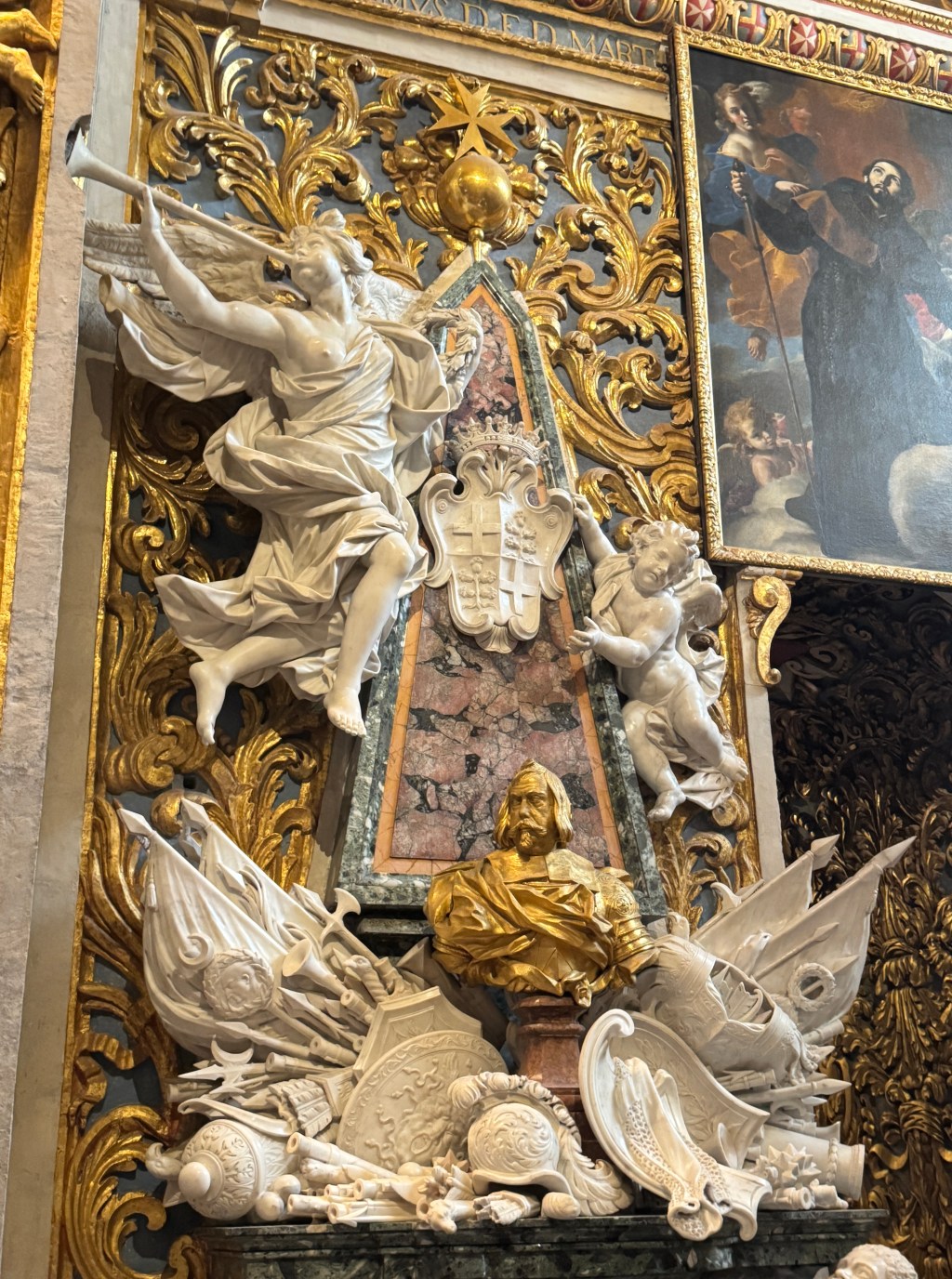
Knights on Malta were led by a Grand Master from each of the eight lands of Western Europe they came from. Many of these leaders are memorialized in St. John’s by chapels like this. Note the military paraphernalia around the Grand Master’s bust, and the angel’s trumpet that sticks into the wall at left.
-
Golden Interior
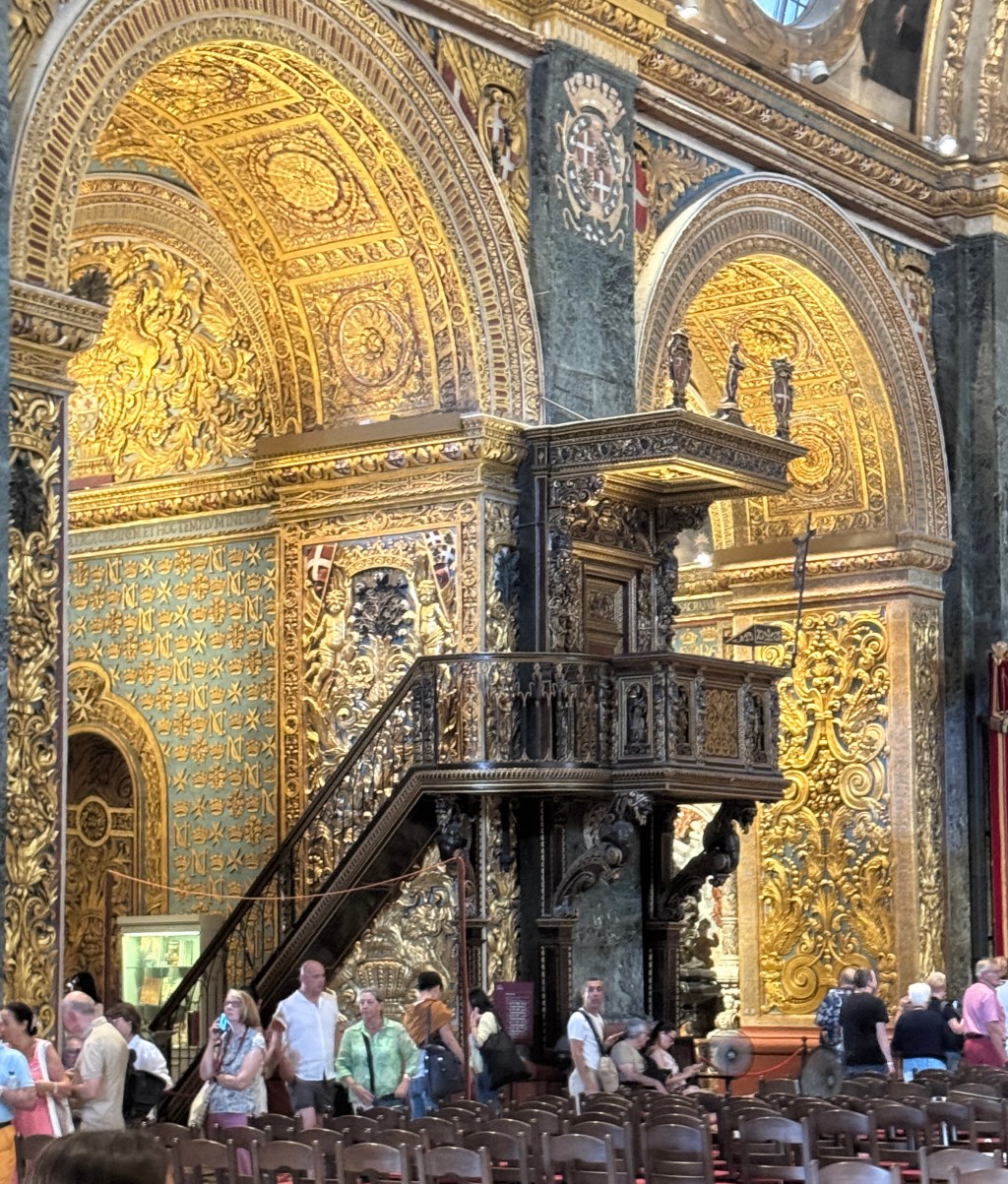
Most of the highly decorated interior of St. John’s Co-Cathedral in Valletta is covered with gold in a glowing tribute to Baroque art. Built after the Knights of Malta held off the Ottoman Armada in the Great Seige of 1565, the floor is covered with over 400 marble inlaid tombstones of distinguished knights.
-
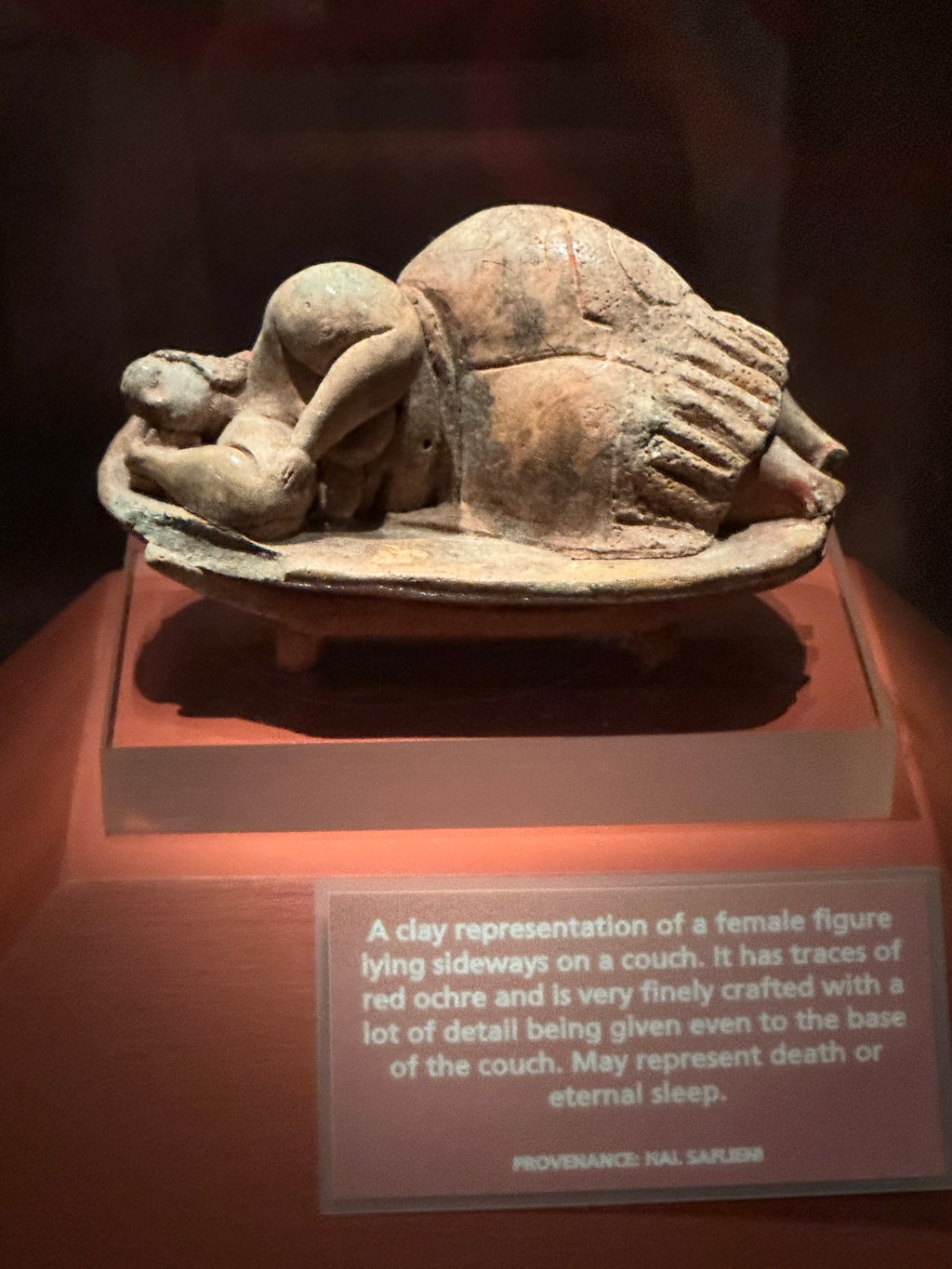
Sleeping Lady
This beautiful clay sculpture of a lady sleeping on her side on a couch or bed was found in a 5,000-year-old burial chamber under one of the megalithic stone structures on Malta. She may represent the eternal sleep of death, but she’s also become the symbol of prehistoric Malta.
-
Megalithic Art
These large cut and carved stones once decorated the walls or served as altars in one of the megalithic temples on Malta. The pinkish photo at the upper right shows the stones next to it in their original position. They were moved to the Archaeology Museum to protect them from weathering.

-
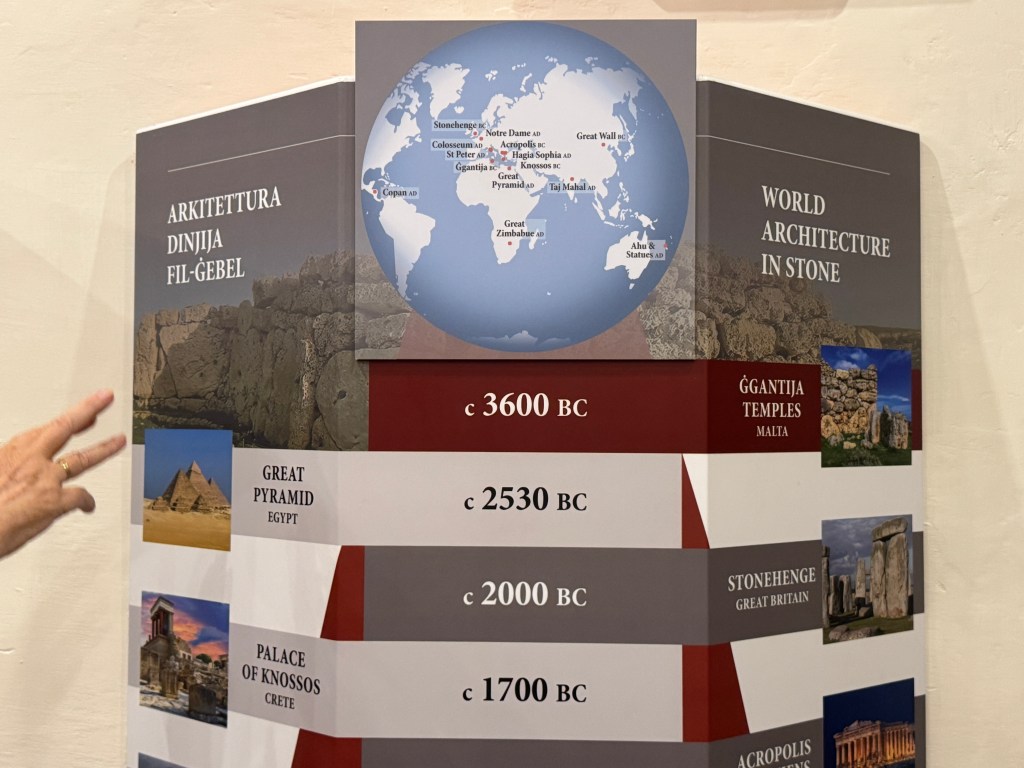
Stone Temples
A thousand years before the Egyptians built the Great Pyramid, the inhabitants of Malta were constructing the first large free-standing stone buildings in the world. If you haven’t heard of the Ggantija Temples, well neither had I, but the evidence is in the National Museum of Archaeology.
-
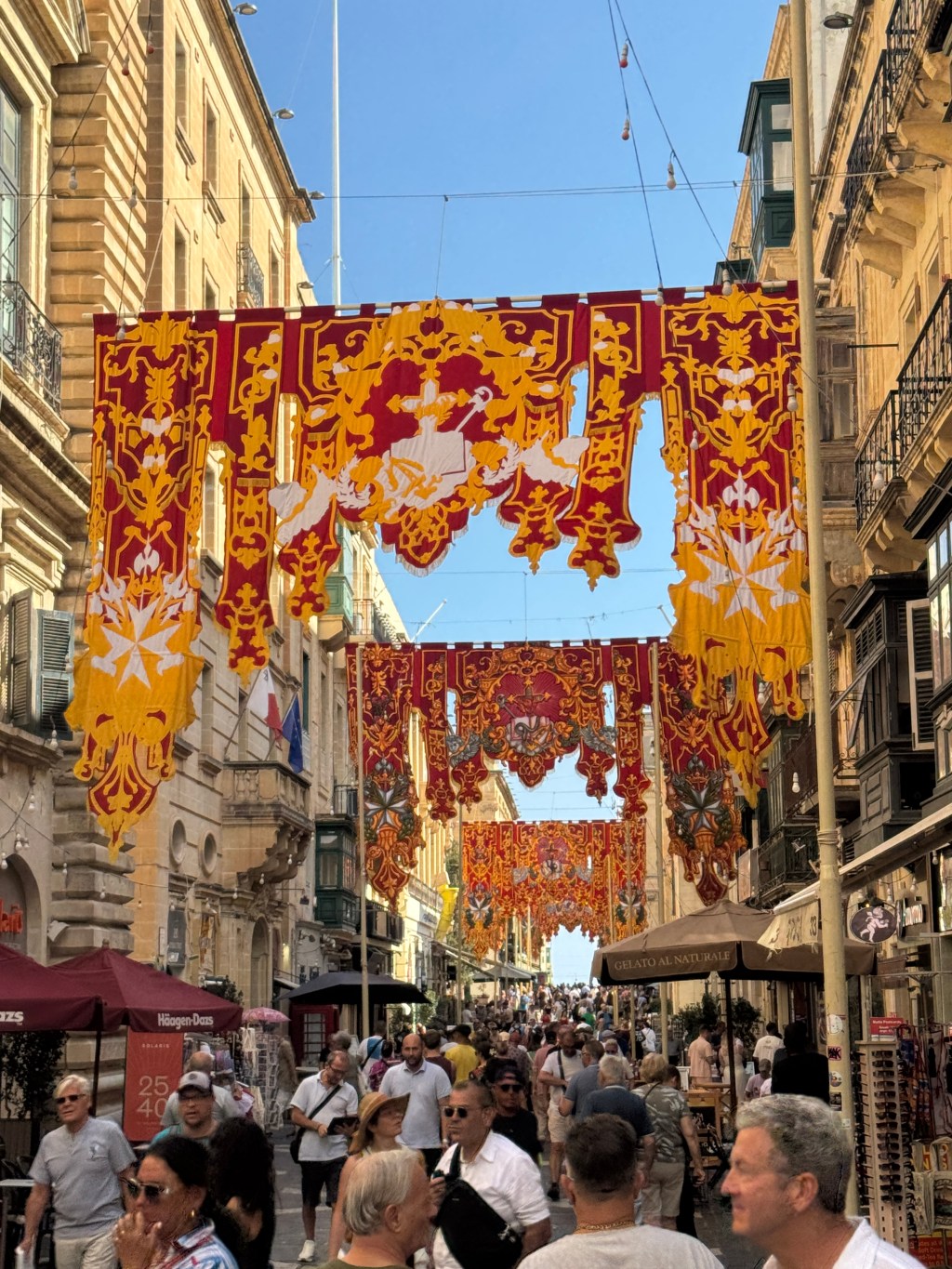
Festival Banners
Our visit to Malta coincided with a week-long festival dedicated to Mary as “Our Lady of Perpetual Sorrow,” although the colorful banners strung across the main street inspired more joy than sorrow. Each month has a different festival with different banners in good medieval European fashion.
-
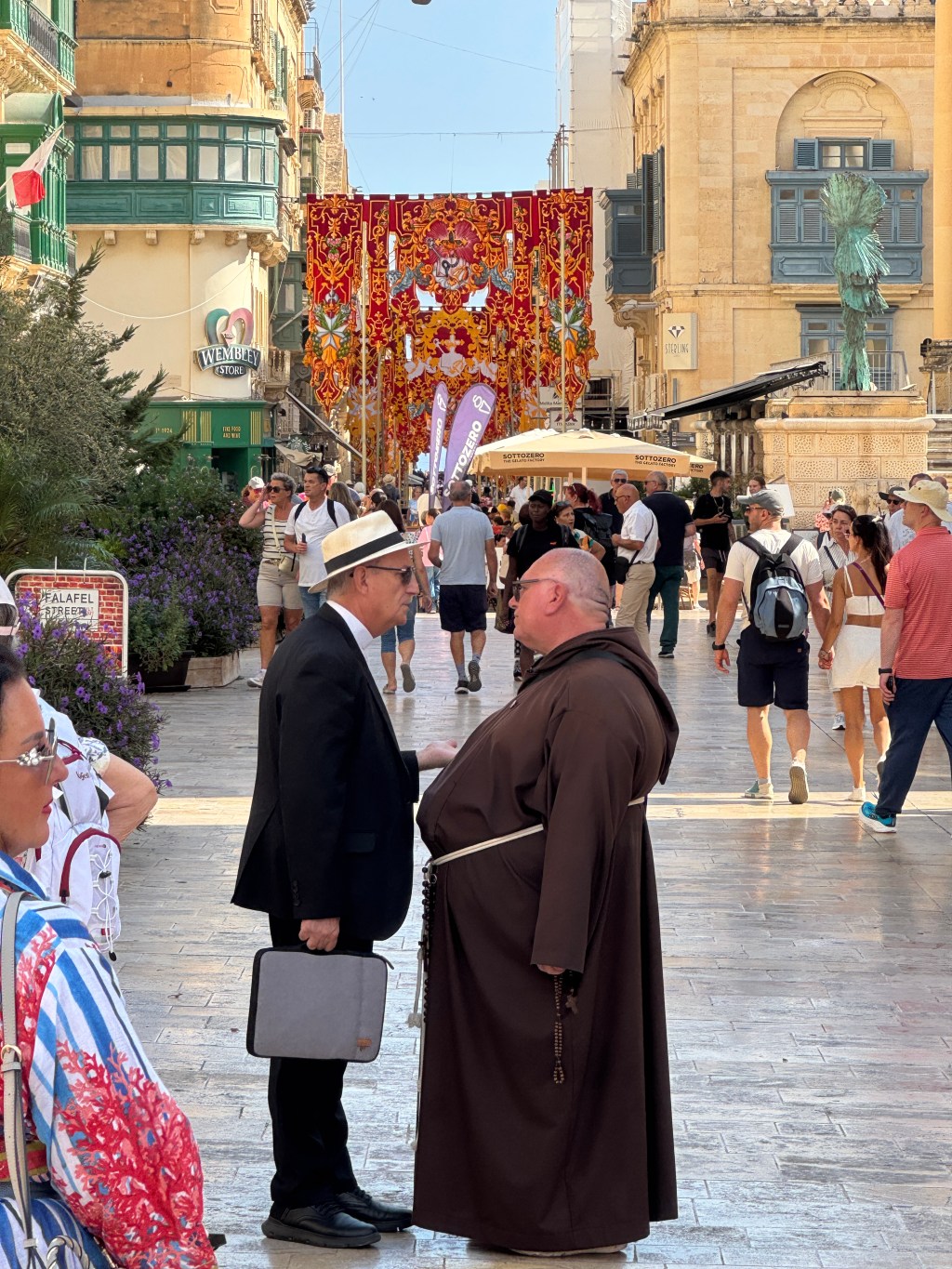
Church and State
Here’s a photo I took in the main pedestrian-only street of Valletta, the capital of Malta. You know it’s a small country when “church” and “state” can get together to talk things out in the middle of a crowd of tourists right outside the Parliament building.
-
Crusader Memorials
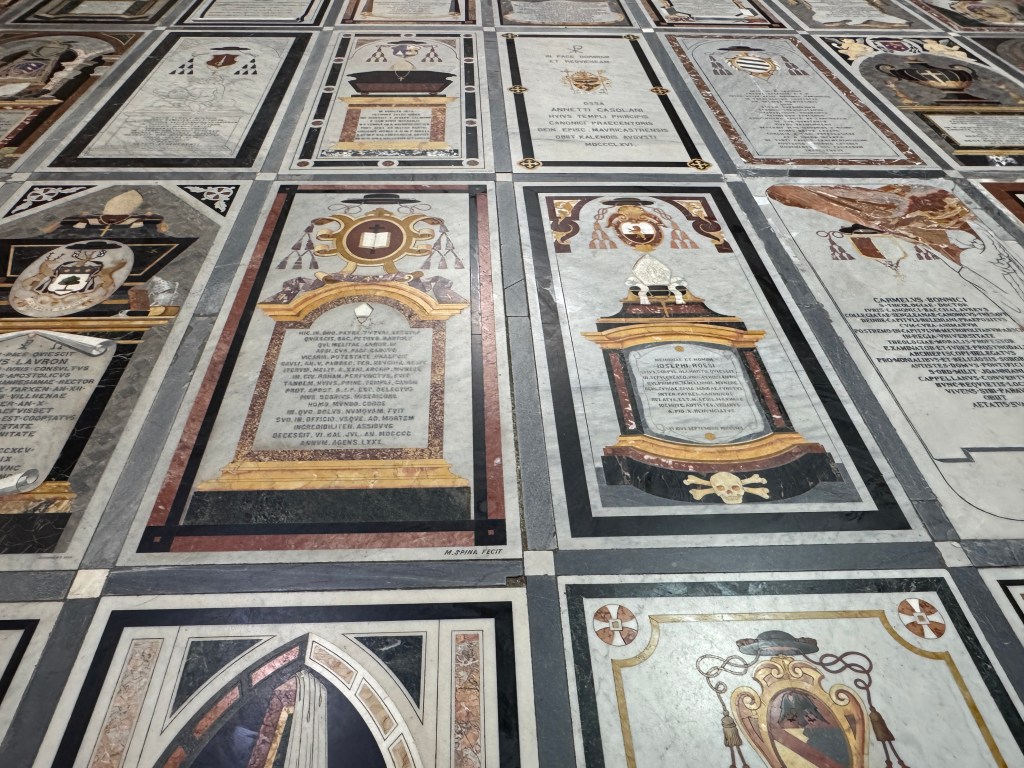
The floor of the Mdina Cathedral is covered with tombstones over the graves of some of the original Crusaders and their descendants. The inlaid marble designs honor each person’s achievements, and the patterns identify some of their activities or offices.
-
Mdina Cathedral
Stepping into the Mdina Cathedral, we found a worship service in progress. Rose-colored marble columns hold up a dome that draws in light for the artwork and congregants below.

-
Doorknocker
Many of the doors in Mdina feature dramatic metal doorknockers. This one includes a family crest and the Latin phrase for “Not unless through hardship” meaning success can only be achieved through hard work or difficulty.

-
Warm Sandstone
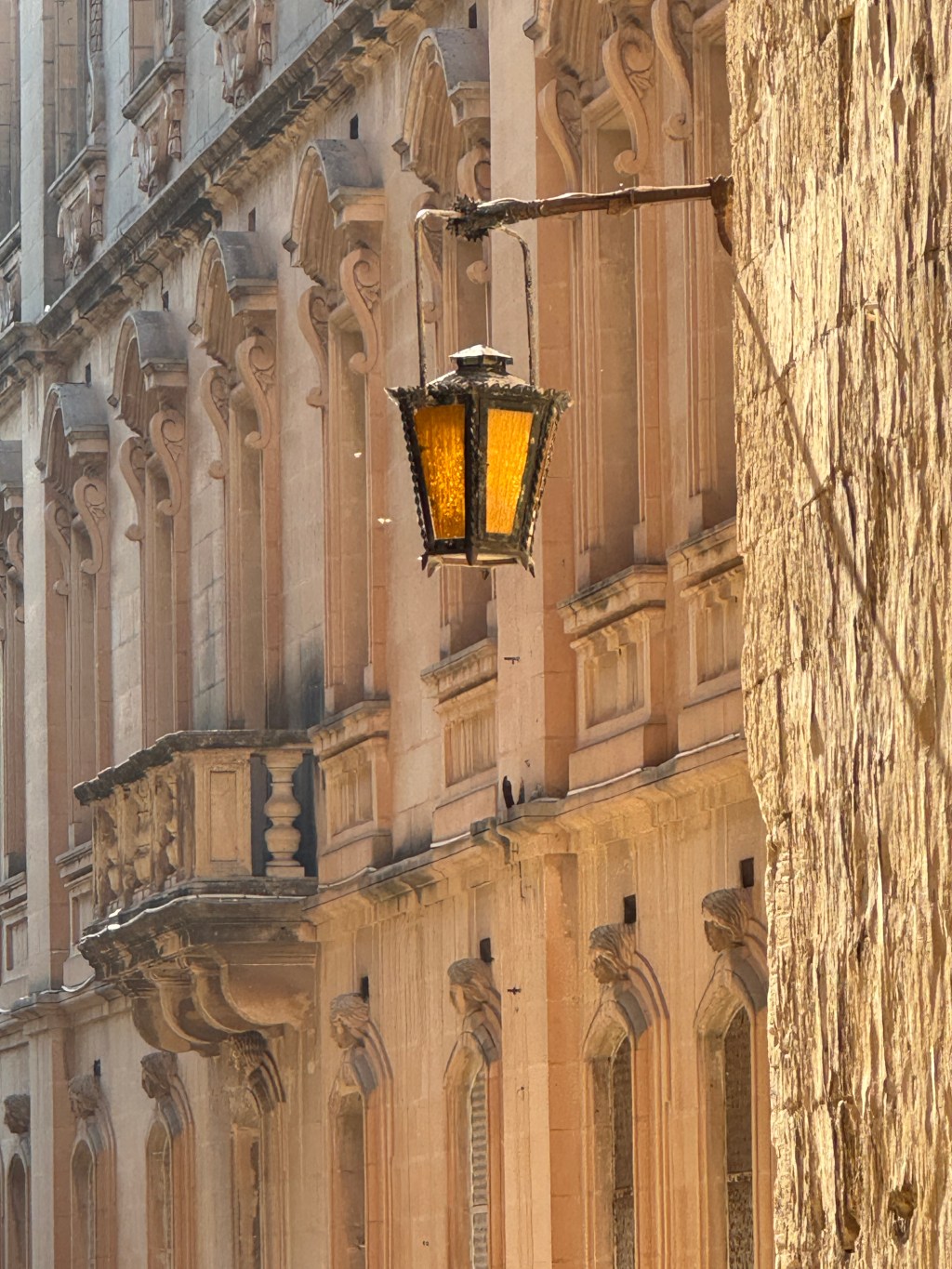
The buildings in Mdina, and much of the rest of Malta, are made of honey-colored sandstone that glows when the sun reaches them in the narrow streets of the old capital city.
-
Hush
Tourists wandering through Mdina are reminded that 72 people live in the town, mostly descendants of Maltese noble families, and they appreciate you keeping your voices down.

-
Back Alley
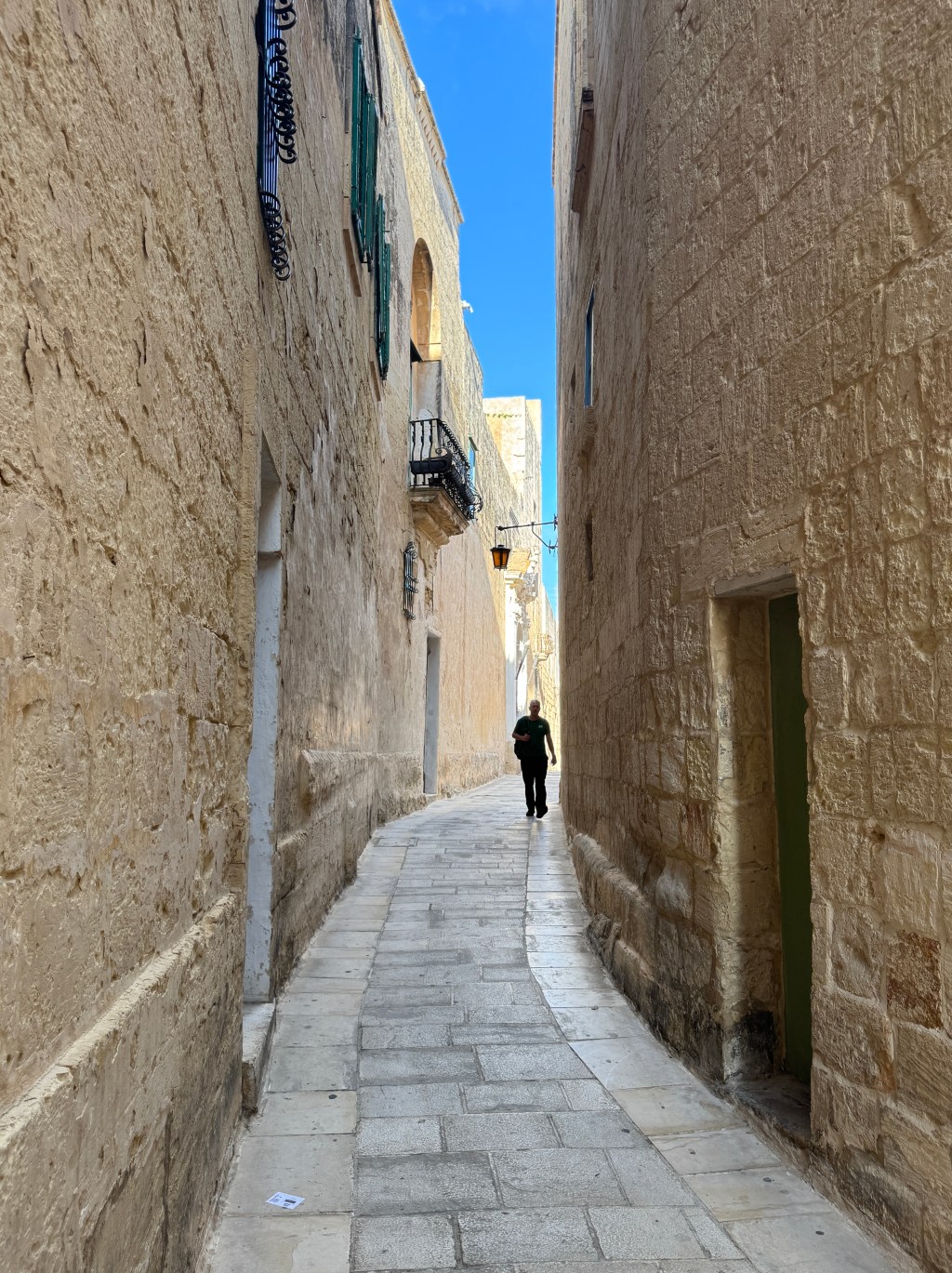
Mdina looks like a medieval movie set, and it has appeared in several films, but it’s a real town with occasional cars and (very small) trucks winding through the narrow stone streets.
-
Mdina Gate
This small passage is the main gate to enter the old capital city of Mdina. A medieval hilltop town with at least 30-foot walls on all sides, it survived the Great Siege of 1565 when the Knights of St. John successfully repulsed an Ottoman army and fleet.

-
Balconies
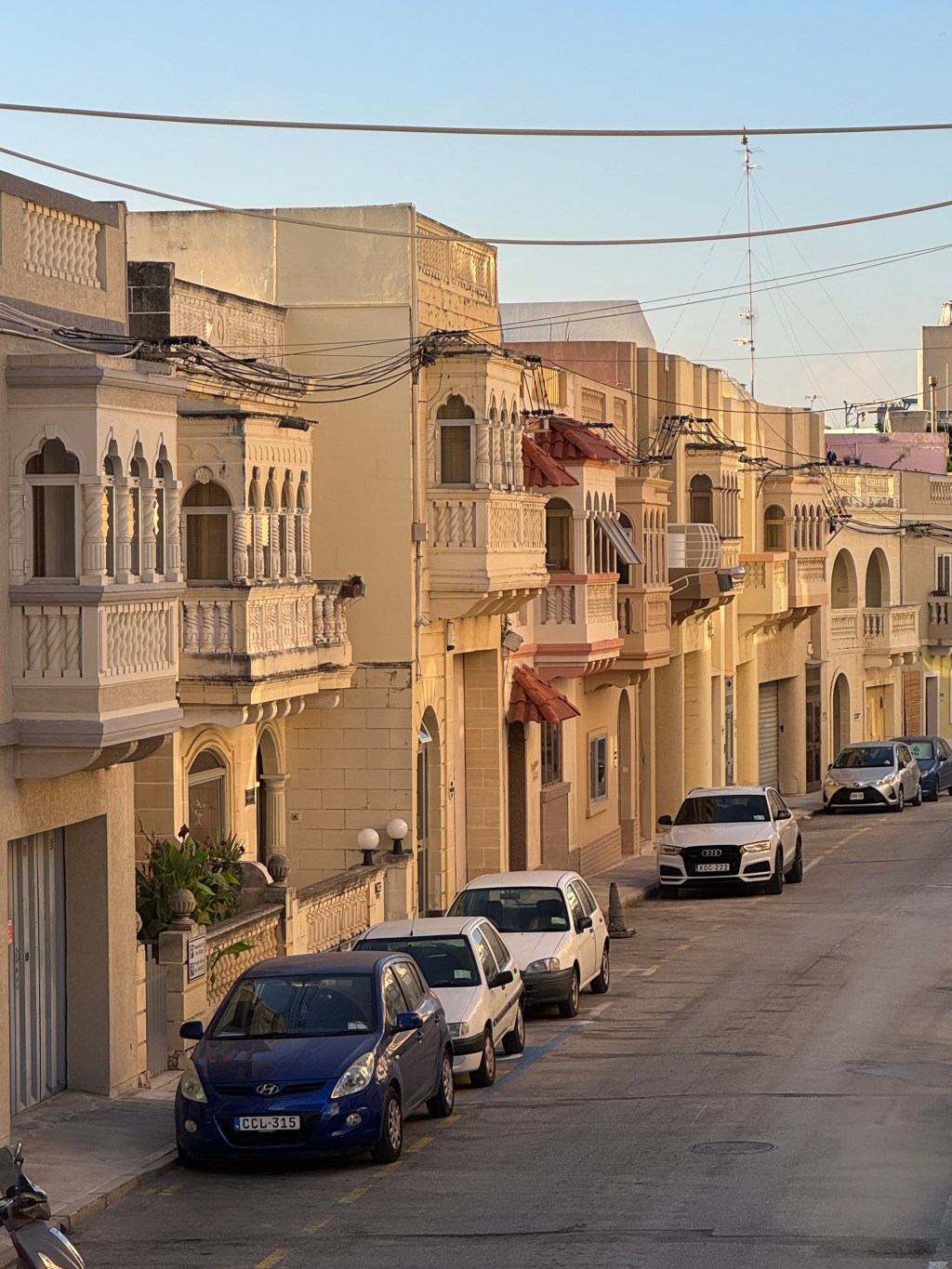
This block in one of the newer neighborhoods on Malta still shows the popularity of traditional enclosed balconies. These have been a distinctive feature of Maltese homes and apartment buildings since the island was controlled by Arabs from the 9th to the 12th centuries.
-
Maltese Layers
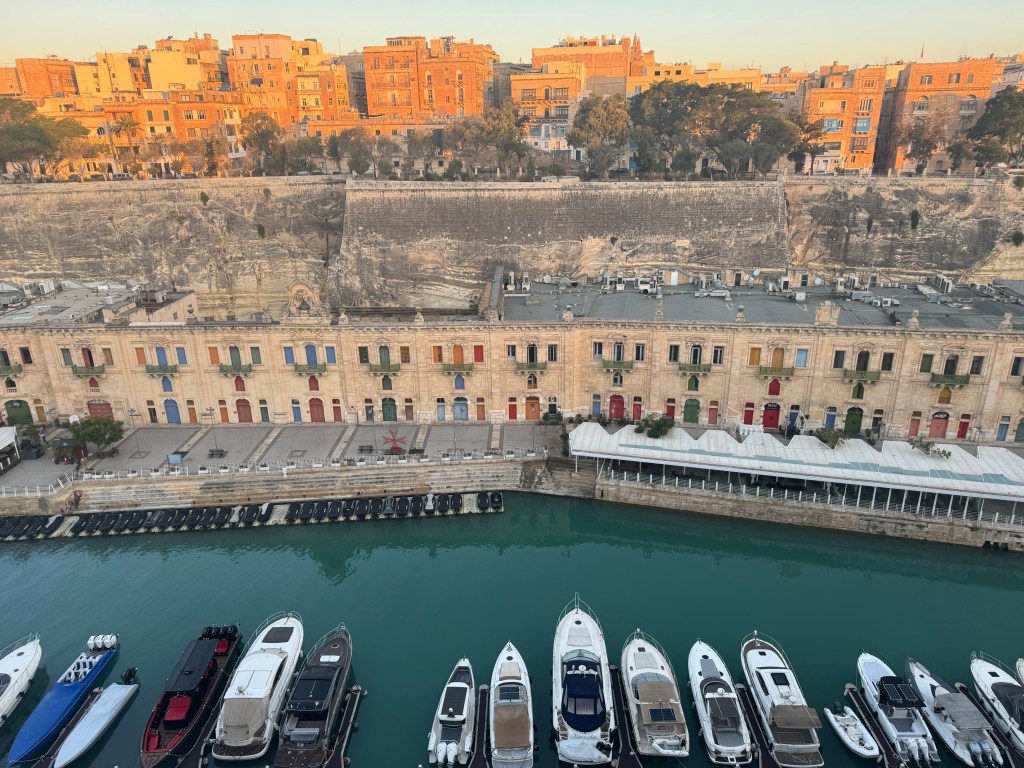
Looking from our ship, the harbor resembles a layer cake. Pleasure boats and jet skis line the waterfront dock, then a row of warehouses with colorful doors and windows, a steep cliff of honey-colored sandstone, and the buildings of the capital city Valletta built of that same sandstone glow in the morning sun.
-
Maltese Sunrise
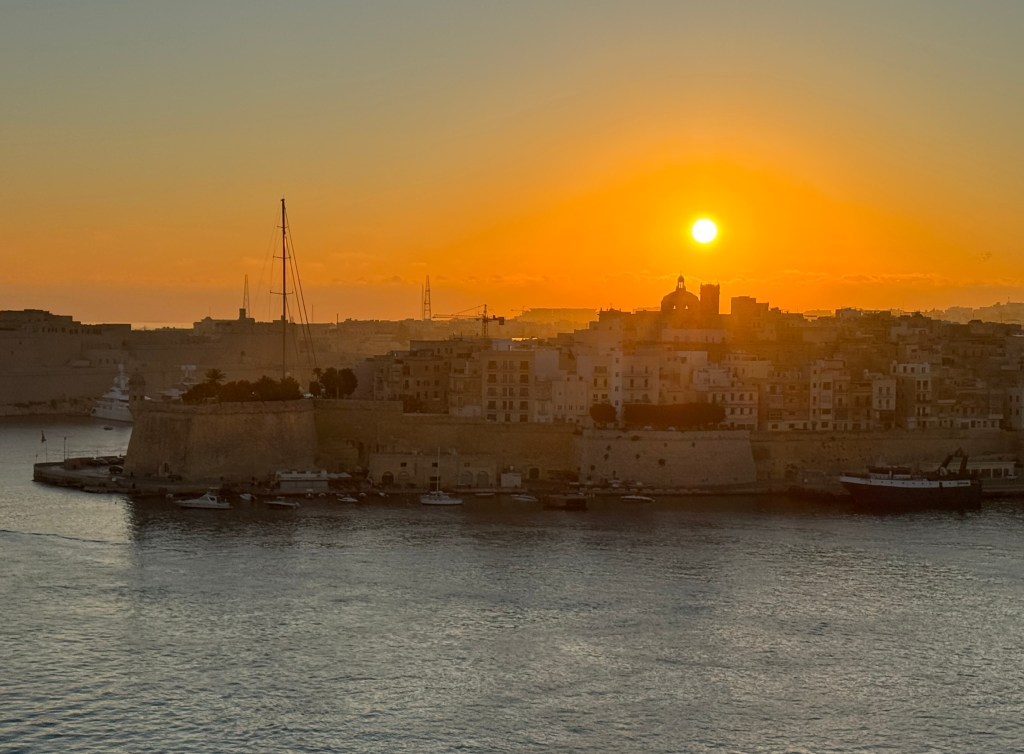
Our ship arrived at the island nation of Malta as the sun was rising over the jumble of historic buildings along its harbor. Malta boasts the largest natural harbor in the western Mediterranean, and it doesn’t even have a major river flowing into it.
 Words Are Inadequate