Mediterranean Cruise
-
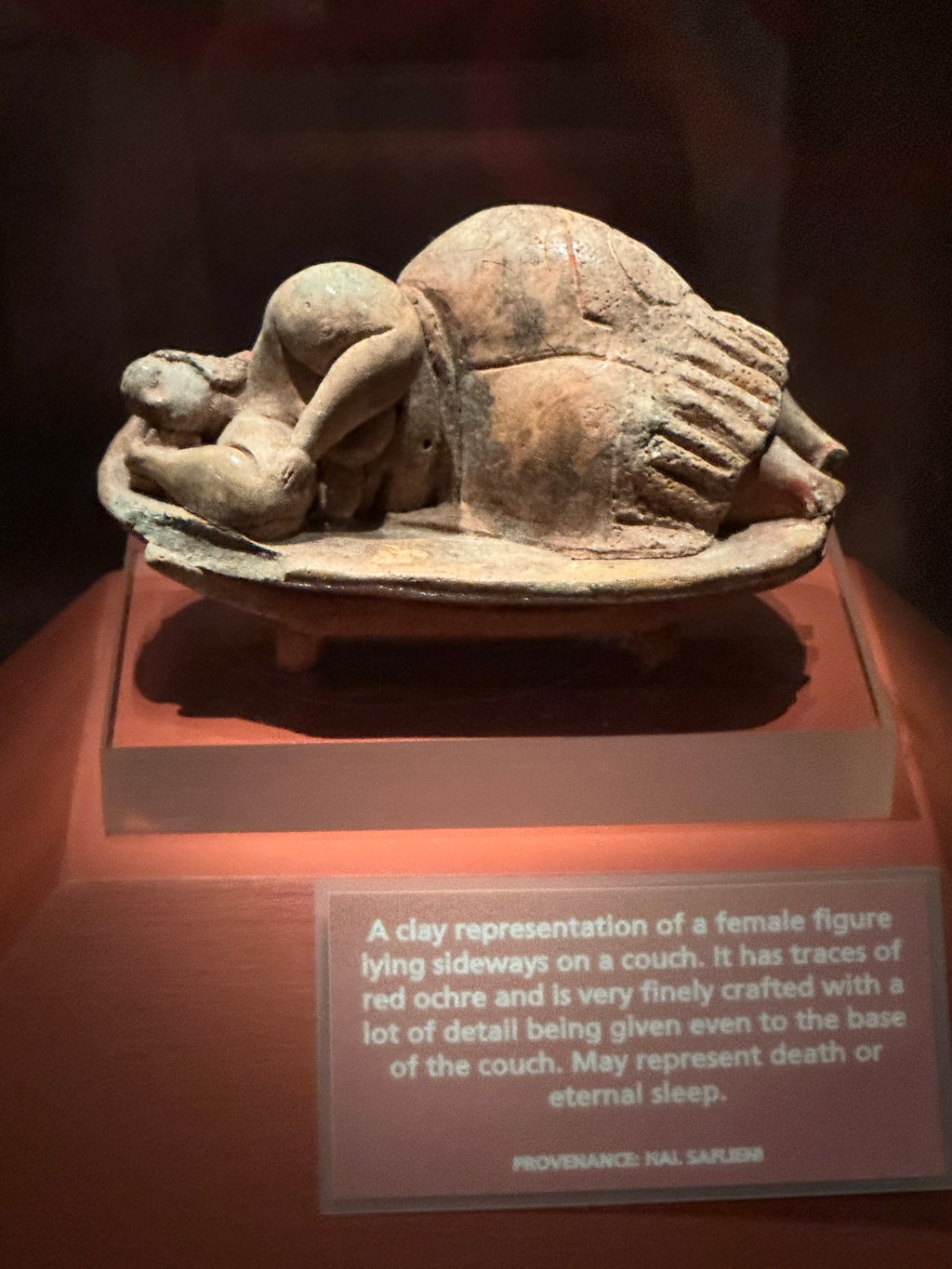
Sleeping Lady
This beautiful clay sculpture of a lady sleeping on her side on a couch or bed was found in a 5,000-year-old burial chamber under one of the megalithic stone structures on Malta. She may represent the eternal sleep of death, but she’s also become the symbol of prehistoric Malta.
-
Megalithic Art
These large cut and carved stones once decorated the walls or served as altars in one of the megalithic temples on Malta. The pinkish photo at the upper right shows the stones next to it in their original position. They were moved to the Archaeology Museum to protect them from weathering.

-
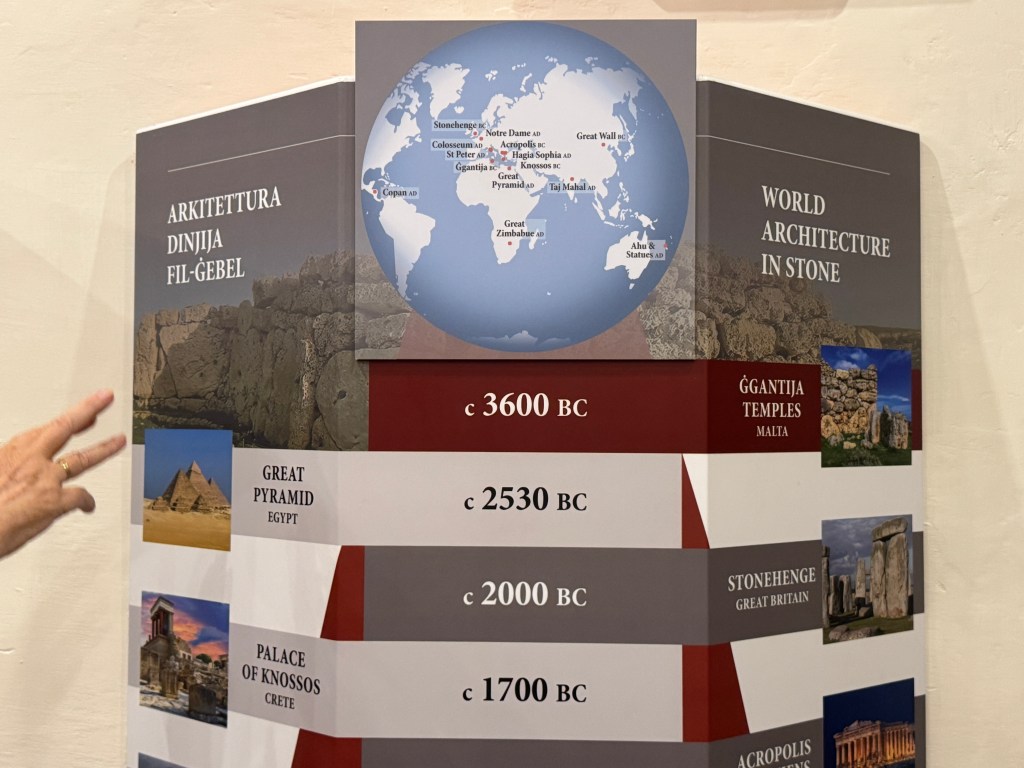
Stone Temples
A thousand years before the Egyptians built the Great Pyramid, the inhabitants of Malta were constructing the first large free-standing stone buildings in the world. If you haven’t heard of the Ggantija Temples, well neither had I, but the evidence is in the National Museum of Archaeology.
-
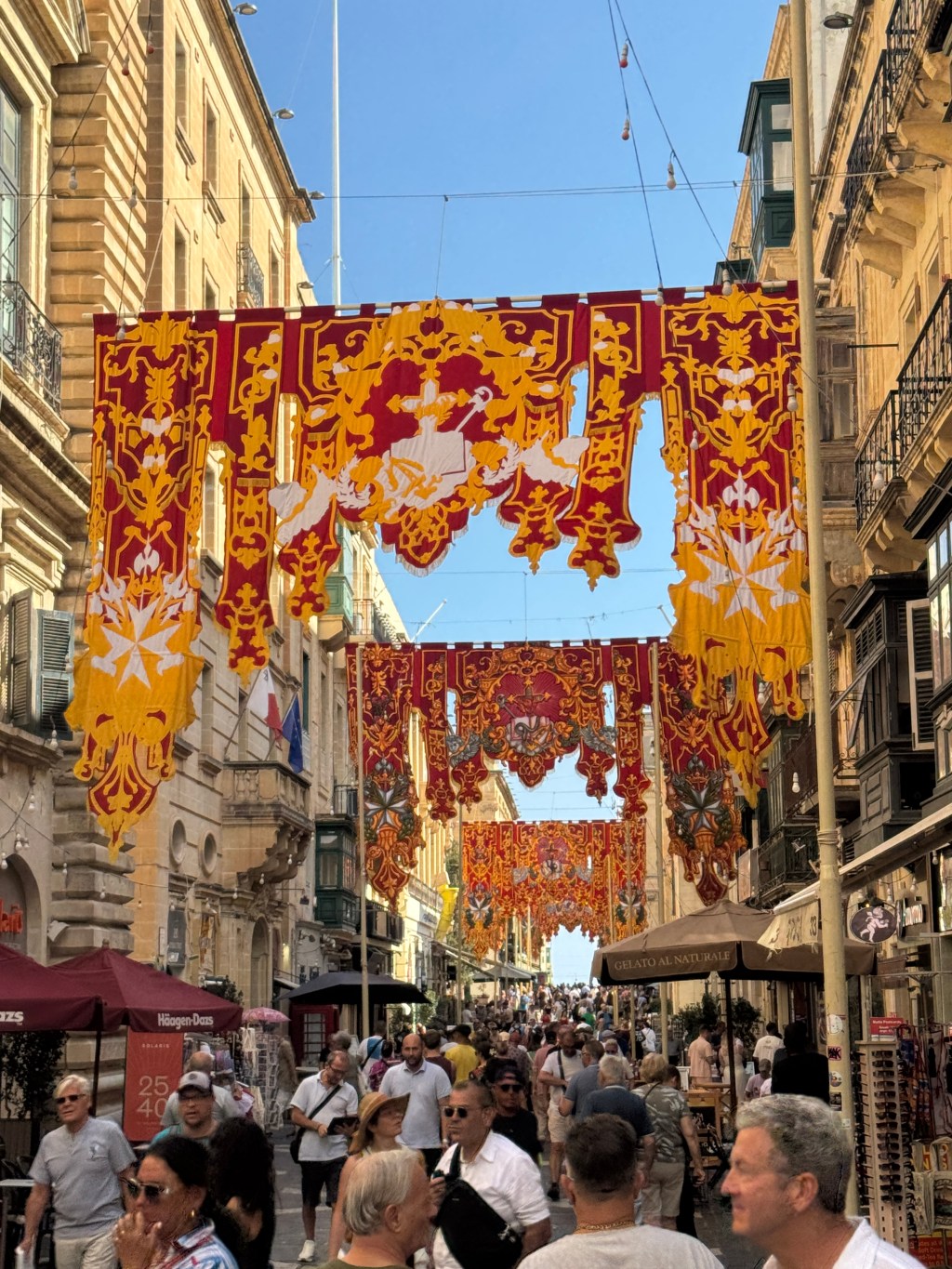
Festival Banners
Our visit to Malta coincided with a week-long festival dedicated to Mary as “Our Lady of Perpetual Sorrow,” although the colorful banners strung across the main street inspired more joy than sorrow. Each month has a different festival with different banners in good medieval European fashion.
-
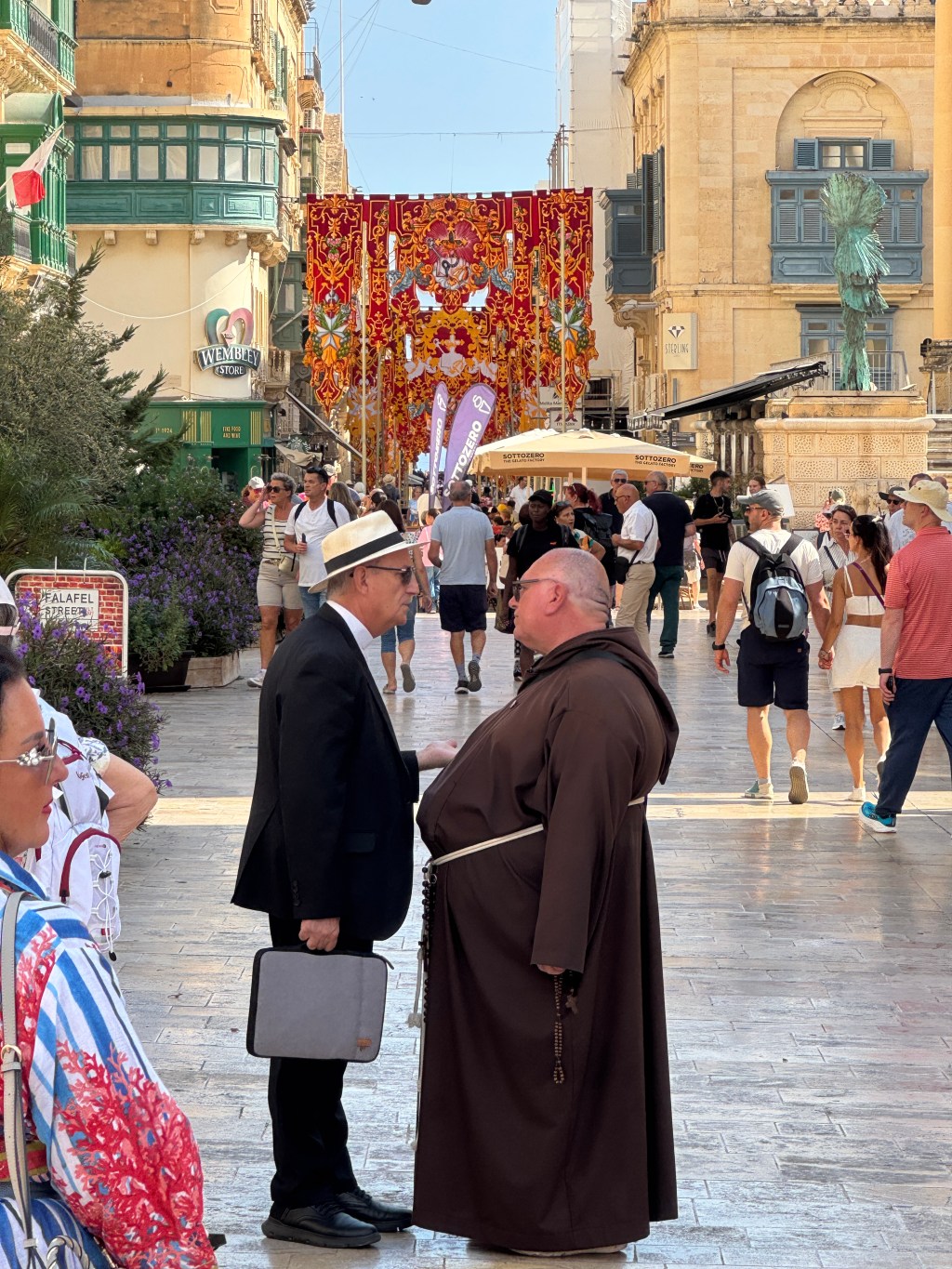
Church and State
Here’s a photo I took in the main pedestrian-only street of Valletta, the capital of Malta. You know it’s a small country when “church” and “state” can get together to talk things out in the middle of a crowd of tourists right outside the Parliament building.
-
Crusader Memorials
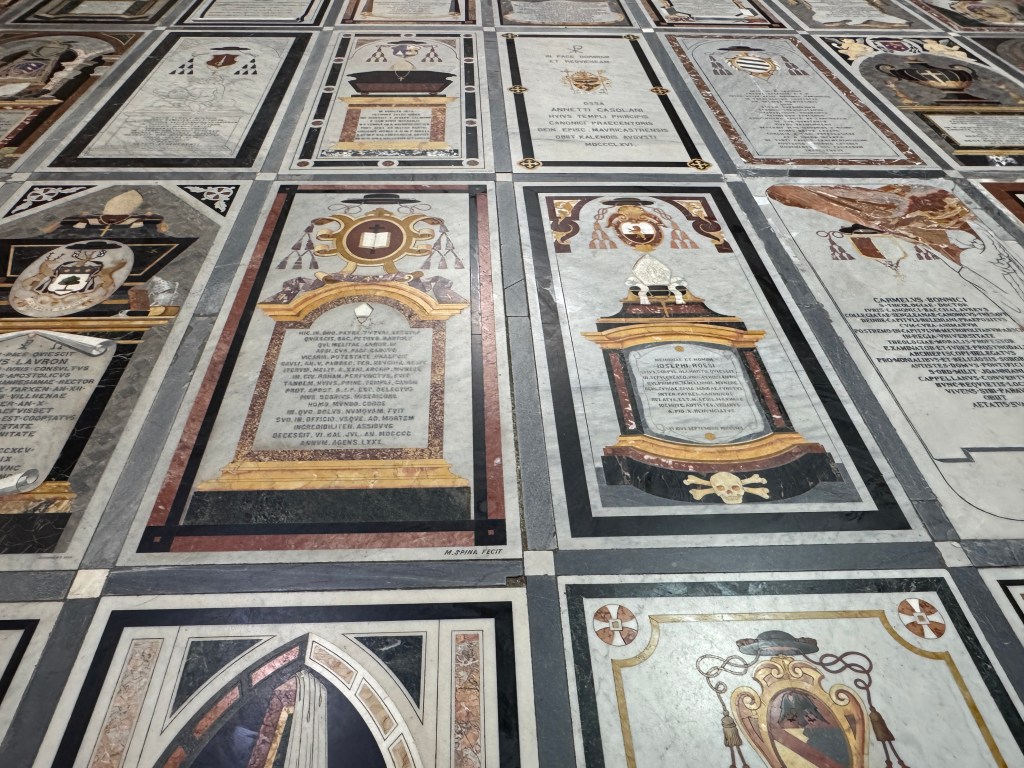
The floor of the Mdina Cathedral is covered with tombstones over the graves of some of the original Crusaders and their descendants. The inlaid marble designs honor each person’s achievements, and the patterns identify some of their activities or offices.
-
Mdina Cathedral
Stepping into the Mdina Cathedral, we found a worship service in progress. Rose-colored marble columns hold up a dome that draws in light for the artwork and congregants below.

-
Doorknocker
Many of the doors in Mdina feature dramatic metal doorknockers. This one includes a family crest and the Latin phrase for “Not unless through hardship” meaning success can only be achieved through hard work or difficulty.

-
Warm Sandstone
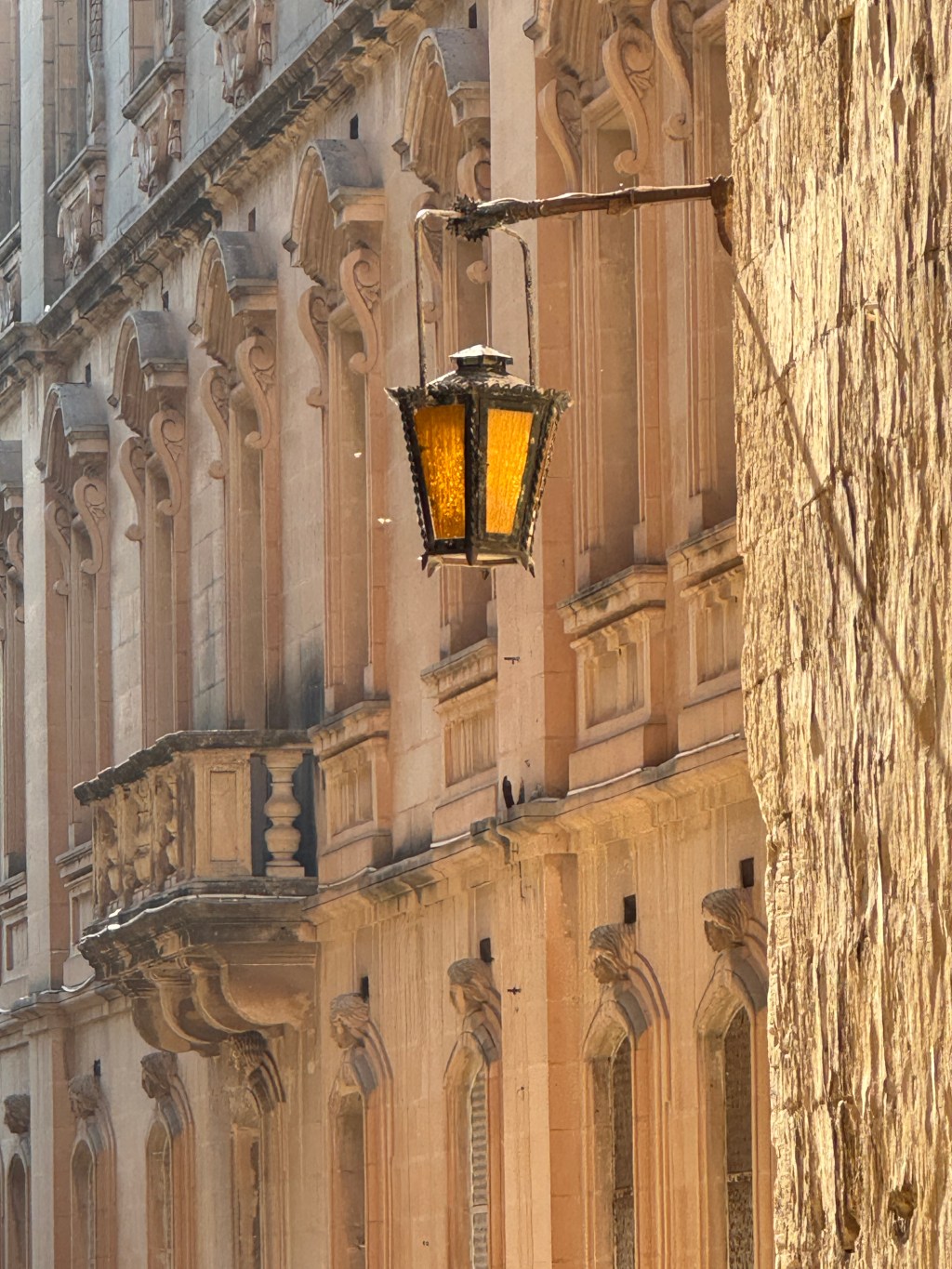
The buildings in Mdina, and much of the rest of Malta, are made of honey-colored sandstone that glows when the sun reaches them in the narrow streets of the old capital city.
-
Hush
Tourists wandering through Mdina are reminded that 72 people live in the town, mostly descendants of Maltese noble families, and they appreciate you keeping your voices down.

-
Back Alley
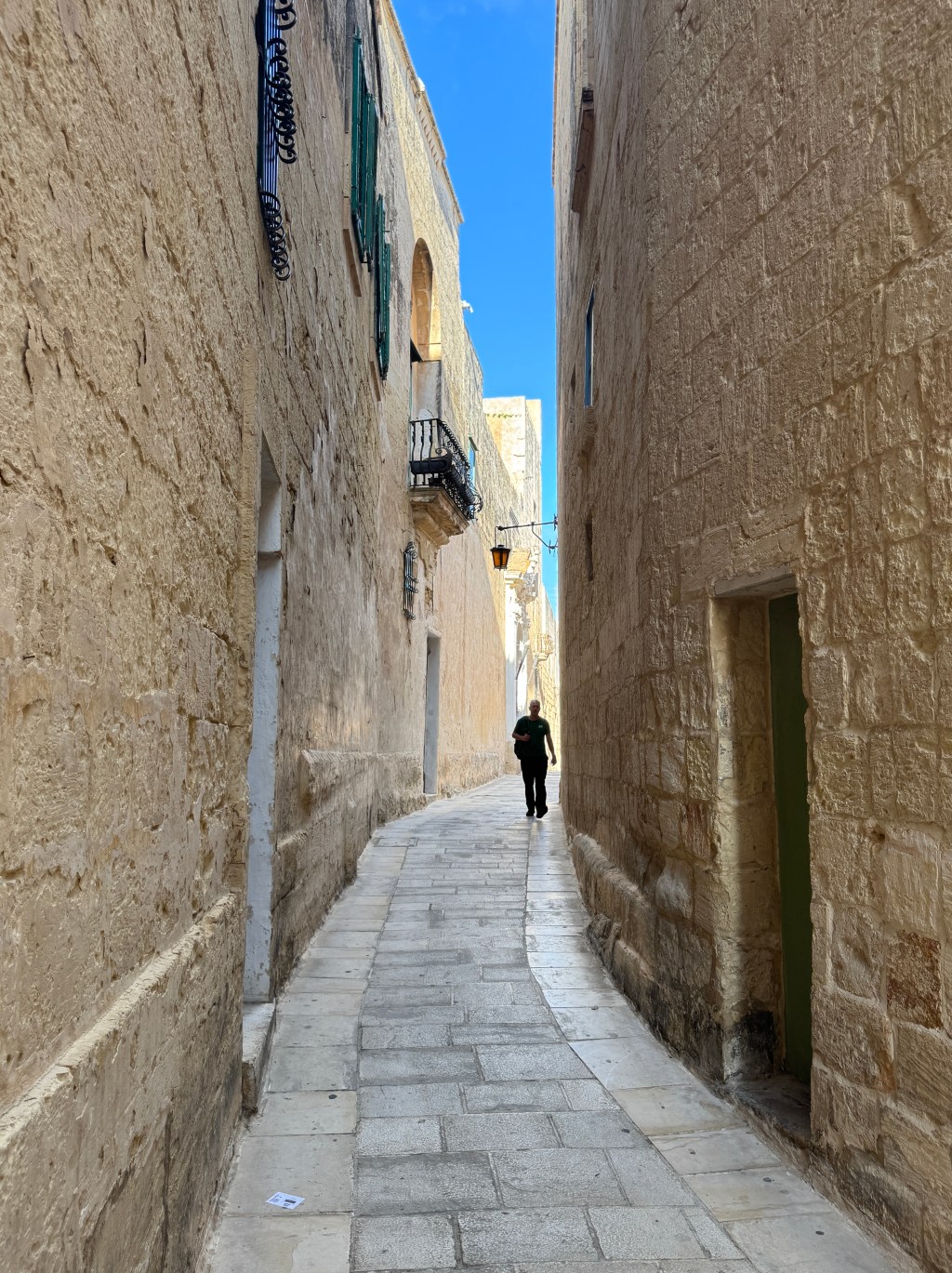
Mdina looks like a medieval movie set, and it has appeared in several films, but it’s a real town with occasional cars and (very small) trucks winding through the narrow stone streets.
-
Mdina Gate
This small passage is the main gate to enter the old capital city of Mdina. A medieval hilltop town with at least 30-foot walls on all sides, it survived the Great Siege of 1565 when the Knights of St. John successfully repulsed an Ottoman army and fleet.

-
Balconies
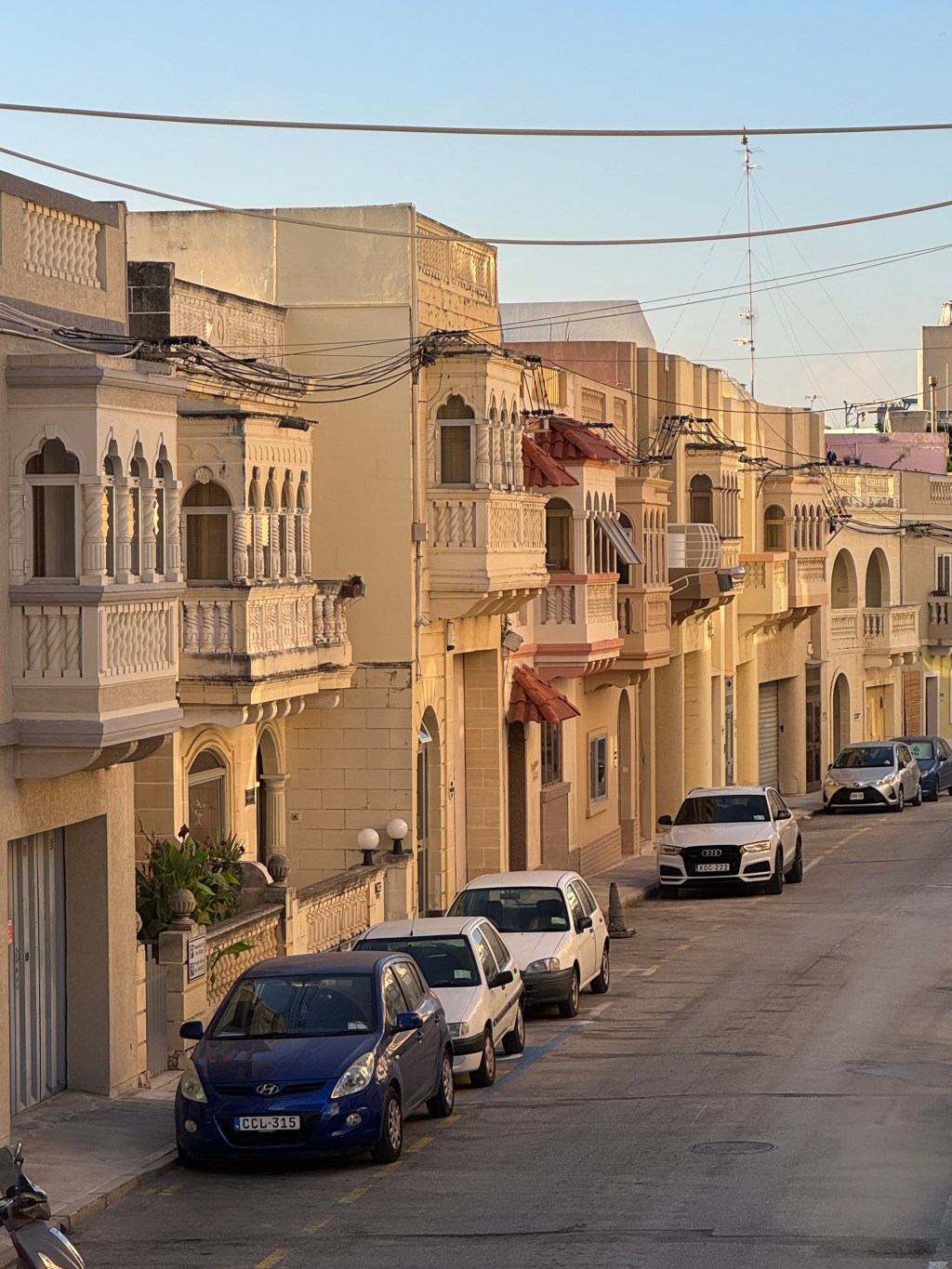
This block in one of the newer neighborhoods on Malta still shows the popularity of traditional enclosed balconies. These have been a distinctive feature of Maltese homes and apartment buildings since the island was controlled by Arabs from the 9th to the 12th centuries.
-
Maltese Layers
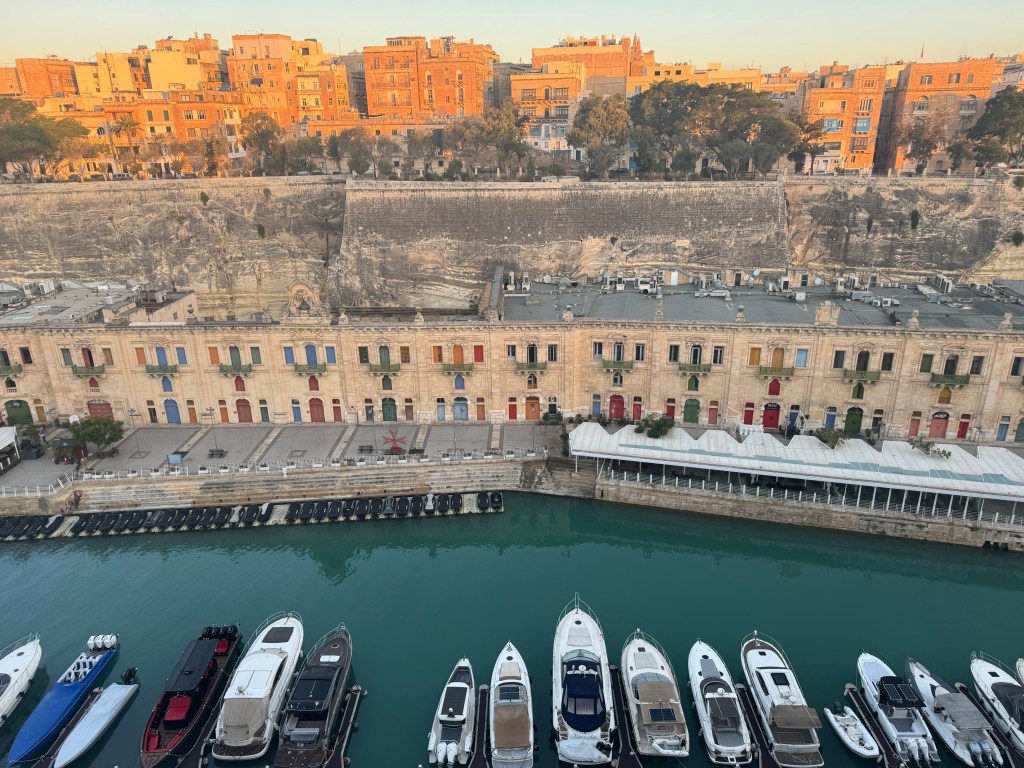
Looking from our ship, the harbor resembles a layer cake. Pleasure boats and jet skis line the waterfront dock, then a row of warehouses with colorful doors and windows, a steep cliff of honey-colored sandstone, and the buildings of the capital city Valletta built of that same sandstone glow in the morning sun.
-
Maltese Sunrise
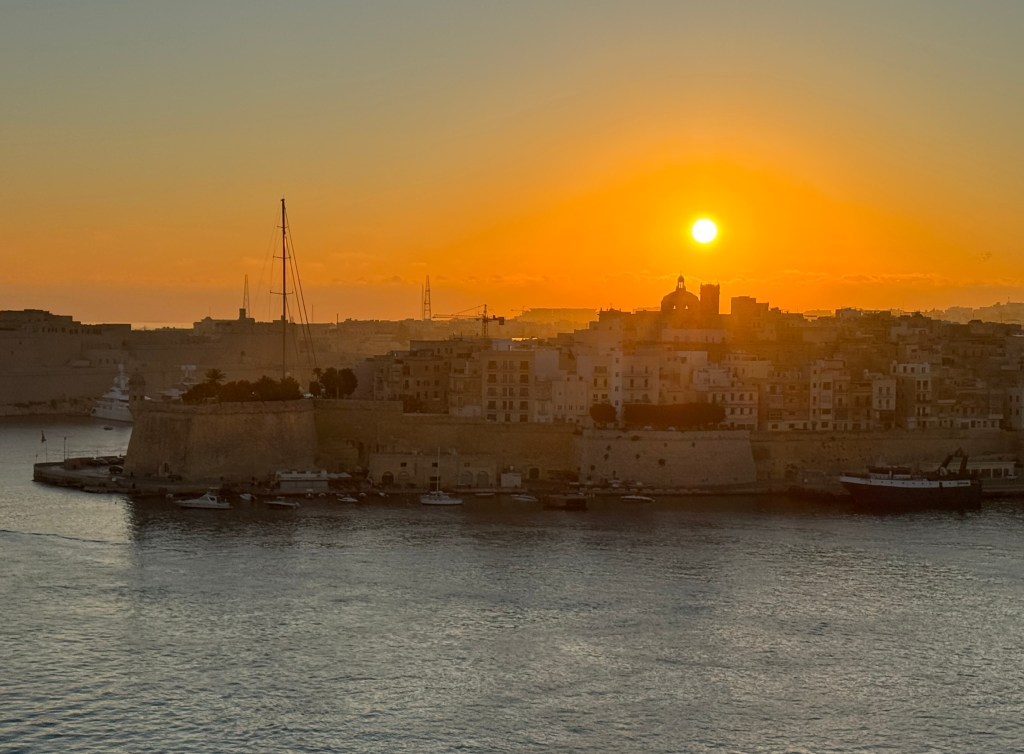
Our ship arrived at the island nation of Malta as the sun was rising over the jumble of historic buildings along its harbor. Malta boasts the largest natural harbor in the western Mediterranean, and it doesn’t even have a major river flowing into it.
-
Straits of Messina
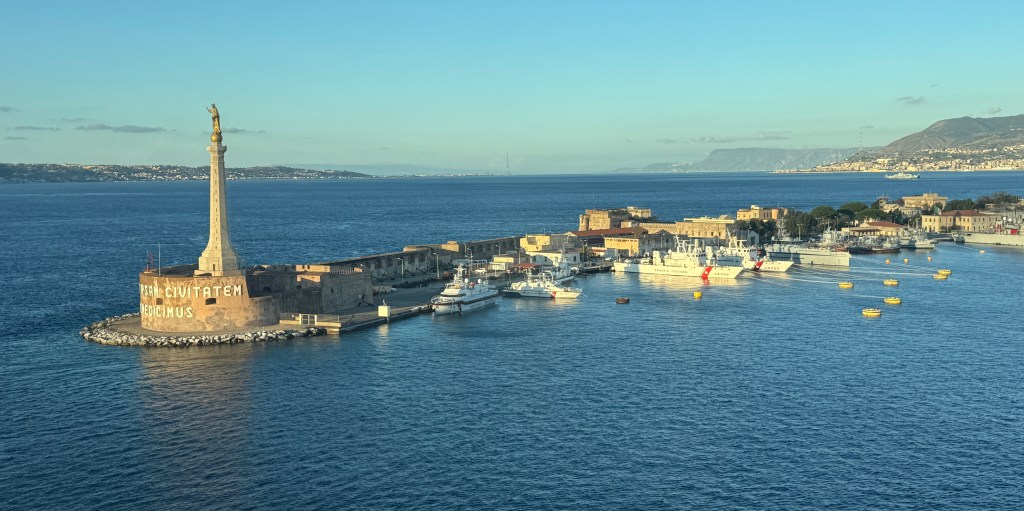
Mary, protector of Messina, blesses the city’s harbor from the end of a long jetty. In the background are the Straits of Messina, with Sicily on the left and the mainland of Italy just a mile and a half away on the right. Ferries cross it in just 20 minutes.
-
Puppet Museum
Puppet theater is a classic form of Sicilian entertainment, and we toured a museum of puppets in Messina maintained by a single family of puppeteers. Here the king and his knight share a conversation, while other displays had three-foot tall knights sword fighting or posed to show off their impressive armor.

-
Ceiling Details
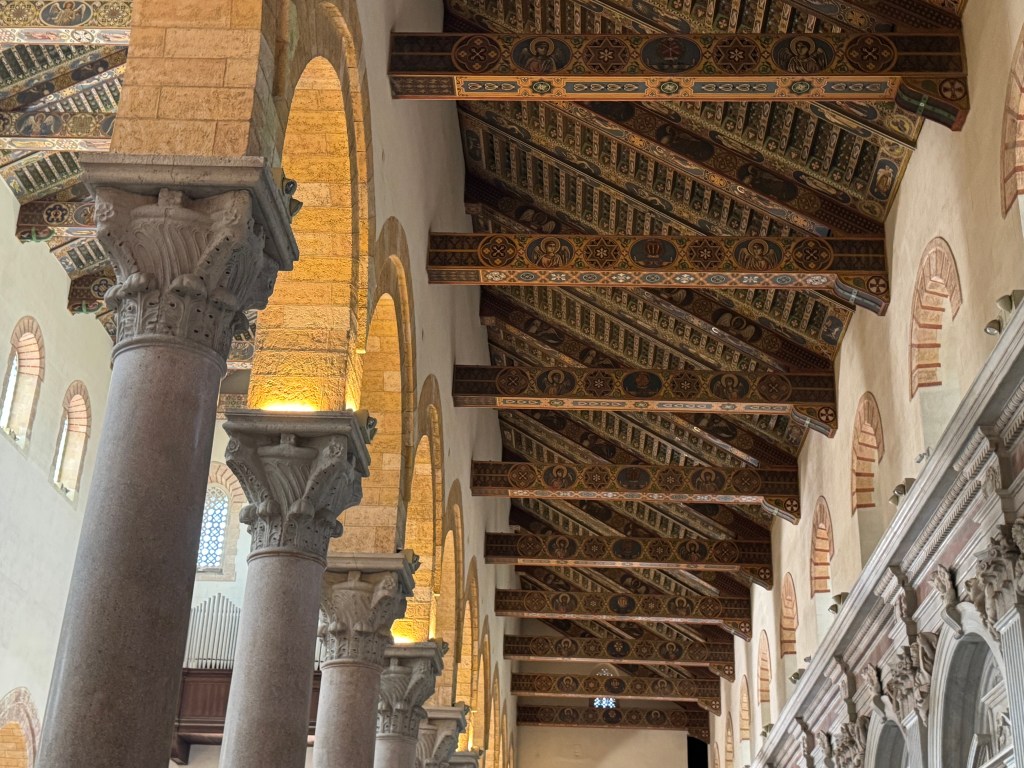
The restored ceiling in Messina’s Cathedral shows beautiful painted details that elaborate on the original design. European cathedrals invite you to gaze upward with their towering columns, but the details of their often intricate ceilings are worth meditating on as well.
-
The Nave
The main hall of the Messina Cathedral is over 800 years old, but the decorative ceiling and almost all of the mosaics are 20th century reconstructions after earthquake and bomb damage took a heavy toll.

-
Interactive Clock
Messina’s Cathedral bell tower of moving statues marks the time and entertains visitors. According to legend, Dina and Clarenza (large figures) helped repel an attack in 1282 by ringing bells, which they do each 15 minutes. The rooster flaps its wings and loudly crows three times at Noon.

-
Messina Cathedral
A monumental fountain of Orion fills part of the square in front of Messina’s Cathedral and bell tower. The Cathedral was almost entirely rebuilt after the 1908 earthquake and again after a fire caused by Allied bombing in 1943.

-
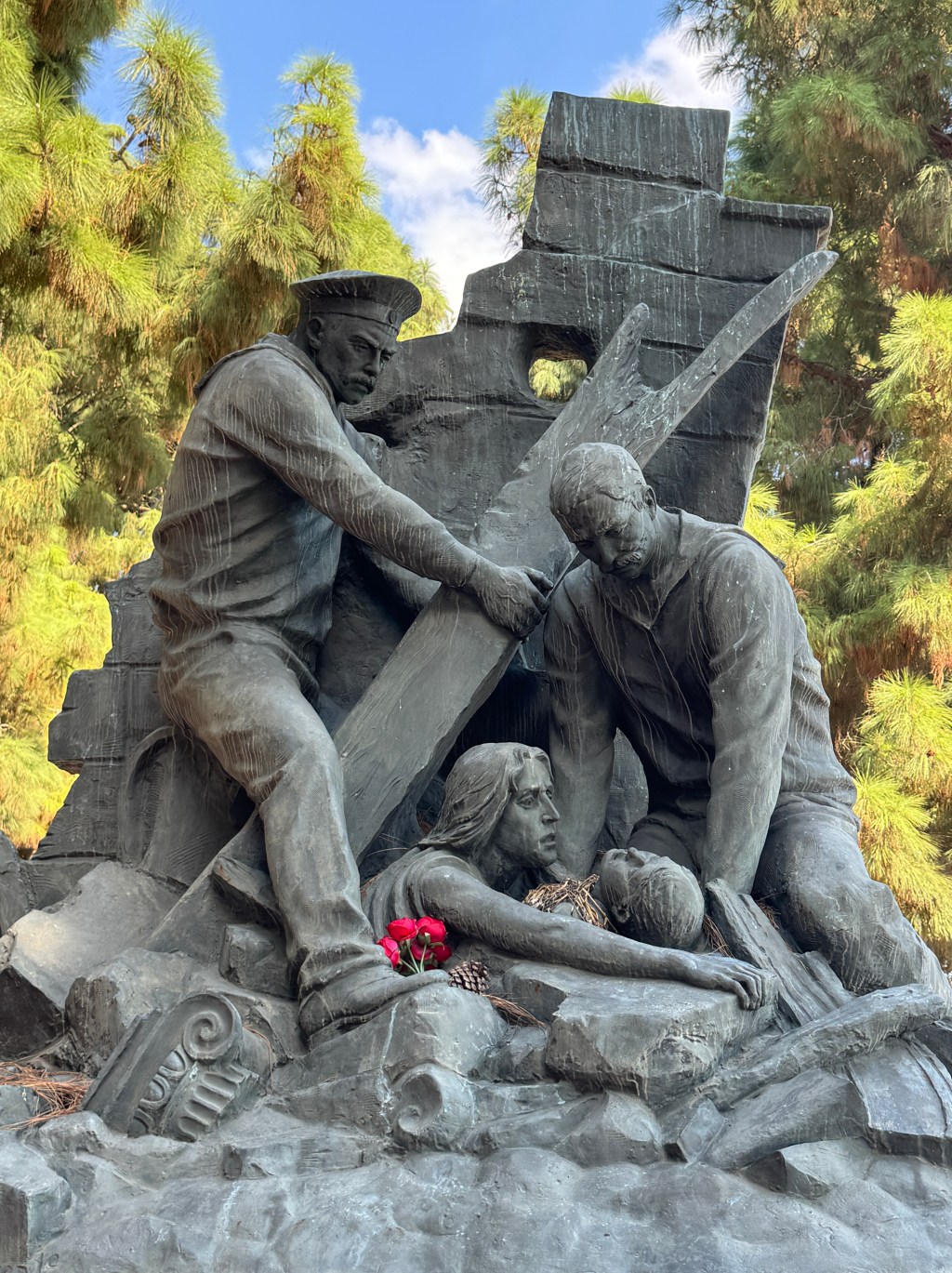
Earthquake
An early morning earthquake in 1908 destroyed nearly all of Messina and killed 60,000 residents. This memorial honors the Russian marines on a ship in the harbor who were the first rescuers to begin pulling people out of the ruins. The red roses show that the event is still fresh for local residents.
-
Neptune
This fountain of Neptune built in 1557, looks out to the Straits of Messina where the mythological monsters Scylla and Charybdis once threatened mariners such as Odysseus. Scylla was a six-headed creature that preyed on passing sailors, while Charybdis was a massive whirlpool that sank many ships.

-
Messina
Messina, the city on Sicily that looks across to the Italian mainland, climbs the hills above the harbor with churches and buildings that have been rebuilt after the twin 20th century disasters of a major earthquake and heavy bombing during World War II.

-
Naples at Night
Pulling away from the cruise ship pier, the palaces, churches and public buildings along the Naples waterfront glow with a warm light.

 Words Are Inadequate