Mediterranean Cruise
-
Castel Nuovo
Only in Italy would a castle erected in 1279 be referred to as the “new castle.” It’s imposing size and scenic location overlooking the harbor makes it one of the architectural landmarks of Naples.

-
Passageway
This covered portico on the north side of the Royal Palace has become a busy sidewalk for Neapolitans headed to nearby stores and theaters at the end of the day.

-
Colored Marble
This close up image of a round table in the Royal Palace of Naples highlights a remarkable collection of colored marble pieces. It was smaller works of art like this that really showed the opulence of an 18th century royal court.

-
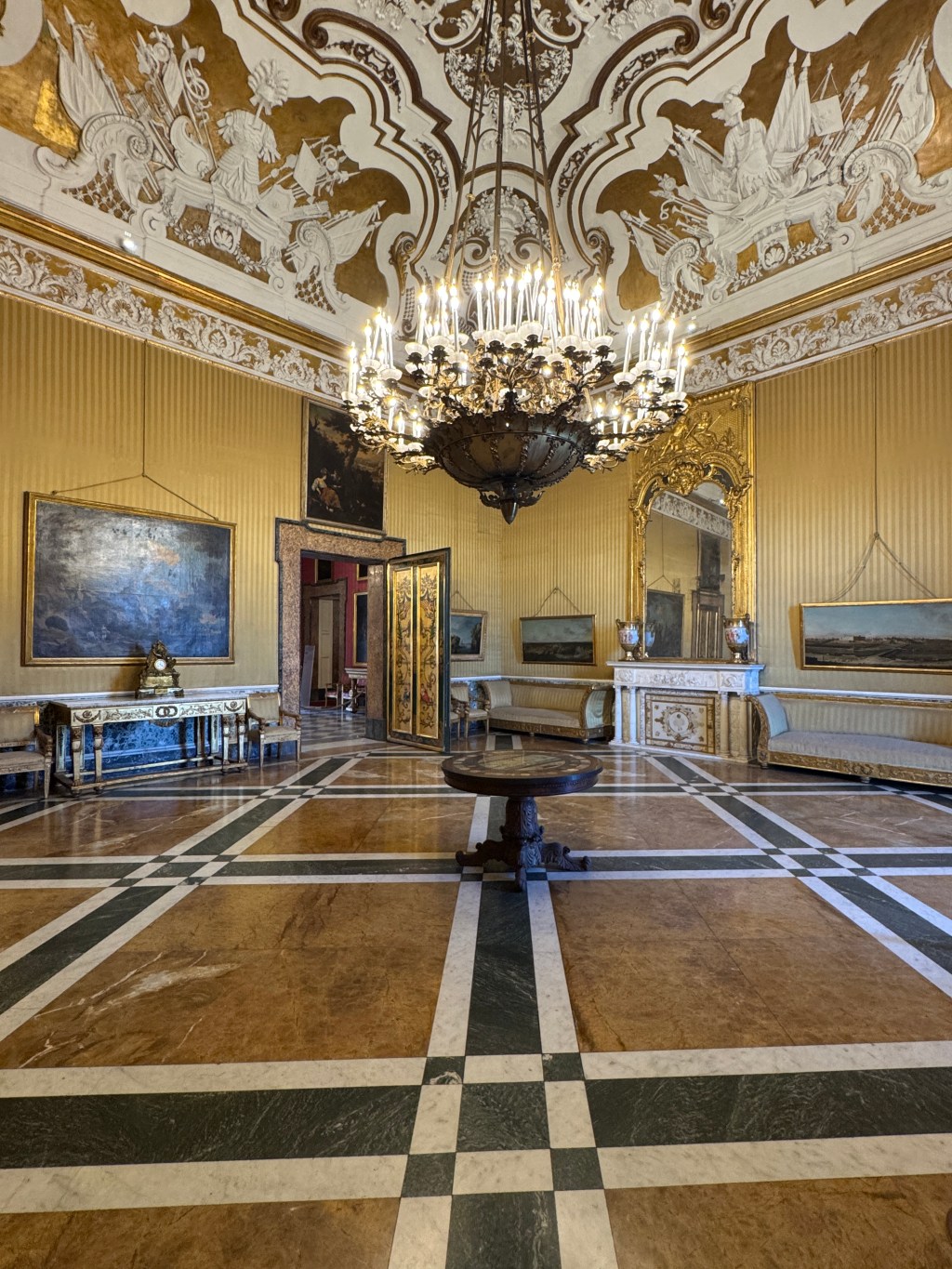
Queen’s Throne Room
As the Queen of Naples’ throne room in the Royal Palace, the white stucco on gold ceiling and the dramatic marble floor design would have created a suitably regal setting.
-
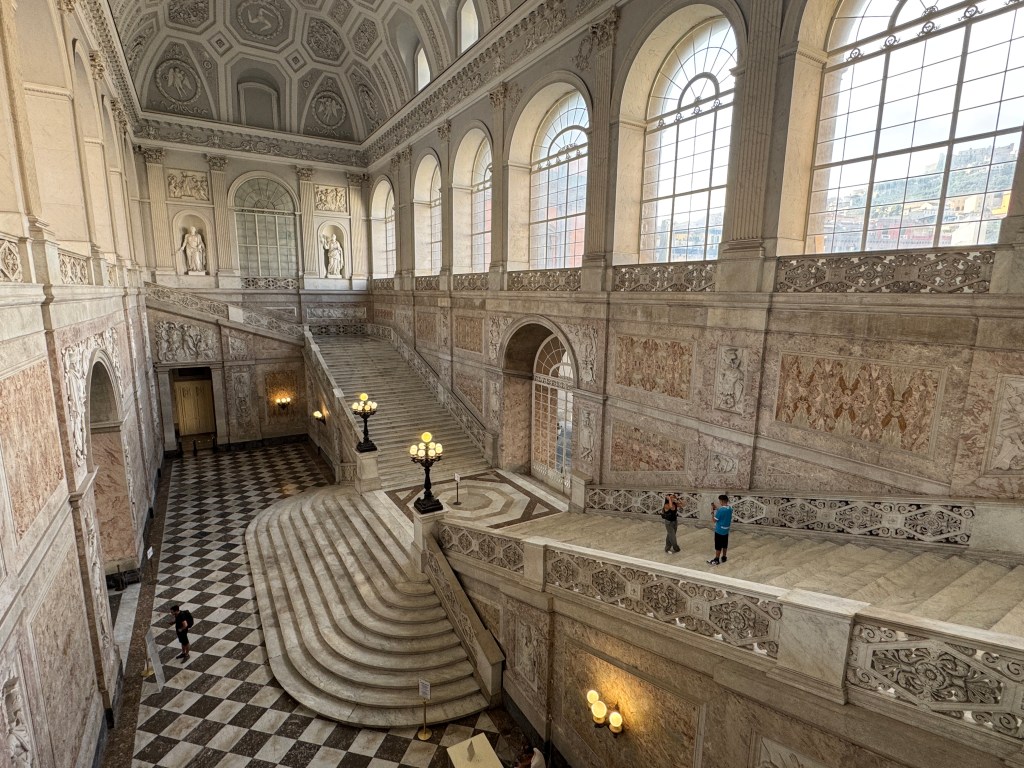
Royal Palace Stairway
The Royal Palace of Naples (walking distance from our cruise ship) was home to the Bourbon kings for more than a century before the unification of Italy. Not many buildings have a double grand staircase to compete with this one.
-
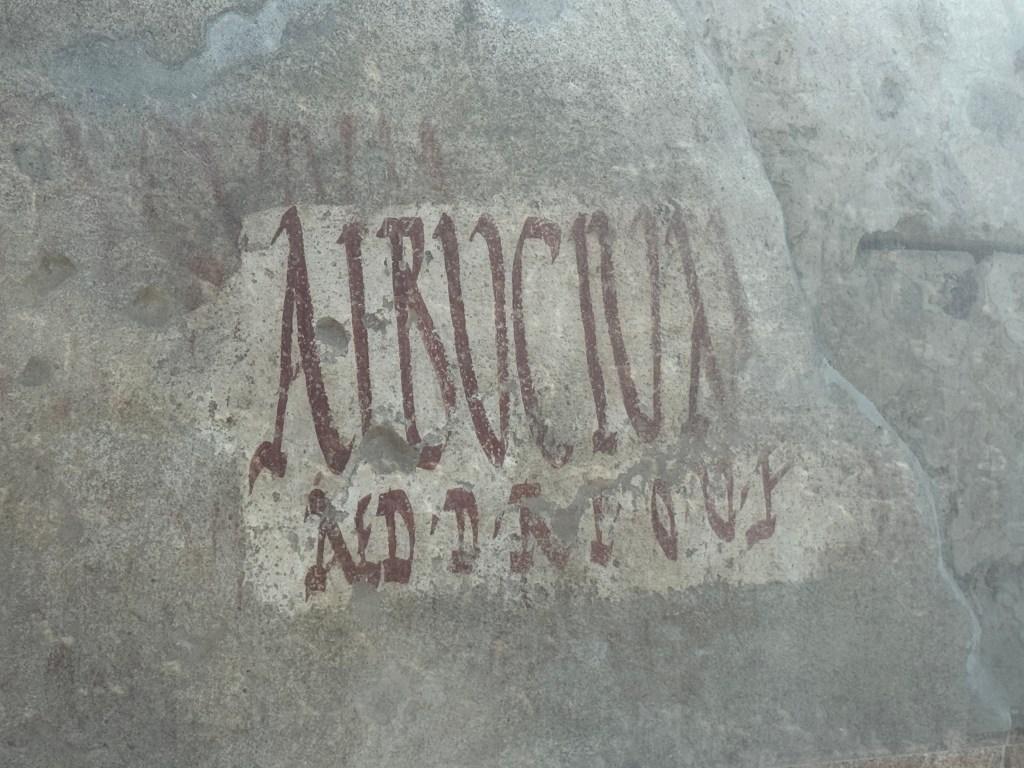
Vote For Albucium
Election slogans like this one appeared on the walls of shops, houses and public buildings as a common part of political campaigns for municipal offices in Pompeii.
-
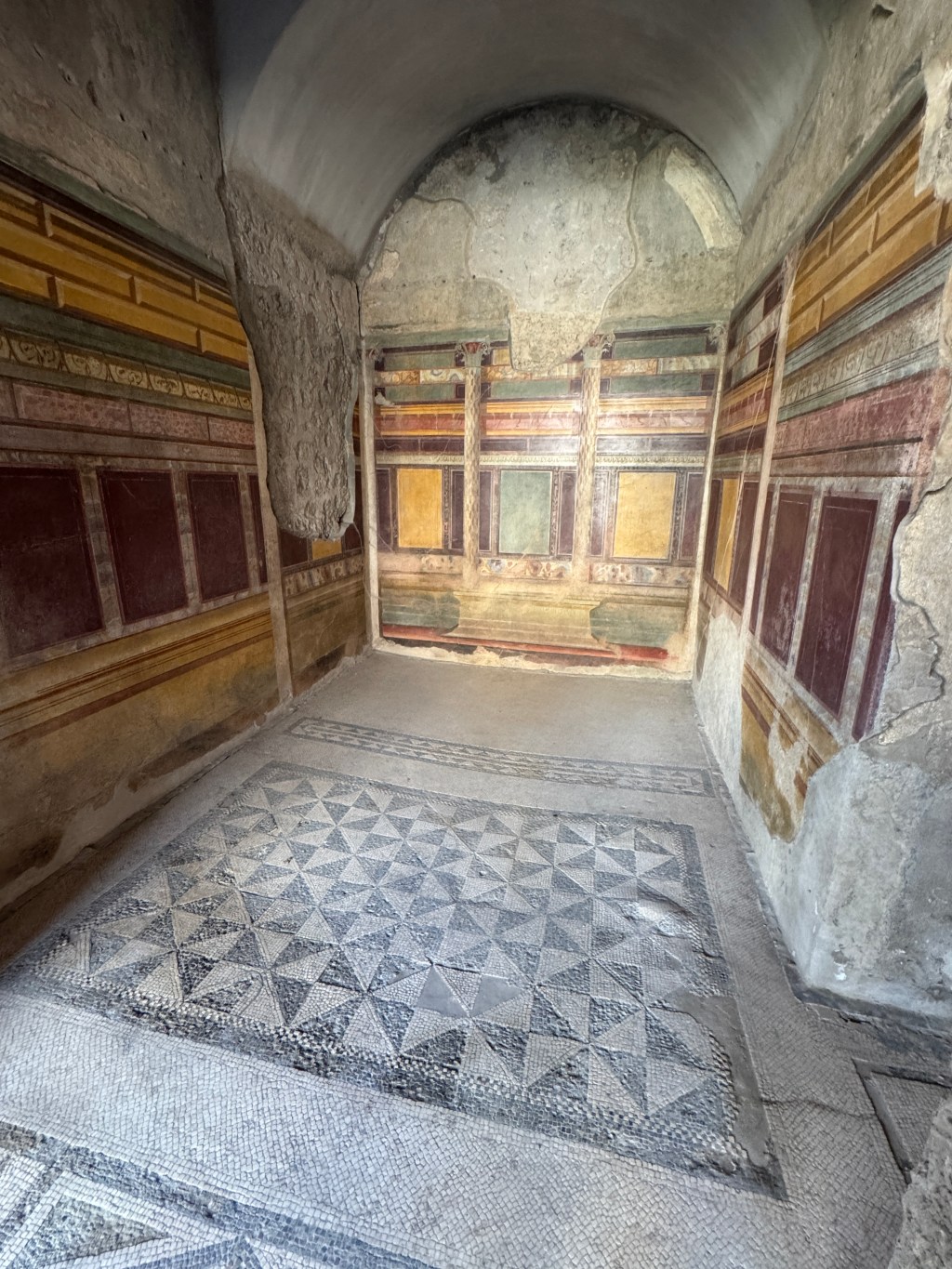
Frescoes and Mosaics
Rooms off the garden in the back of L. Albucius Celsius’ house still preserve colorful frescoes on the walls and geometric mosaics on the floors. This residence was excavated in 1893 and was named “House of the Silver Wedding” in honor of the Italian royal couple’s 25th anniversary.
-
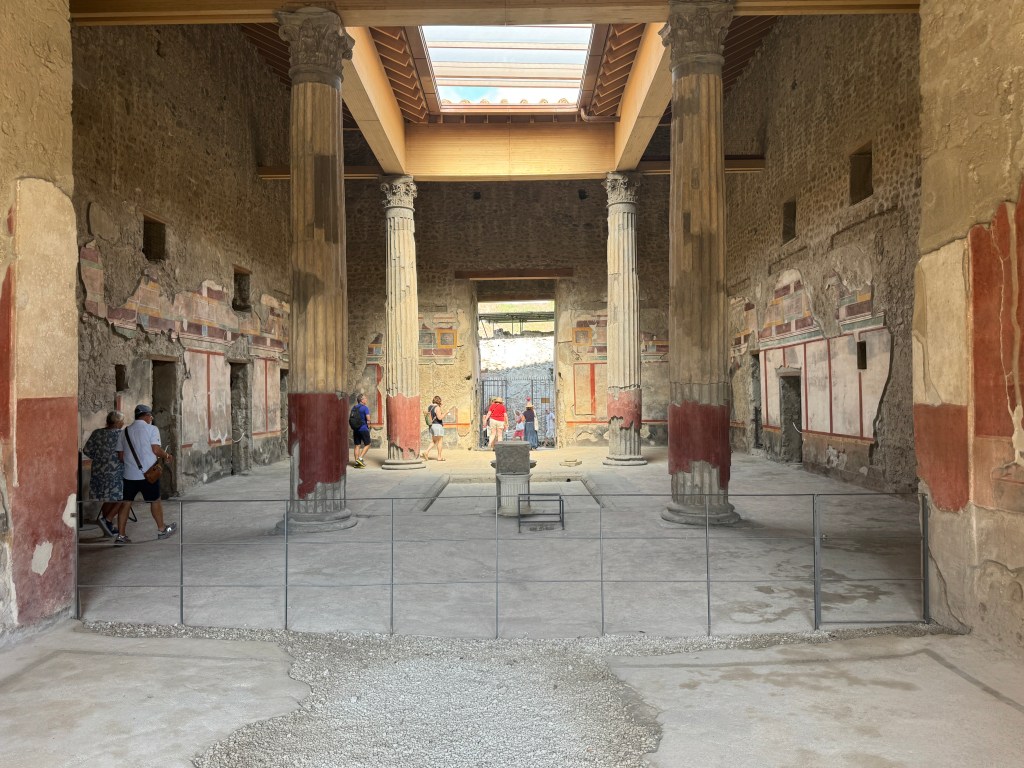
Atrium
The impressive house of L. Albucius Celsus has a large atrium with an impluvium (shallow pool) for collecting rainwater. The bottoms of the columns show the red stucco that originally covered the full columns.
-
Pompeiian Street
Paved with blocks of basalt, Pompeii’s streets included raised stepping stones for pedestrians to cross the often filthy streets. Notice the deep ruts in the stones where metal cart wheels ground down the basalt.

-
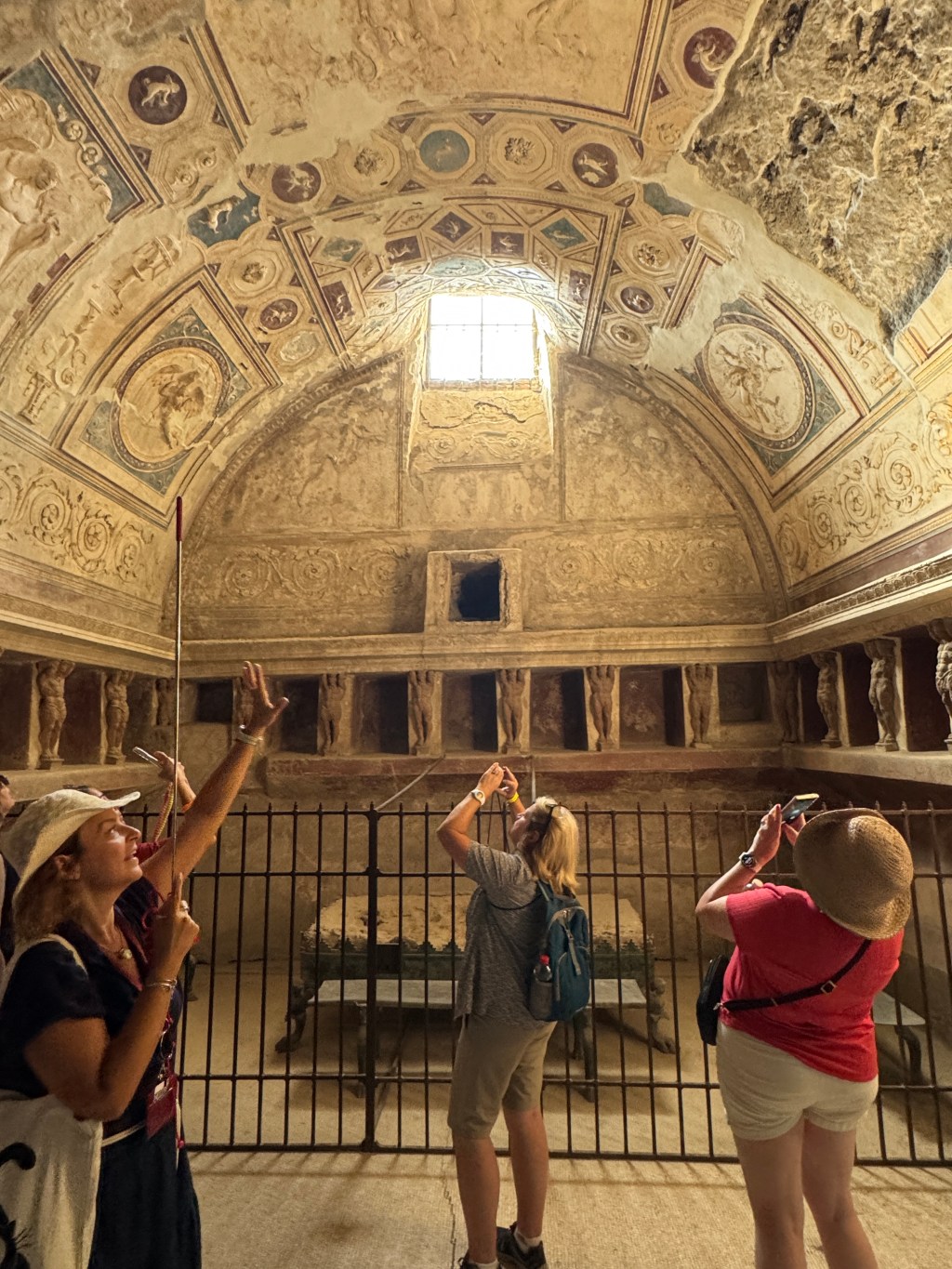
Forum Baths
Built in about 80 BC as a popular meeting place for Pompeii residents of all social classes, the Forum Baths had separate spaces for men and women. The tepidarium featured paintings of gods and mythology on the ceiling and clay figures framing niches on the walls for clothing.
-
Temple of Apollo
Entering Pompeii with our archeologist guide, one of the first ruins we pass is the Temple of Apollo, a small structure surrounded by a two-story colonnade. The original bronze statue of Apollo is visible on the right.

-
Vesuvius
Entering Naples harbor at sunrise, the red sky behind nearby Mount Vesuvius offers a reminder of the volcano’s deadly eruption in 79 AD that buried the city of Pompeii, our destination for today’s tour.

-
Obelisk
Looking down a Roman street toward the obelisk that stands at the top of the Spanish Steps. The obelisk was made by Romans during the early Empire in imitation of Egyptian ones and decorated nearby gardens until it was moved here in 1789.

-
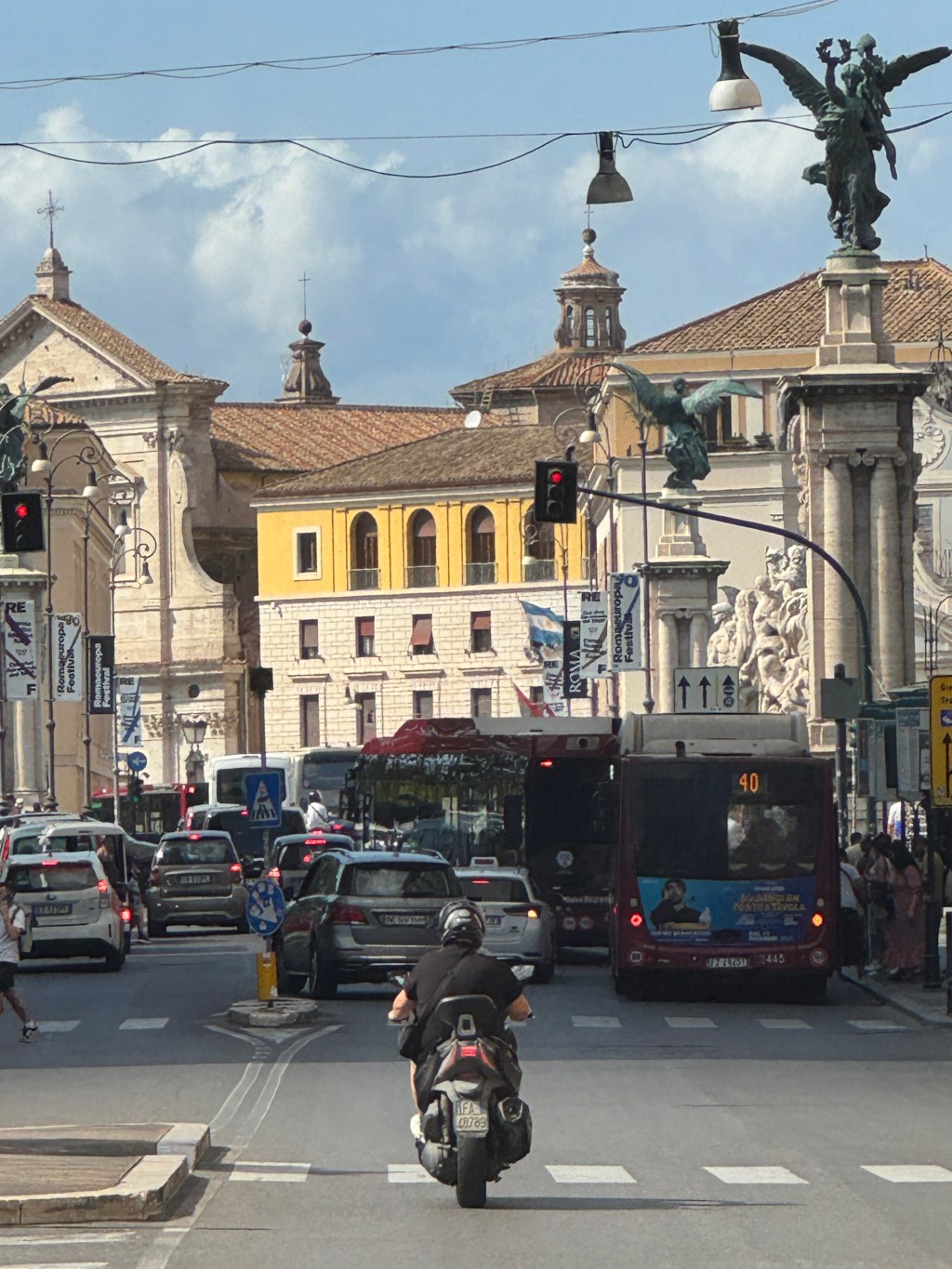
Roman Traffic
This image brings together three features of modern Rome – monuments and statues (more than any other city in the world), Roman Catholic churches (seemingly one on every other corner), and chaotic traffic (combining tourist busses, assertive drivers, and motorcycles zipping through it all).
-
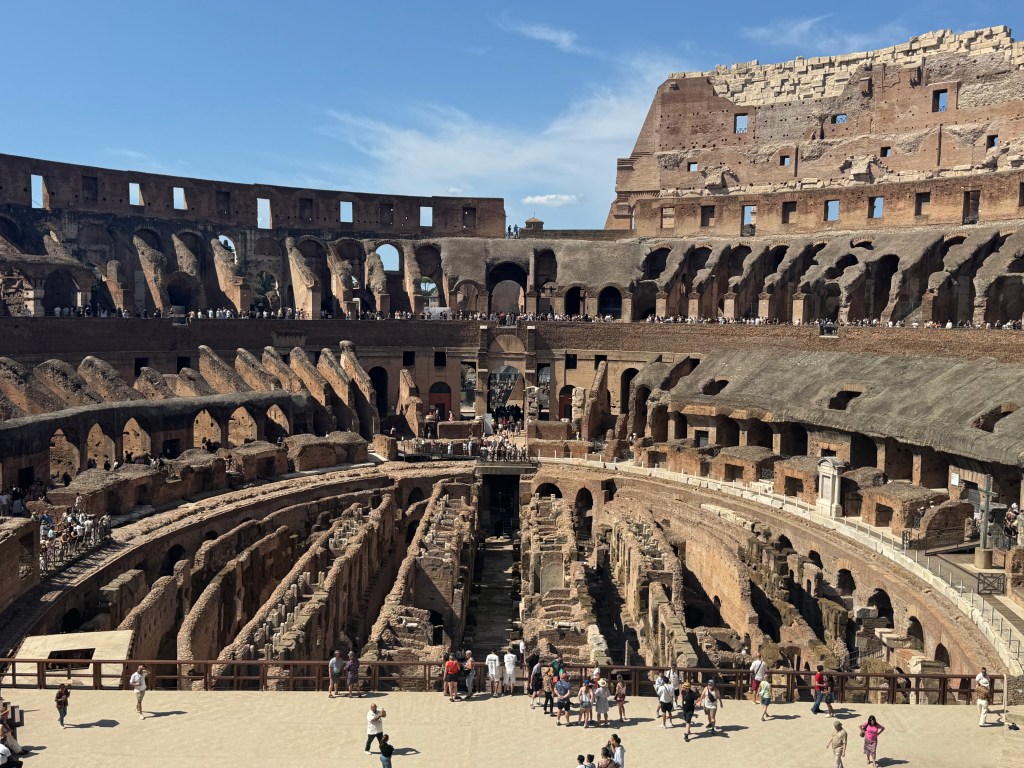
Colosseum
The largest ancient amphitheater, the Roman Colosseum was built in 72-80 AD and still overwhelms the visitor with its size. Earthquakes and stone robbers have left it without the limestone seats and steps that made it a gleaming white inside. The floor in the foreground once extended across the full oval floor.
-
Brick-Covered Arches
Looking into the Roman Colosseum, you can see the various layers of brick-covered concrete arches that held up the seats for more than 65,000 spectators. Gladiators, executions, dramas and even mock sea battles filled the stadium during the Roman Empire.

-
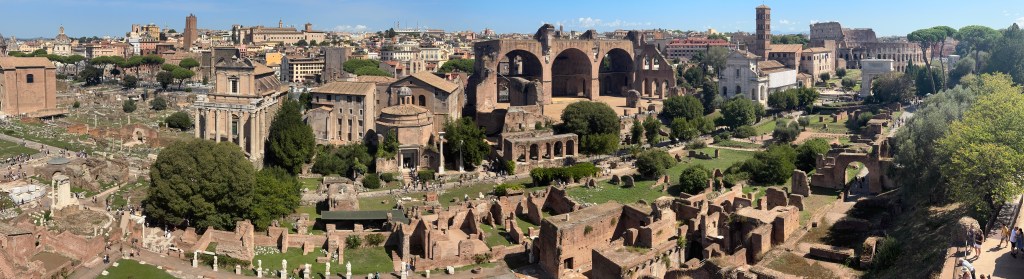
Roman Forum
A panoramic view of the Roman Forum from the ruins on Palatine Hill. The Colosseum is at the far right, while the large three-arched ruins in the middle is the Basilica of Maxentius. That’s where the boxing matches during the 1960 Olympics were held and Cassius Clay received his gold medal.
-
Triumphal Procession
The Arch of Titus at the edge of the Roman Forum celebrates the victory by Titus and his father Vespasian over the Jewish Rebellion in 70-71 AD. The panel shows Roman soldiers carrying a menorah from Herod’s Temple, which became a symbol of the Jewish diaspora and eventually of the State of Israel.

-
Columns
These columns and the building behind them was originally the Temple of Antoninus and Faustina before becoming a Roman Catholic church dedicated to the martyr St. Lawrence (San Lorenzo), who was believed to have been sentenced to death at this location in the Roman Forum.

-
Capitoline Hill
Entering the Roman Forum, you look across a field of fallen columns and broken brick walls through the iconic pines of Rome up toward the more modern structures on the Capitoline Hill. The large white monument honors King Victor Emmanuel II, although our guide called it “the wedding cake.”

-
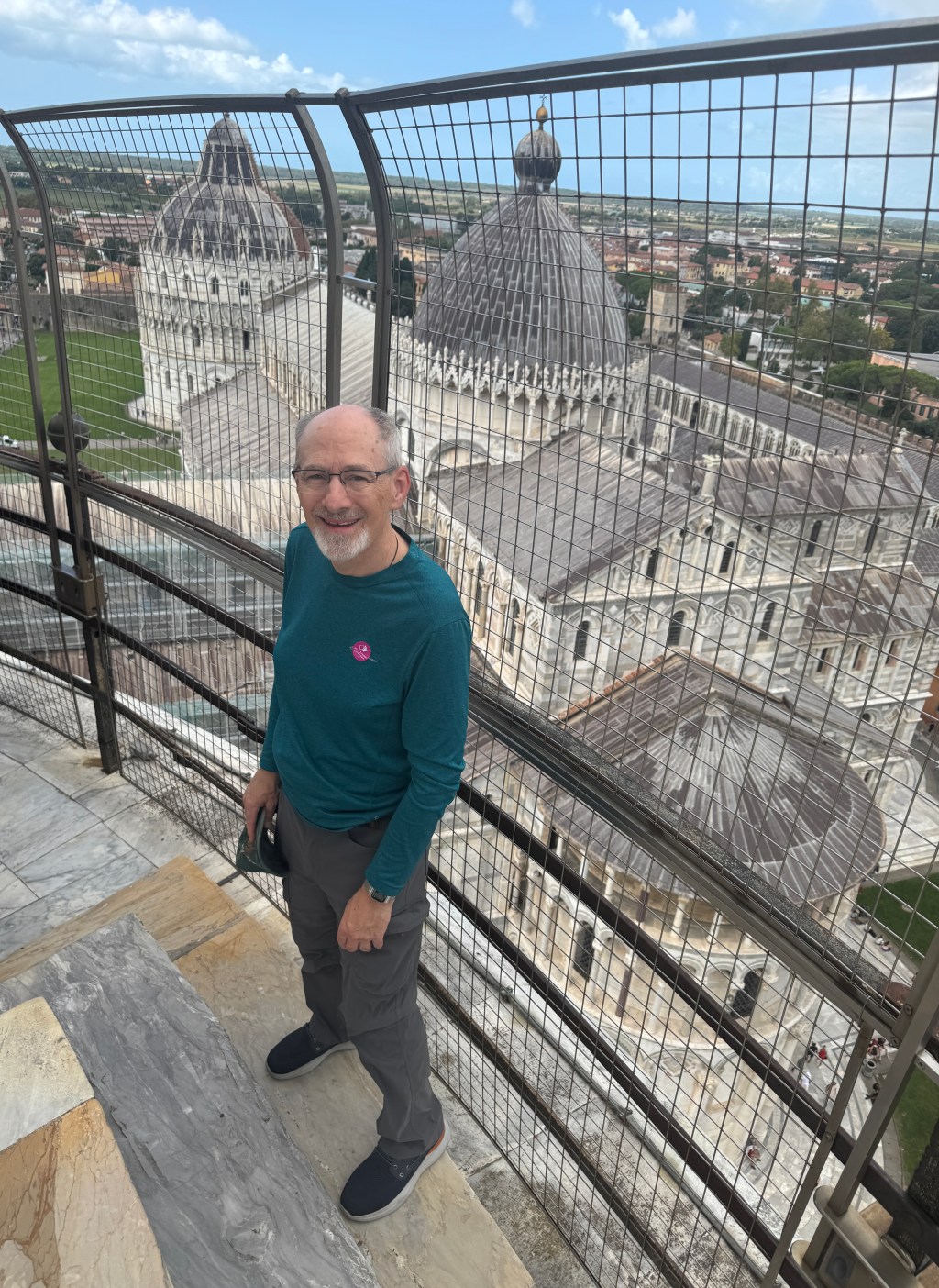
The View
On the top platform of the Leaning Tower, I’m about 170 feet above the Pisa Cathedral (on the right) and the Baptistery (left). This is where Galileo dropped two differently weighted cannonballs in the late 1500s to show that their speed was independent of their mass – the scientific law of free fall.
-
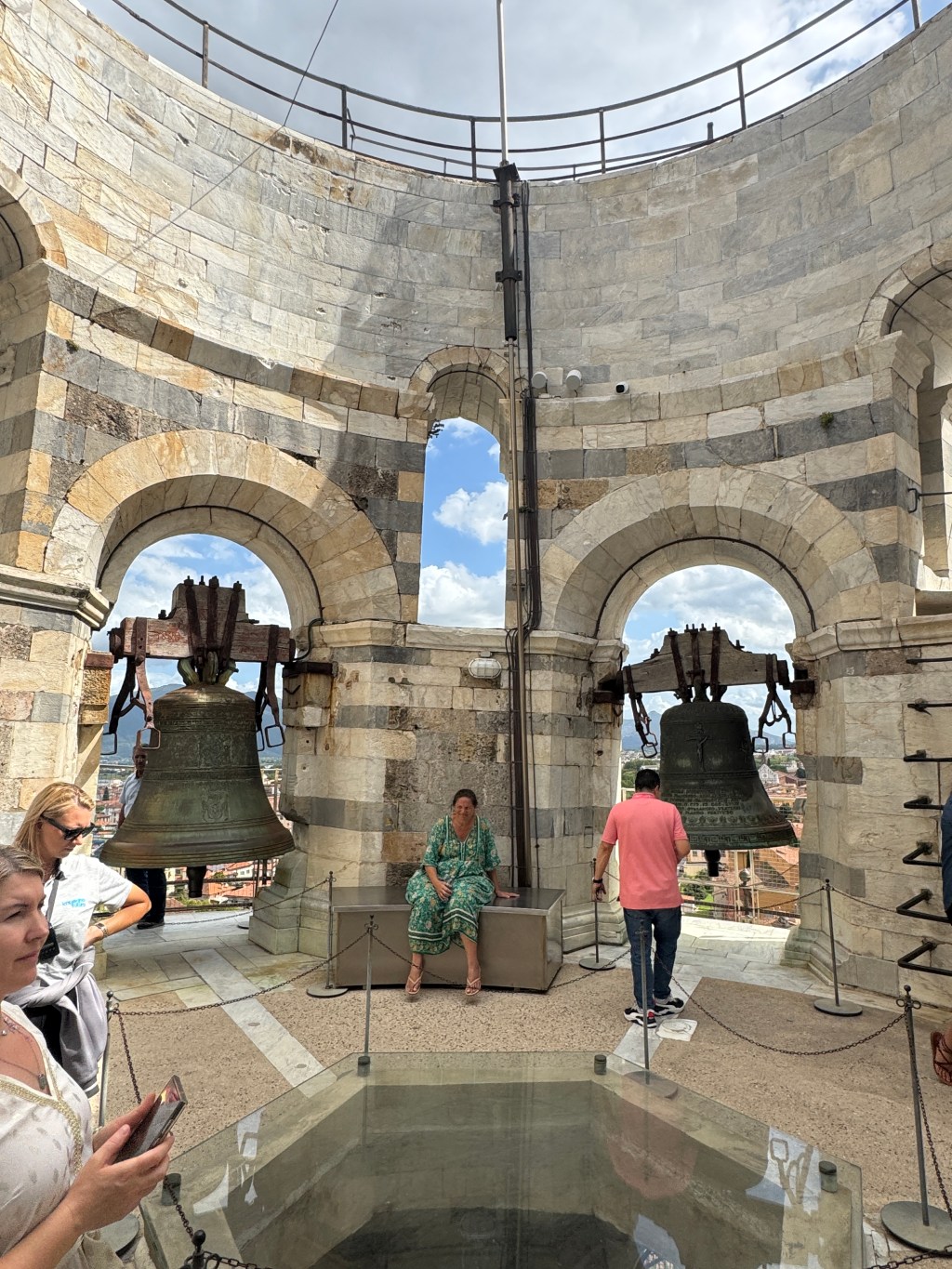
Bell Tower
The Leaning Tower, the freestanding bell tower for the Pisa Cathedral, has an open platform on top for the bells, which can’t be rung for fear of resonance that could damage the tower. You don’t notice the tilt as much on top, even though one side is 2’ 8” higher than the other.
-
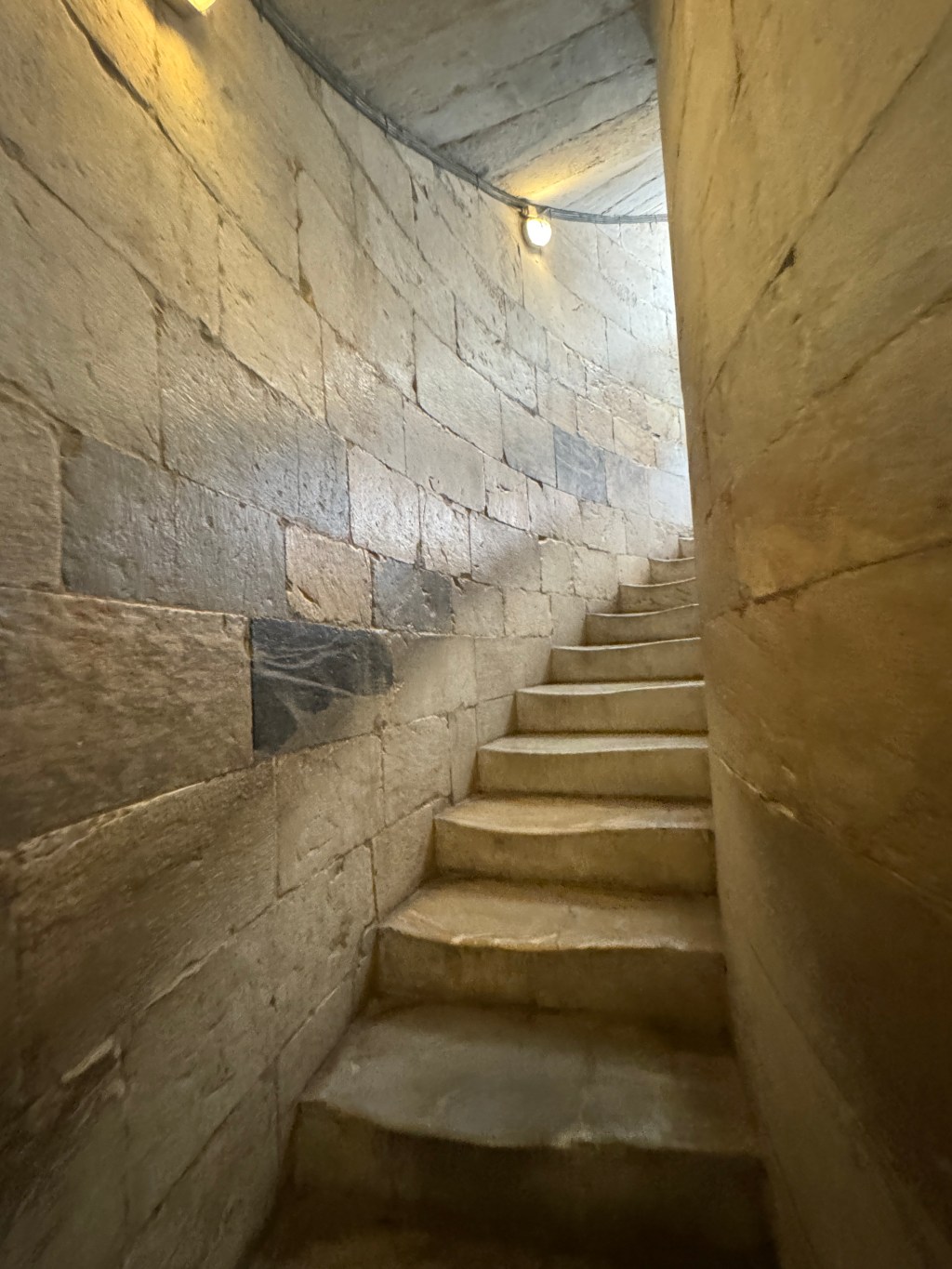
Slanted Stairs
The circular stairs that lead up (and down) the Leaning Tower are well worn marble. As you climb, half of the time you are leaning into the wall and half of the time you are leaning out into the path of people going the opposite direction!
-
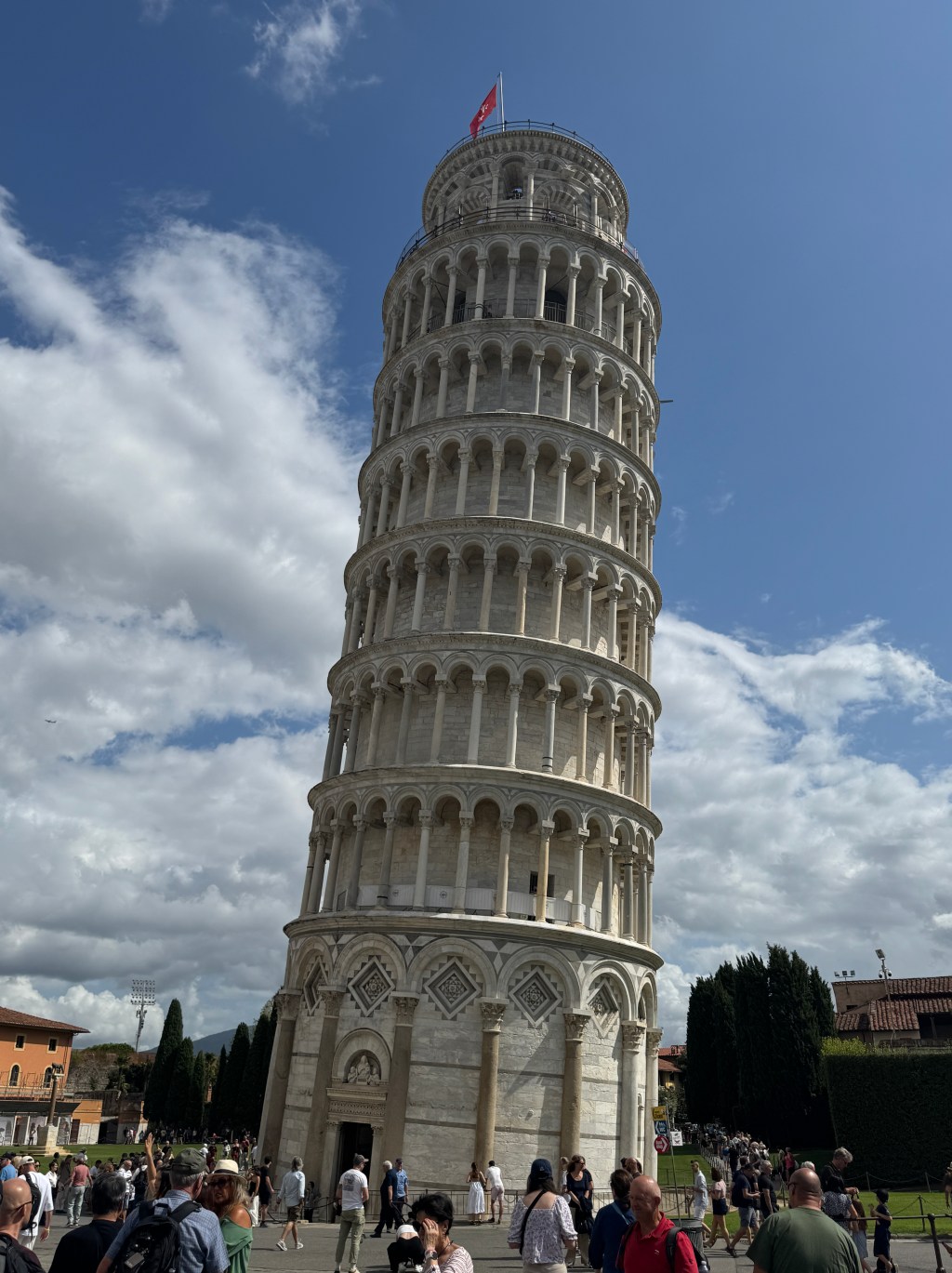
Leaning Tower
Unstable soil meant that the famous Leaning Tower started leaning even as it was being built; by 1990 it had grown to 5.5 degrees of tilt. After digging out 70 tons of dirt from under the higher side, the tower has stabilized at just under 4 degrees of tilt and visitors can climb it again.
-
Marble Floors
Pisa’s Cathedral has sections of marble inlaid floors that create wonderful geometric patterns from the 11th century.

 Words Are Inadequate