Mediterranean Cruise
-
Christ Enthroned
The luminous mosaic in the apse above the altar features Christ with Mary and St. John. It evokes the style of Byzantine and Norman churches, which the Pisans would have seen during their trading voyages to Sicily. It survived a fire in 1595 that damaged much of the cathedral.

-
Pisa Cathedral
Completed in 1092, Pisa’s striking cathedral mixes Romanesque and Islamic styles, including enormous granite columns taken from the mosque in Palermo, Sicily as spoils of war. The wooden ceiling adorned with gold leaf dates from the 17th century.

-
Pisa
Unlike crowded Florence, Pisa has an open square around its cathedral, with the Baptistery (foreground) and bell tower (far right) creating an inviting space known as the “Square of Miracles.” Pisa was a prominent maritime republic in the 10th to 13th centuries before its defeat by rival Genoa in 1284.

-
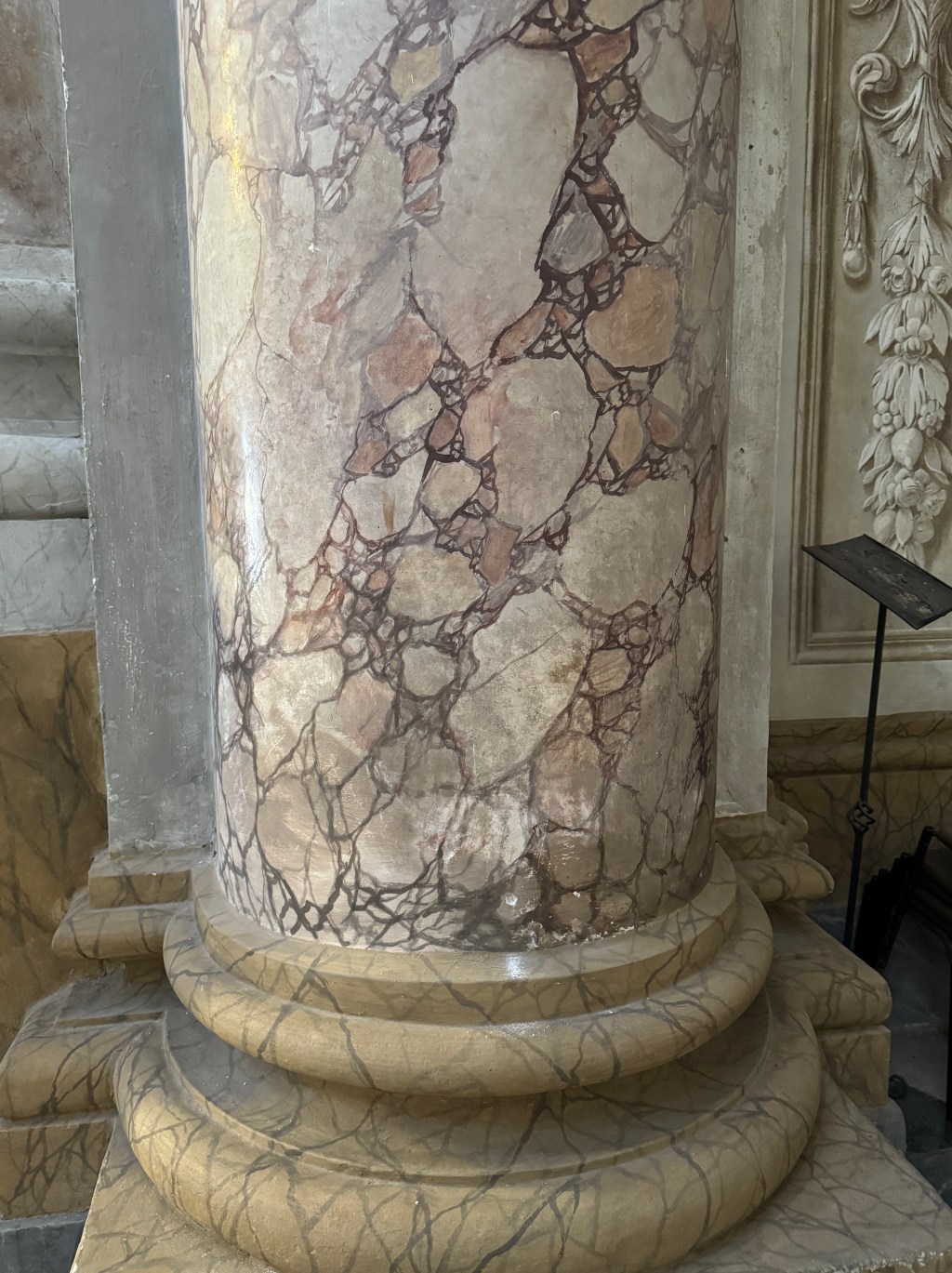
Fake Marble
Not being as rich as Florence or Pisa, Livorno’s churches had to economize. One way was to paint wooden columns to look like fine marble, as they did for the columns and walls in Santa Caterina church. From a distance, it looks pretty good.
-
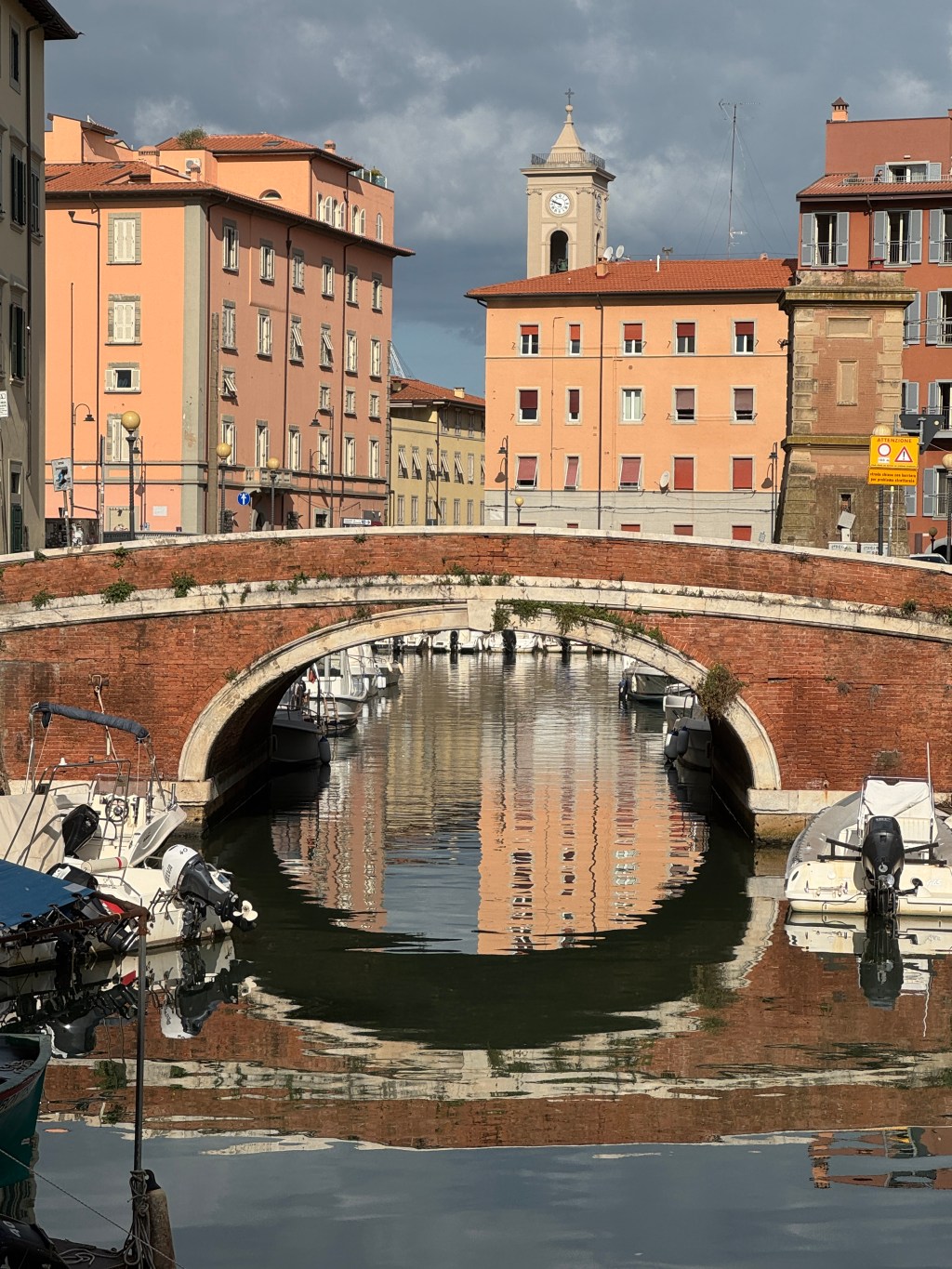
Livorno
The port for Florence, Livorno has lovely canals and an interest in past. The Medici rulers of Florence created the town from scratch, offering no taxes, religious toleration, and amnesty for any crimes to anyone that would move there. The current citizens are proud to be the sons and daughters of pirates!
-
Ponte Vecchio
The old bridge over the Arno River (Ponte Vecchio) was originally the home of butcher shops, who tossed their scraps into the river. But since the Medici rulers had to cross the foul-smelling bridge each day, they decided to replace the butchers with jewelers, who are still there today.

-
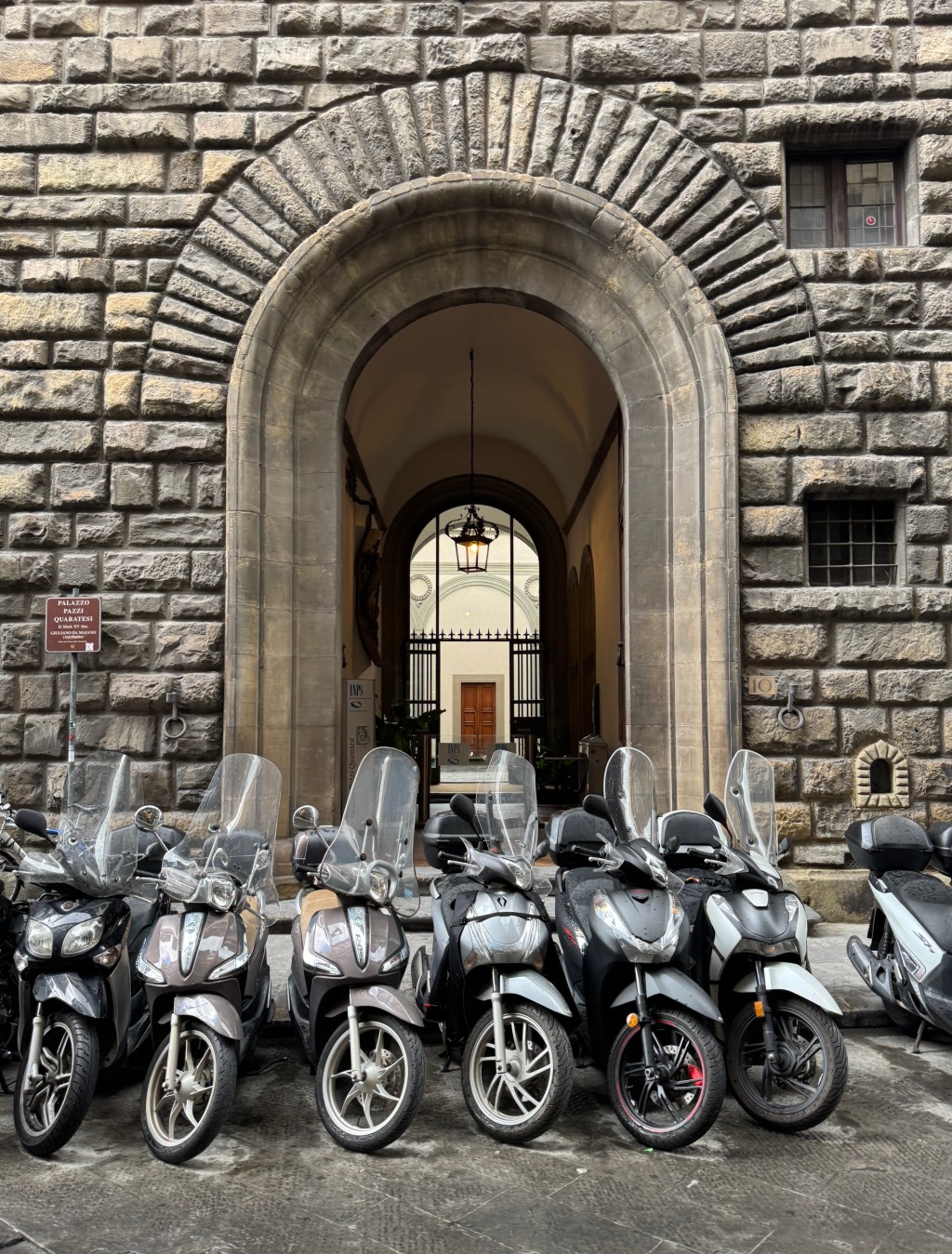
Archway
With narrow streets and lots of pedestrians, it’s easier to get around downtown Florence on a motorcycle. These bikes are parked in front of an old “palace” gateway with a central courtyard in the background. Amazing stonework!
-
Gates of Paradise
These gilded bronze doors on the Florence Baptistery were created by Lorenzo Ghiberti in the 1400s. Michelangelo reportedly called these panels, depicting Old Testament scenes, the “Gates of Paradise.” (Like other outdoor artworks, the originals are in a nearby museum to protect them from pigeons and acid rain.)

-
Duomo
The facades of the Duomo Cathedral and neighboring bell tower are rectangles of white, green and pink marble. It’s so big that it’s difficult to see more than just a part of it in the relatively small open spaces around one of the largest churches in the world.

-
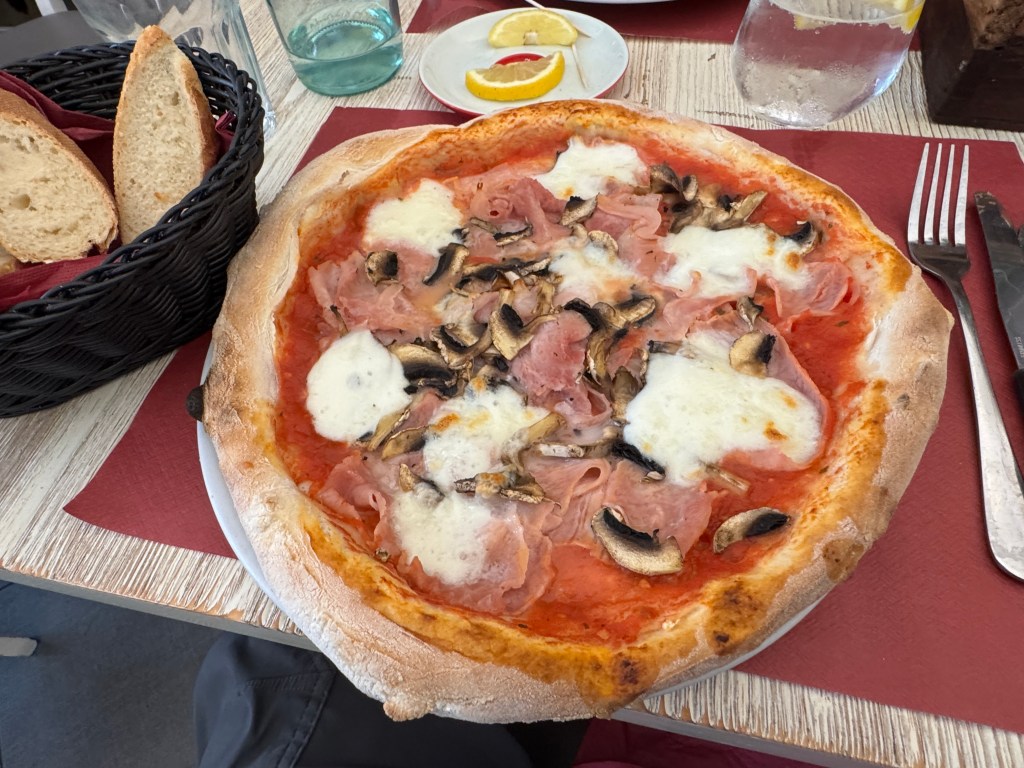
Pizza
Walking through Florence, we found a restaurant that was popular with both locals and visitors. I ordered a pizza with mozzarella, prosciutto and mushrooms, and this was the delicious result. Hungry?
-
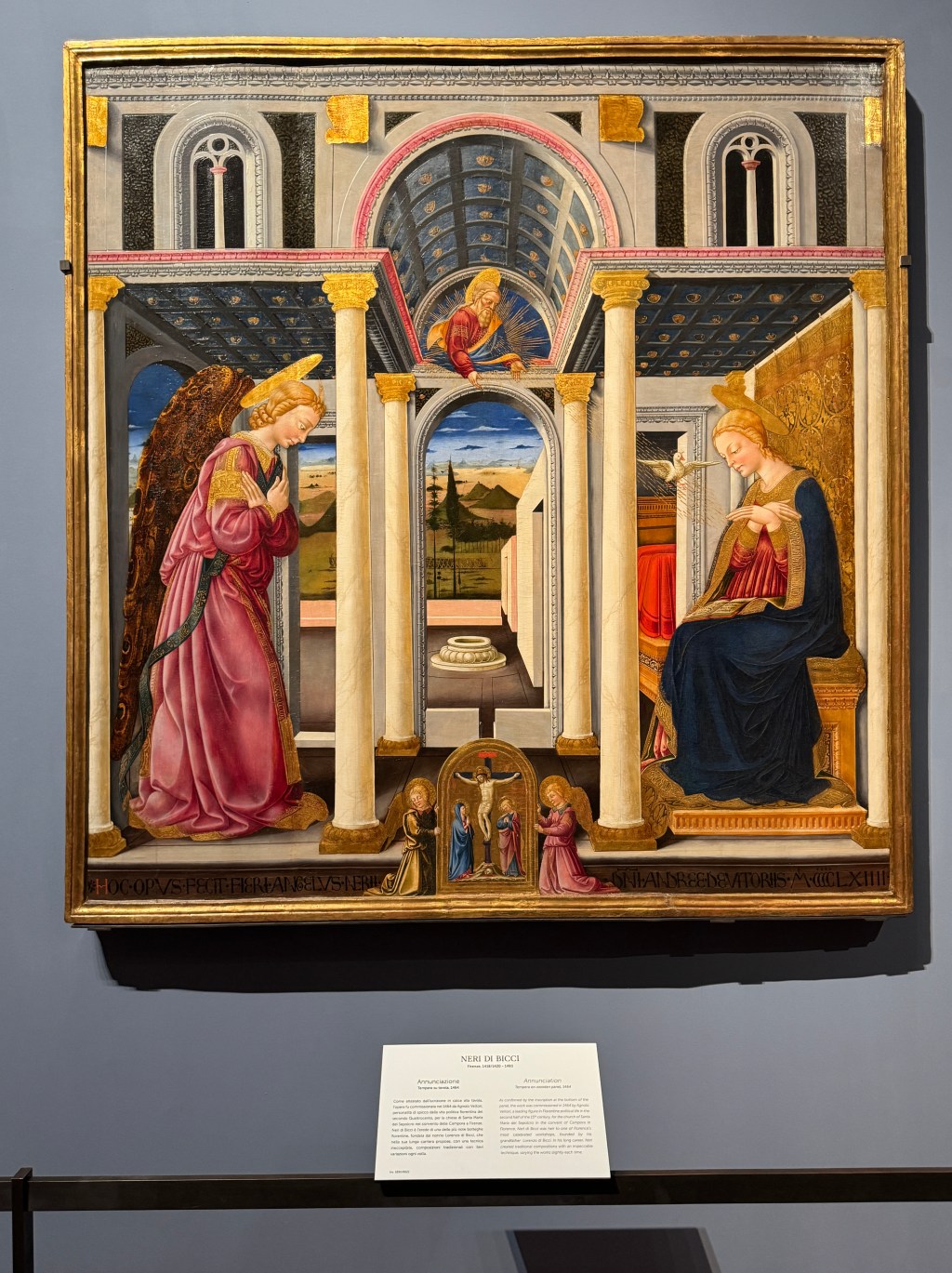
Annunciation
This 1464 painting by Neri di Bicci in the Accademia Gallery has the classic geometry of Renaissance artwork, setting the Angel Gabriel’s visit to Mary in a Greek temple. Follow the lines of the ceilings to find the perspective’s vanishing point in the painting’s center.
-
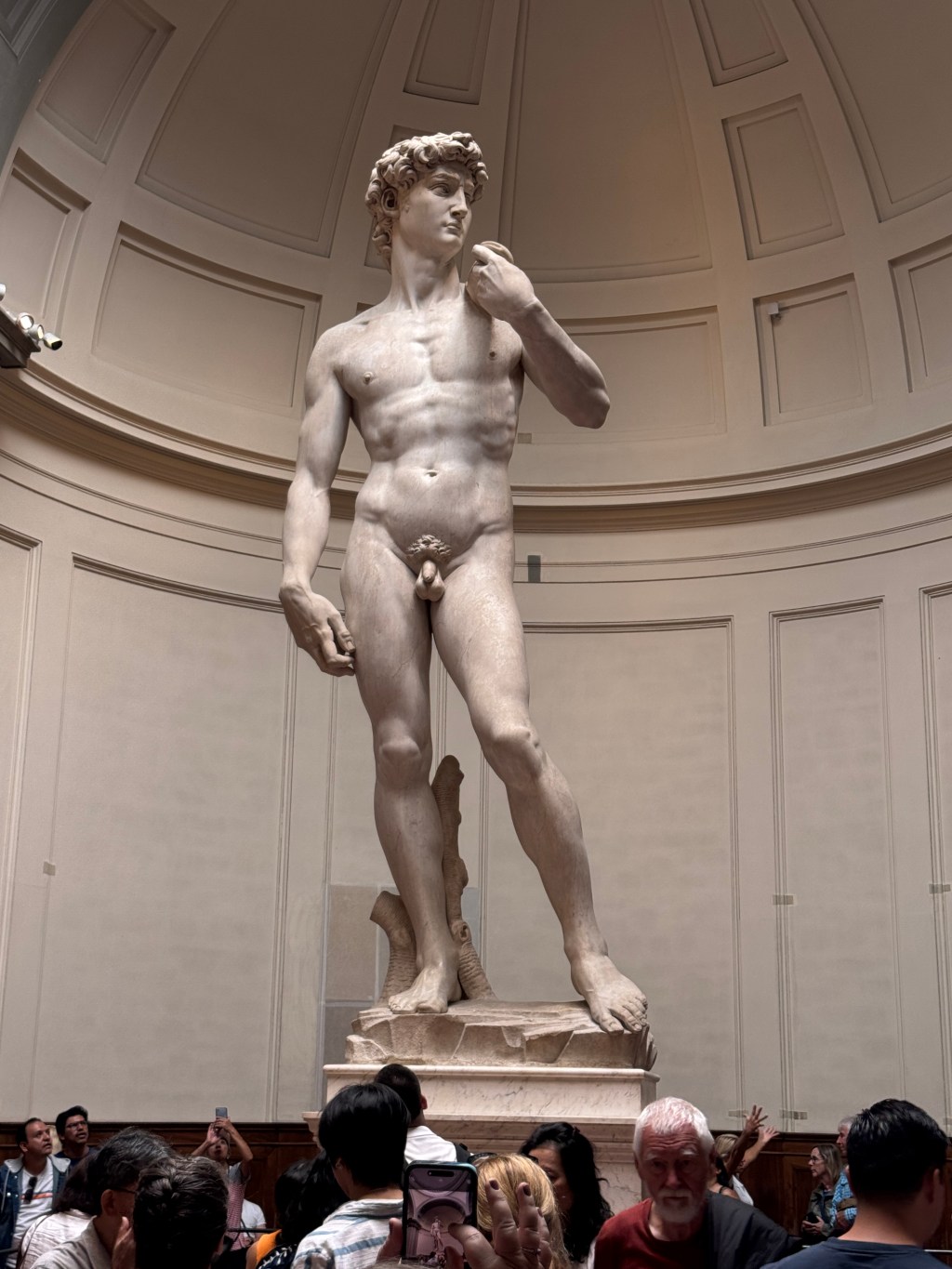
David
No visit to Florence, Italy is complete without seeing Michelangelo’s David. At 19 feet tall, he stands above the swirling crowd just as he rises above every other Renaissance sculpture as both a symbol of the Florentine Republic and of human potential.
-
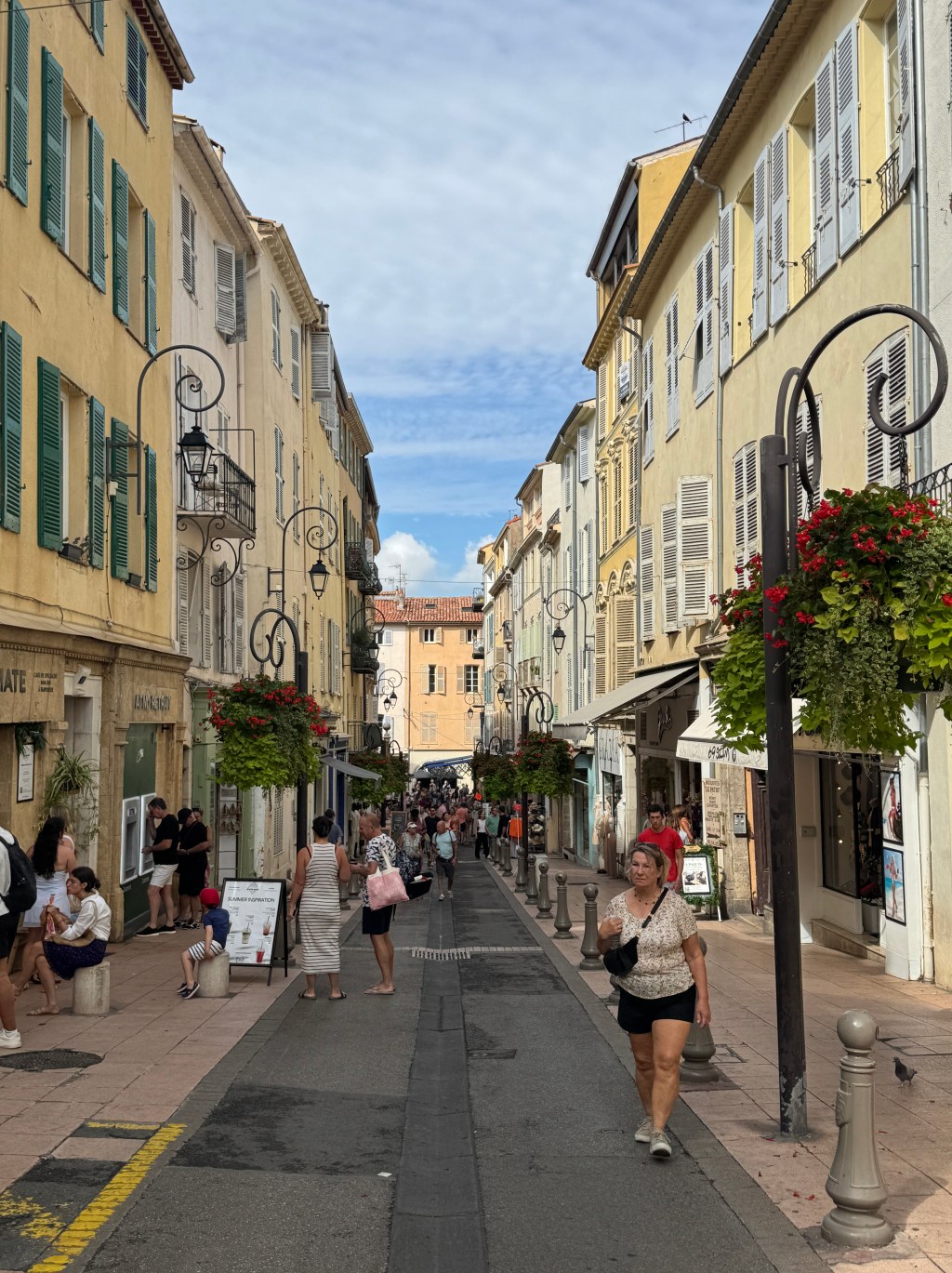
Antibes Alley
This charming alley was one of the busier shopping streets in Antibes, as well as a pleasant shady stroll on a sunny day.
-
Crème-Filled Croissants
Every port we visited had some variation on sweet cream in a crunchy pastry. In the market in Antibes, they were croissants with vanilla, lemon or chocolate cream fillings.

-
French Riviera
Beginning our Norwegian cruise around the western Mediterranean Sea, we visited the French Riviera town of Antibes. The harbor was full of yachts, but 210 years ago it was this quiet coast where Napoleon landed to launch his last campaign that ended at the battle of Waterloo.

-
Ramblas
A warm summer evening is the time for Barcelonans to greet their neighbors and walk their dogs along the tree-lined Ramblas boulevards. We wandered through the Poblenou neighborhood, getting a feel for urban life in a very livable European city.

-
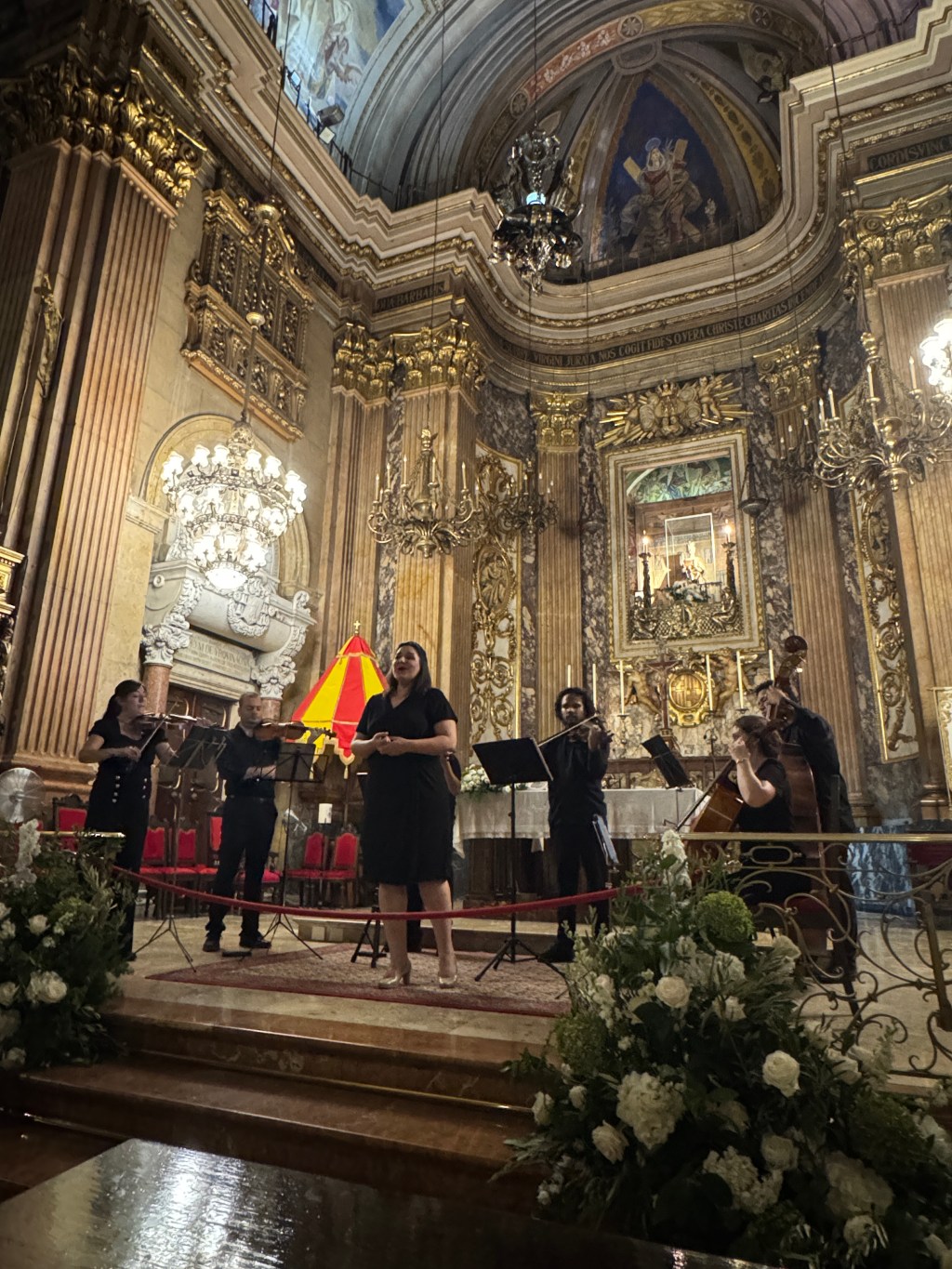
Church Music
View from our front row seats to the concert in the Basilica of our Lady of Mercy. She had a beautiful voice that echoed throughout the baroque interior.
-
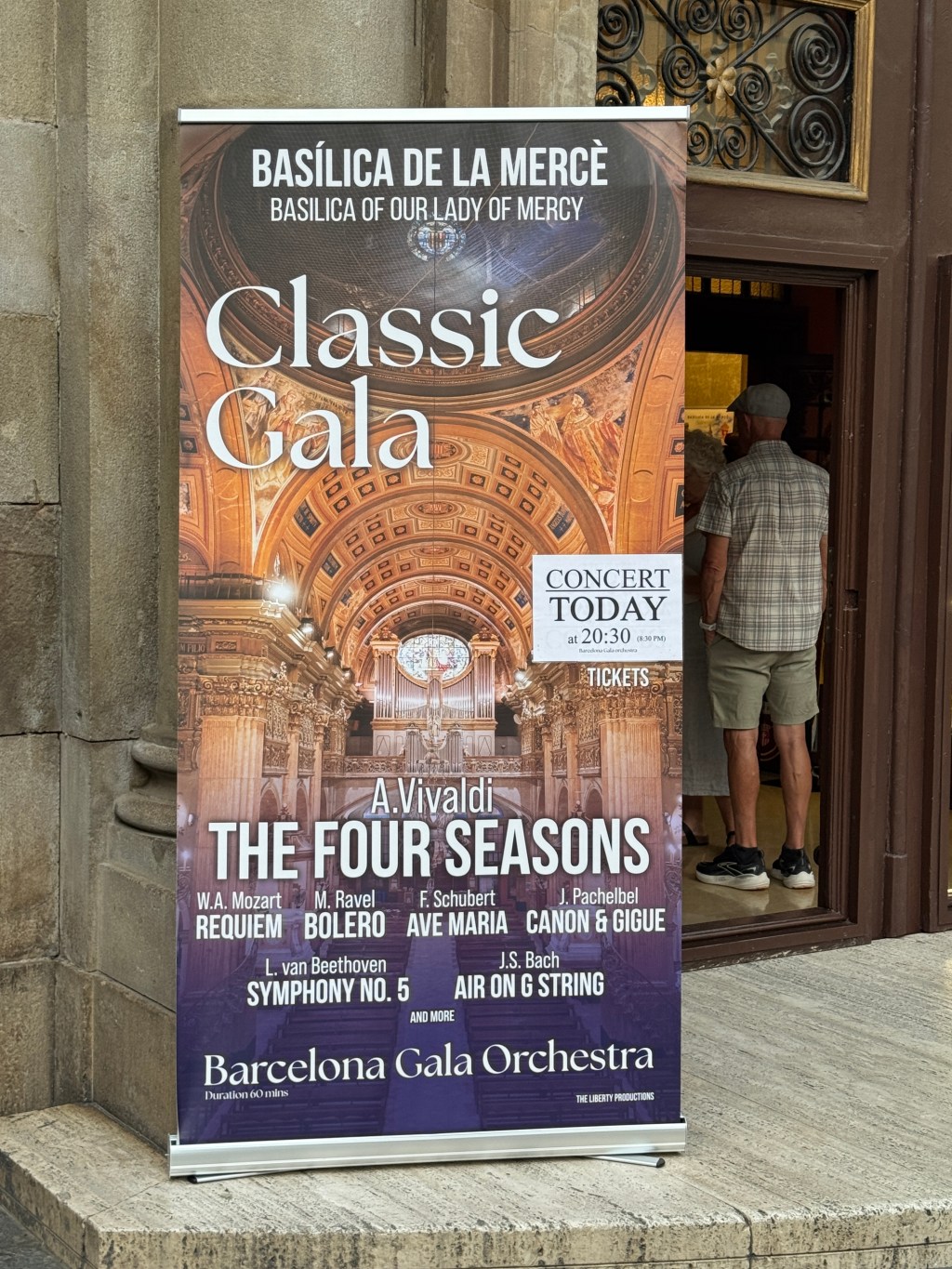
Classical Concert
Where better to enjoy the greatest hits of the 18th century than in a baroque church in the old town of Barcelona. We ordered tickets in advance for the string ensemble and solo soprano who put on a great concert.
-
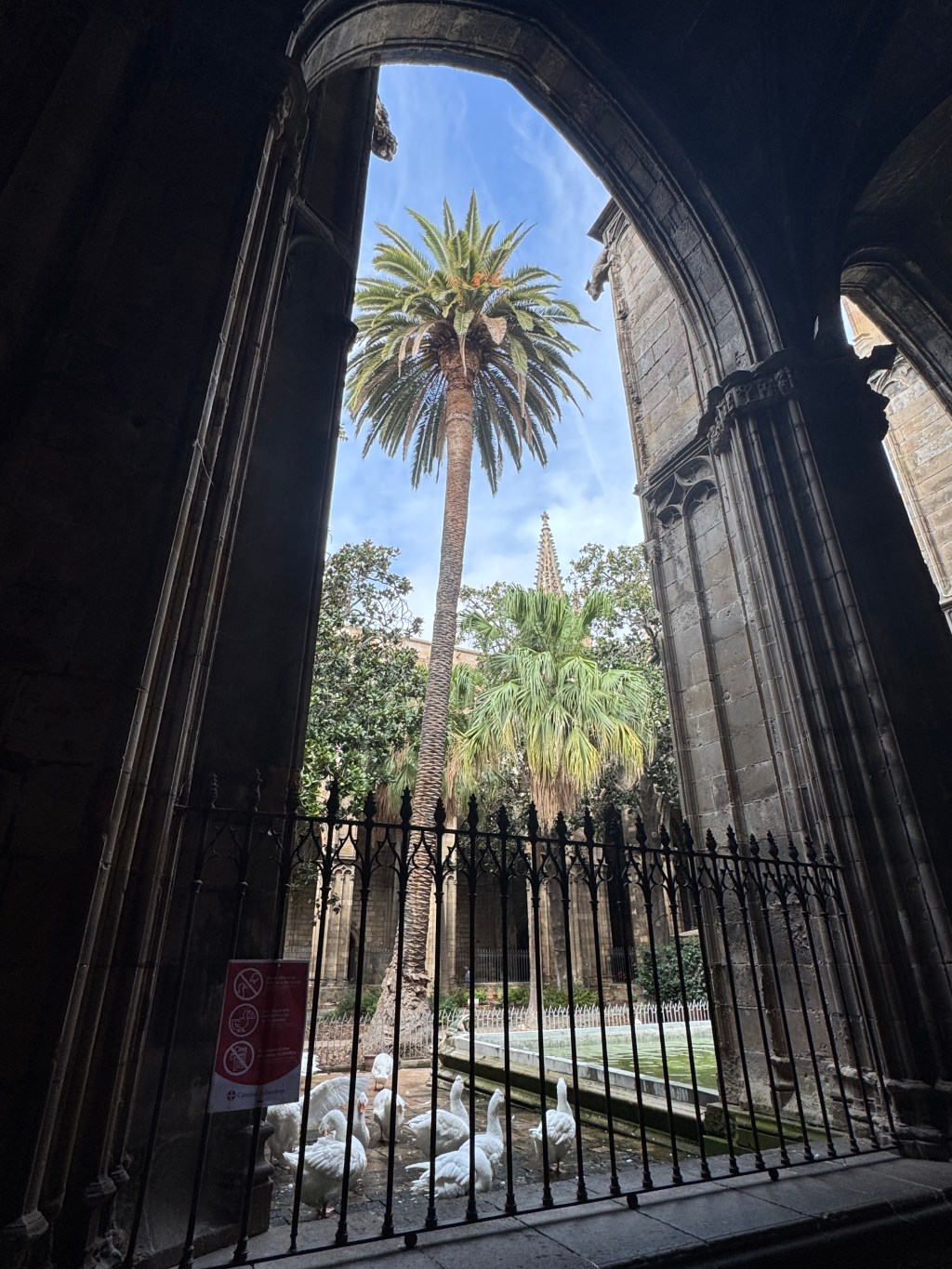
Cloister Guards
The courtyard next to the Barcelona Cathedral features a flock of geese, always 13 of them for over 500 years, whose honking acted as an alarm before modern security systems. Rich merchants paid to be buried in the floor of the Cloister walkway, their headstones showing shoes or baking bread to identify their trades.
-
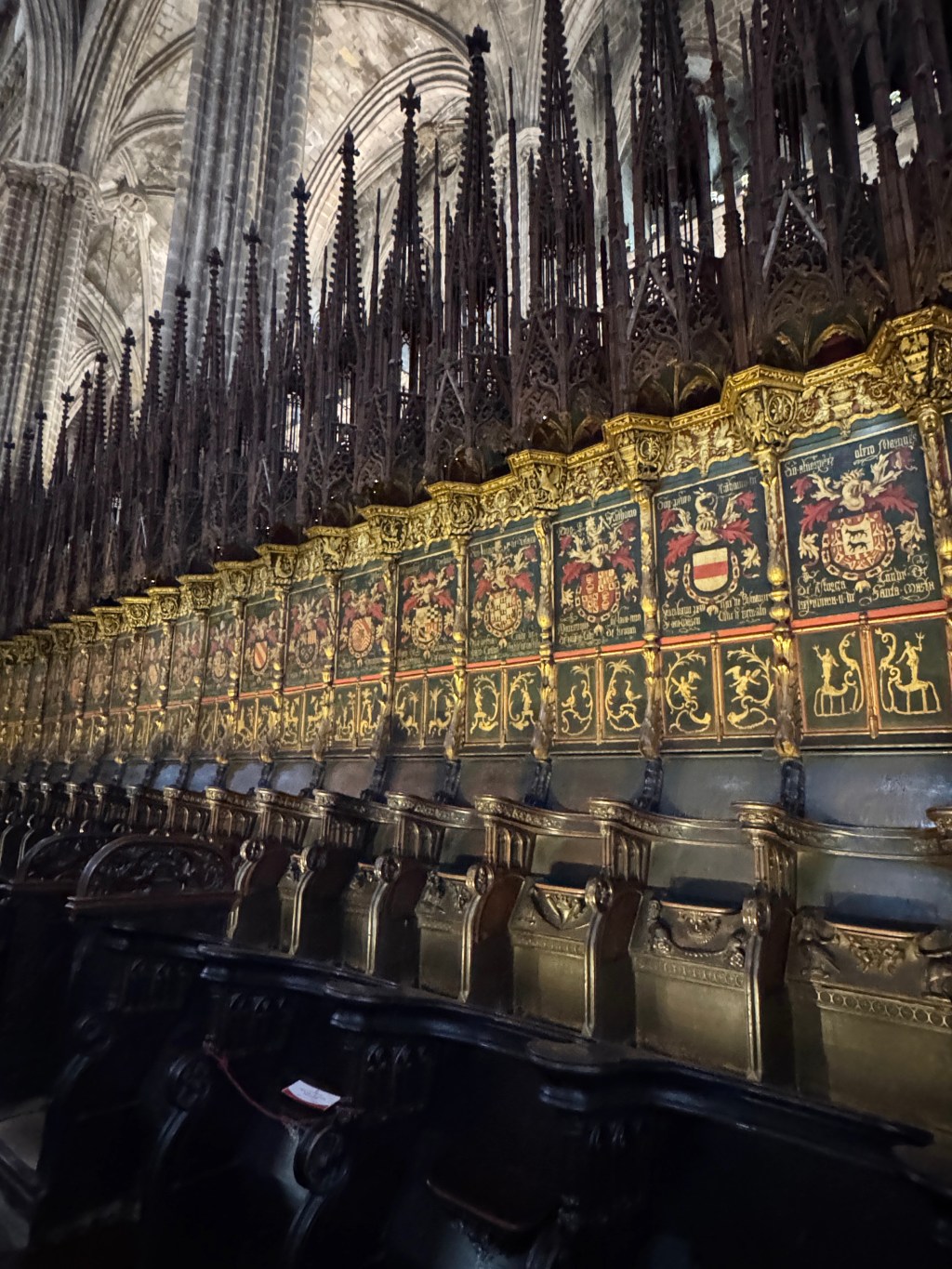
Choir of Nobles
These ornately carved stalls in the Cathedral’s choir display the coats of arms of the Knights of the Golden Fleece. They gathered here in 1518 to plan how to defend Europe from the Turks. (They ignored the activities of a German monk named Luther, who turned out to be a bigger challenge.)
-
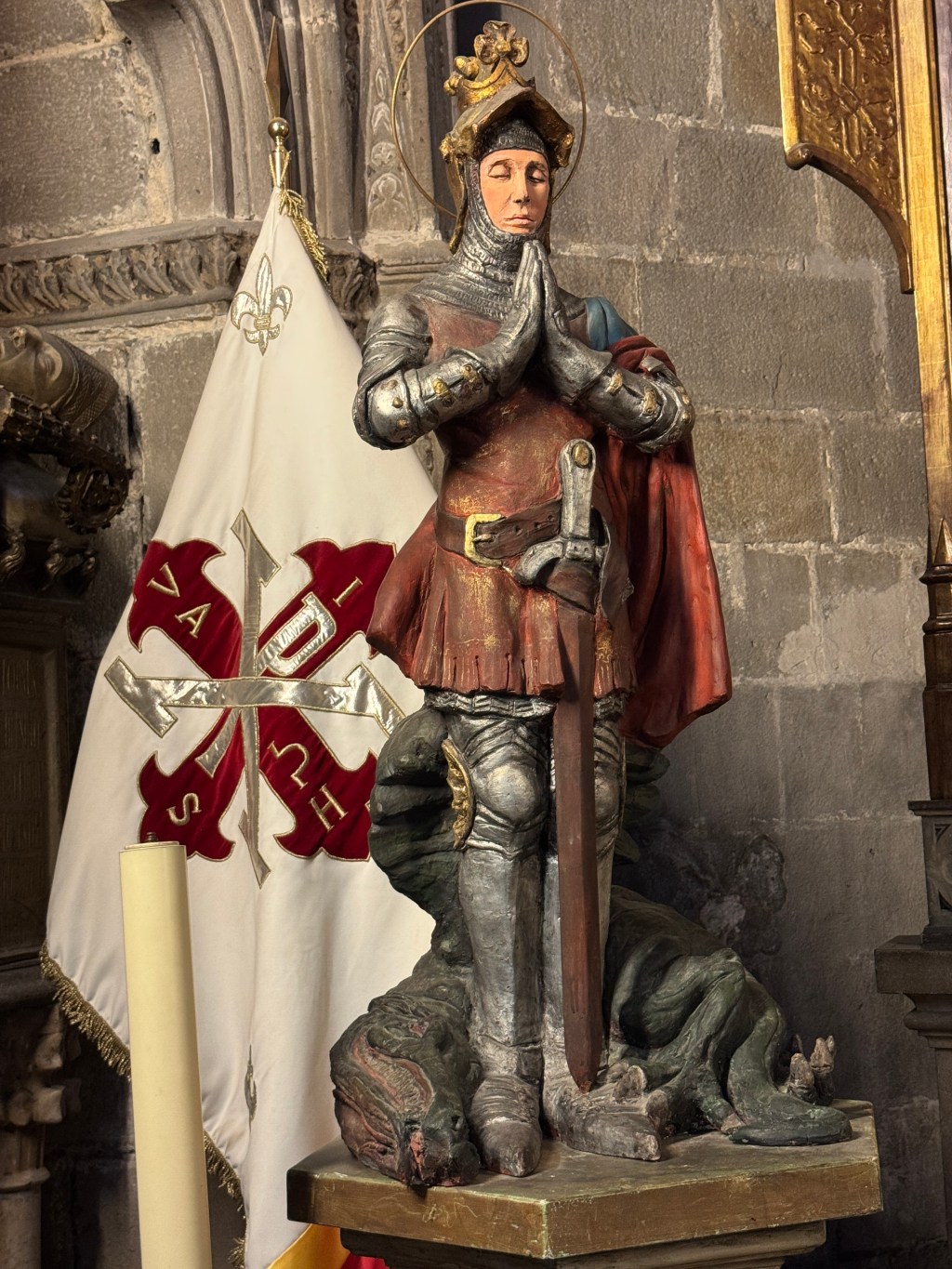
St. Jordi
St. George (Jordi in Catalan) is the patron saint of Catalonia, so it’s no surprise to see him in the Barcelona Cathedral standing over his defeated foe. Jordi is also the most popular boy’s name in the region.
-
Barcelona Gothic
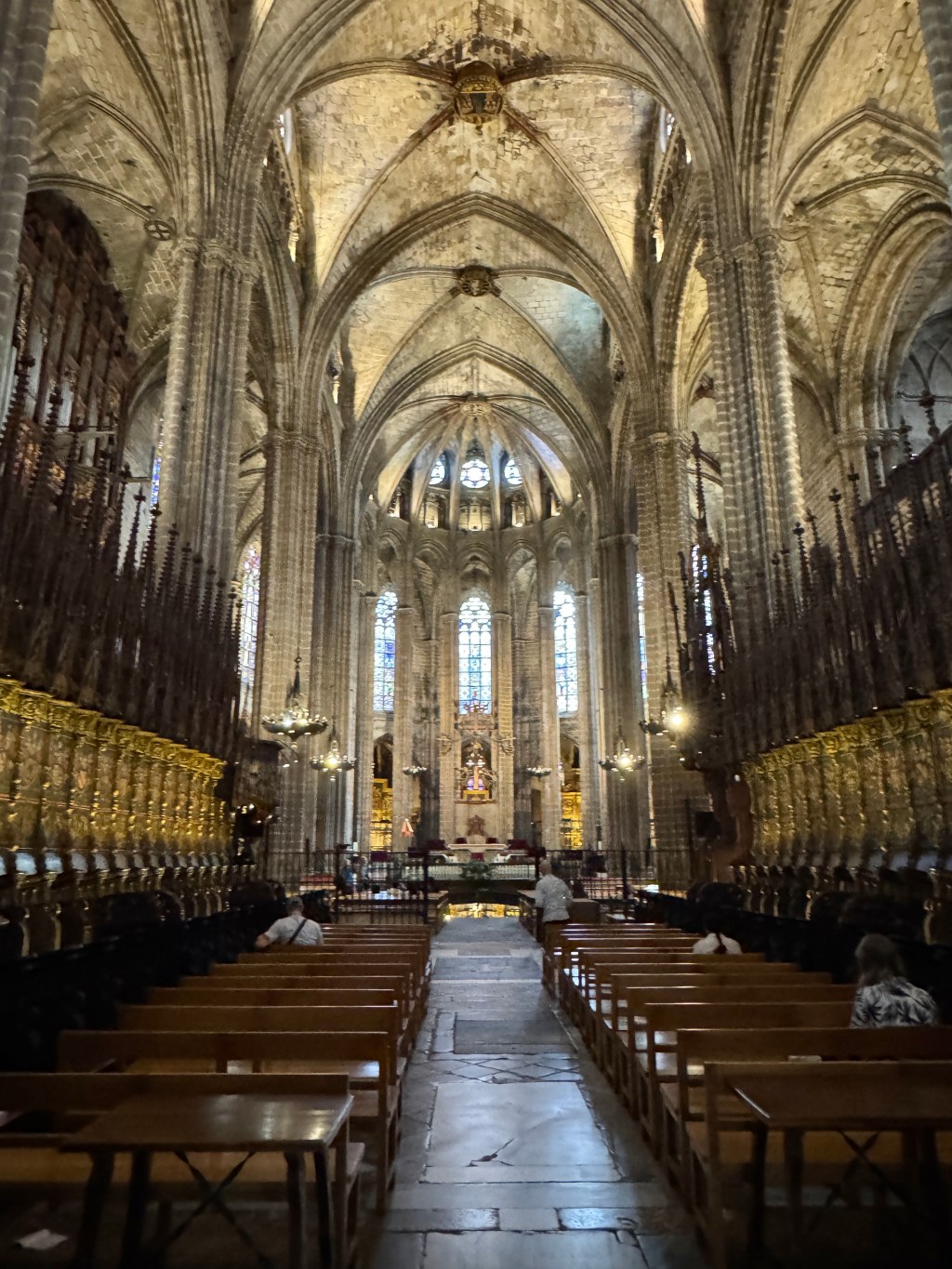
Centuries away from the Sagrada Familia, in both time and style, is the other major church in Barcelona, the Cathedral. Begun in 1298 and built over 150 years on the site of previous cathedrals, the towering arches enclose a “choir” of wooden seats for a more intimate worship experience.
-
Crucifiction
Exiting the Sagrada Familia, you pass under the Passion Facade where stern, block-like sculptures portray Christ’s torture and execution. Following Gaudi’s instructions, they were created by Josep Maria Subirachs and finished in 2005. The Roman soldiers kind of look like stormtroopers.

-
Our Daily Bread
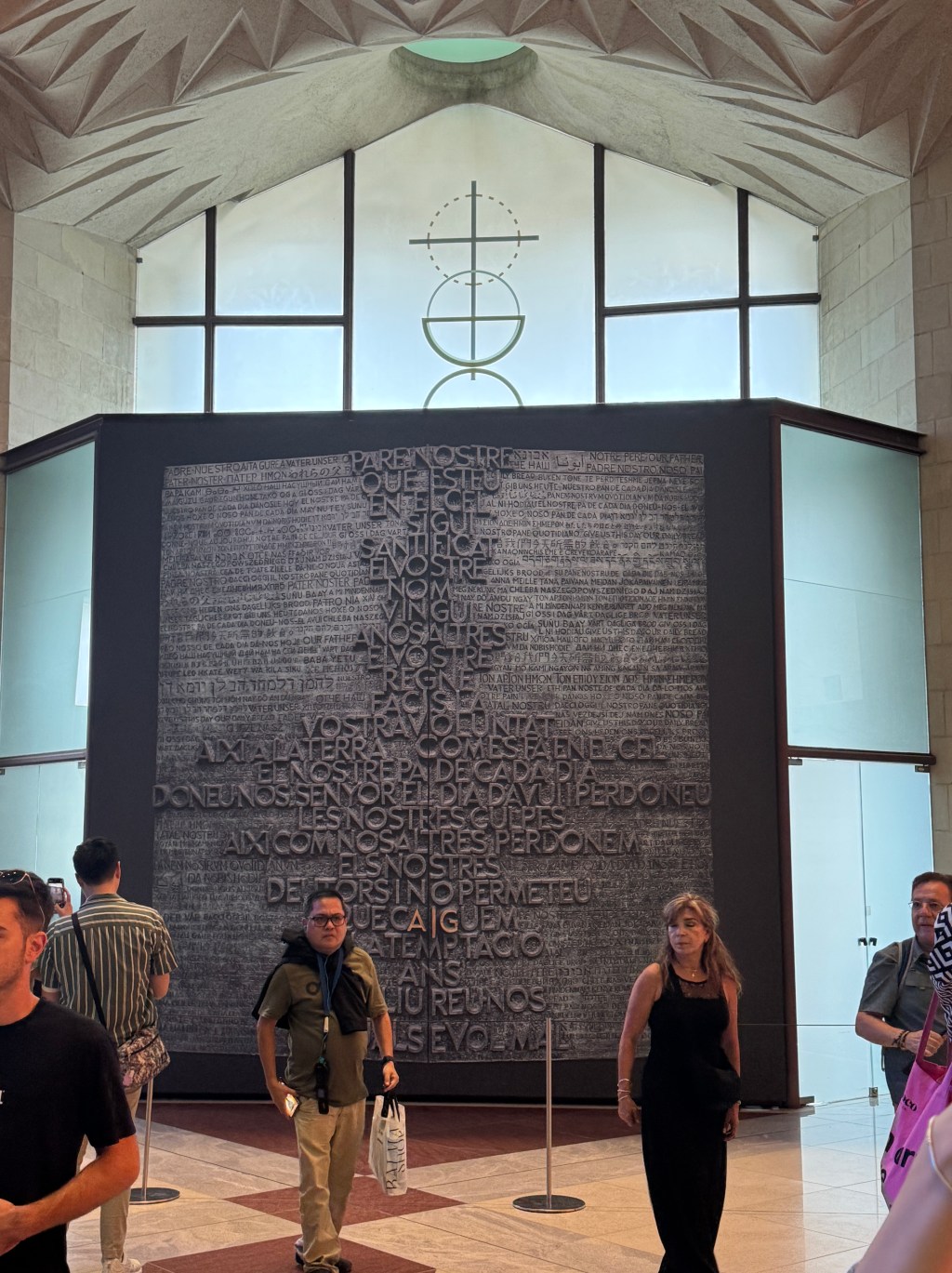
The main doors to the basilica, although no one can enter through them yet, have the Lord’s Prayer engraved on them in Catalan and 50 other languages.
-
The Altar
On a more human scale is the altar with a contemporary-looking crucifix below a canopy that has stalks of wheat growing up and clusters of grapes hanging down – representing the bread and wine of the Last Supper. The effect seems to defy gravity, a moment suspended in space and time.

 Words Are Inadequate