New Mexico
-
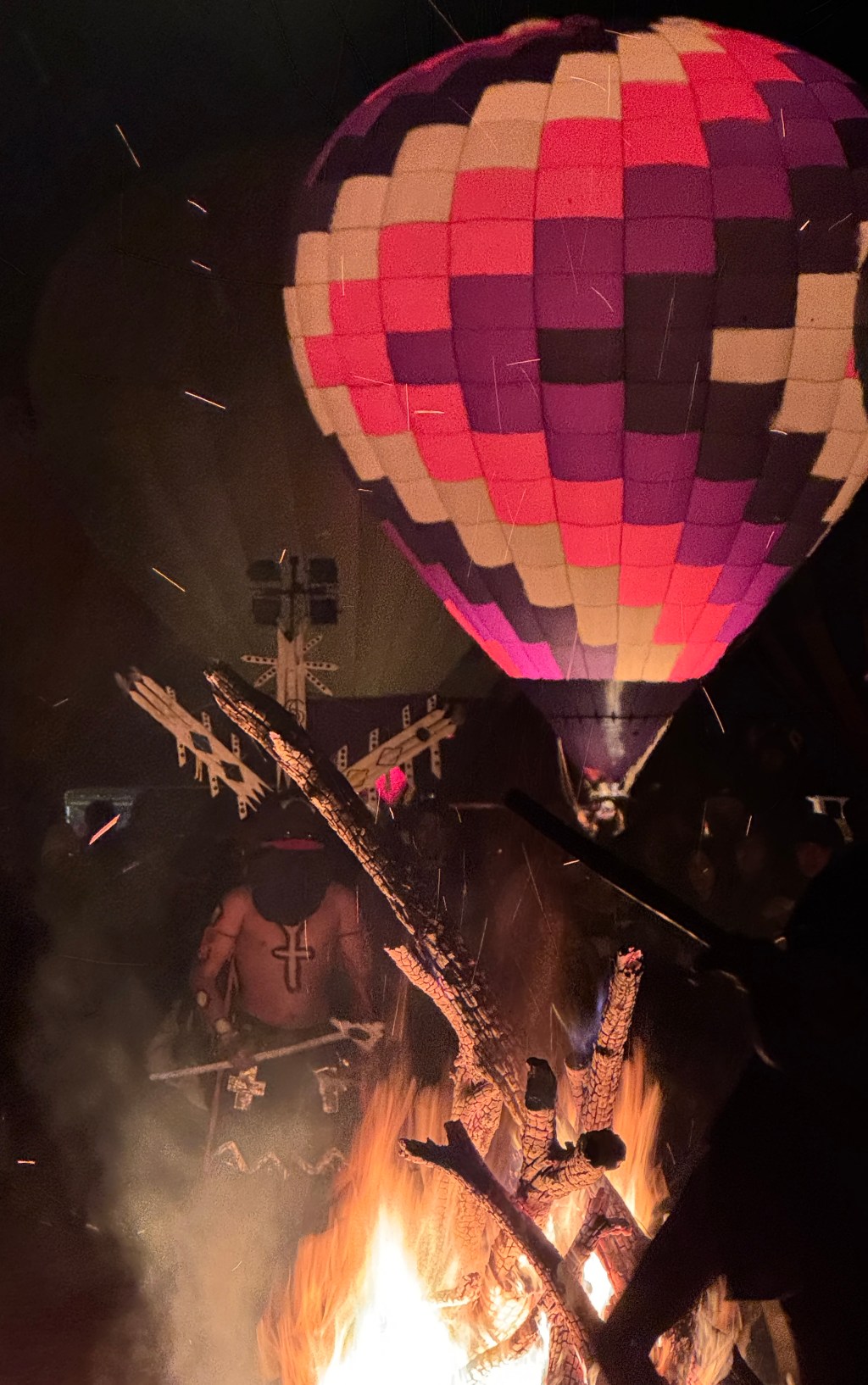
Night Scene
This shot juxtaposes three elements of the Red Rocks balloon rally’s “Evening Glow” event — a burning bonfire, Apache dancer, and hot air balloon.
-
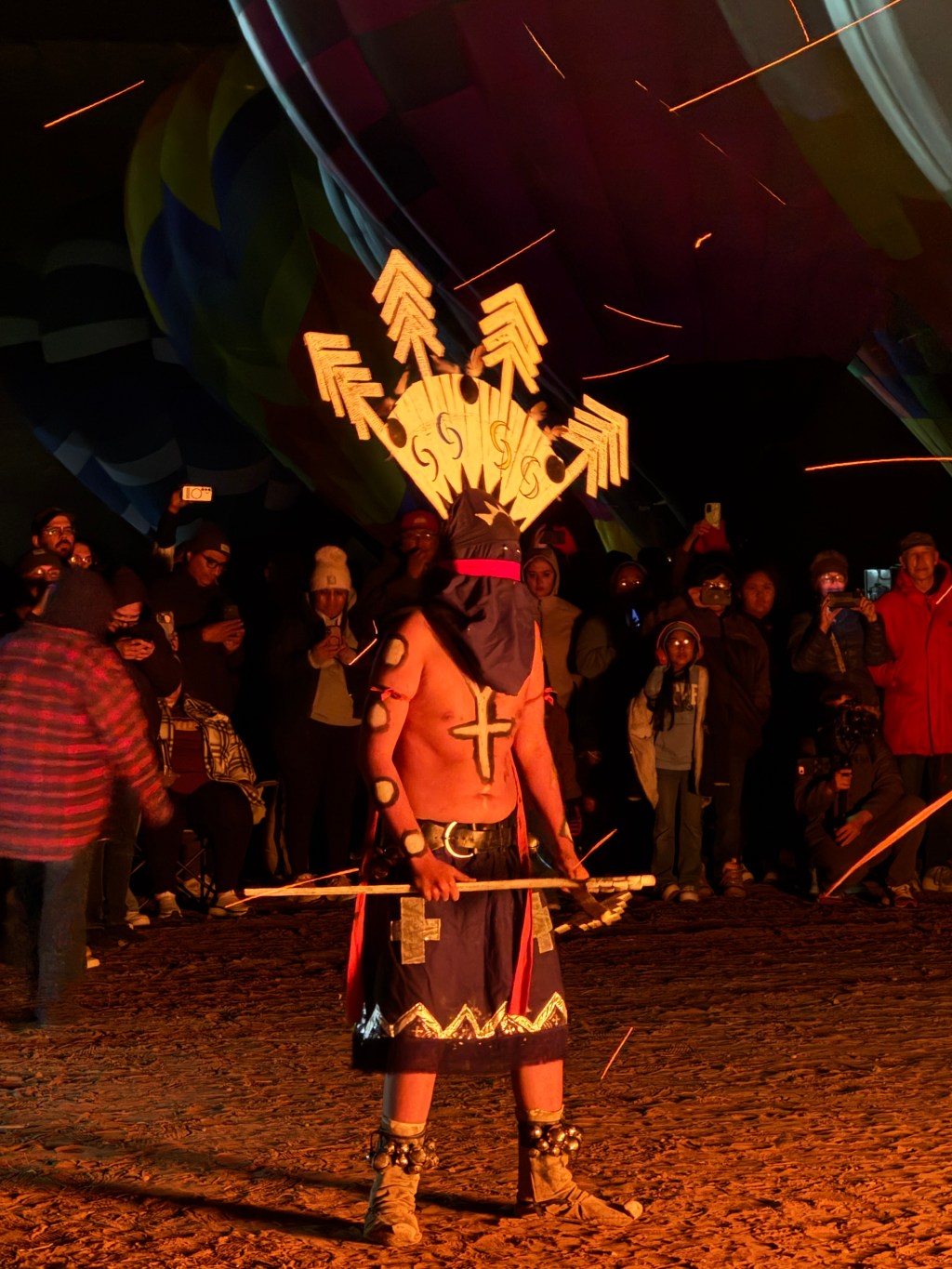
Apache Dancer
This dancer from the Apache tribe was one of four circling around a large bonfire at the Red Rocks Balloon rally’s “Evening Glow” event. Four Navajo women also danced with waving ribbons that evening.
-
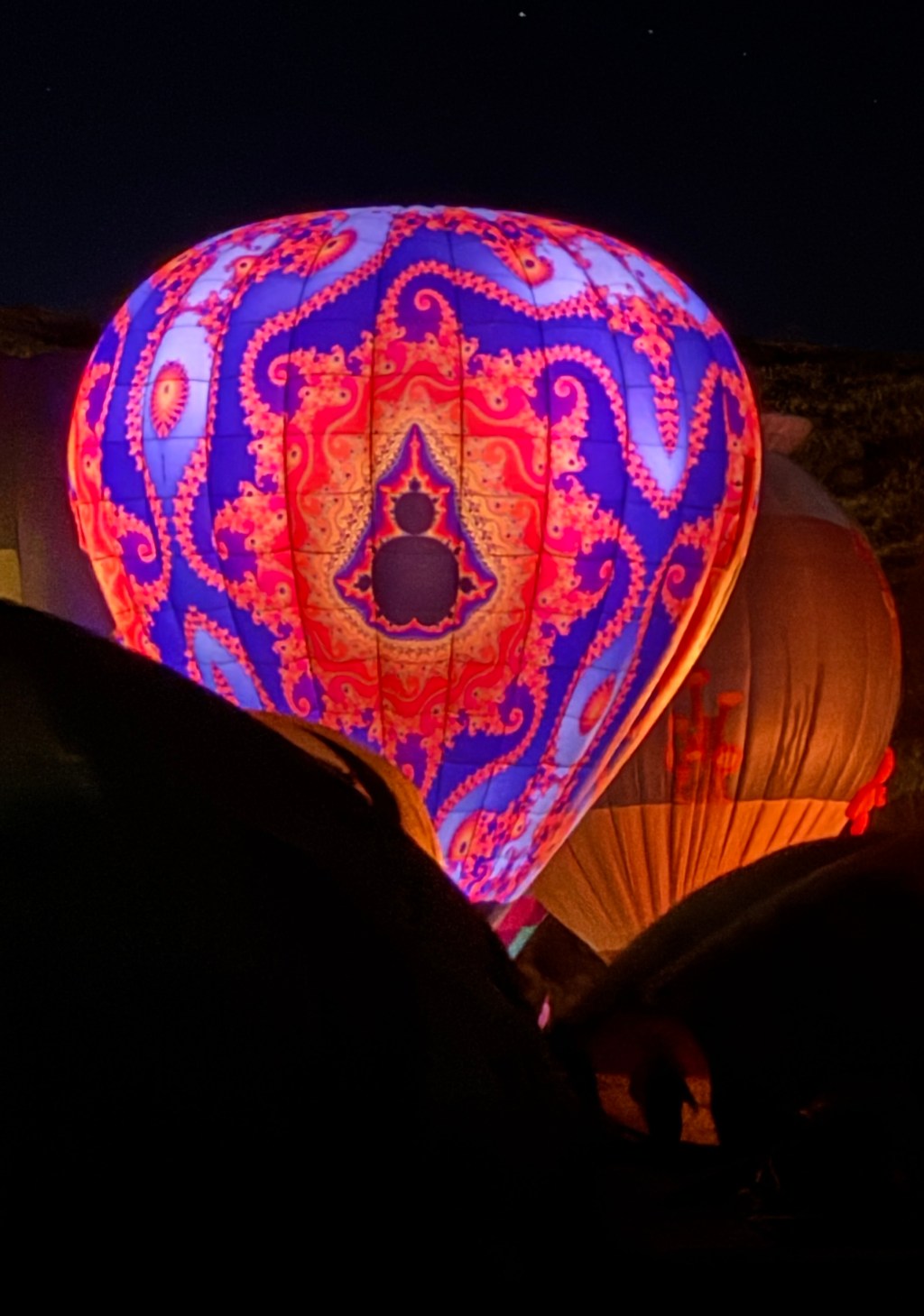
Fractal Balloon
The intense hot air balloon with a fractal design kept changing colors as the pilot turned on and off the flames in the basket.
-
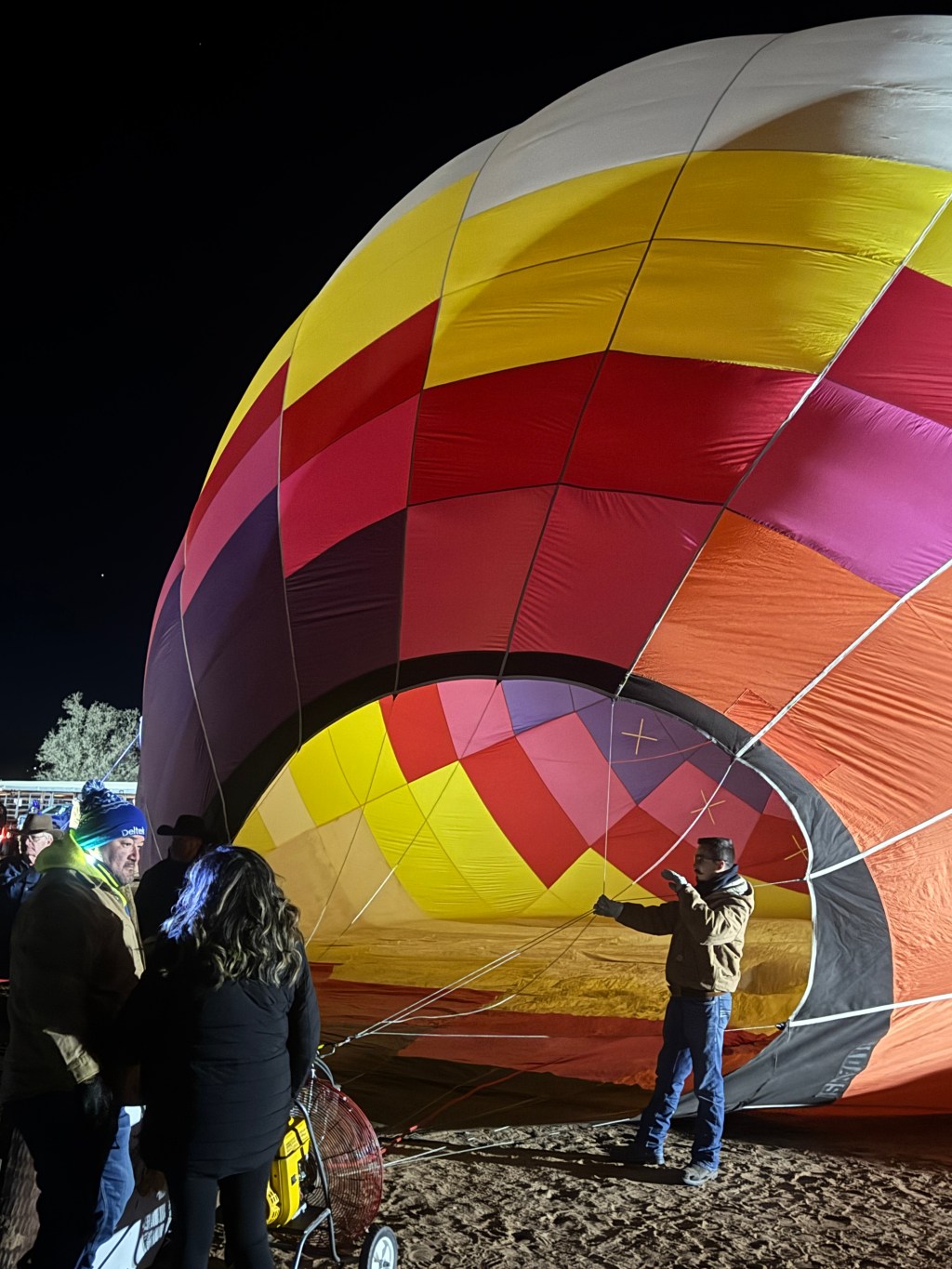
Inflating at Night
The “Evening Glow” event at the Red Rocks balloon rally opened with giant fans used to start inflating the balloons.
-
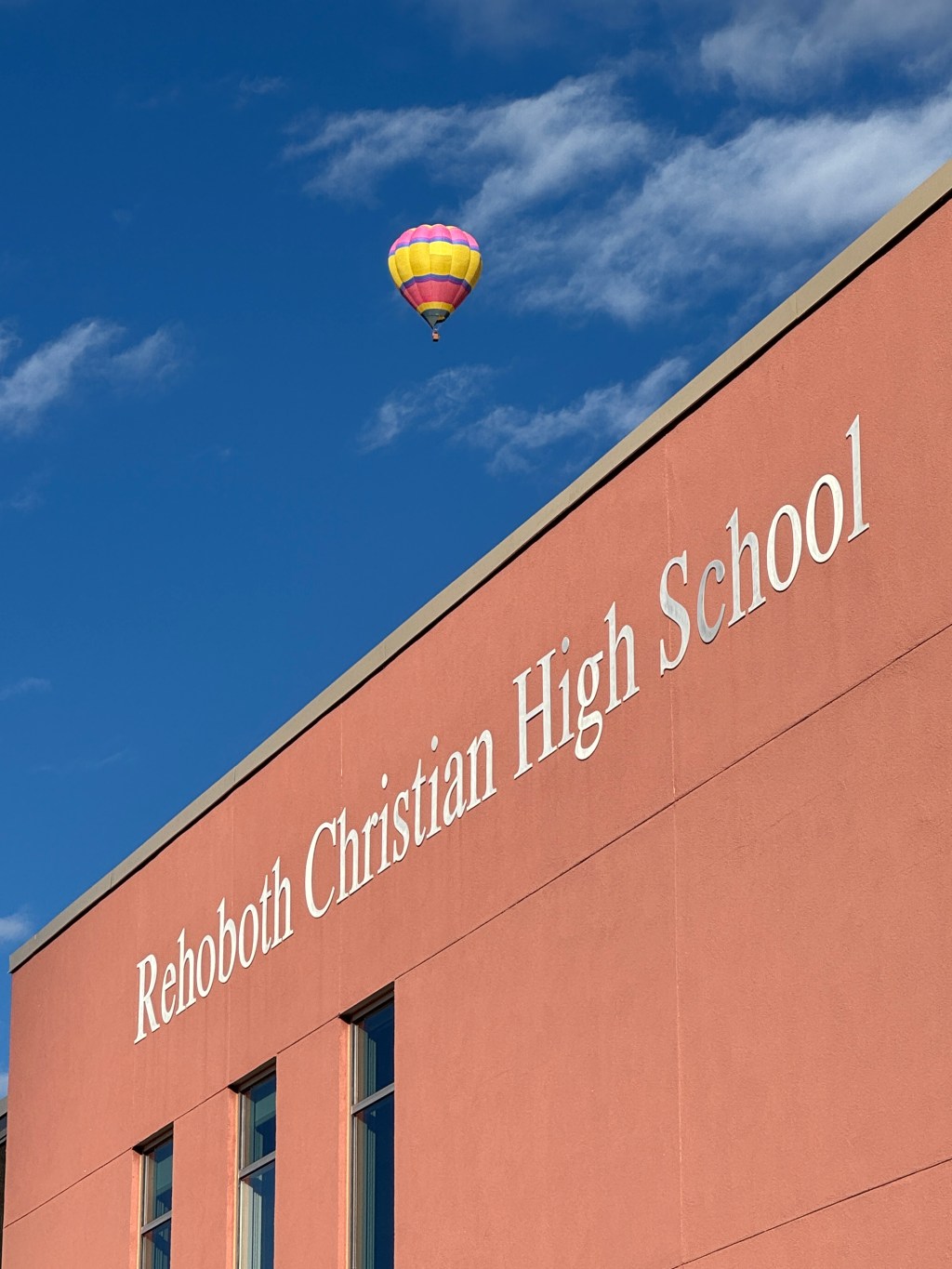
High Above Rehoboth
The first weekend in December is the Red Rocks Balloon Rally in Gallup, NM. Friday morning we awoke to see hot air balloons floating over the school’s campus!
-
Belt Buckle
I found this spectacular belt buckle of silver and inlaid precious stones at a trading post in Zuni, New Mexico. The design is distinctively Zuni (the sun in the center is a protective symbol) and the artist is no longer making them, so I brought it home with me!

-
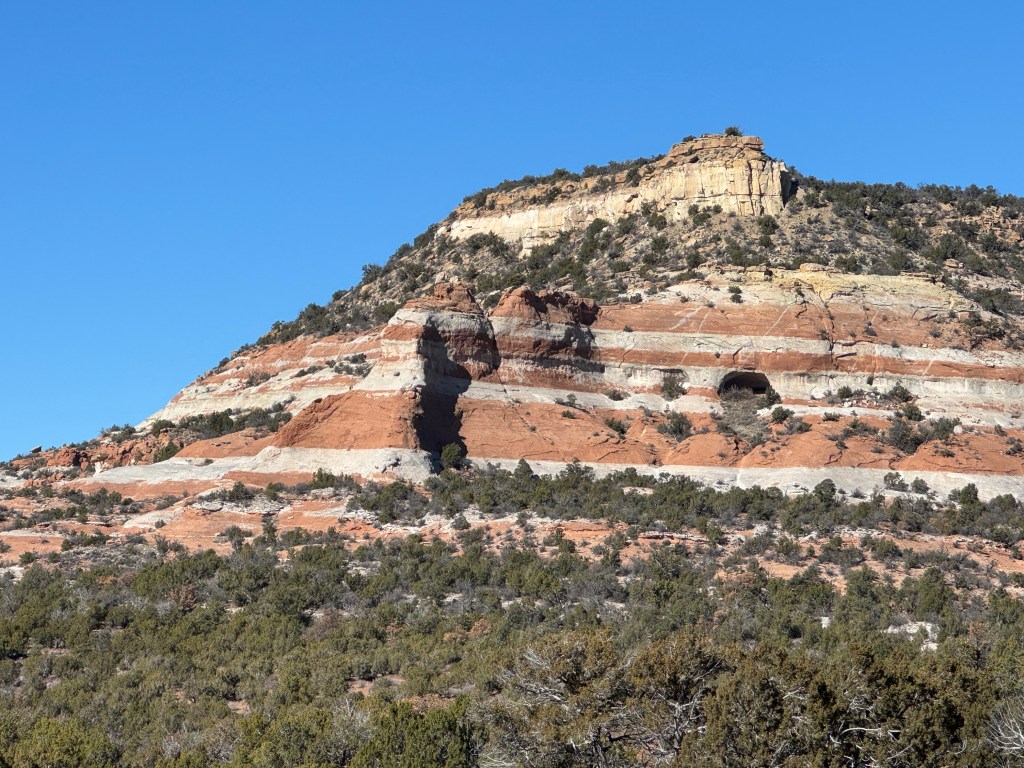
Zuni Cliffs
These red and white stripes mark the entrance to the valley of the Zuni Pueblo, about half an hour south of Gallup. We visited Zuni, but everyone was busy cleaning up after their big dancing and feasting celebration a few days before.
-
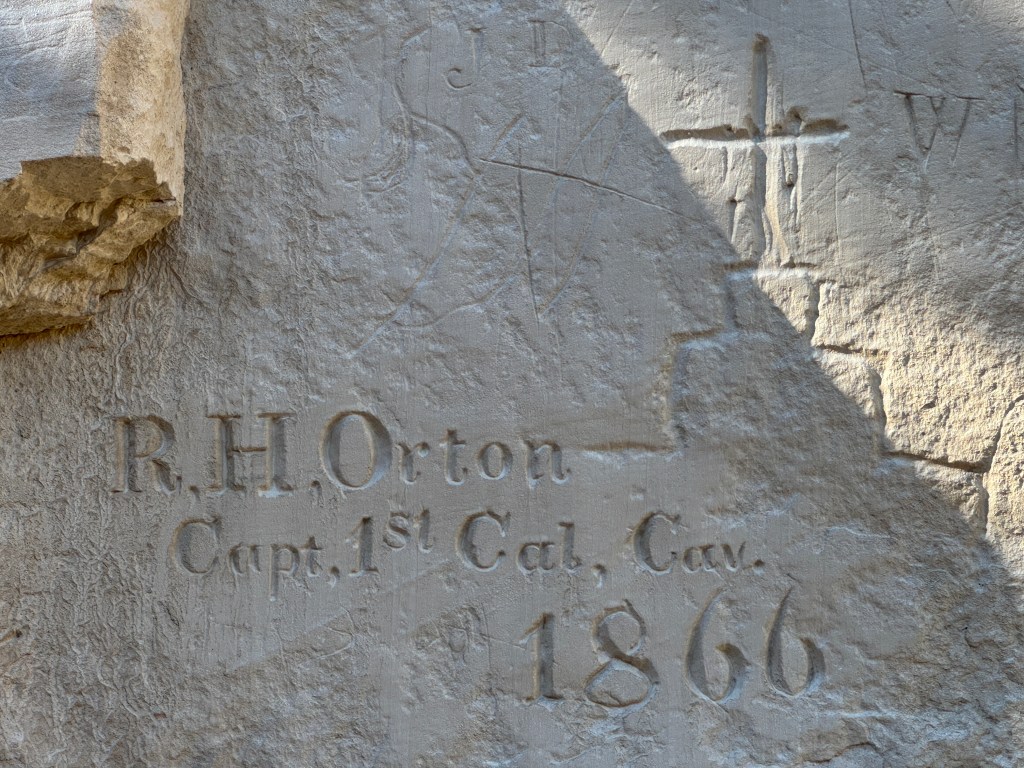
The Cavalry
After the U.S. annexed New Mexico in the 1840s, American army officers recorded the inscriptions on El Morro and added their own names like this cavalry officer in 1866. One group of officers even drove a herd of camels through the valley on their way to California.
-
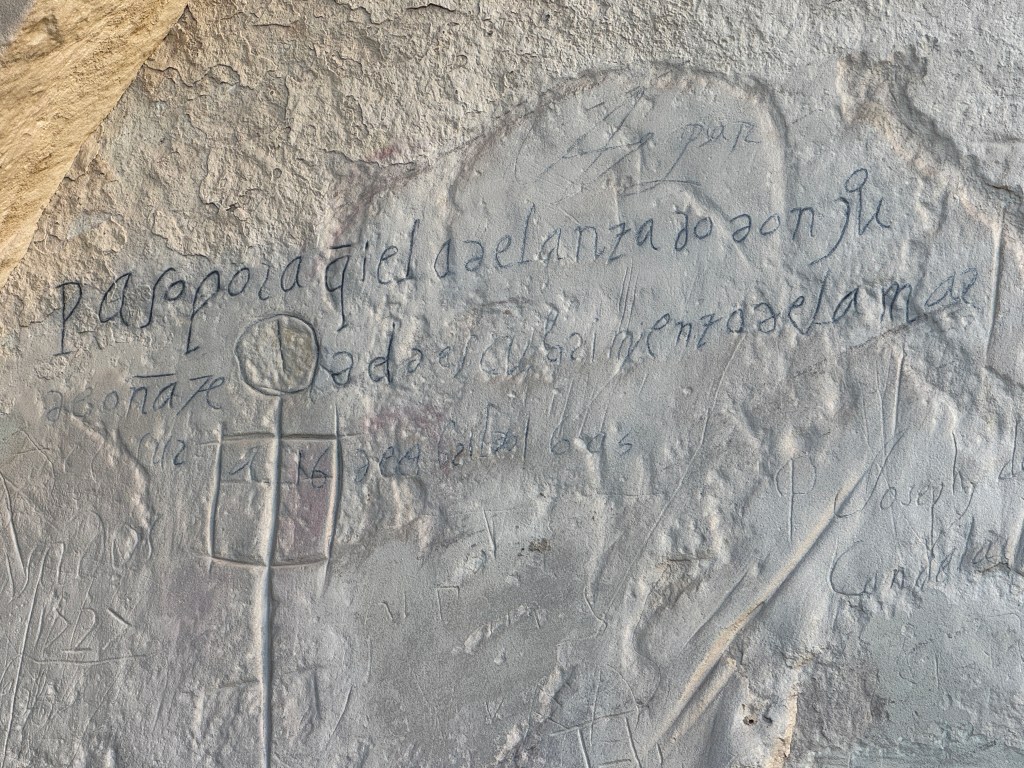
The Last Conquistador
Don Juan de Oñate led the first Spanish colonists north to New Mexico in 1598. Seven years later on an expedition to reach the Pacific, Oñate carved his name into El Morro (in this hard to read inscription), marking the first European name to appear on the rock.
-
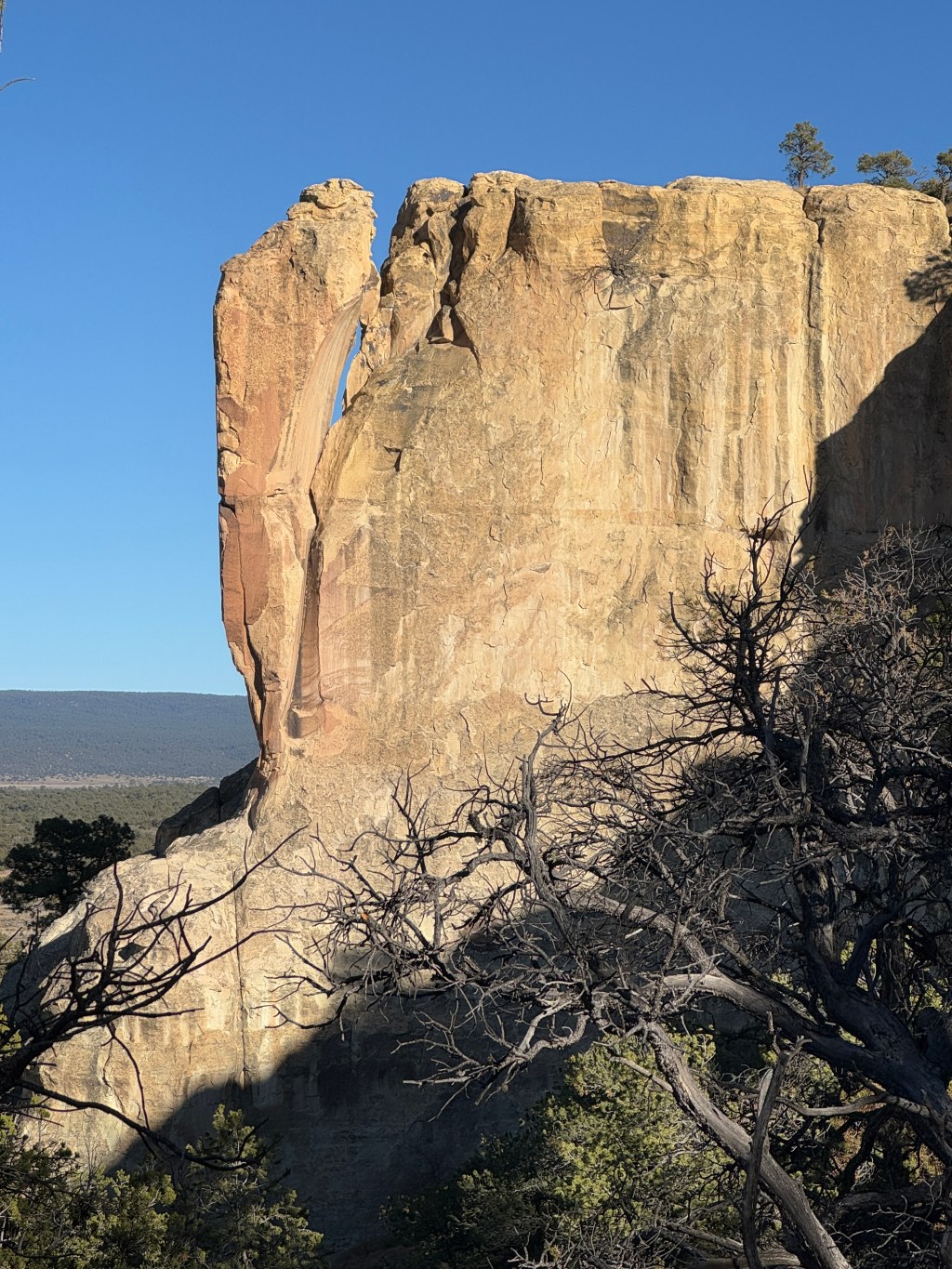
Inscription Rock
El Morro, also known as Inscription Rock, rises 200 feet above the valley. Cracks in the vertical sandstone walls may look ominous, but the landmark has drawn visitors for centuries.
-
Pine Canyon
On top of El Morro National Monument are several surprises, such as the ruins of Atsinna Pueblo that housed over 1,000 residents in the 13th century before being abandoned after just 75 years. Another surprise was this mini canyon with a tall pine tree rising almost as high as the cliffs.

-
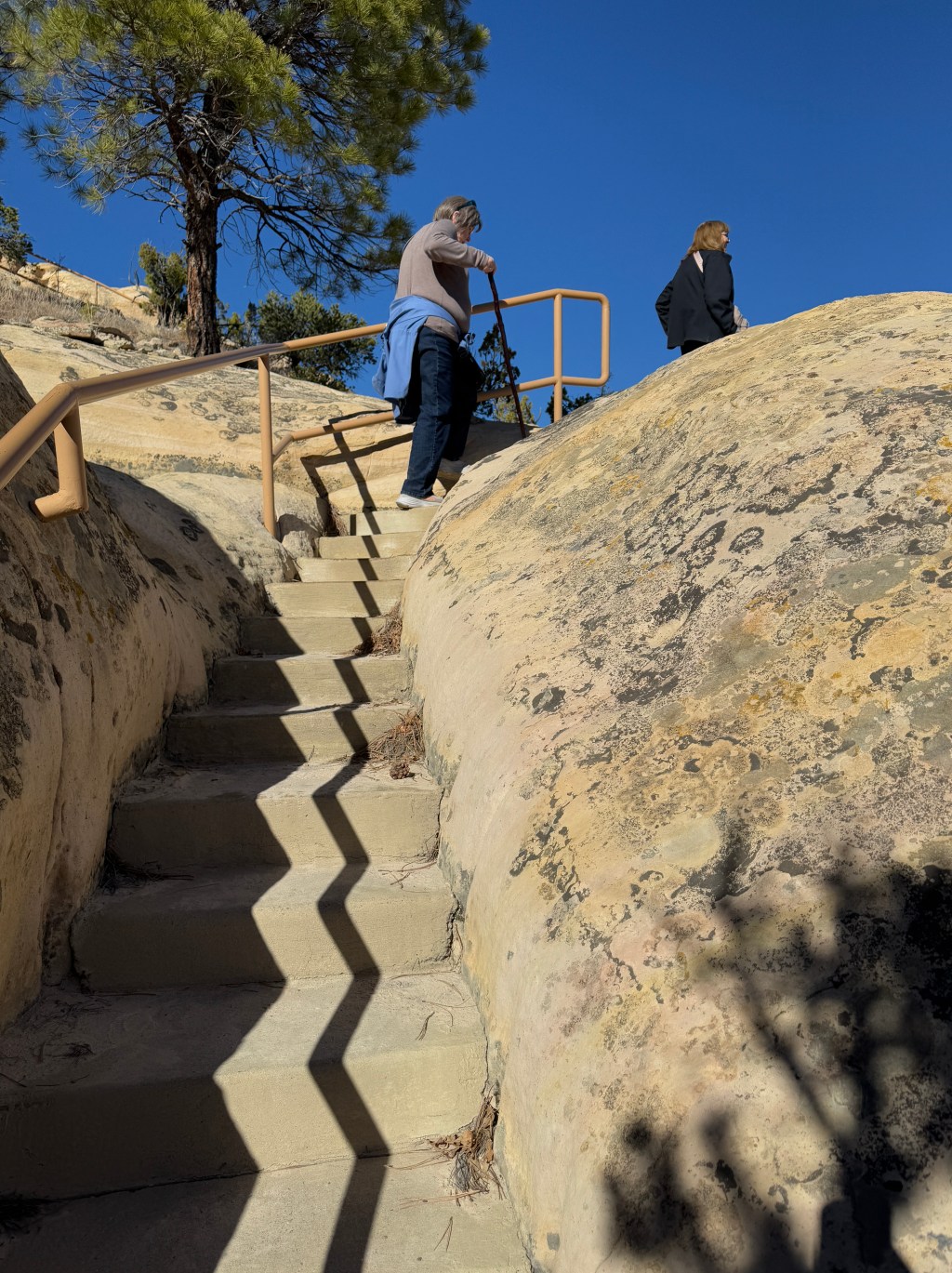
Stone Stairway
Climbing to the top of El Morro involves over 150 steps carved into the sandstone walls. The views keep getting more impressive as you climb, so it’s good to pause and enjoy the sights.
-
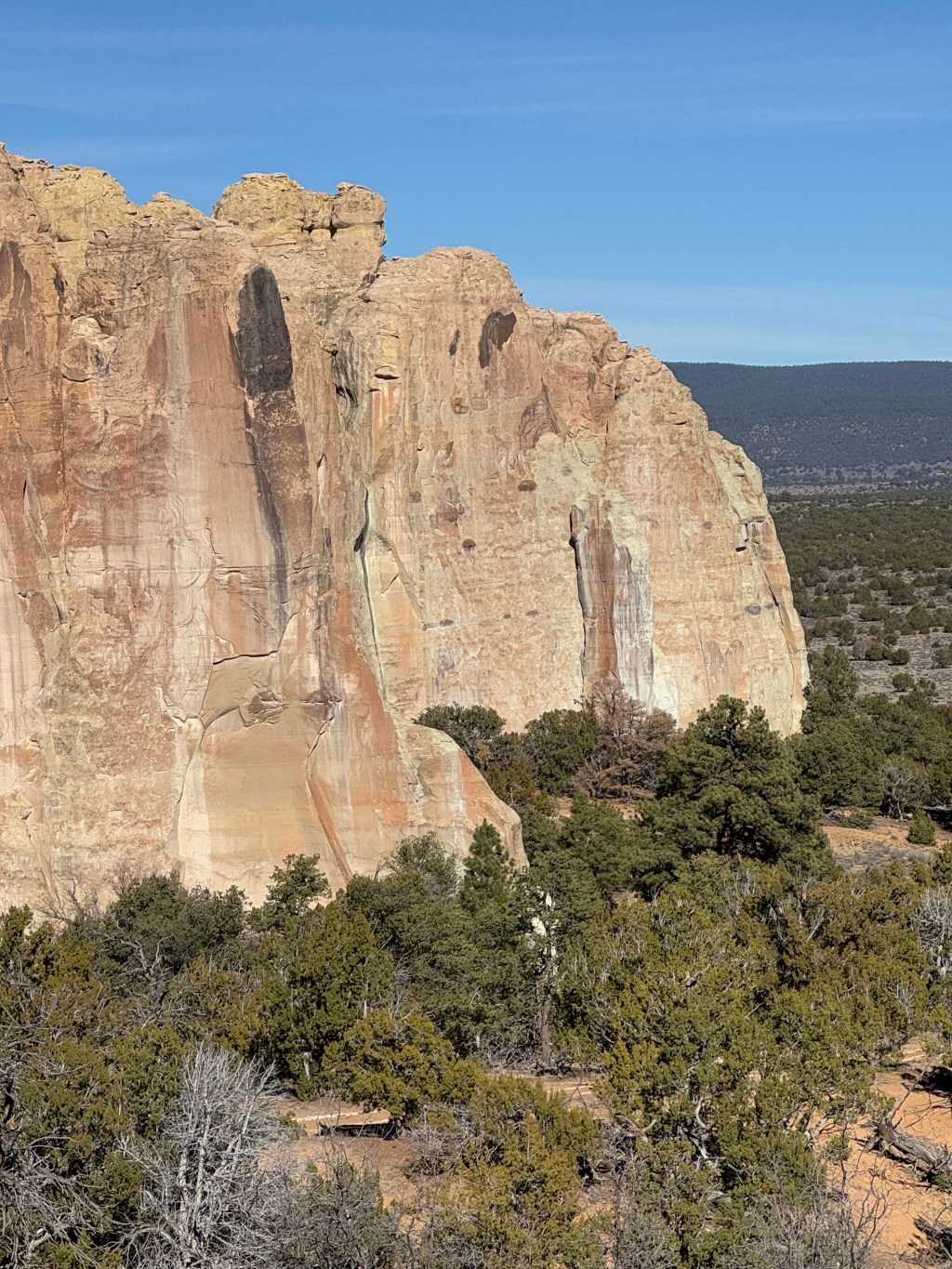
El Morro
An hour’s drive southeast from Gallup, a white sandstone outcropping marks El Morro National Monument. We spent an afternoon hiking over and around this dramatic landscape with friends from Rehoboth School.
-
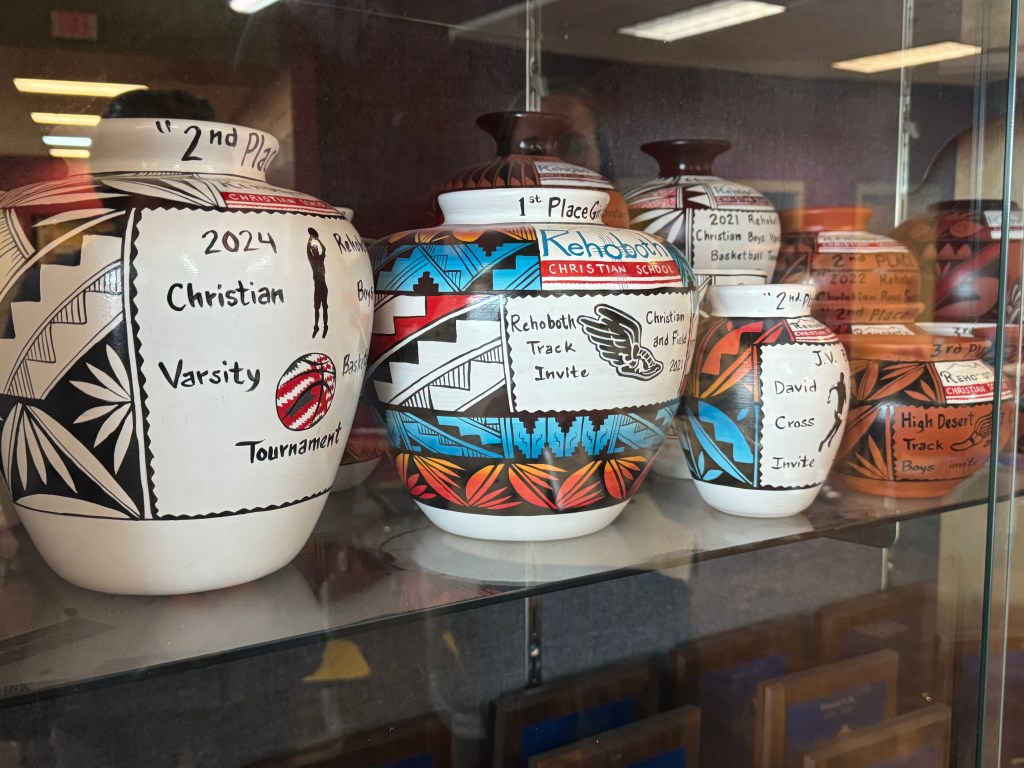
Pot Trophies
Rehoboth hosts athletic tournaments against other schools from Navajo country and across New Mexico. In keeping with the local aesthetic, the winners receive a painted pot instead of a standard wood and metal trophy.
-
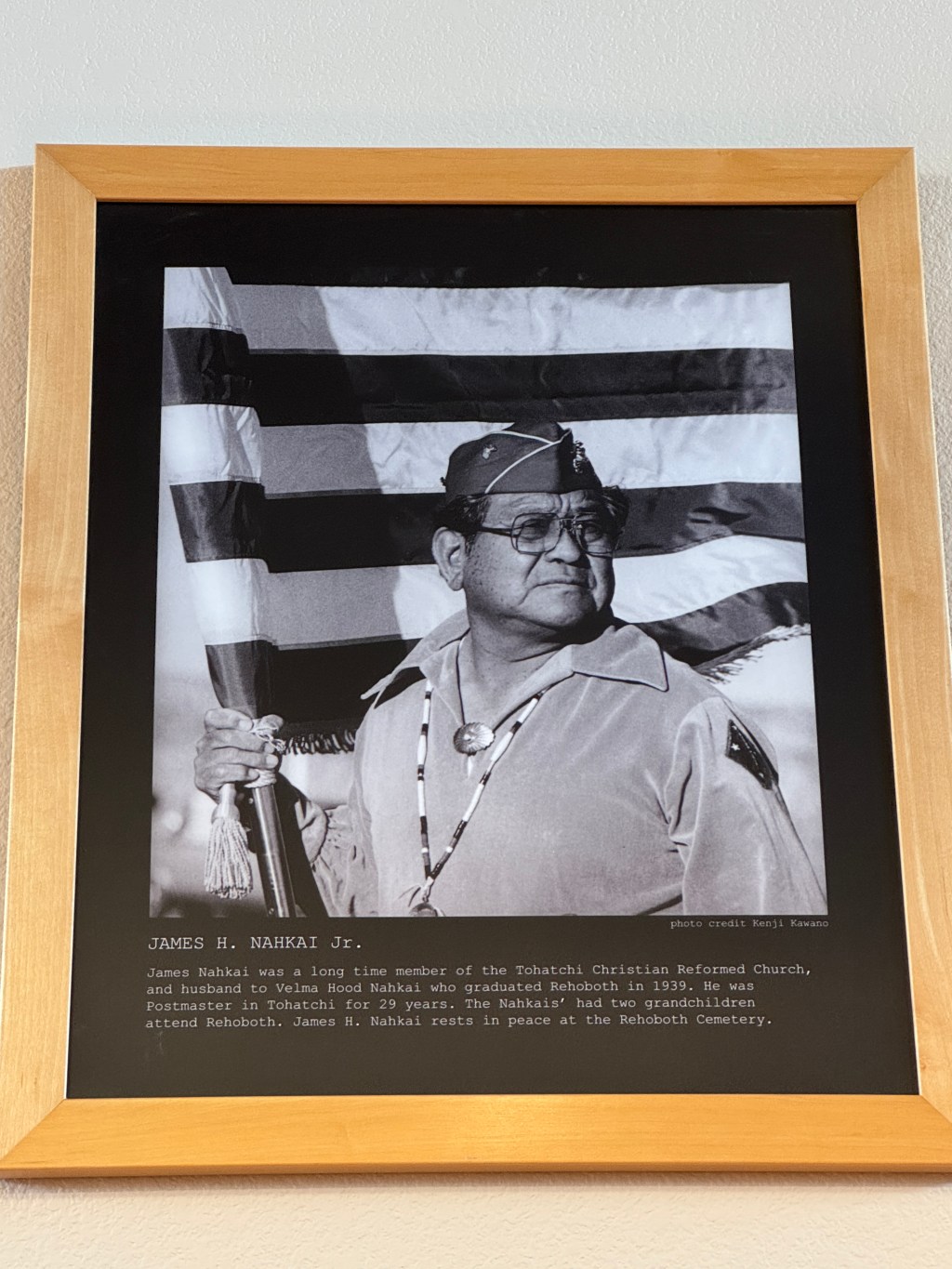
Code Talkers
Navajo “code talkers” helped the U.S. defeat Japan in WWII by using their language for coded communications. Thirty of the 400 total code talkers were Rehoboth students, and others, like James Nahkai Jr., were parents or grandparents of Rehoboth students.
-
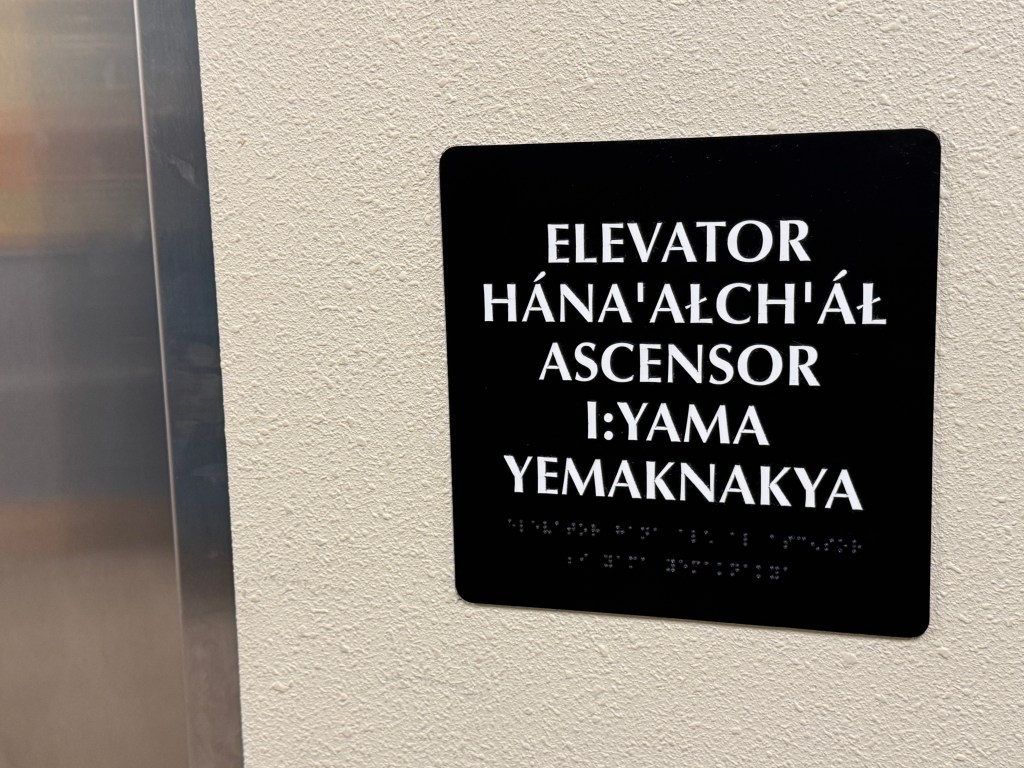
Elevator
Rehoboth’s multi-cultural and multi-lingual student body is 3/4 Native American. Where else would you find signage that identifies everything in English, Navajo, Spanish, Zuni, and Braille?
-
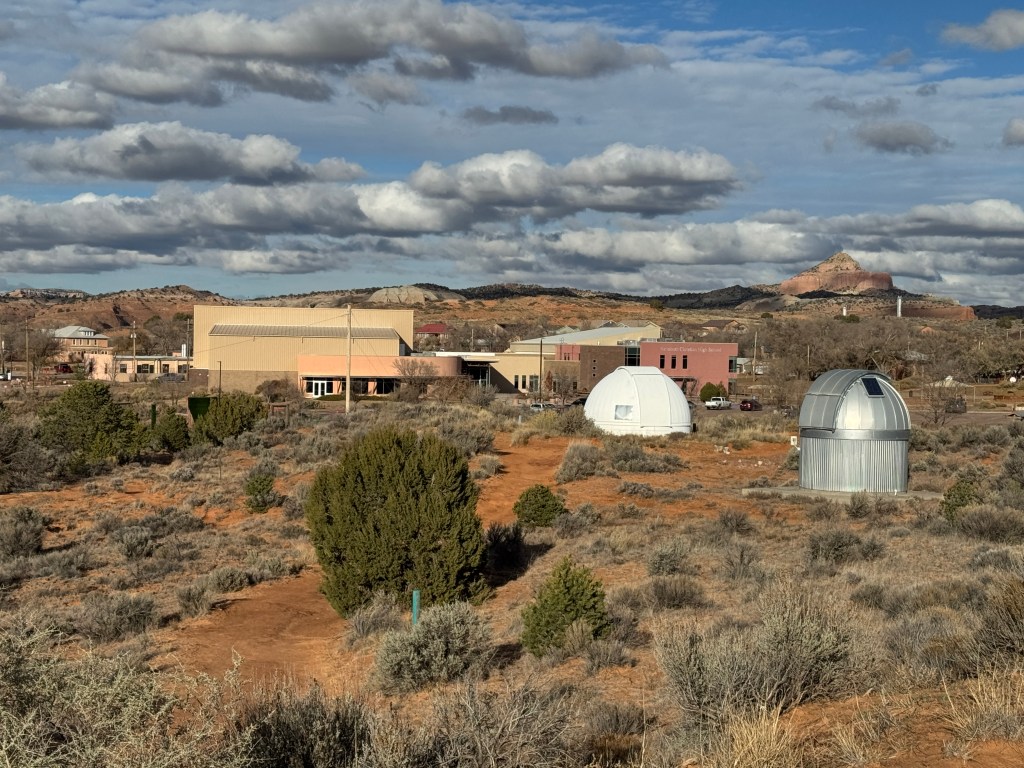
Rehoboth
Rehoboth Christian School is a K-12 private school in the sagebrush near Gallup, New Mexico. Elaine and I spent a month volunteering there in Nov.-Dec. 2025, helping students and staff in a variety of ways. (Those are two small observatories in the foreground for night sky viewing.)
-
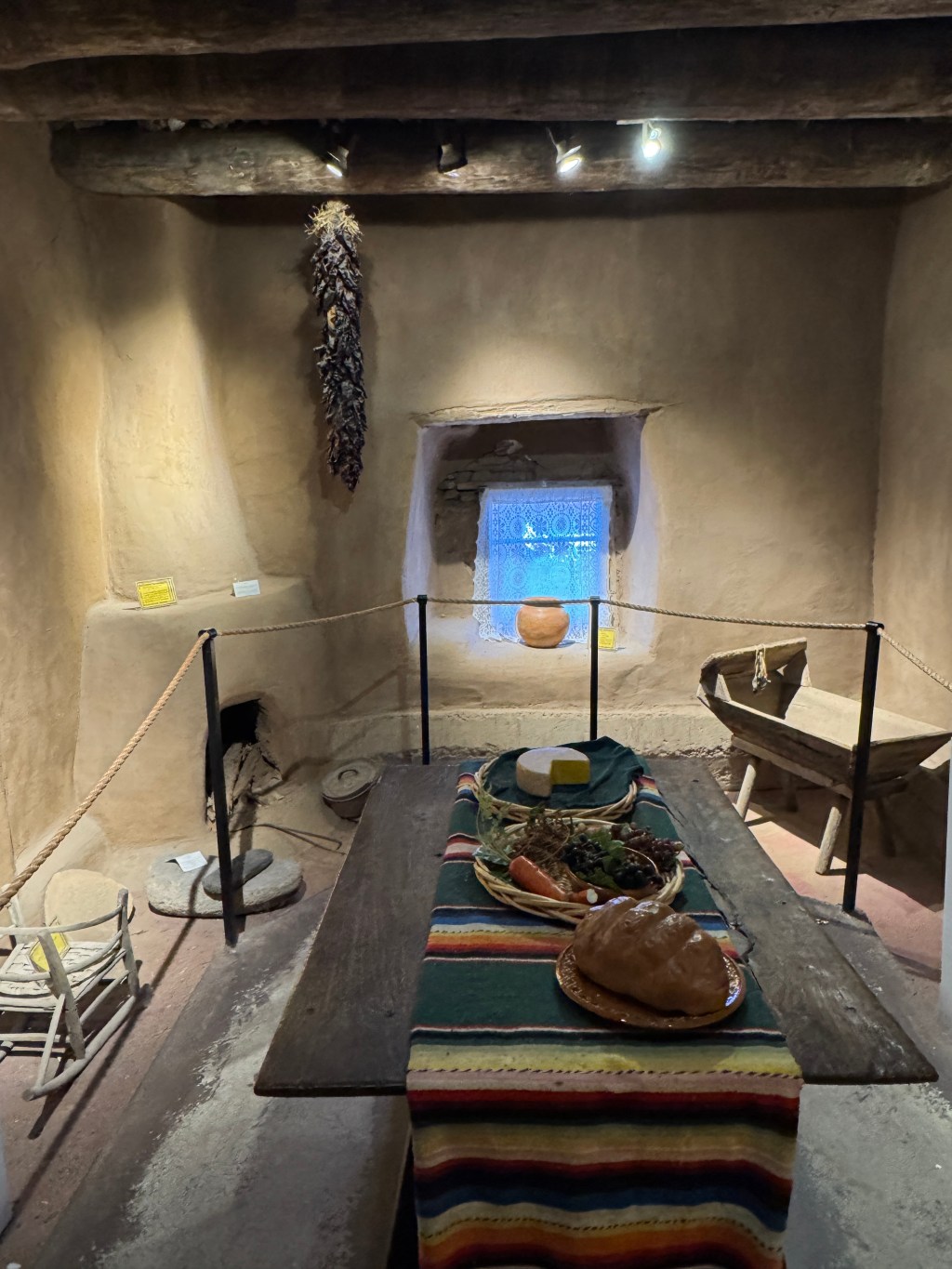
Adobe Walls
Inside the oldest house in America, there isn’t much space when you have 2-foot thick adobe brick walls. Santa Fe has history like no where else in the U.S.!
-
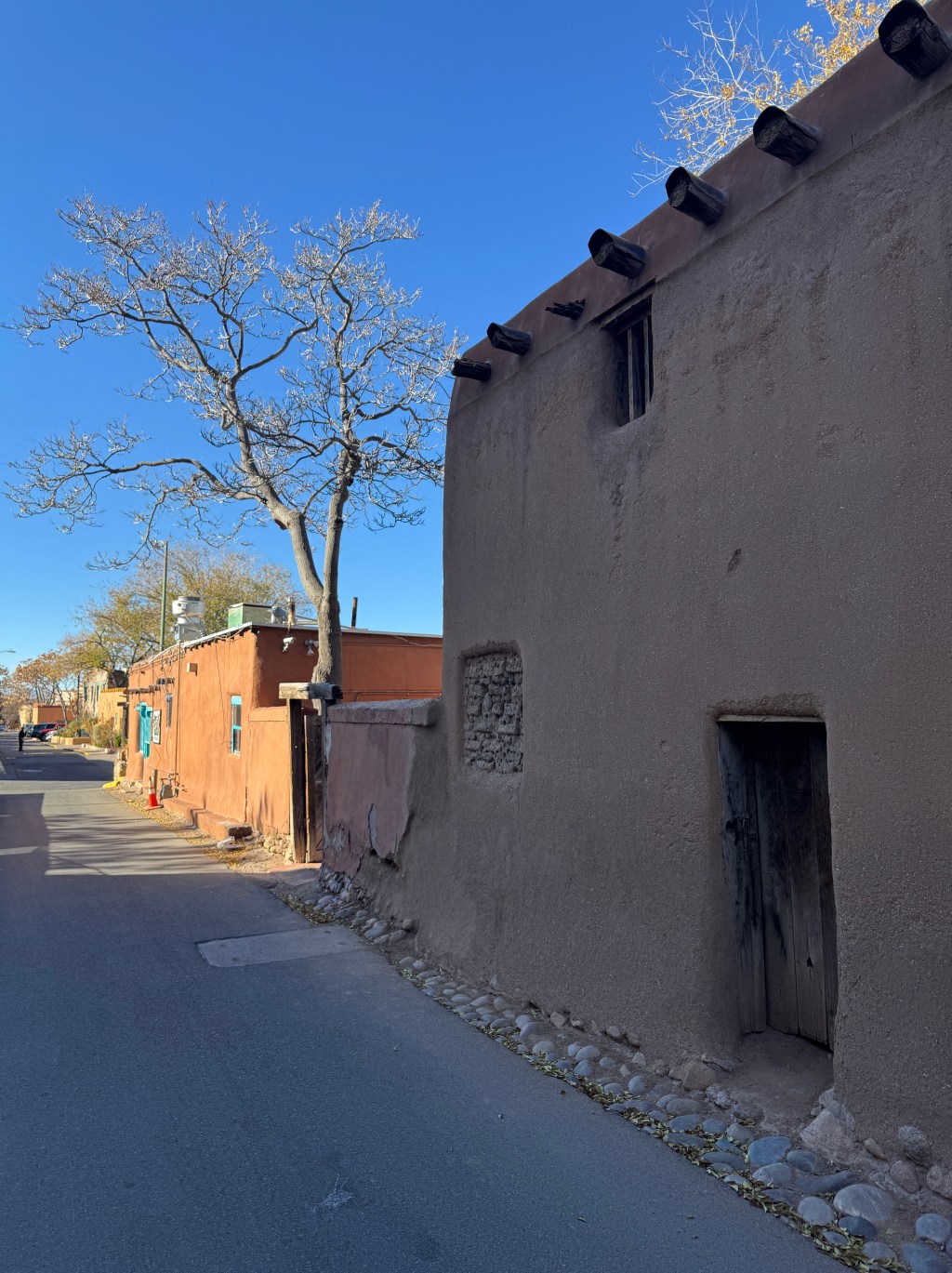
Oldest House
Across the street from the oldest church in America is the oldest house (foreground), built in 1646 as a private home by the Spanish and never really renovated.
-
Crucifiction
Painted in the 1630s on buffalo hide and now hanging on the walls of San Miguel Chapel, this compilation of images from the Passion of Christ was used as a visual aid for teaching Christianity to Pueblo Indians.

-
Layers of History
San Miguel chapel was damaged in 1640, burned in the 1680 Pueblo Revolt and rebuilt again in 1710. An anonymous local artist created the altar screen in 1798, highlighting Saints Teresa of Avila (upper left), Clare of Assisi (upper right) and Francis of Assisi (middle left).

-
Oldest Church
How old is Santa Fe? San Miguel Church in downtown is the oldest church in the continental U.S., built in about 1610, or a decade before the Pilgrims landed in Massachusetts!

-
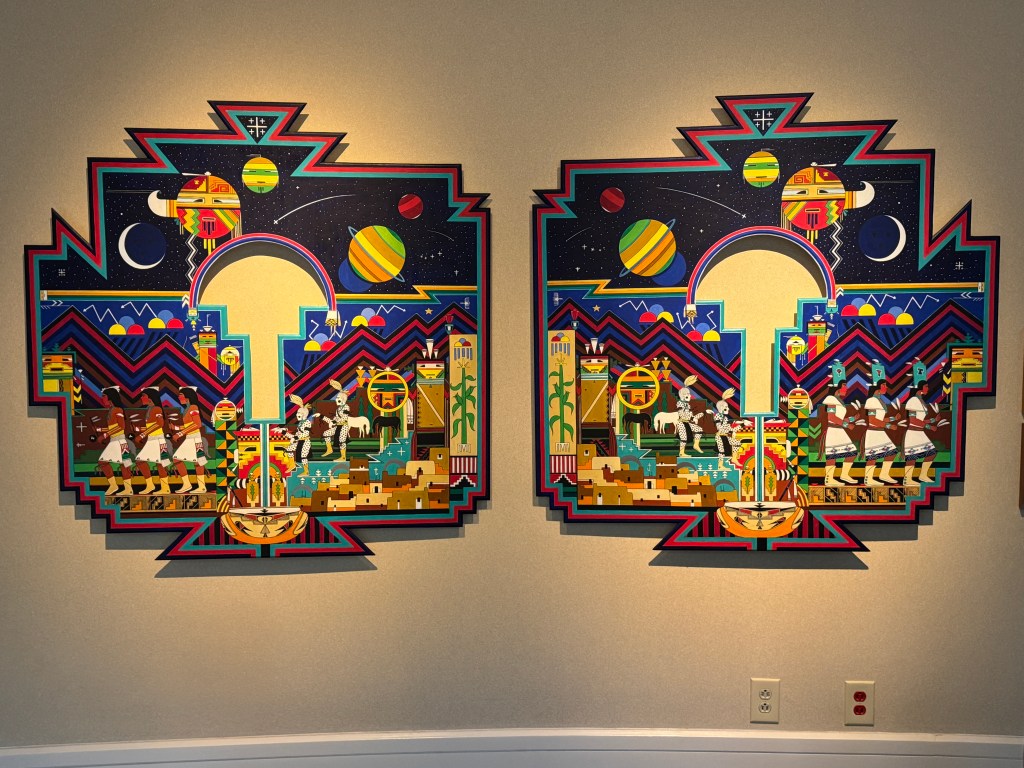
Harmonious Way
A detailed, two-panel painting by Douglas Johnson brings the natural elements of the Navajo and Pueblo tribes together to illustrate harmony. Johnson, who has lived with a Navajo weaver, is one of the New Mexico artists whose work is on display in the State Capitol building.
-
Quetzalcoatl & The Master Ants
This elaborate cut paper art by Catalina Delgado Trunk hangs in the state Capitol hallways. Aztec myth says Quetzalcoatl, the plumed serpent god who created humans, became an ant in order to enter the master ant’s mountain to steal corn for people to eat.

-
Woven Drawing
Local artist Carl Schuman uses colored pencils to create multi-layered drawing constructions like this one in the Capital building in Santa Fe. “Where All True Paths Meet” is part of the Capitol Art Foundation’s collection of New Mexico masterworks.

 Words Are Inadequate