Oregon Coast
-
Pioneer History
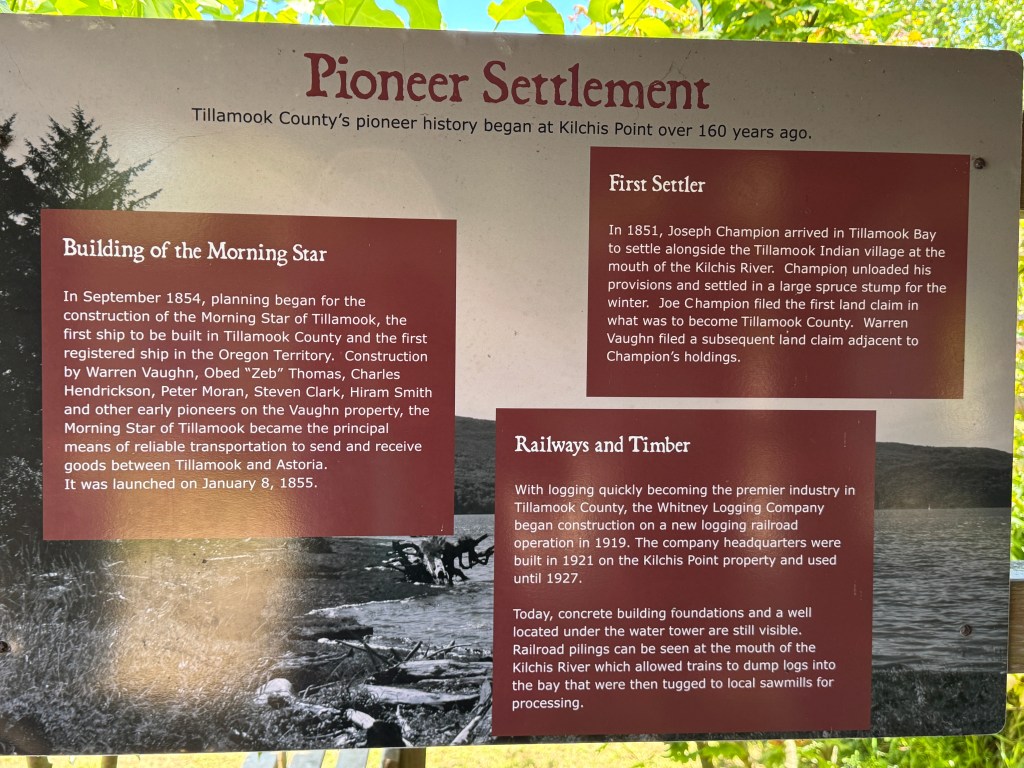
The Kilchis Point trail is lined with signs from the Tillamook Pioneer Museum about its role in the early history of American settlement on the coast. How would you like to spend a winter in the rainforest living in a tree stump!
-
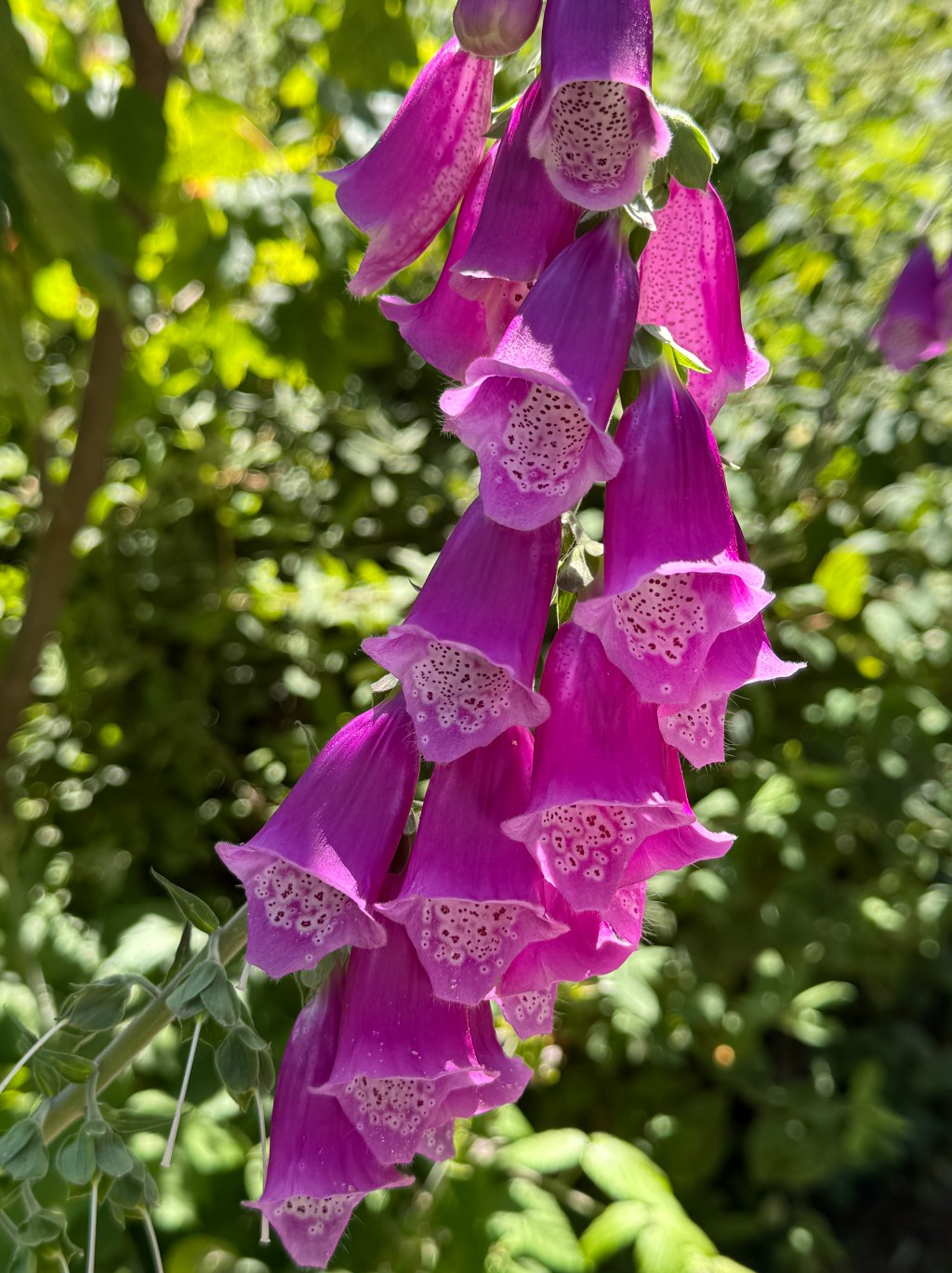
Fox Glove
Bright pink blooms of fox glove line parts of the Kilchis Point trail near the town of Bay City on Tillamook Bay.
-
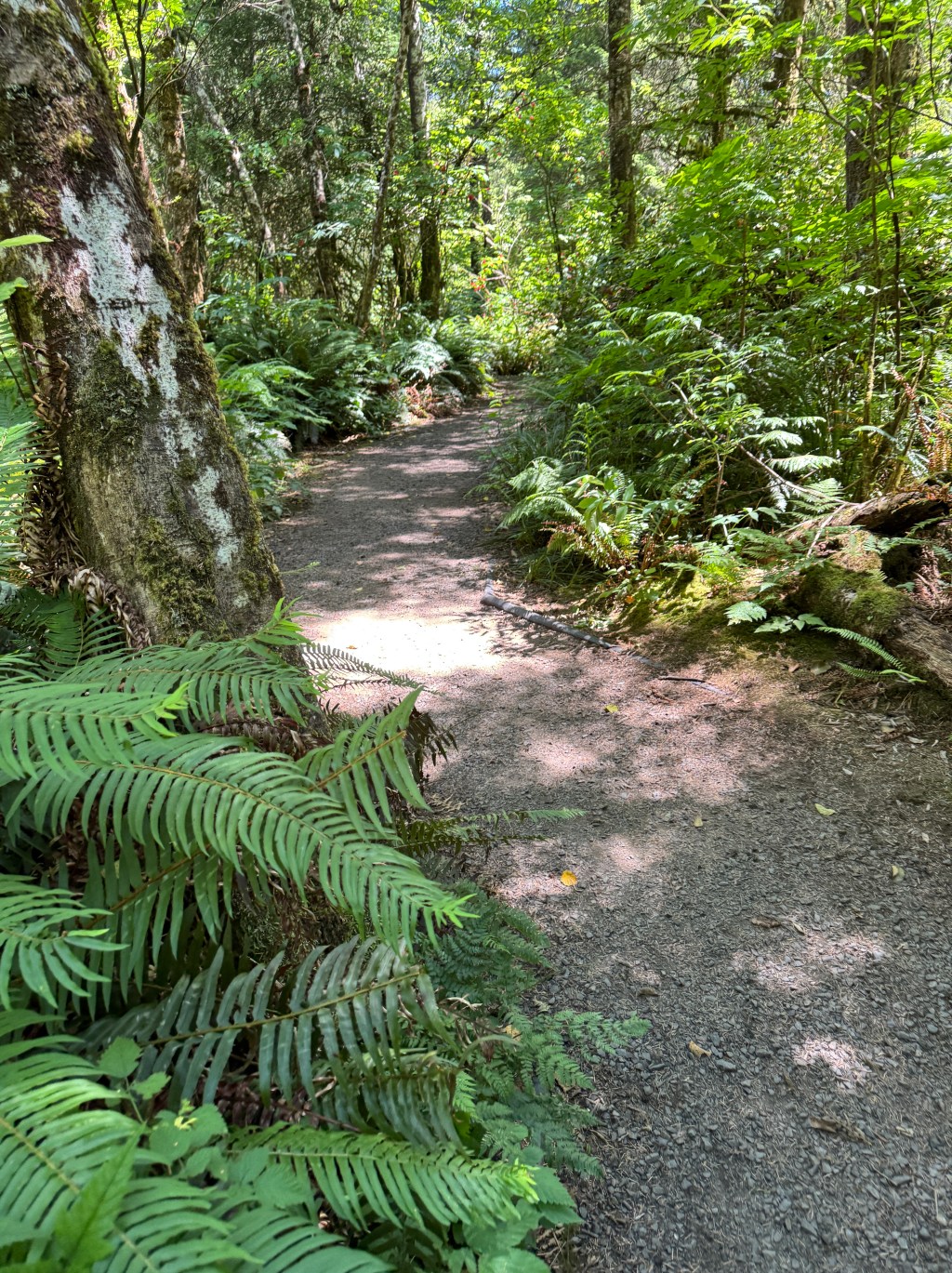
Kilchis Point Trail
The original settlement on Tillamook Bay was next to a native village on Kilchis Point. The land between Highway 101 and the point is a nature preserve with this scenic path winding through the second growth forest.
-
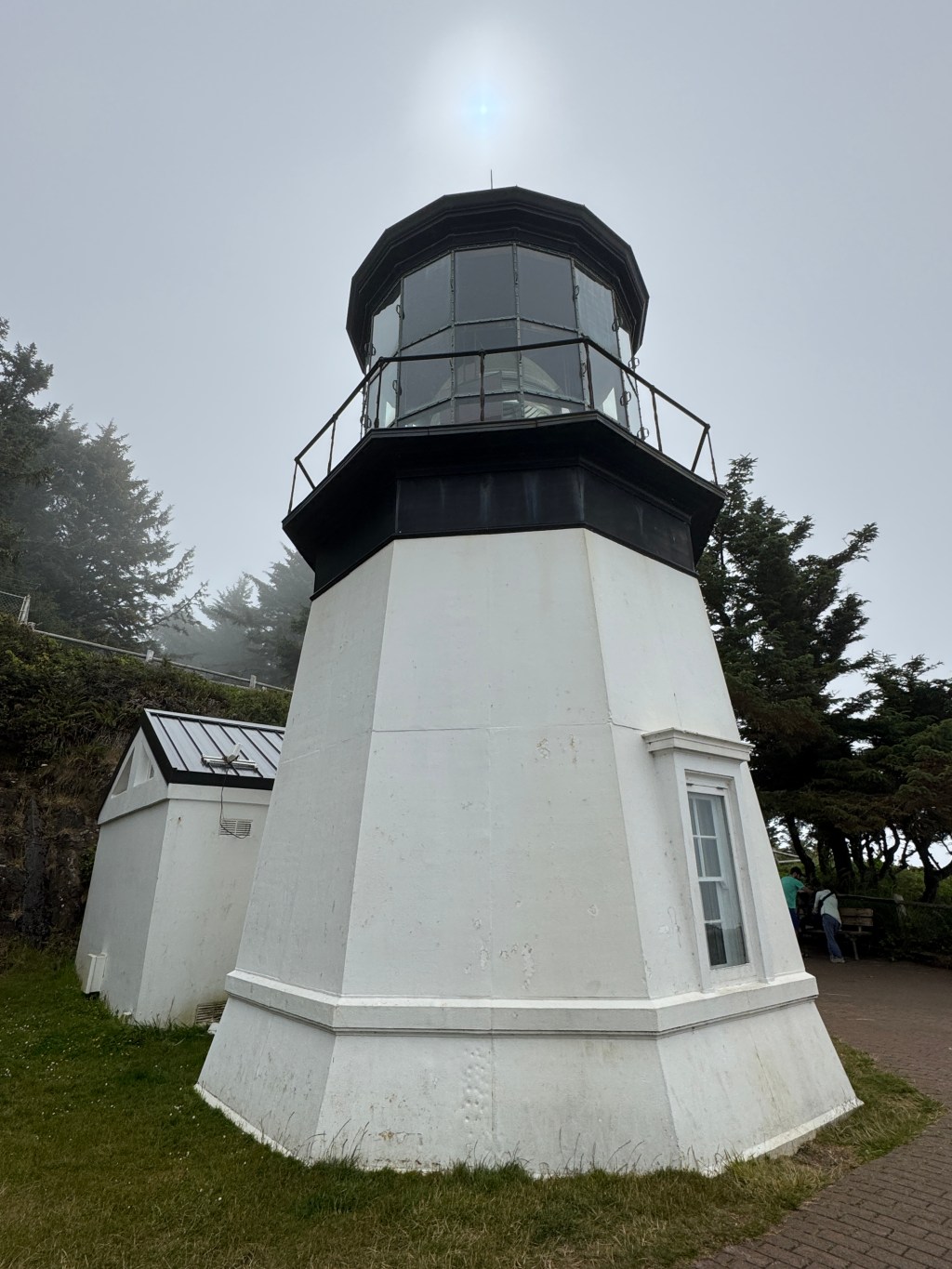
Big Lens
Looking up into the glass lenses of the Cape Meares lighthouse, it gives the appearance of a gigantic eye peering down on you. About a dozen of the heavy hand-carved pieces of glass were damaged and are being replaced at a cost of over $200,000.

-
Cape Meares Lighthouse
Standing on a point of basalt nearly 200 feet above the surf, the Cape Meares lighthouse has guided ships along the Oregon coast for over a century, although the old light has been replaced with a more modern beam.
-
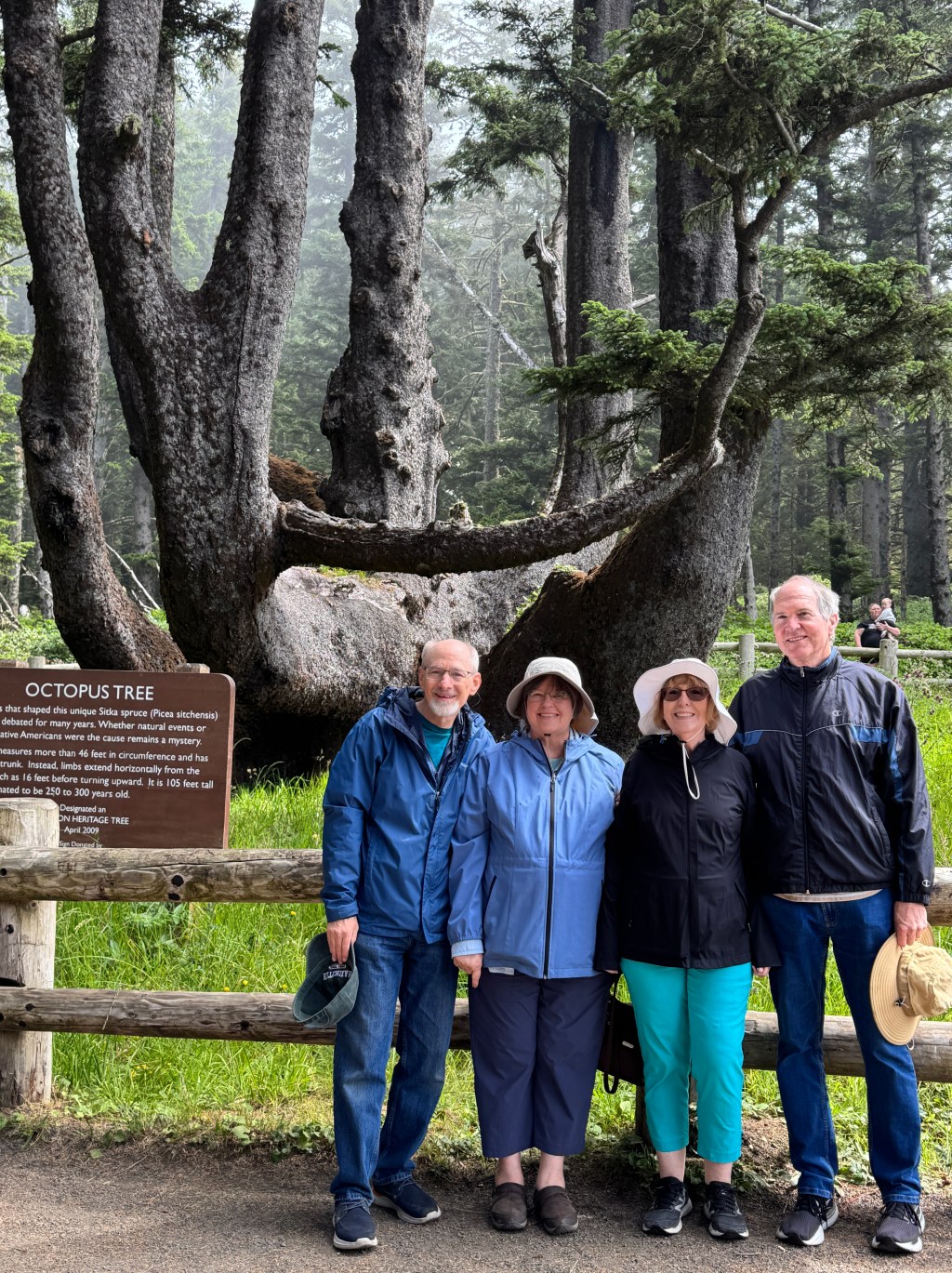
Octopus Tree
Cape Meares State Park features this 250-300 year old Sitka Spruce that has grown into a candelabra shape. Known as the Octopus Tree and over 100 feet tall, no one knows for sure how it ended up this way. Elaine and I visited it with Vivianne and Rick, friends from Spokane.
-
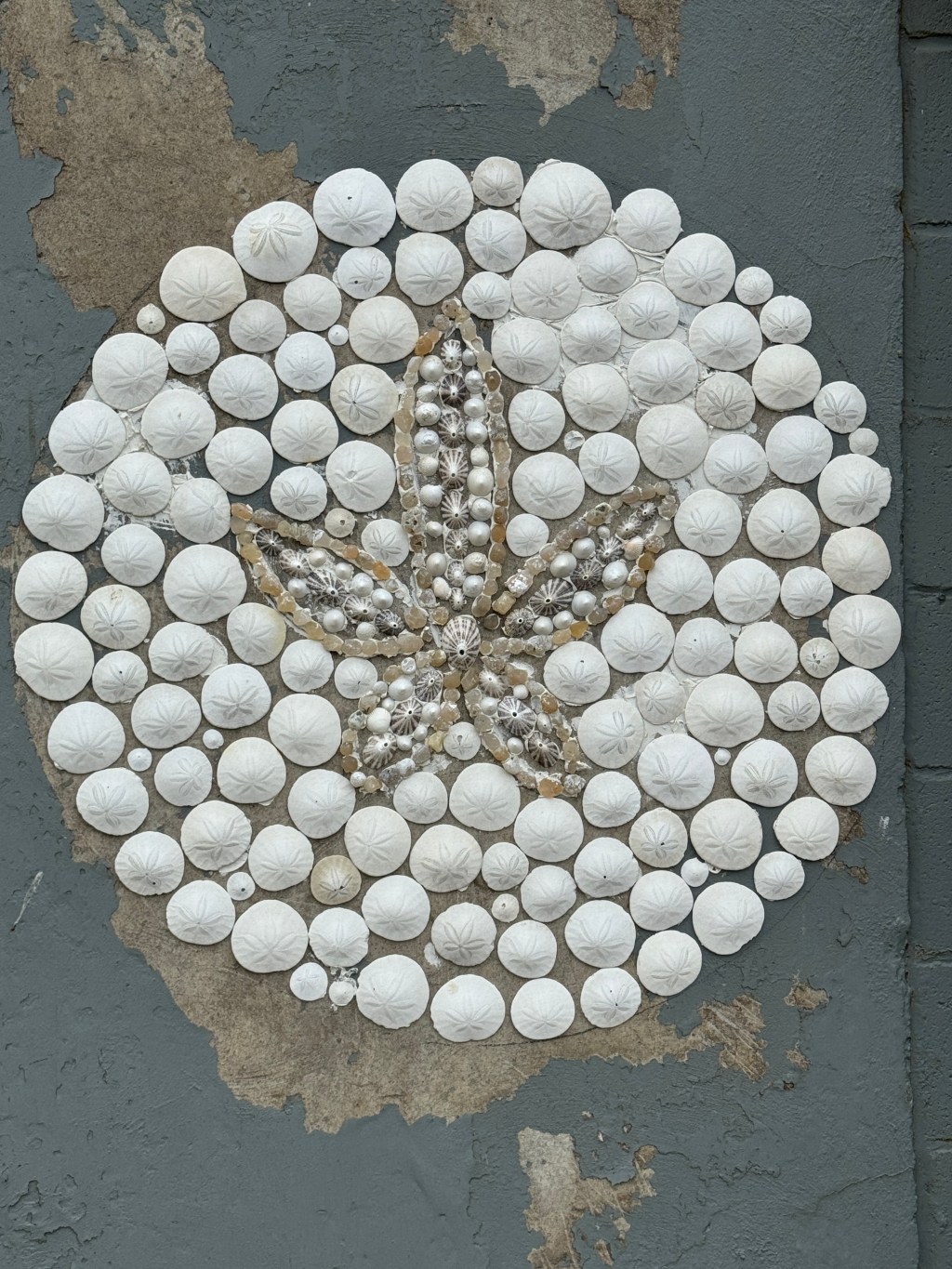
Shell Art
Decorating a concrete wall in the town of Oceanside, Oregon, you see a starfish made of limpet and clam shells outlined by agates and enveloped in a sea of sand dollars looking like big bubbles.
-
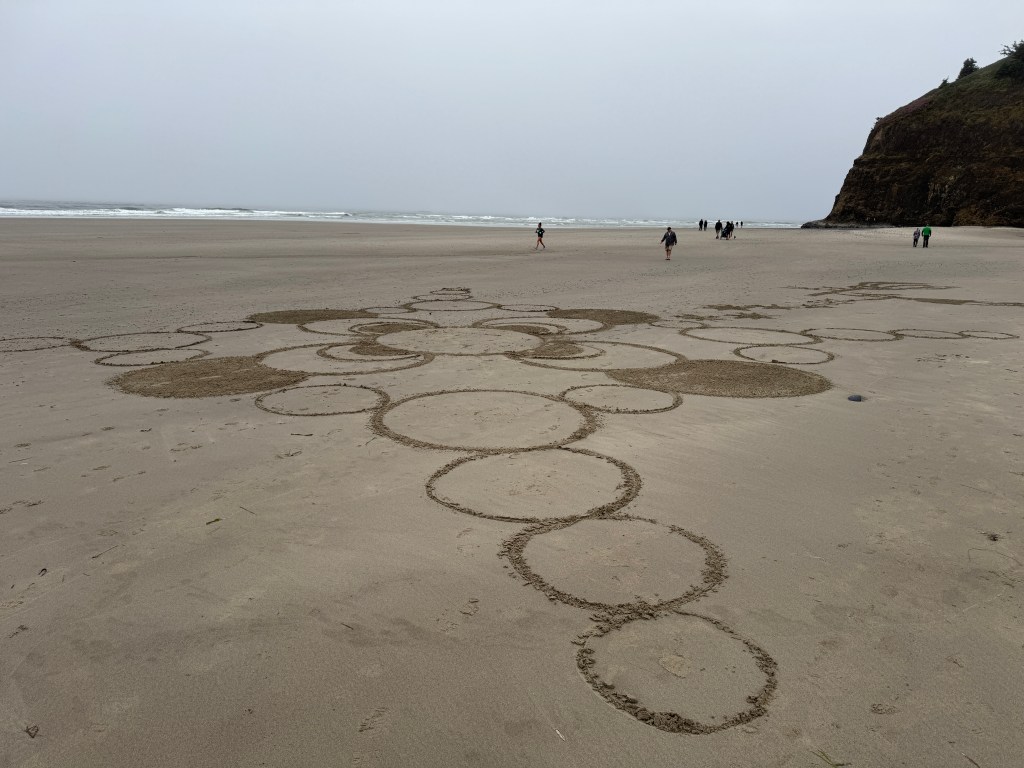
Sand Pattern
Someone used a rake (and probably a couple of sticks tied together with a string) to make this geometric pattern in the sand on Oceanside beach. What looks really complicated is not that difficult to create if you plan it out ahead of time.
-
Starfish
Before the starfish get big from munching on mussels, they are smaller like this one that a girl on the beach showed to me.

-
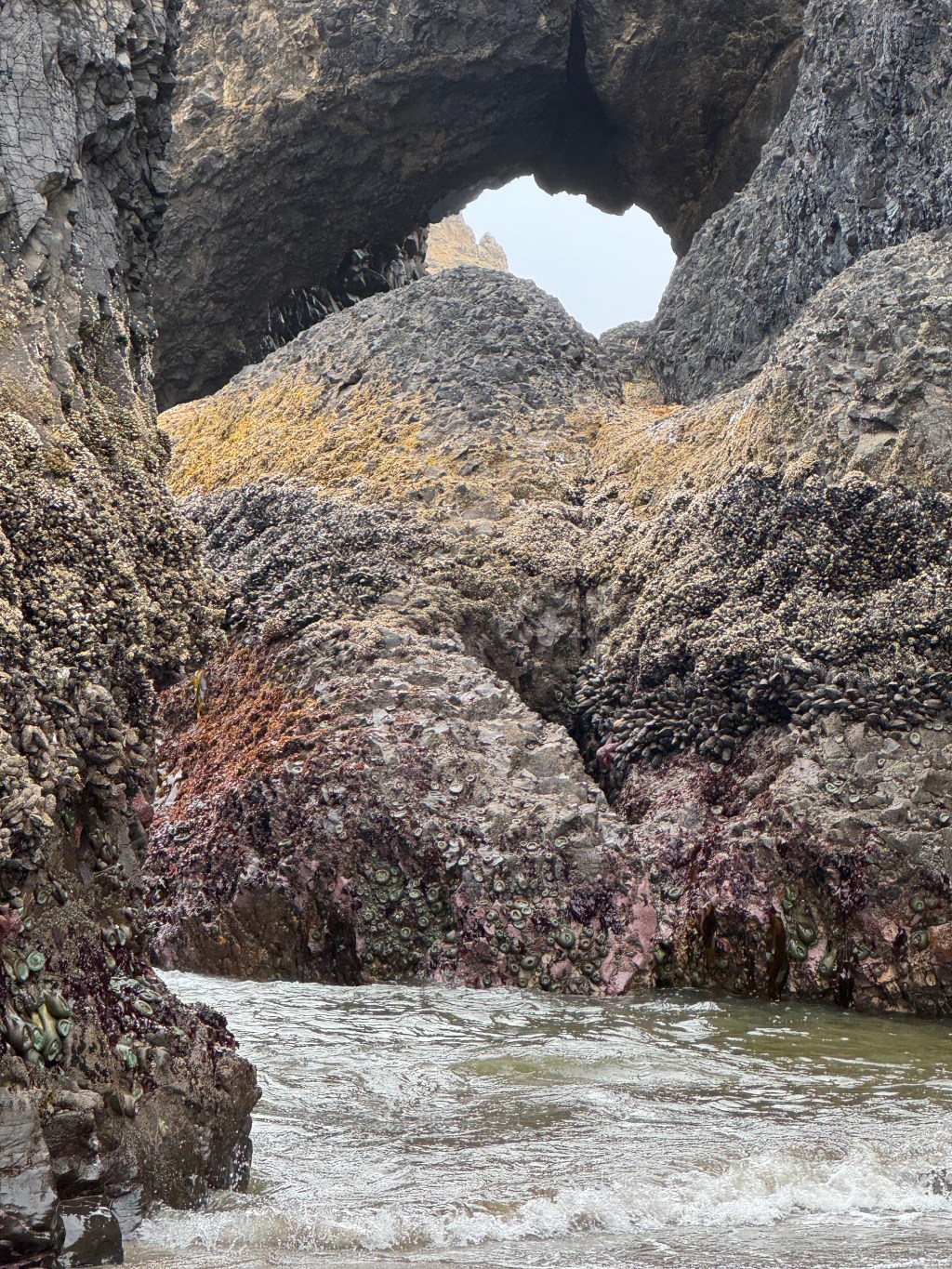
Hole in the Rock
At the far north end of the Oceanside beach is this hole in the rocks that leads to Lost Boy beach, at least when the tide is really low.
-
Sea Urchin
Spikey and purple, this sea urchin is one of dozens that inhabited just one tide pool on the beach north of Oceanside. They munch on kelp, so it’s a hopeful sign that Oregon is planning to reintroduce sea otters to the coast, since they keep the sea urchin numbers in check and can help keep…

-
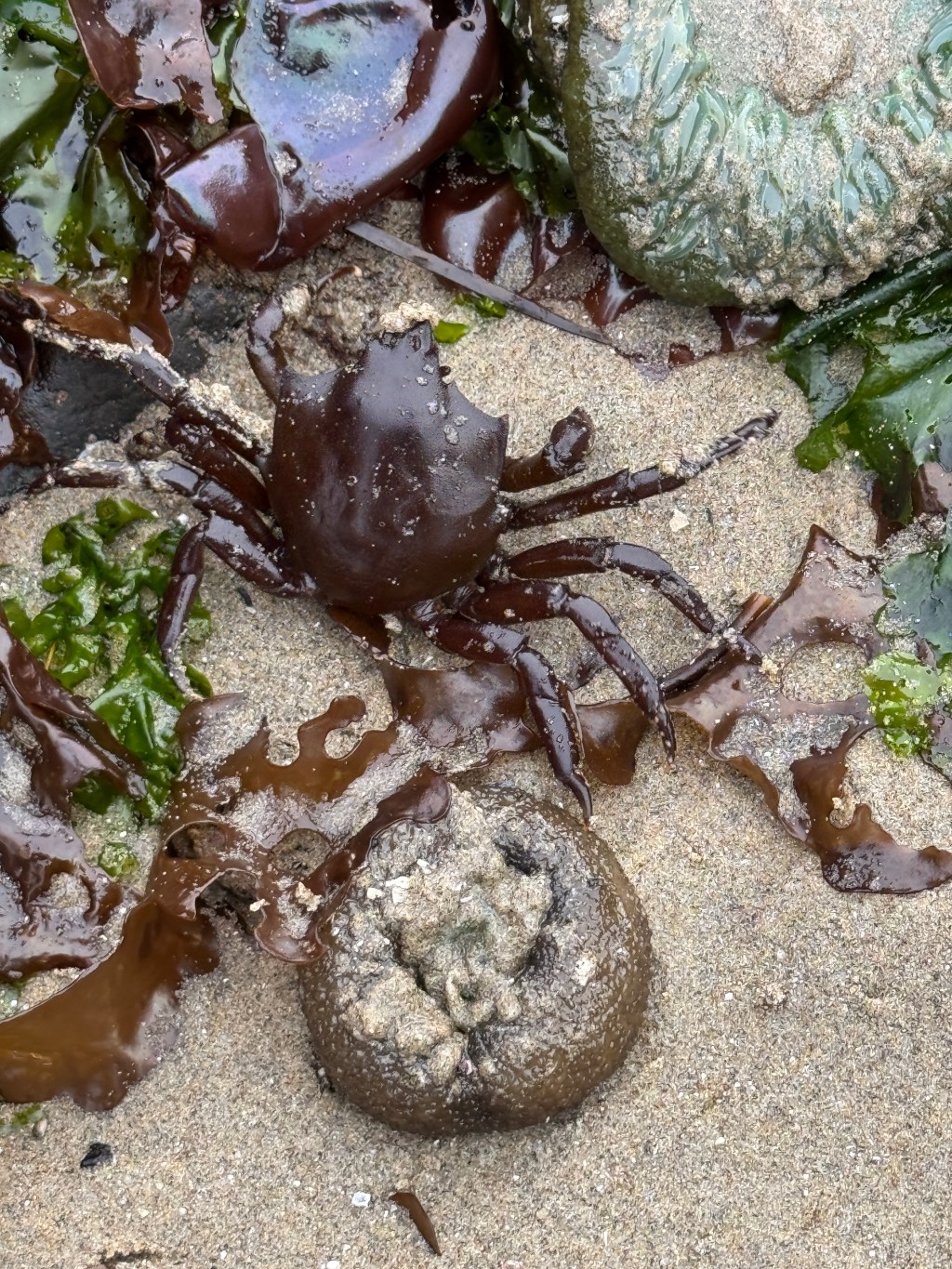
Spider Crab
This brown crab lives in kelp beds by the rocks exposed at low tide, where it blends in perfectly.
-
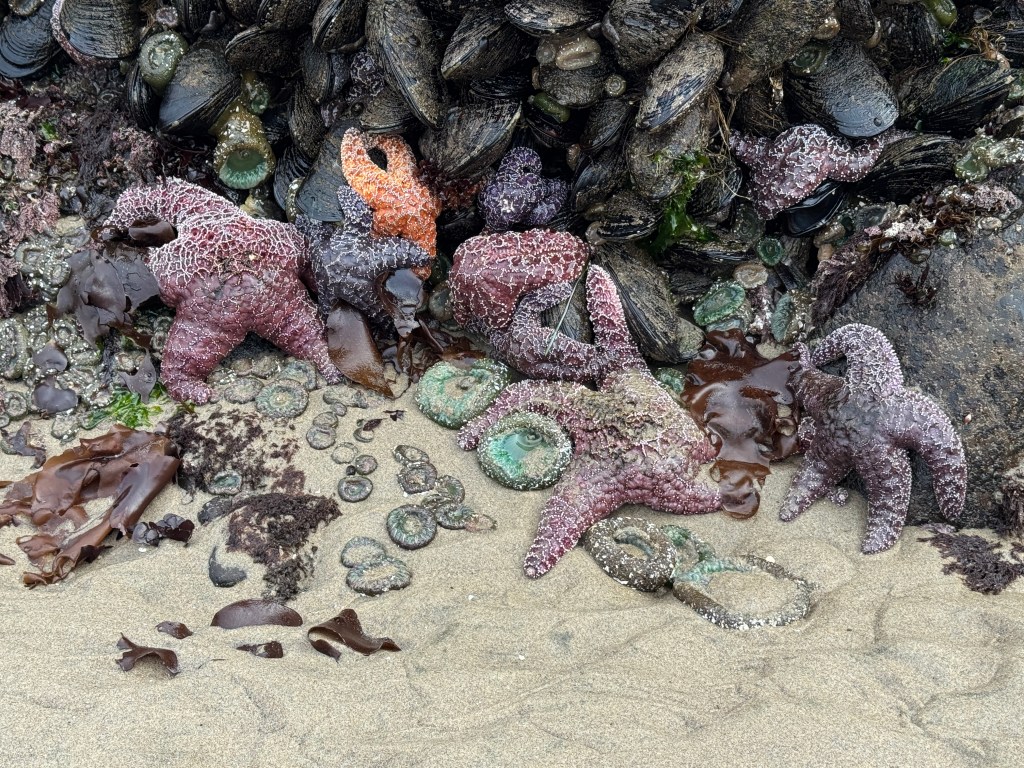
Tidal Community
Starfish, anemones, mussels and more creatures cover the rocks at low tide on the beach north of Oceanside.
-
Wild Coast
Fog, wind and waves weave around the rocks on the beach just north of Oceanside, Oregon.

-
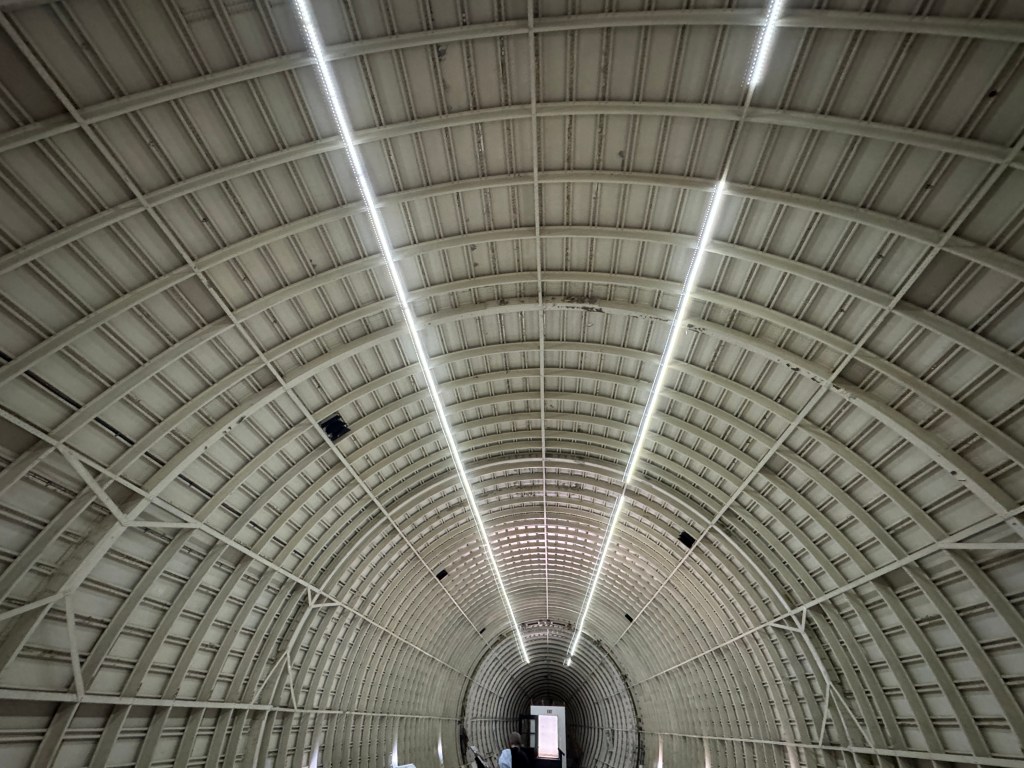
Mini-Guppy
The inside of this Boeing jet remodeled for carrying cargo looks like it could be lifted from a Star Wars set. The Mini-Guppy plane is parked outside the Tillamook Air Museum.
-
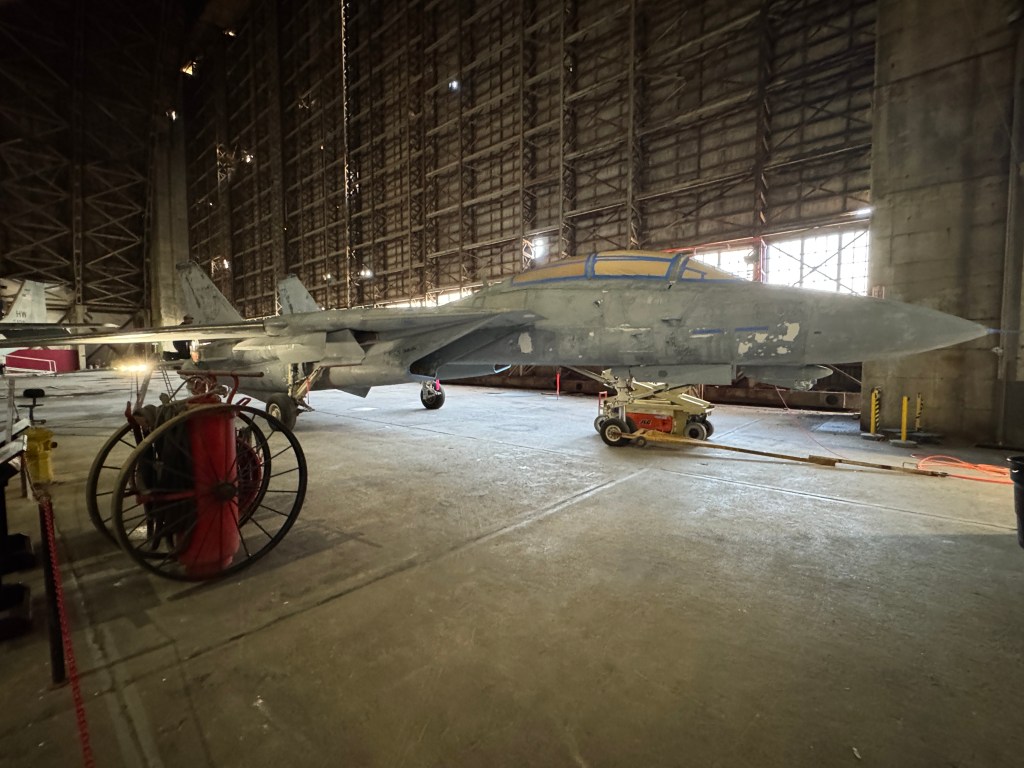
F-14 Tomcat
Covered in gray paint and masking tape, this F-14 Tomcat in the Tillamook Air Museum is being repainted to its original look. This plane, one of 9 still in operation in the US, was used in the filming of the climactic dog fight in the original Top Gun movie!
-
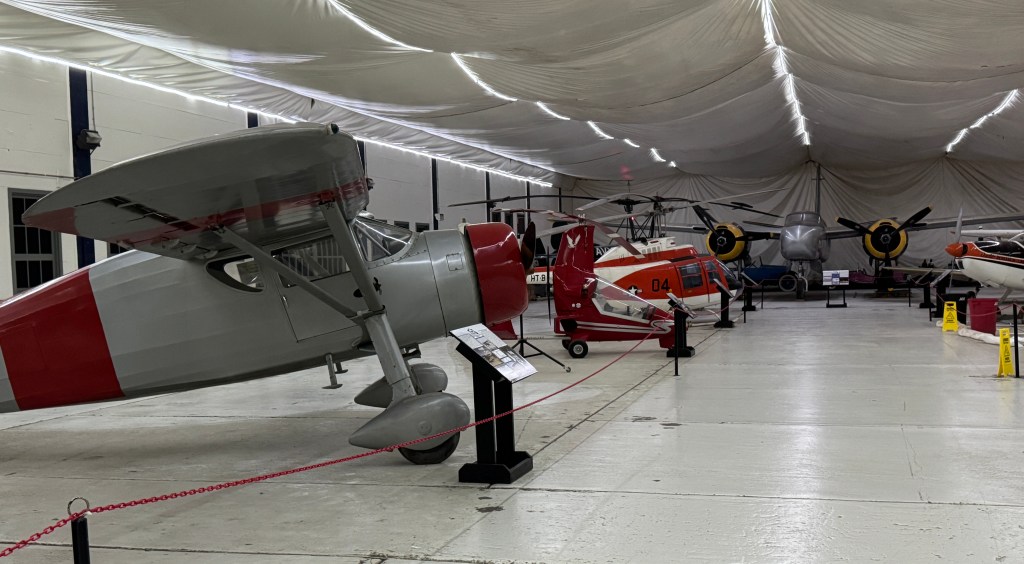
Small Planes
This collection of small planes from the 1920s onward are found in a special section of the Tillamook Air Museum. Each has detailed information about when and how they were flown, offering a glimpse of the variety of planes that we have created over the past century.
-
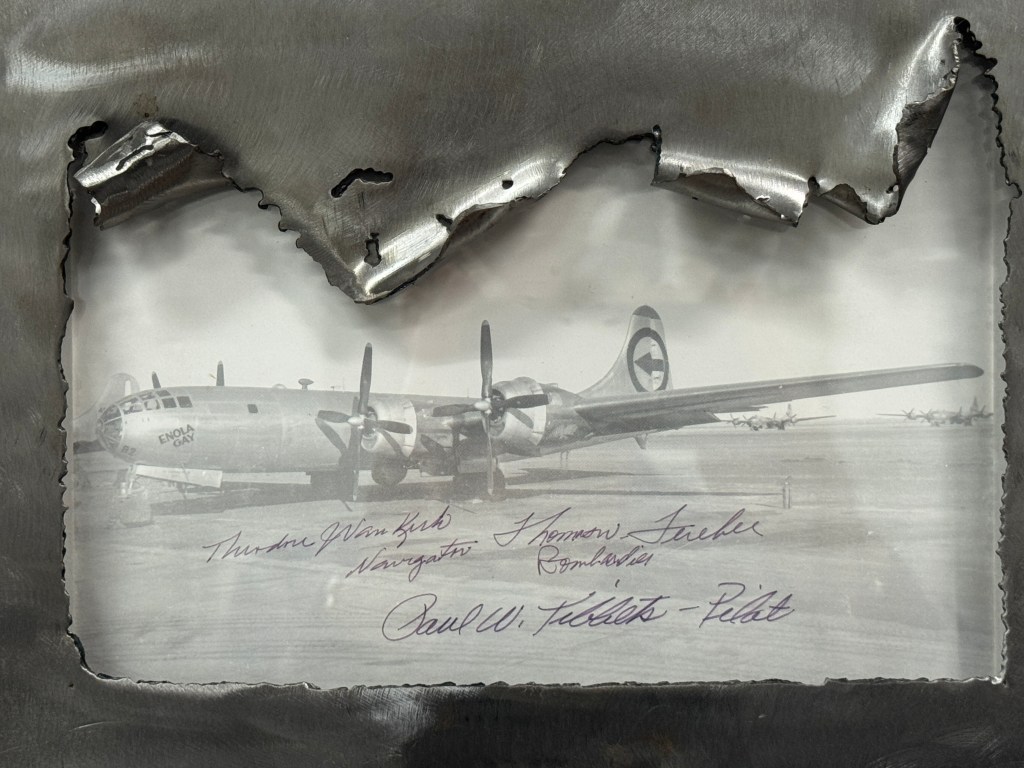
Enola Gay
This photo in the Tillamook Air Museum was signed by the navigator, bombadier, and pilot of the Enola Gay, the B-29 Superfortress that dropped the first atomic bomb on Hiroshima in 1945. It was part of a display of WWII uniforms, equipment and memorabilia on display in the former blimp hanger.
-
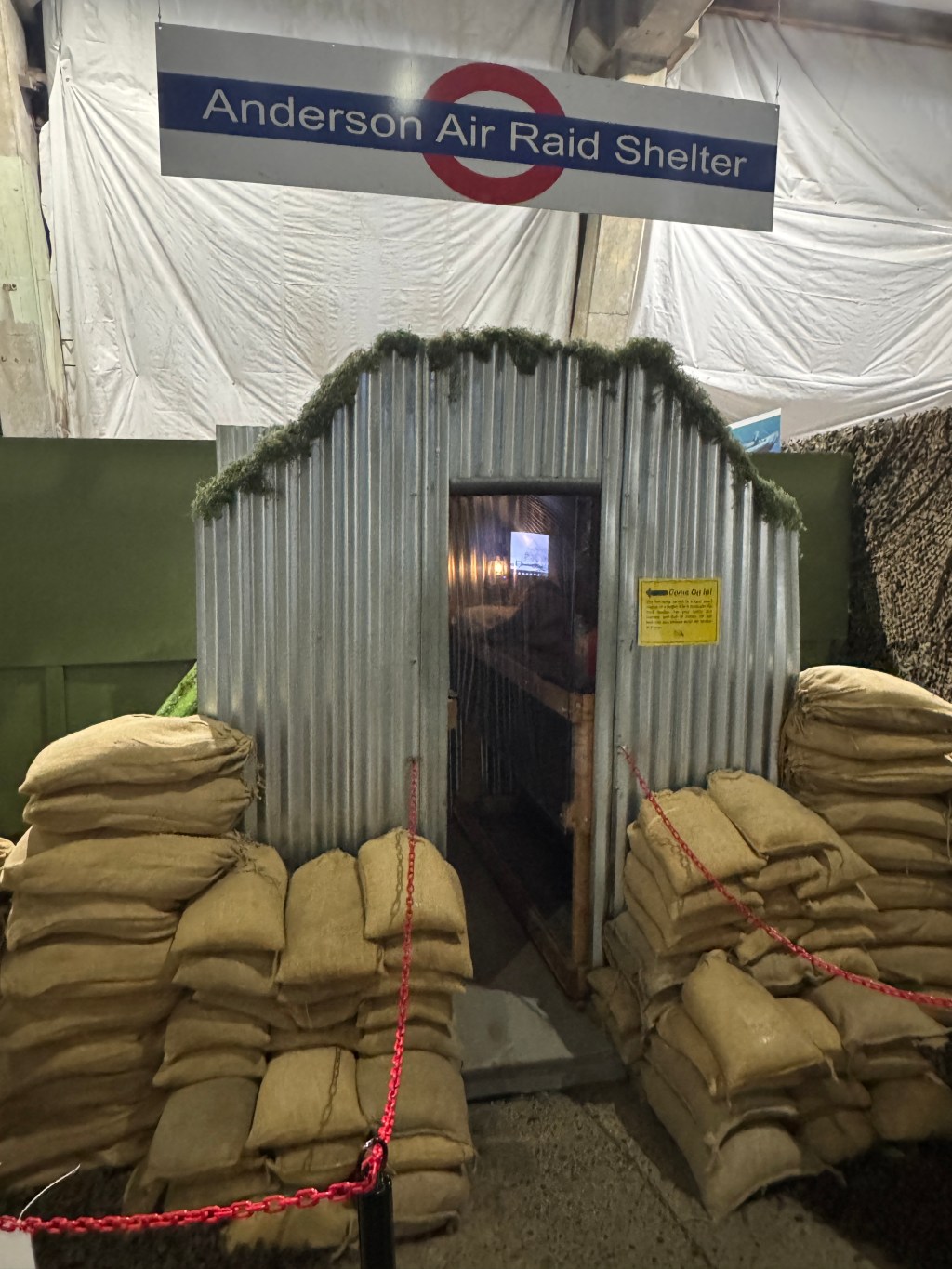
Air Raid Shelter
An exhibit on WWII in the Tillamook Air Museum included this Anderson Air Raid Shelter, one of thousands that were made in England before and during the war. The size of a small shed, it had room for 4 bunks and not much else, but many families survived the Blitz in one of these.
-
Friendly Aliens
The visitors from outer space painted on this smaller, 82-foot long blimp used to float over Tillamook but now just hang out in the Air Museum’s hanger.

-
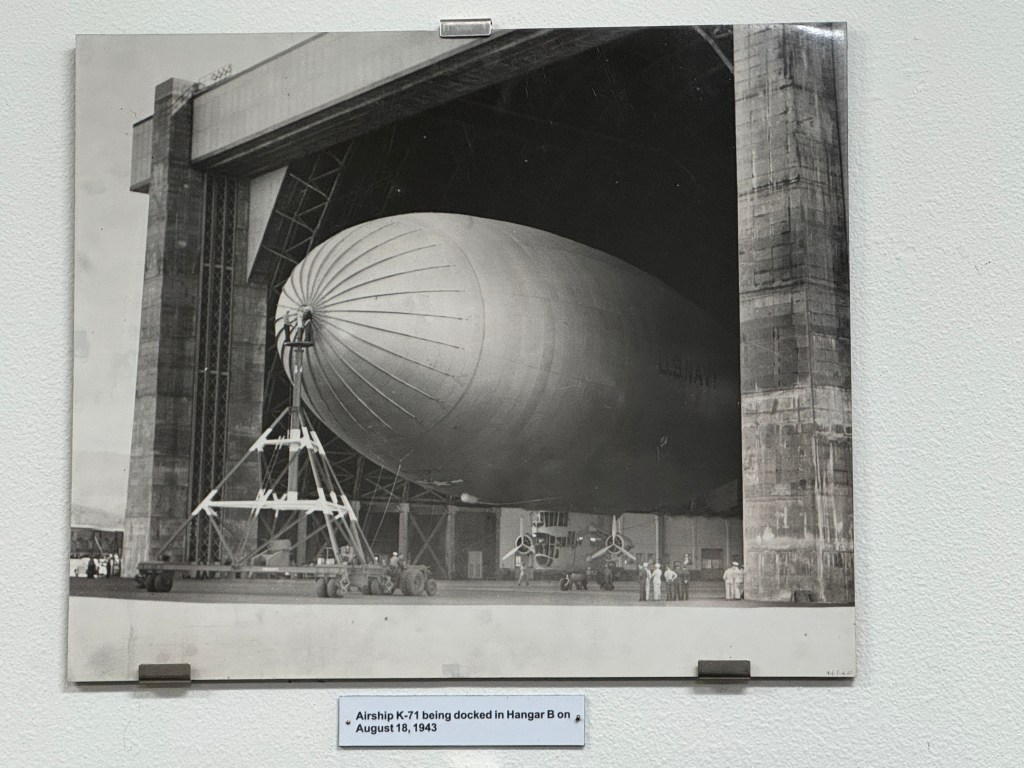
Airship Docking
This image of an airship docking in Hanger B in 1943 shows how big the blimps were (almost twice the size of the Goodyear blimp) that used to call this structure home.
-
Inside the Hanger
Built at the U.S. Navy to house blimps that patrolled the Oregon Coast during WWII, Hanger B is over 1,000 feet long and nearly 300 feet wide and 200 feet tall. Big enough to park an aircraft carrier in it, it was fascinating to see the variety of aircraft in the Air Museum that fills…

-
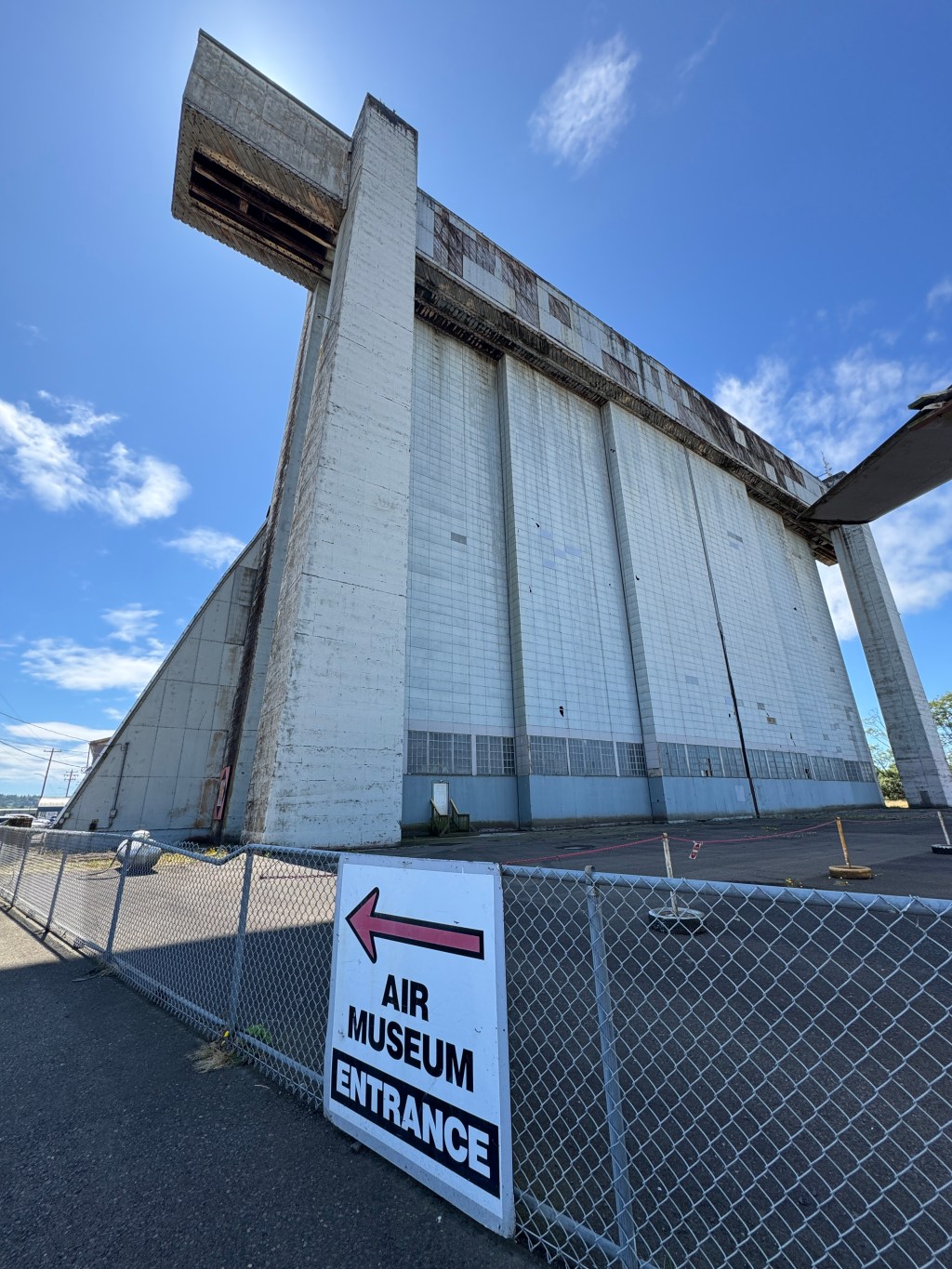
Tillamook Air Museum
The Tillamook Air Museum is housed in a former blimp hanger built during World War II and still one of the largest wooden structures in the world!
-
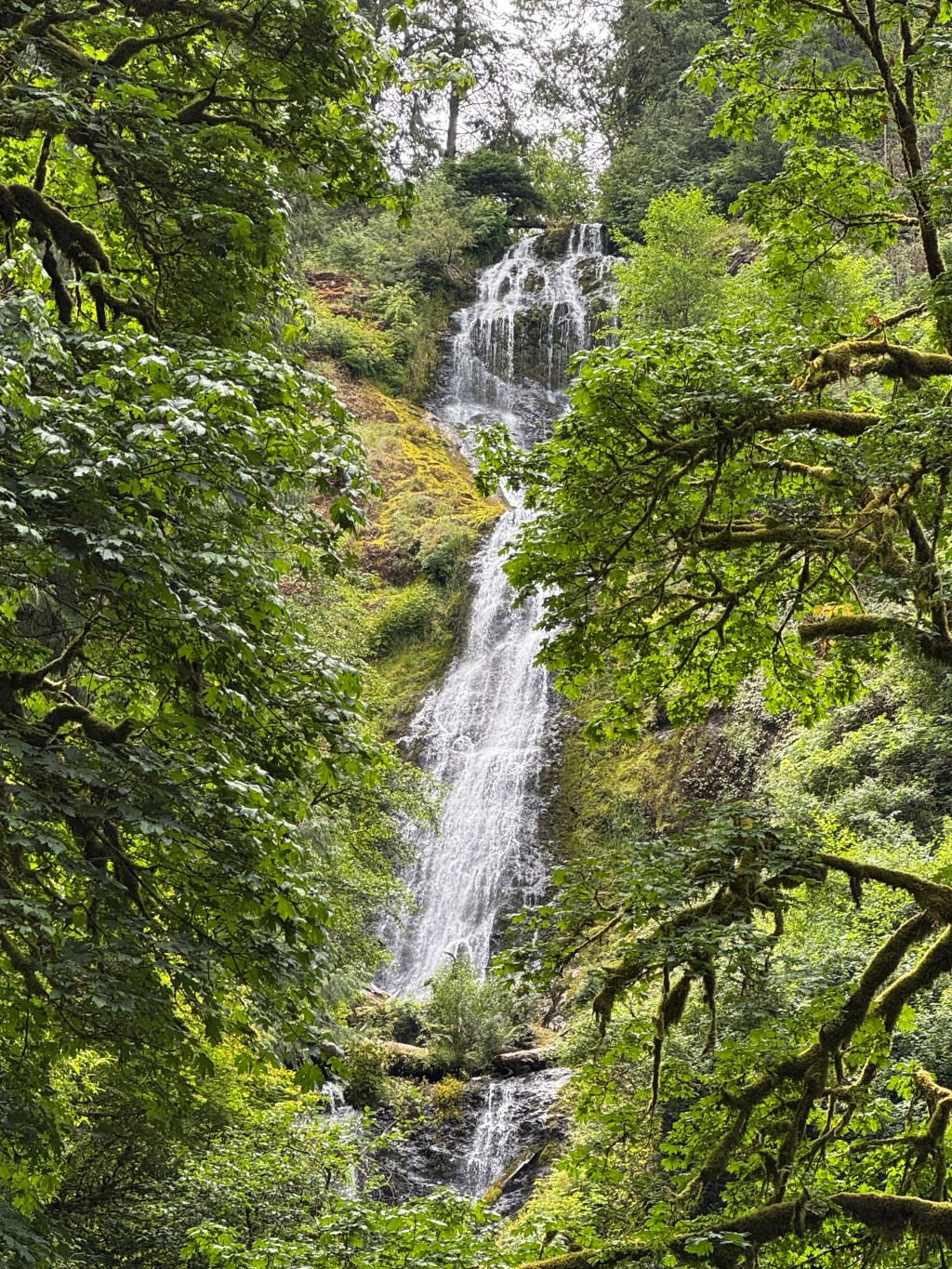
Munson Falls
At the end of a short hike near Tillamook, Oregon, we were rewarded with this view of the top part of Munson Falls. Over 300 feet high, the ribbons of water cascaded down to help water the rainforest around us.
-
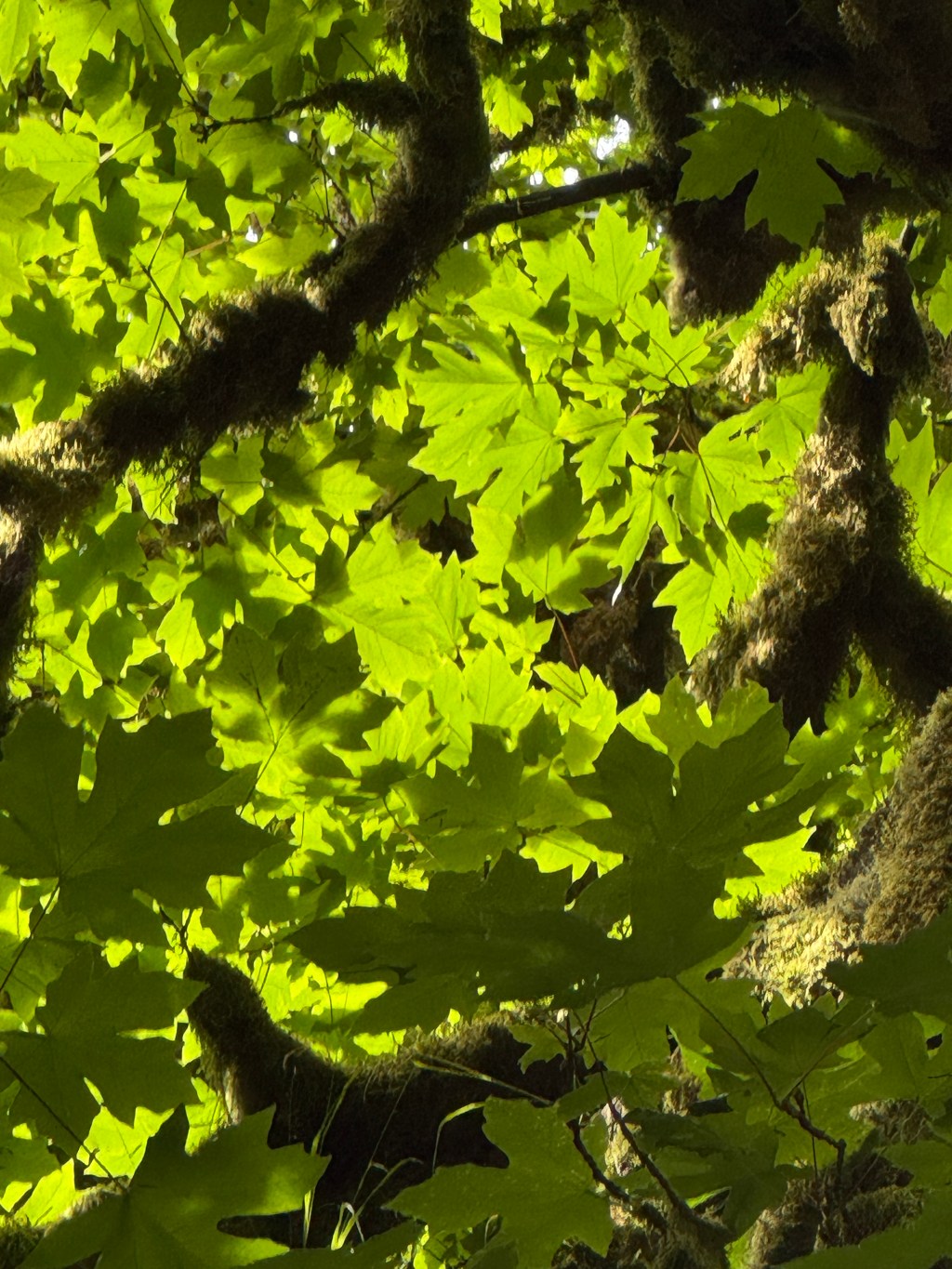
Green Canopy
Hiking to Munson Falls just south of Tillamook meant walking under a canopy of leaves and mossy branches with the sun filtering through.
 Words Are Inadequate