Palma
-
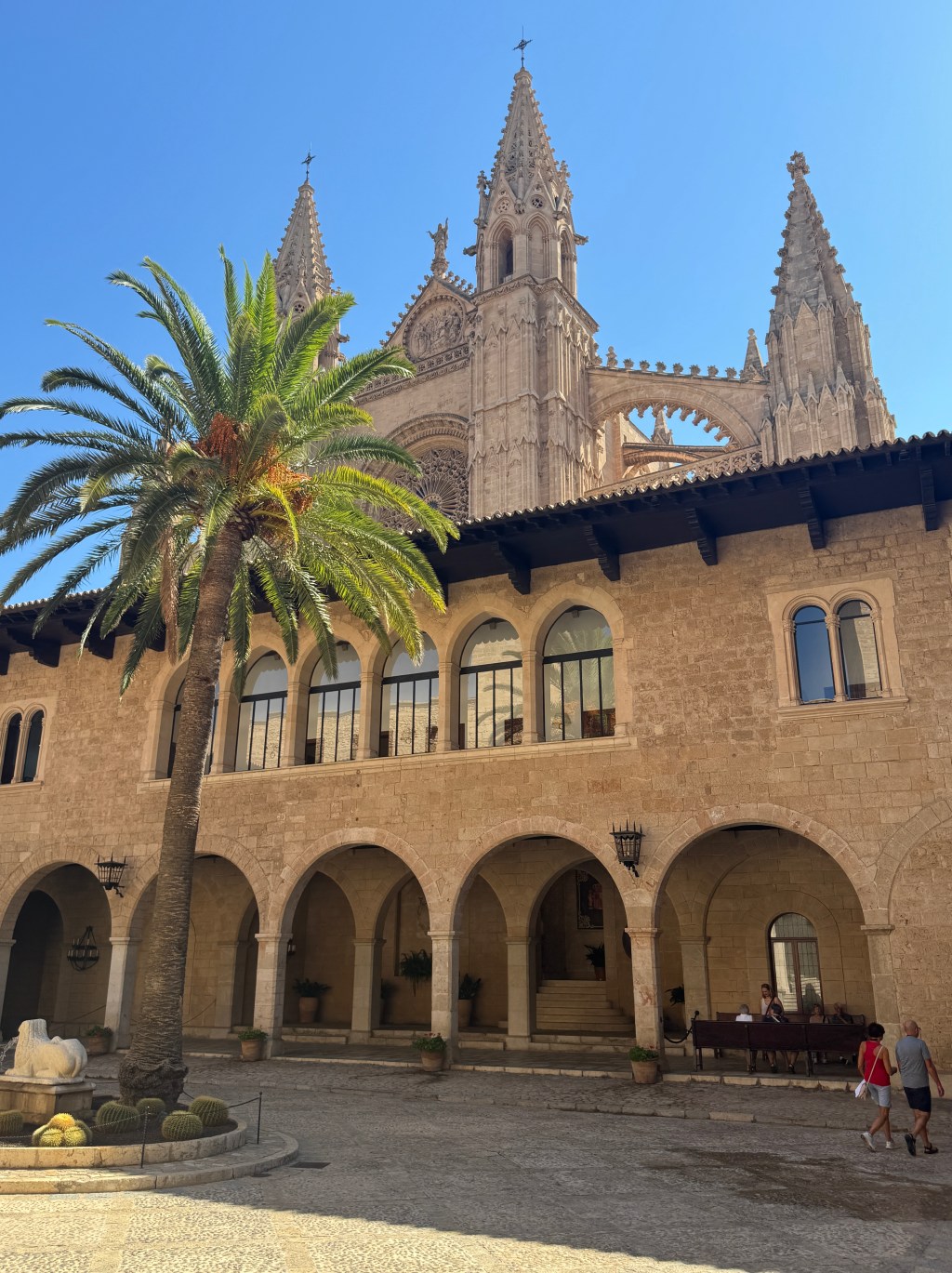
Courtyard
Palma’s Almudaina Royal Palace is built in several stories of galleries around this central courtyard. The Palma Cathedral rises above the palace just across the street. The two medieval structures still serve as focal points for Palma and reminders of the storied history of this Spanish island.
-
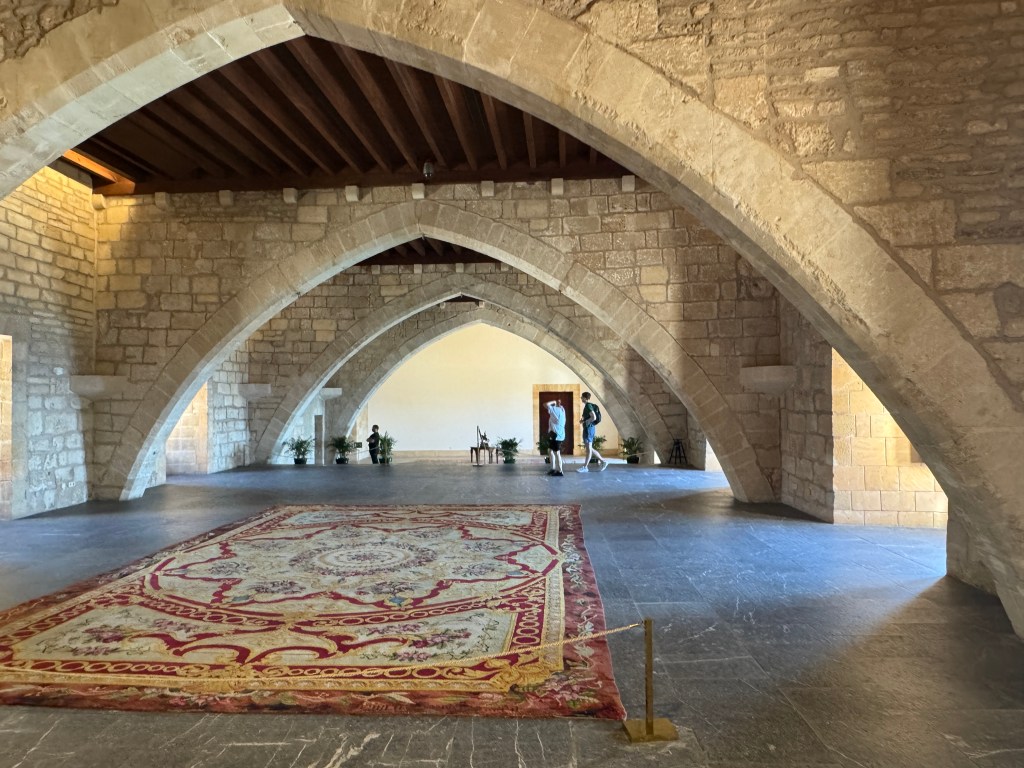
Main Hall
The main hall of the Royal Palace is still used for receptions when the Royal Family is on Mallorca. It’s a dramatic space with such wide stone arches and light pouring in from the Palma harbor.
-
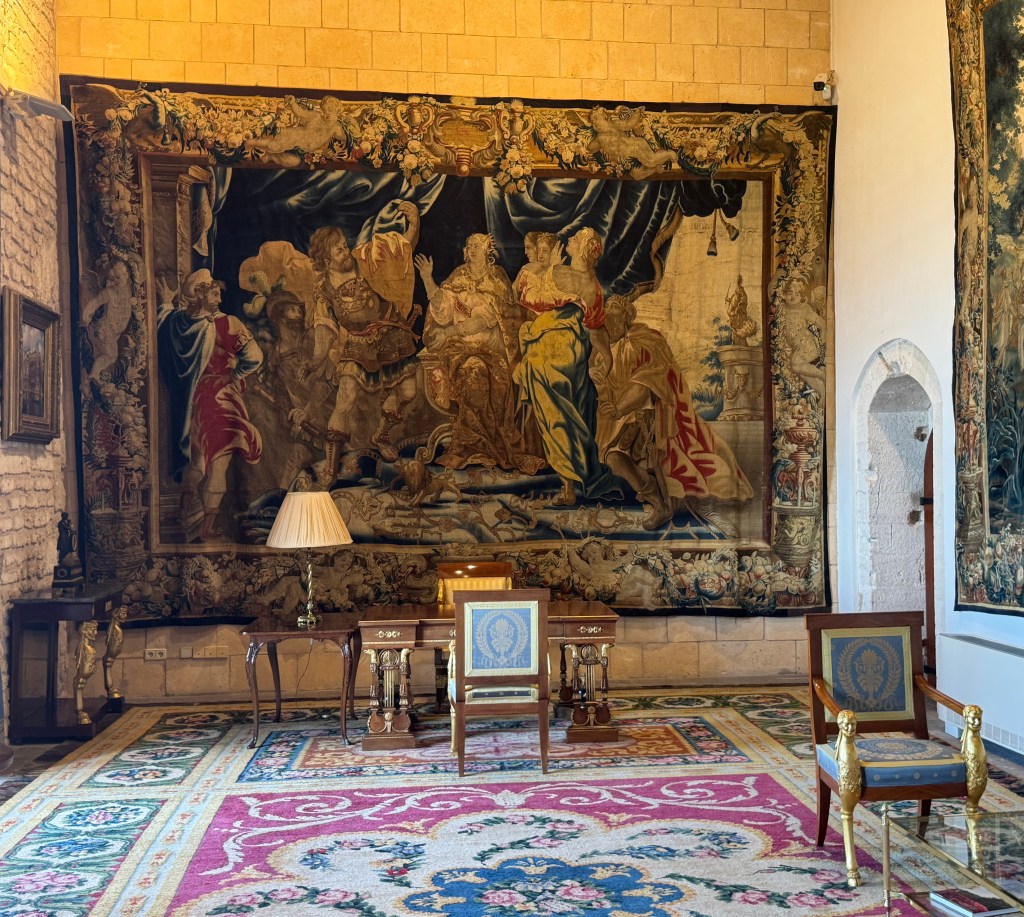
King’s Study
Once the king’s bedchamber, this simple room now serves as the king’s study – including for the current Spanish monarch Felipe VI, who uses the building as a summer palace. It’s also the room where the last Muslim emir surrendered to James I in 1229.
-
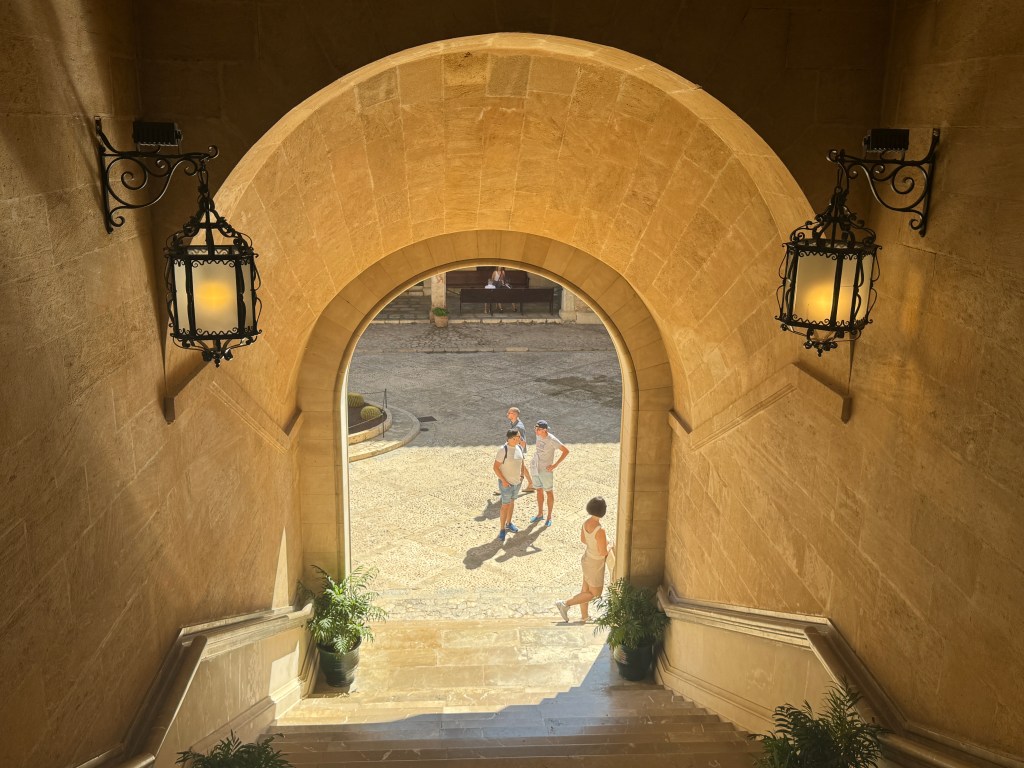
Stairway Arch
Looking down the stairs to the courtyard of the Royal Palace, the illuminated stones and iron light fixtures give a strongly Spanish feel to the view.
-
King of Mallorca
James III was the last of the original kings of Mallorca (1324-1349), who would make a good model for a King Arthur. The kings of Aragon assumed the throne in Palma, followed by Spanish monarchs, who all held court in this palace.

-
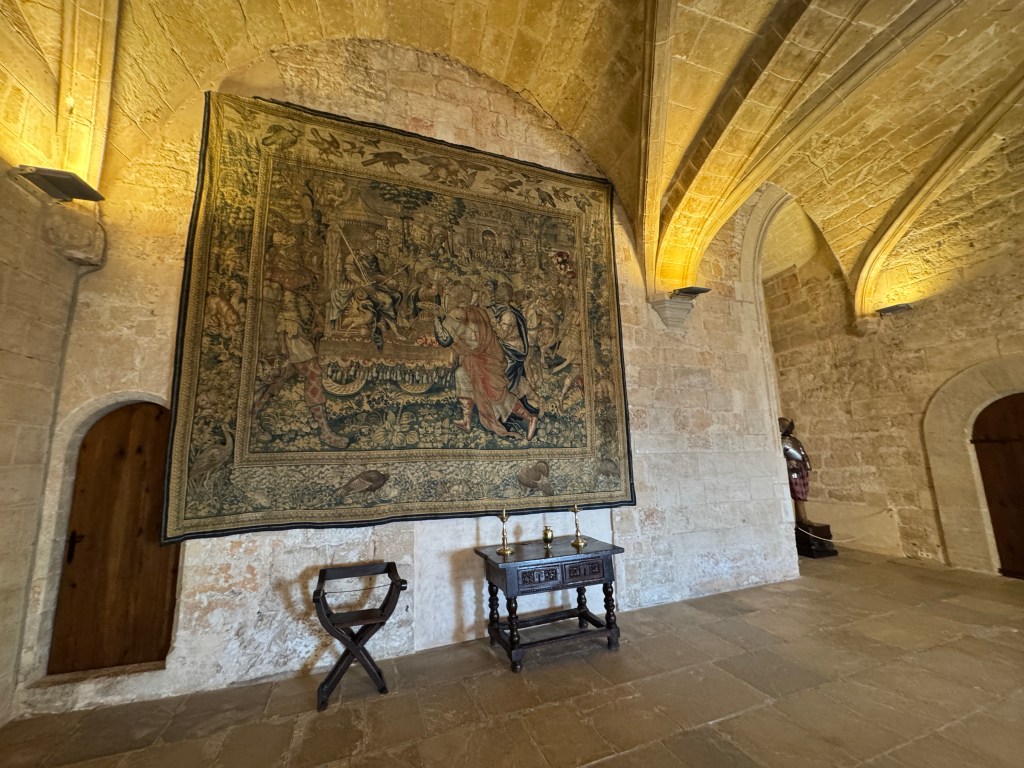
Stonework
The Royal Palace is simply decorated, mostly with old tapestries, leaving the solid stone floors, walls and ceilings to reinforce the impression of strength.
-
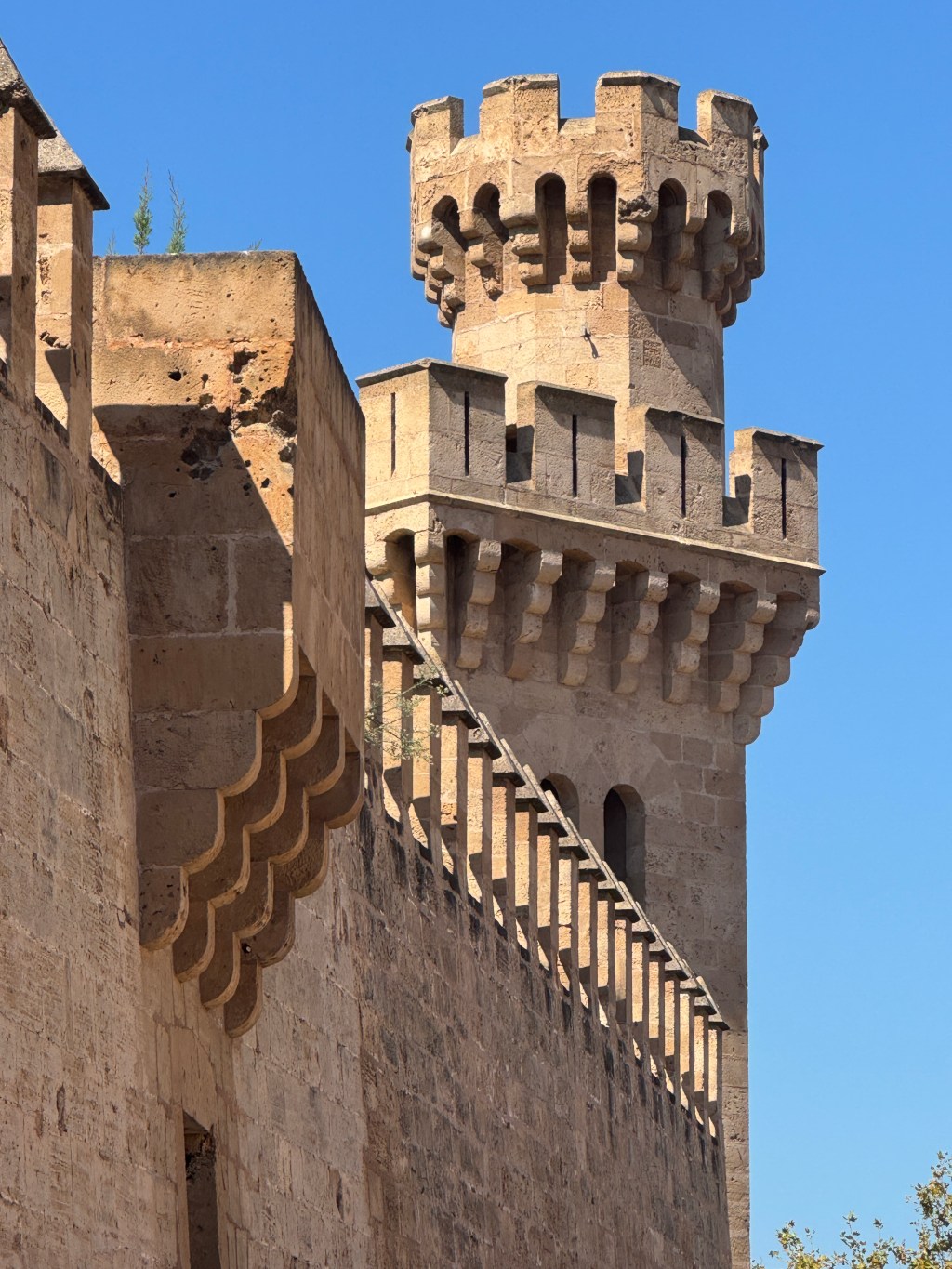
Royal Palace
Palma’s Almudaina Royal Palace was a Muslim fortress before the Spanish conquered the island and turned it into a palace for the kings of Mallorca (often spelled Majorca in English). They kept the old fortifications, here seen rising above one corner of the palace.
-
La Seu
Palma’s Cathedral is also referred to as La Seu (the Seat) as the home church for the Catholic Bishop of Mallorca. This image captured the sign and lamp on a building and part of the Cathedral in a study of textures and angles emblematic of Palma’s old town.

-
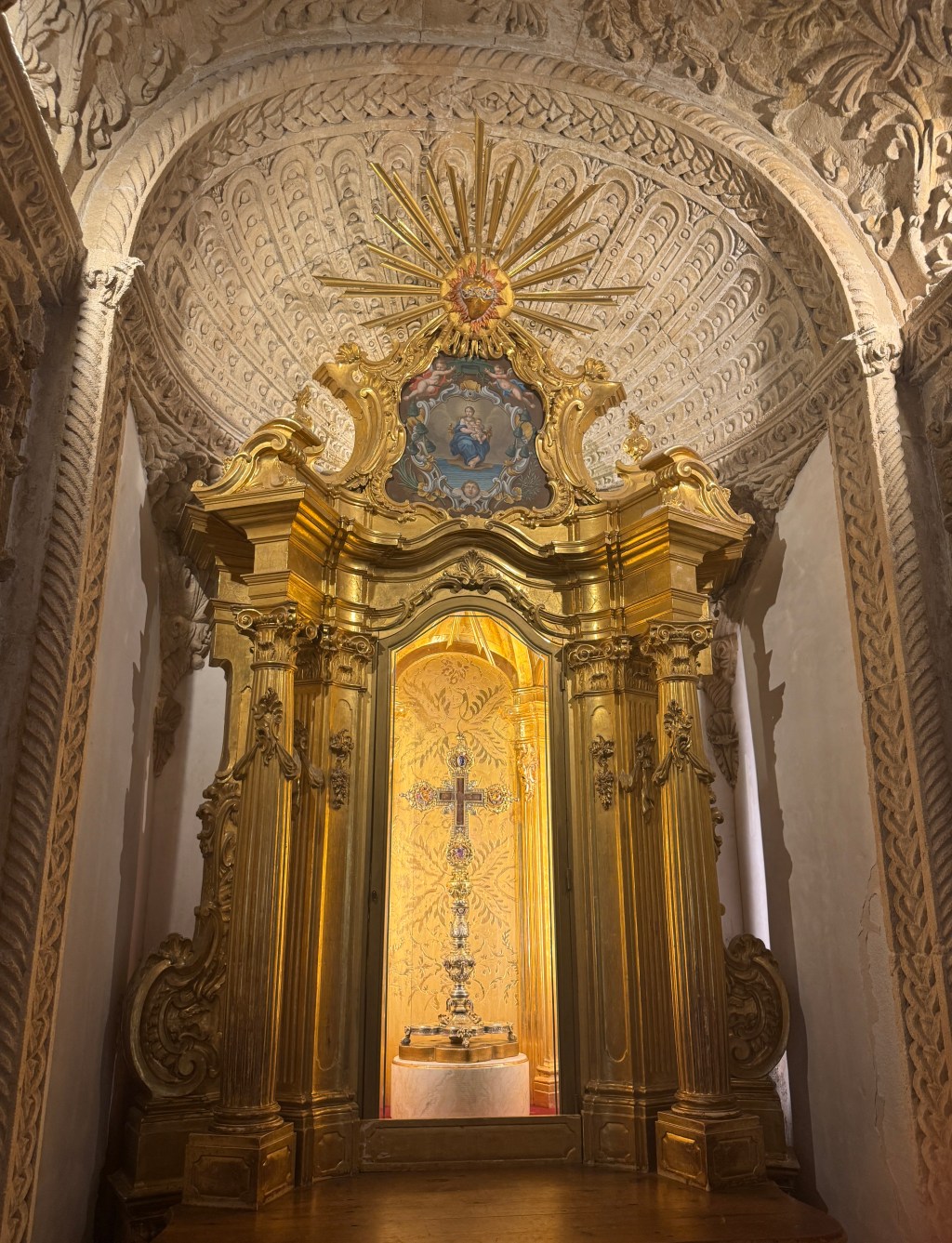
True Cross
The side chapels in Palma’s Cathedral represent a variety of artistic styles. There is also this golden Baroque setting that contains what was believed to be a piece of the”True Cross” that Jesus was crucified on. True or not, it’s a good reminder of the devotion that created places of worship this grand.
-
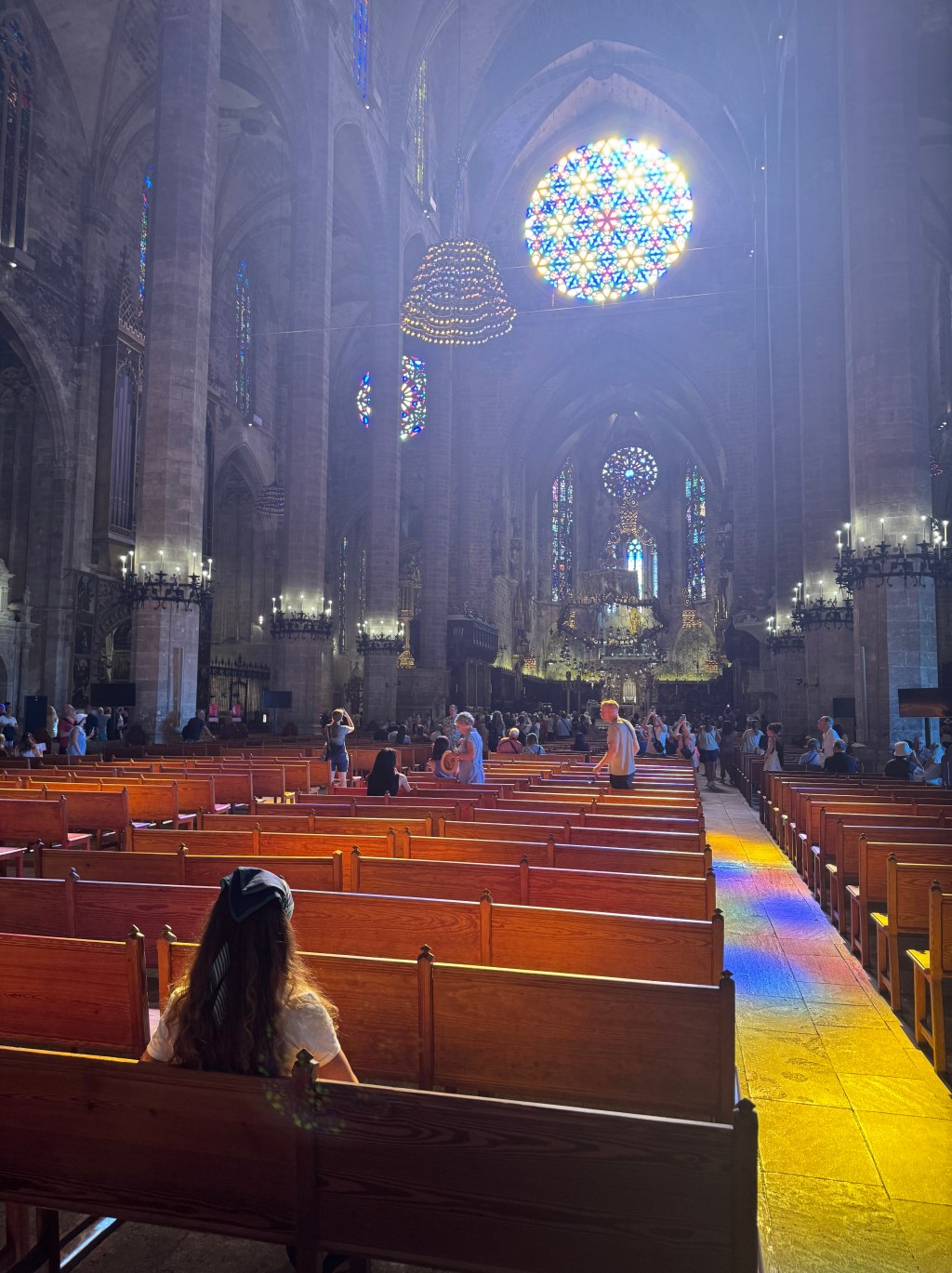
Sitting in the Light
The morning sun shining through the Cathedral’s largest rose window covers the pews (and anyone sitting in them) with bright, pastel hues. It’s also at least 5 degrees hotter in that window’s gleam. All in all, a visual and visceral experience of the presence of God.
-
Rose Window
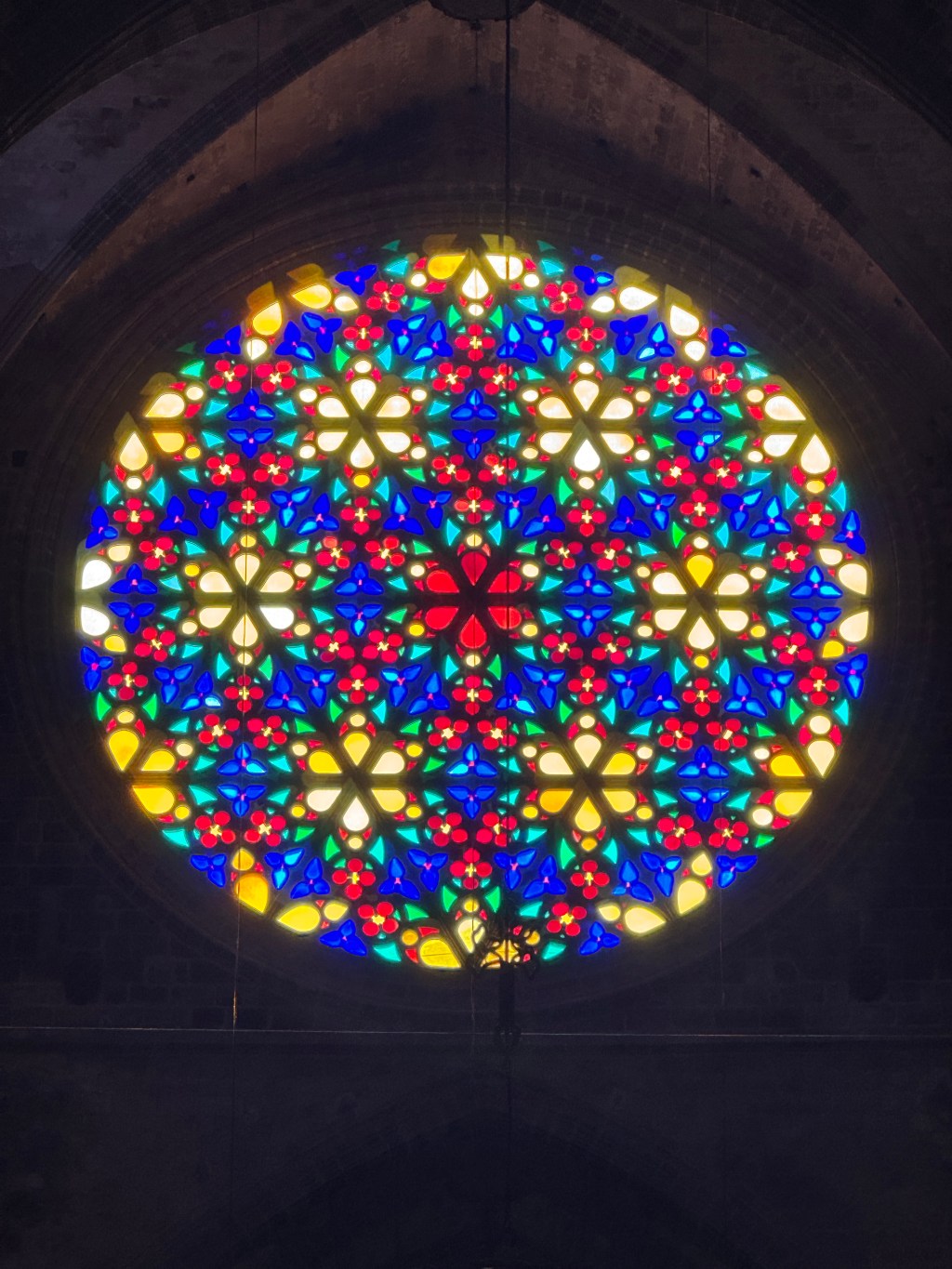
On the opposite end of the Palma Cathedral is another rose window, and at nearly 14 meters (over 45 feet) in diameter it’s the second largest in the world! Yellow, blue, red and a touch of green, and my how it glows.
-
Gothic Interior
Step inside the main entrance of the Palma Cathedral and it’s a classic Gothic space – soaring pillars, plain walls and a colorful rose window.

-
Neo-Gothic Facade
The main, west entrance of Palma’s Cathedral was reconstructed in the late 19th century as a French-inspired Neo-Gothic portal. The rest of the Cathedral remains a Gothic structure, complete with flying buttresses that emphasize the vertical lines of the building.

-
Arches and Steps
Walking up to the Cathedral in Palma involves passing under these stone arches and enjoying music from local musicians on the right, sitting across from an ancient wooden door leading to the nearby Royal Palace on the left.

-
Palma de Mallorca
Our last stop on the cruise was at the resort city of Palma on the Spanish island of Mallorca. Rising on a hill in the old city is the Cathedral of Palma, which was built on the site of the city’s largest mosque after the reconquest of the island from Muslim rulers in 1229.

 Words Are Inadequate