Rome
-
Vesuvius
Entering Naples harbor at sunrise, the red sky behind nearby Mount Vesuvius offers a reminder of the volcano’s deadly eruption in 79 AD that buried the city of Pompeii, our destination for today’s tour.

-
Obelisk
Looking down a Roman street toward the obelisk that stands at the top of the Spanish Steps. The obelisk was made by Romans during the early Empire in imitation of Egyptian ones and decorated nearby gardens until it was moved here in 1789.

-
Roman Traffic
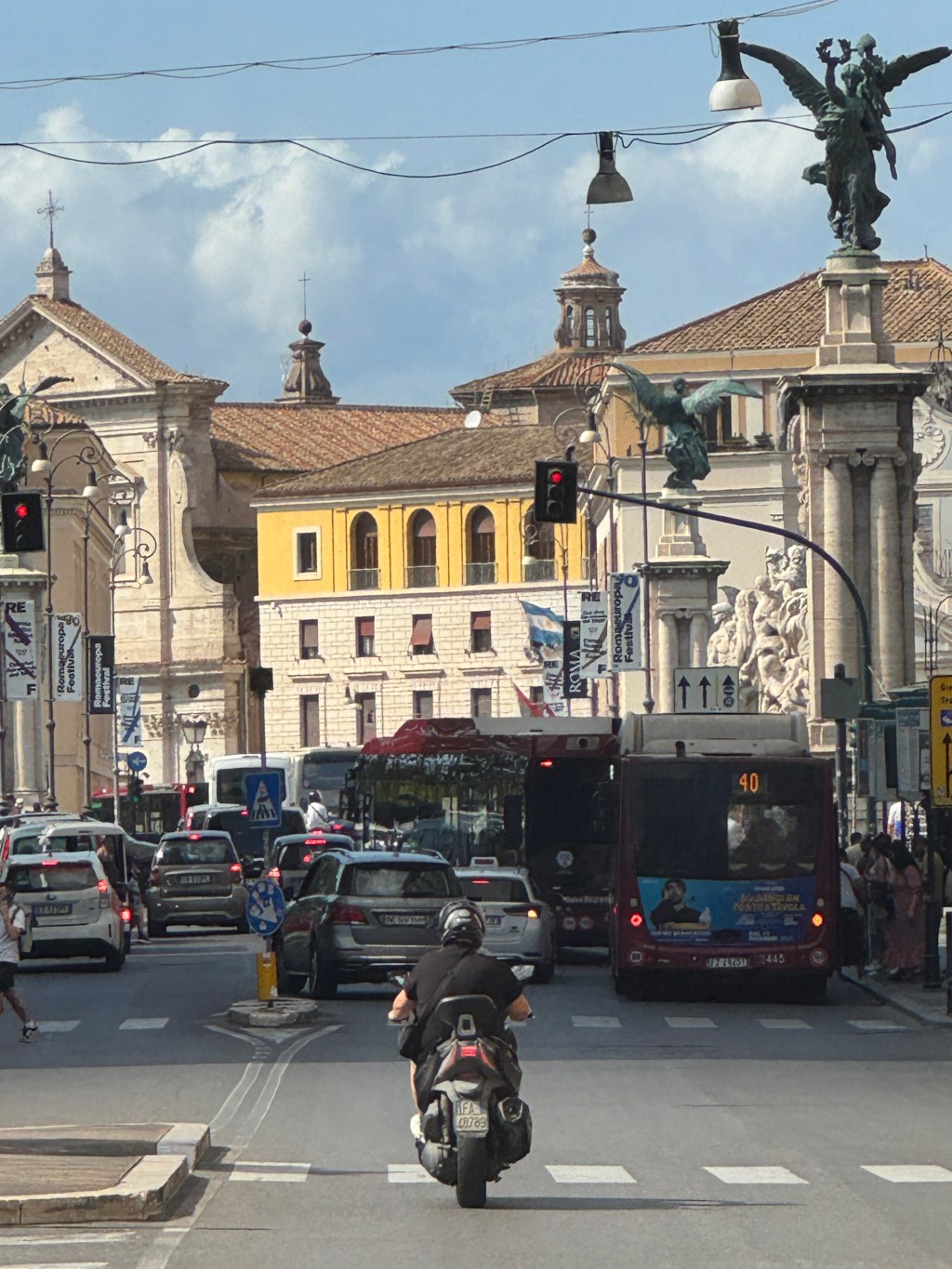
This image brings together three features of modern Rome – monuments and statues (more than any other city in the world), Roman Catholic churches (seemingly one on every other corner), and chaotic traffic (combining tourist busses, assertive drivers, and motorcycles zipping through it all).
-
Colosseum
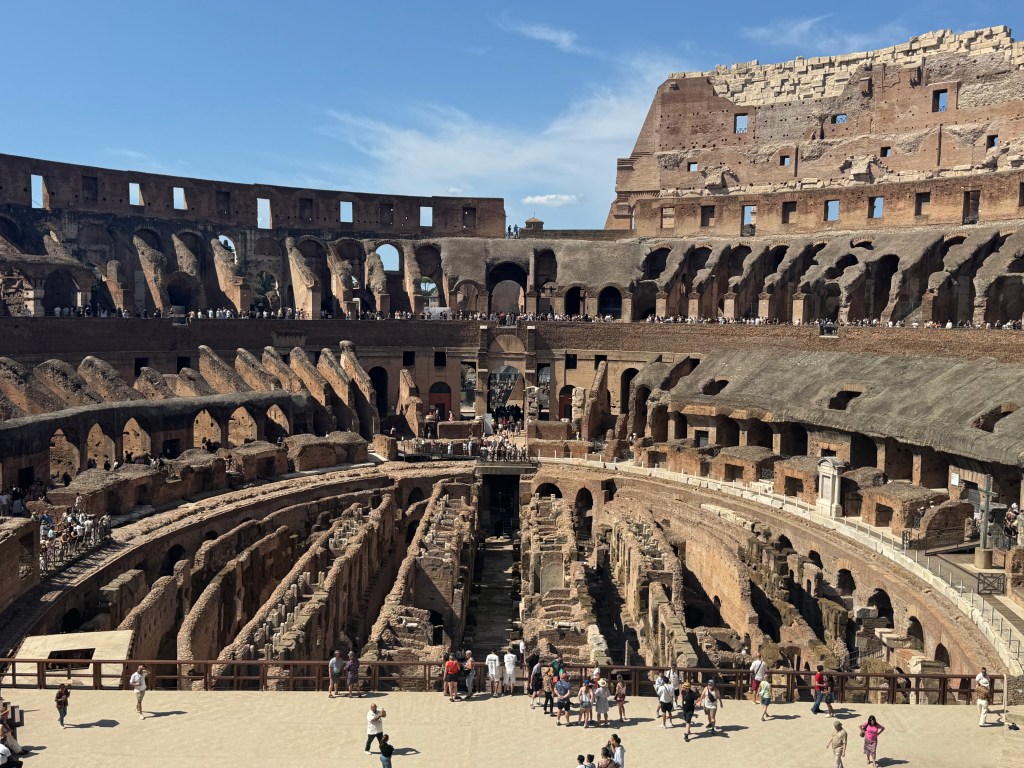
The largest ancient amphitheater, the Roman Colosseum was built in 72-80 AD and still overwhelms the visitor with its size. Earthquakes and stone robbers have left it without the limestone seats and steps that made it a gleaming white inside. The floor in the foreground once extended across the full oval floor.
-
Brick-Covered Arches
Looking into the Roman Colosseum, you can see the various layers of brick-covered concrete arches that held up the seats for more than 65,000 spectators. Gladiators, executions, dramas and even mock sea battles filled the stadium during the Roman Empire.

-
Roman Forum
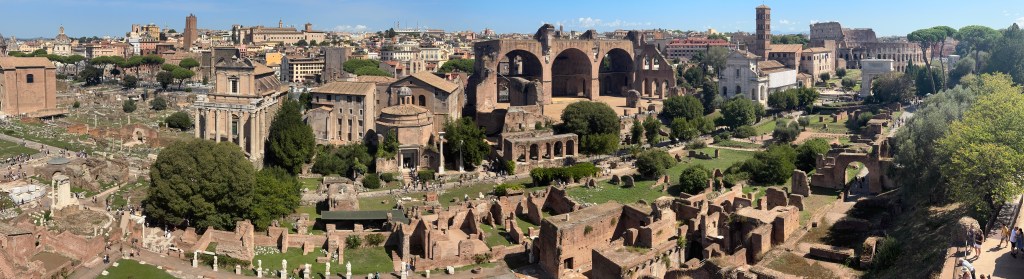
A panoramic view of the Roman Forum from the ruins on Palatine Hill. The Colosseum is at the far right, while the large three-arched ruins in the middle is the Basilica of Maxentius. That’s where the boxing matches during the 1960 Olympics were held and Cassius Clay received his gold medal.
-
Triumphal Procession
The Arch of Titus at the edge of the Roman Forum celebrates the victory by Titus and his father Vespasian over the Jewish Rebellion in 70-71 AD. The panel shows Roman soldiers carrying a menorah from Herod’s Temple, which became a symbol of the Jewish diaspora and eventually of the State of Israel.

-
Columns
These columns and the building behind them was originally the Temple of Antoninus and Faustina before becoming a Roman Catholic church dedicated to the martyr St. Lawrence (San Lorenzo), who was believed to have been sentenced to death at this location in the Roman Forum.

-
Capitoline Hill
Entering the Roman Forum, you look across a field of fallen columns and broken brick walls through the iconic pines of Rome up toward the more modern structures on the Capitoline Hill. The large white monument honors King Victor Emmanuel II, although our guide called it “the wedding cake.”

 Words Are Inadequate