Southwestern Art
-
Belt Buckle
I found this spectacular belt buckle of silver and inlaid precious stones at a trading post in Zuni, New Mexico. The design is distinctively Zuni (the sun in the center is a protective symbol) and the artist is no longer making them, so I brought it home with me!

-
Dorothy’s Weaving
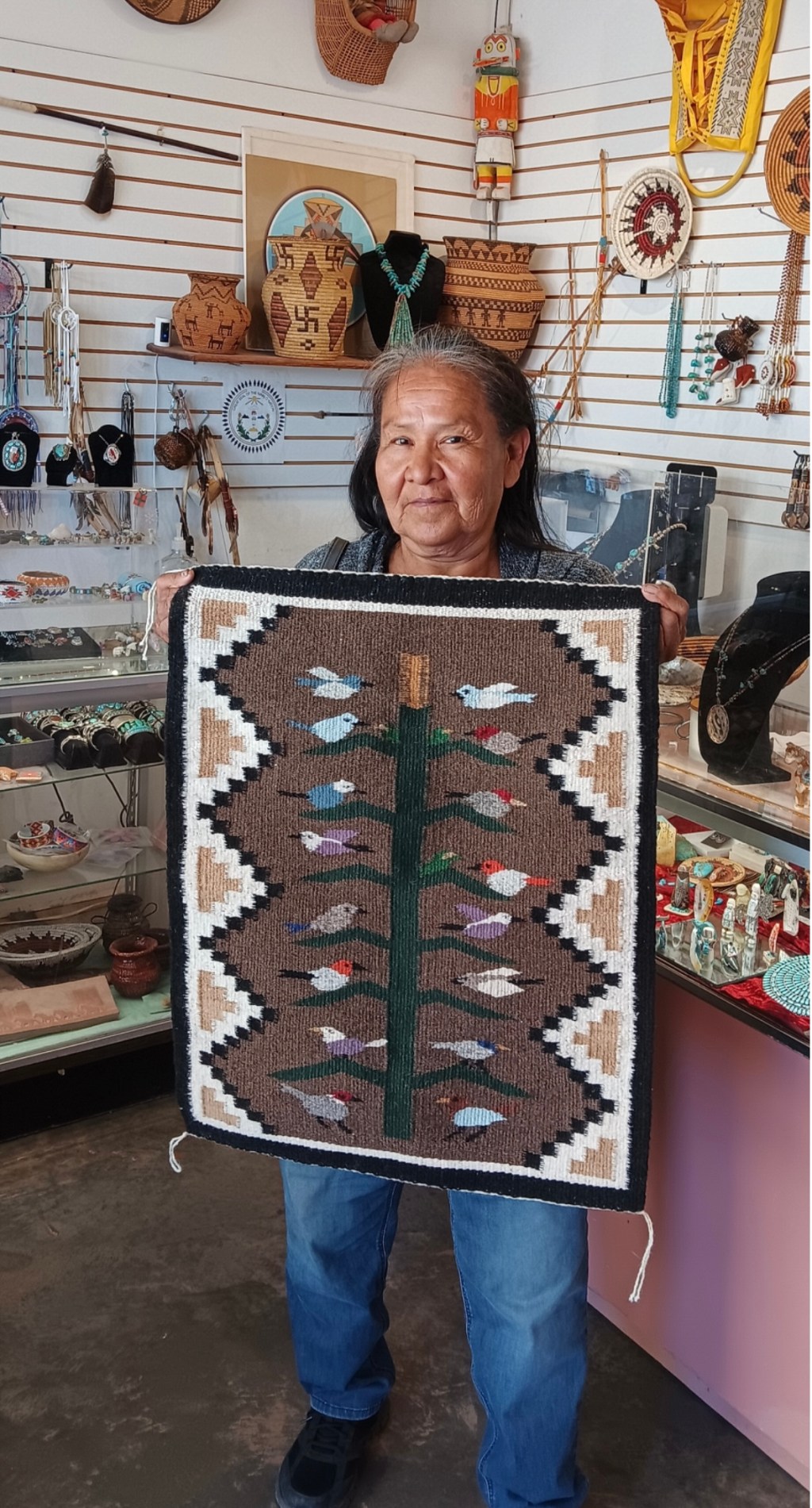
Elaine found a lovely woven rug in a Navajo Market near Monument Valley, and the store owner shared this image of Dorothy Begay, a local weaver who created it out of homespun and dyed yarn from her own sheep. The image of a cornstalk with birds now hangs in our hallway at home.
-
Pot Trophies
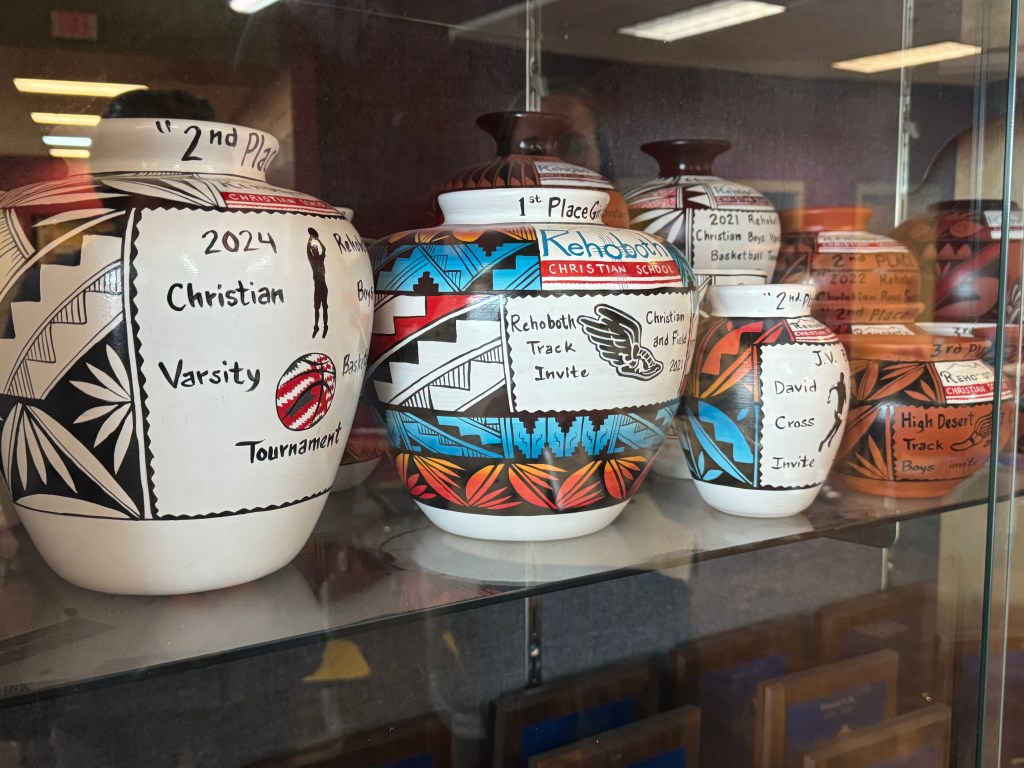
Rehoboth hosts athletic tournaments against other schools from Navajo country and across New Mexico. In keeping with the local aesthetic, the winners receive a painted pot instead of a standard wood and metal trophy.
-
Harmonious Way
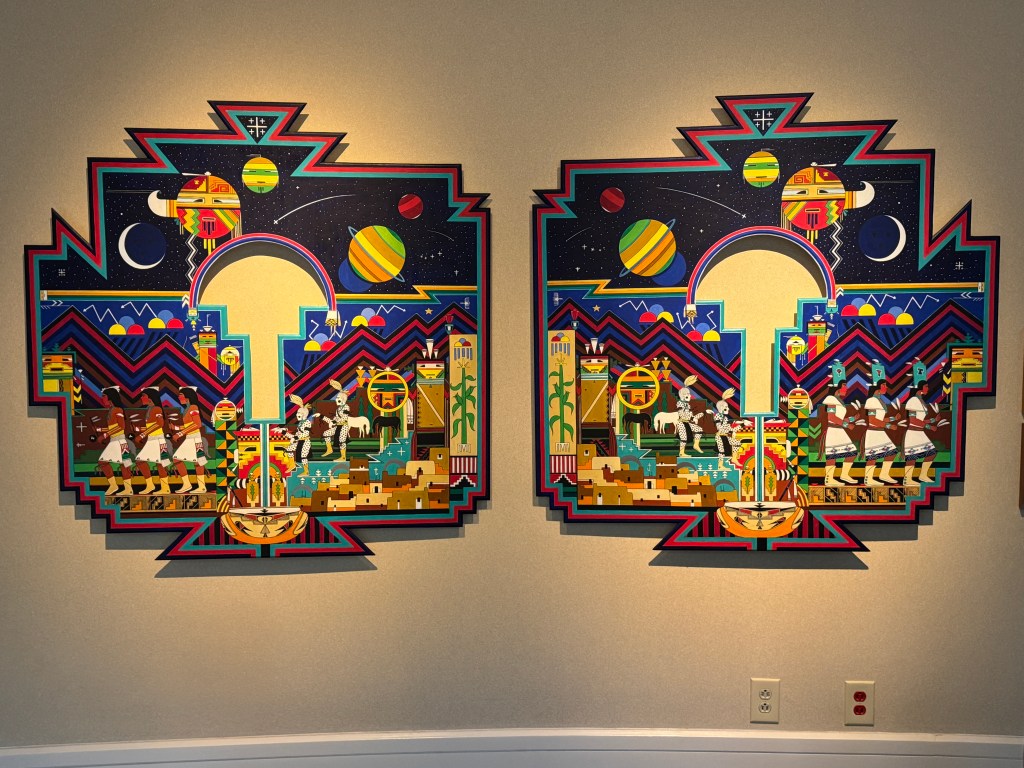
A detailed, two-panel painting by Douglas Johnson brings the natural elements of the Navajo and Pueblo tribes together to illustrate harmony. Johnson, who has lived with a Navajo weaver, is one of the New Mexico artists whose work is on display in the State Capitol building.
-
Quetzalcoatl & The Master Ants
This elaborate cut paper art by Catalina Delgado Trunk hangs in the state Capitol hallways. Aztec myth says Quetzalcoatl, the plumed serpent god who created humans, became an ant in order to enter the master ant’s mountain to steal corn for people to eat.

-
Woven Drawing
Local artist Carl Schuman uses colored pencils to create multi-layered drawing constructions like this one in the Capital building in Santa Fe. “Where All True Paths Meet” is part of the Capitol Art Foundation’s collection of New Mexico masterworks.

-
Hacienda
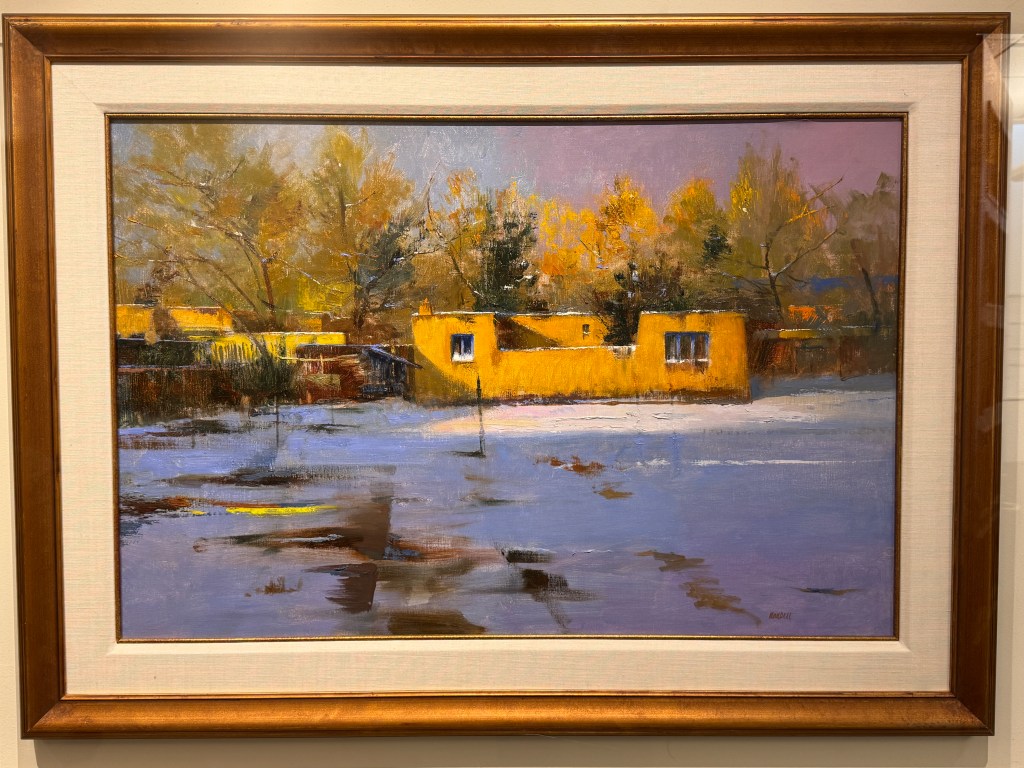
The Capitol Art Foundation’s collection includes “Hacienda Shadow Play” by Santa Fe artist Albert Handell. Known for his painting workshops, Handell was one of the first American artists to paint en plain air with pastels.
-
Tewa Tales of Suspense
The Tewa Country exhibit included edgy works like this take on a superhero story of a woman warrior surrounded by symbols of the Pueblo Revolt of 1680 that burned down Catholic churches and drove the Spanish colonial forces out of New Mexico for 12 years.

-
Round Earth
Hopi artist Arlo Namingha sculpted natural materials into a timeline of the land. Titled “Tsi’ Pin (Pedernall),” it speaks to O’Keeffe’s statement of “owning” the Pedernal mountain, saying instead that we are stewards for a brief time of the locations we inhabit.

-
Prayer Making Its Way
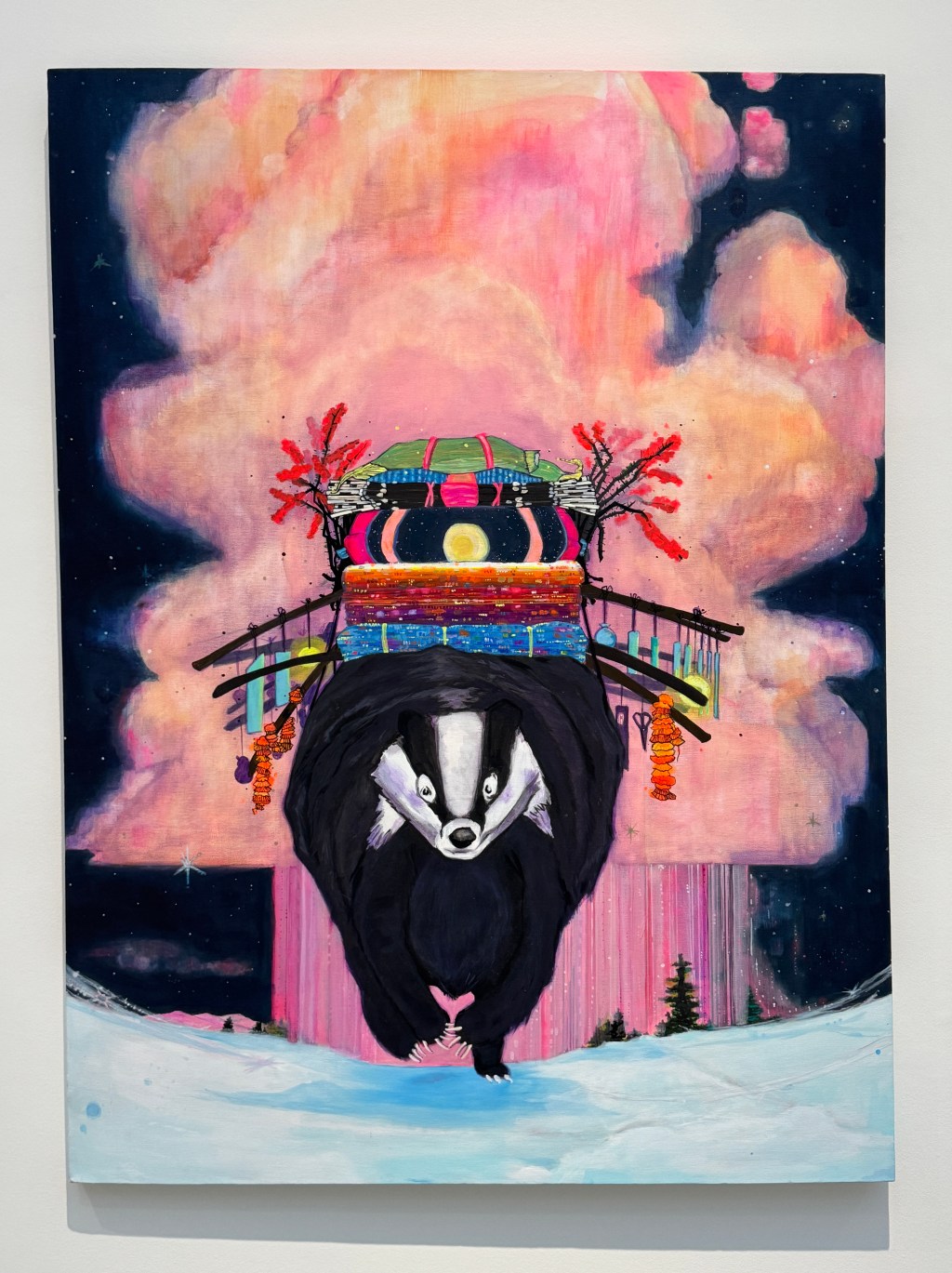
Artist Eliza Naranjo Morse (Santa Clara Pueblo) painted “A Prayer Making Its Way” of a badger carrying Tewa creations up a snowy mountainside with pink rain clouds offering encouragement in the background. A different take on New Mexico’s landscape that caught my attention.
-
Black Mesa Landscape
Georgia O’Keeffe painted this landscape in 1930, but the Tewa people honor the same land as ancestral places worthy of songs and ceremonies. Kudos to the museum for displaying creations by local Tewa (Pueblo) artists that offered commentaries on O’Keeffe’s works and worldview.

-
Georgia’s Corn
The Georgia O’Keeffe Museum in Santa Fe was a highlight of our visit to New Mexico’s capital. This oil painting of a corn plant focuses in on a few leaves, a technique O’Keeffe used in many of her artworks.

-
Family
This earthenware clay sculpture depicts a mother and father holding their child and surrounded by extended family. At 14 feet wide, it hangs in the Santa Fe Community Convention Center and the artist, Roxanne Swentzell, wanted to show the strength of these bonds for the community.

-
Weaving
Inside the Española Valley Fiber Arts Center we found a class full of weavers creating wall hangings on small looms. In another room we talked with this local woman who regularly works on projects at the center. Fascinating to watch her expertly operate the shuttle and loom.

-
Fiber Arts Center
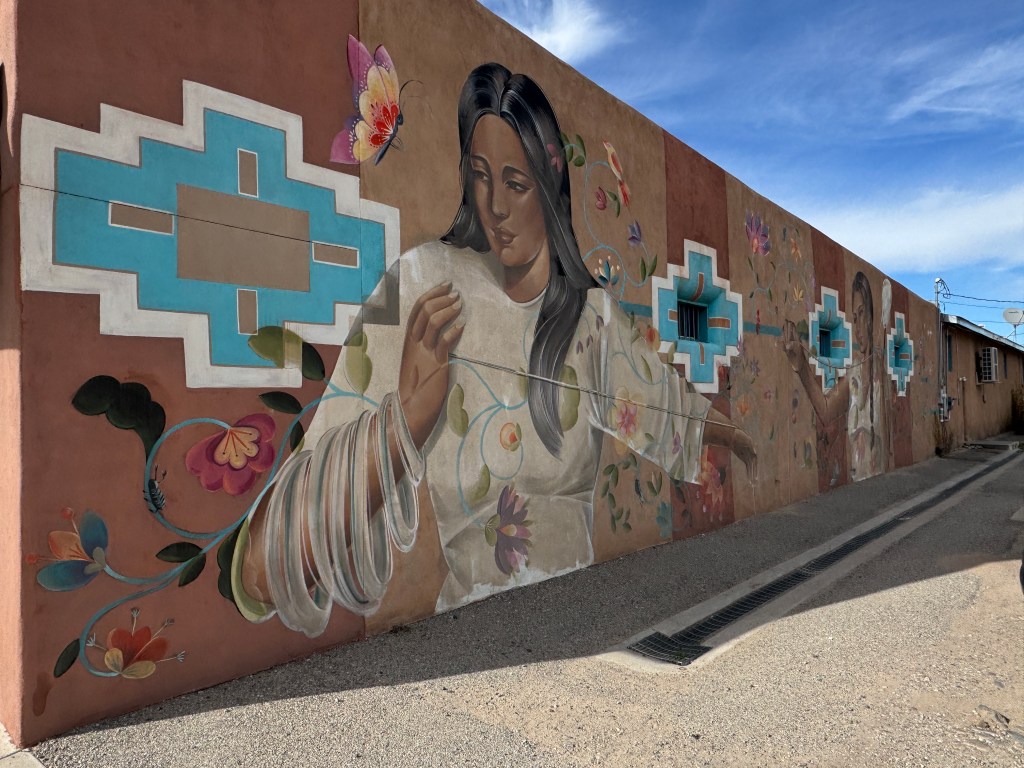
We stopped at the Española Valley Fiber Arts Center while driving through northern New Mexico. The building’s side wall provides a visual cue to what we found inside.
-
Big Drop
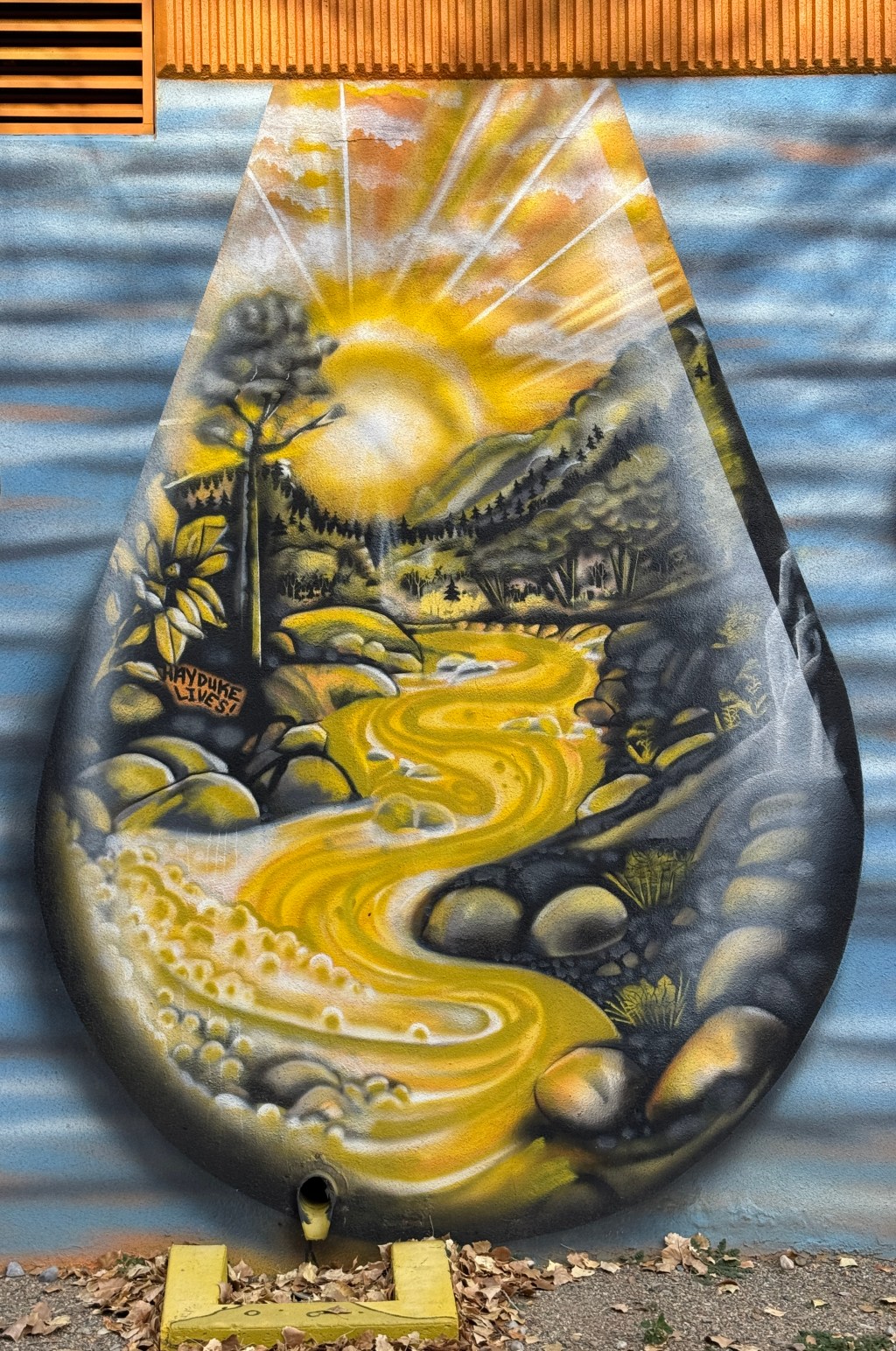
This artwork painted on the walls of the Durango water treatment plant showcases the nearby Animas River, and the golden colors are a reminder of the gold mines that led to the town’s creation.
-
Kayaker Sculpture
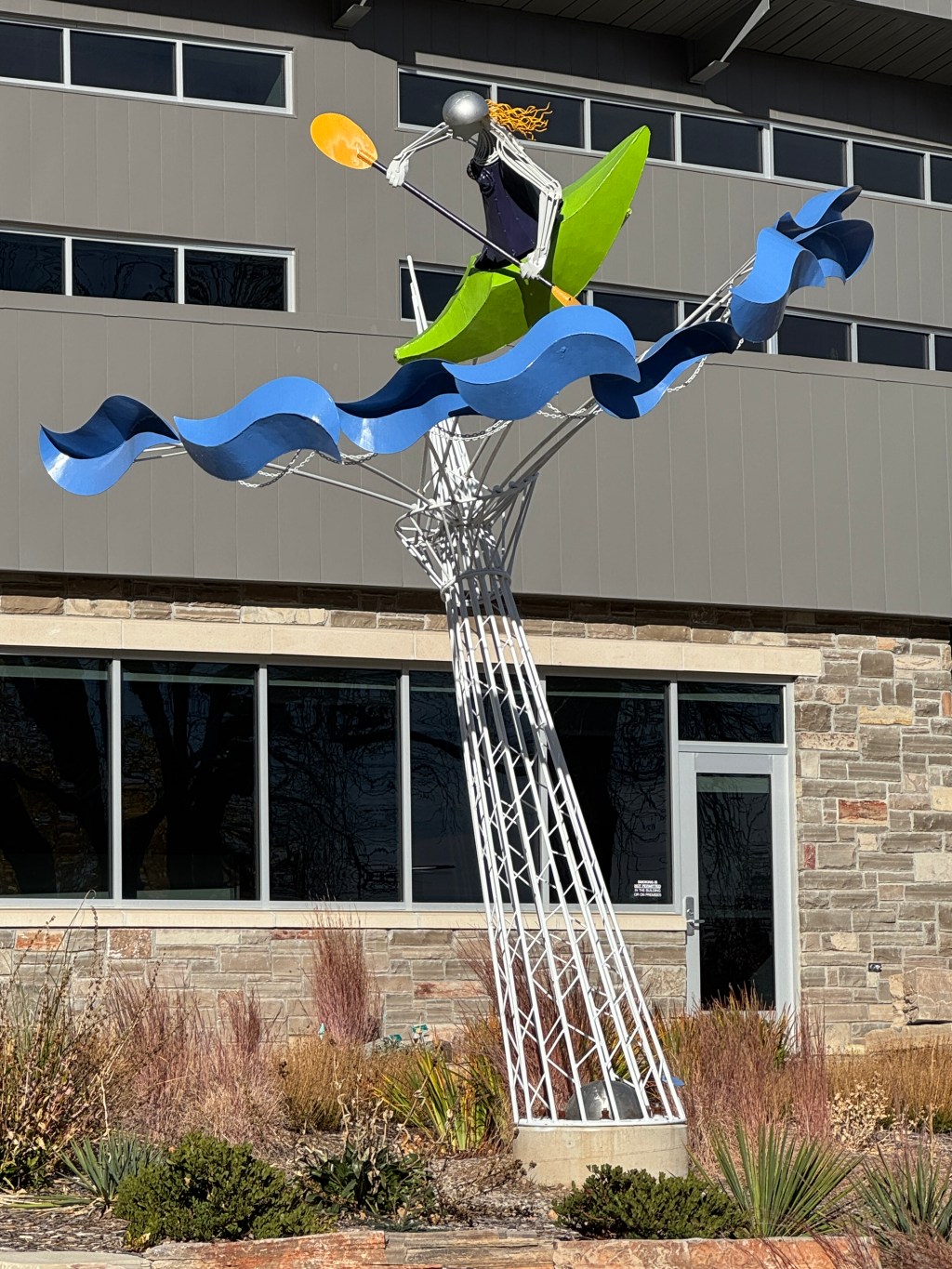
This sculpture outside the Durango Chamber of Commerce highlights the whitewater competition that takes place just a few feet away in the Animas River’s spring floods.
 Words Are Inadequate