Verde Valley, AZ
-
Cooper
Resting on limestone steps after walking around Montezuma Castle, our dog Cooper was ready for another adventure.

-
Shady Stream
Where the water from Montezuma Well emerges from a nearby shady hillside, residents built a canal that ran for miles and irrigated acres of corn, beans and squash over 600 years ago.

-
Cacti
Without water (such as from Montezuma Well), this area mostly grows juniper bushes and impressive plots of prickly cactus.

-
Ruins by the Well
These foundation stones are from a building near Montezuma Well. Though abandoned by 1425, local Hopi, Zuni, and Yavapai tribal members recount oral histories of their ancestors living here.

-
Lakefront Property
This dwelling in the cliff above Montezuma Well is the last surviving of more than 30 stone structures that were built around the rim of the lake before 1400.

-
Montezuma Well
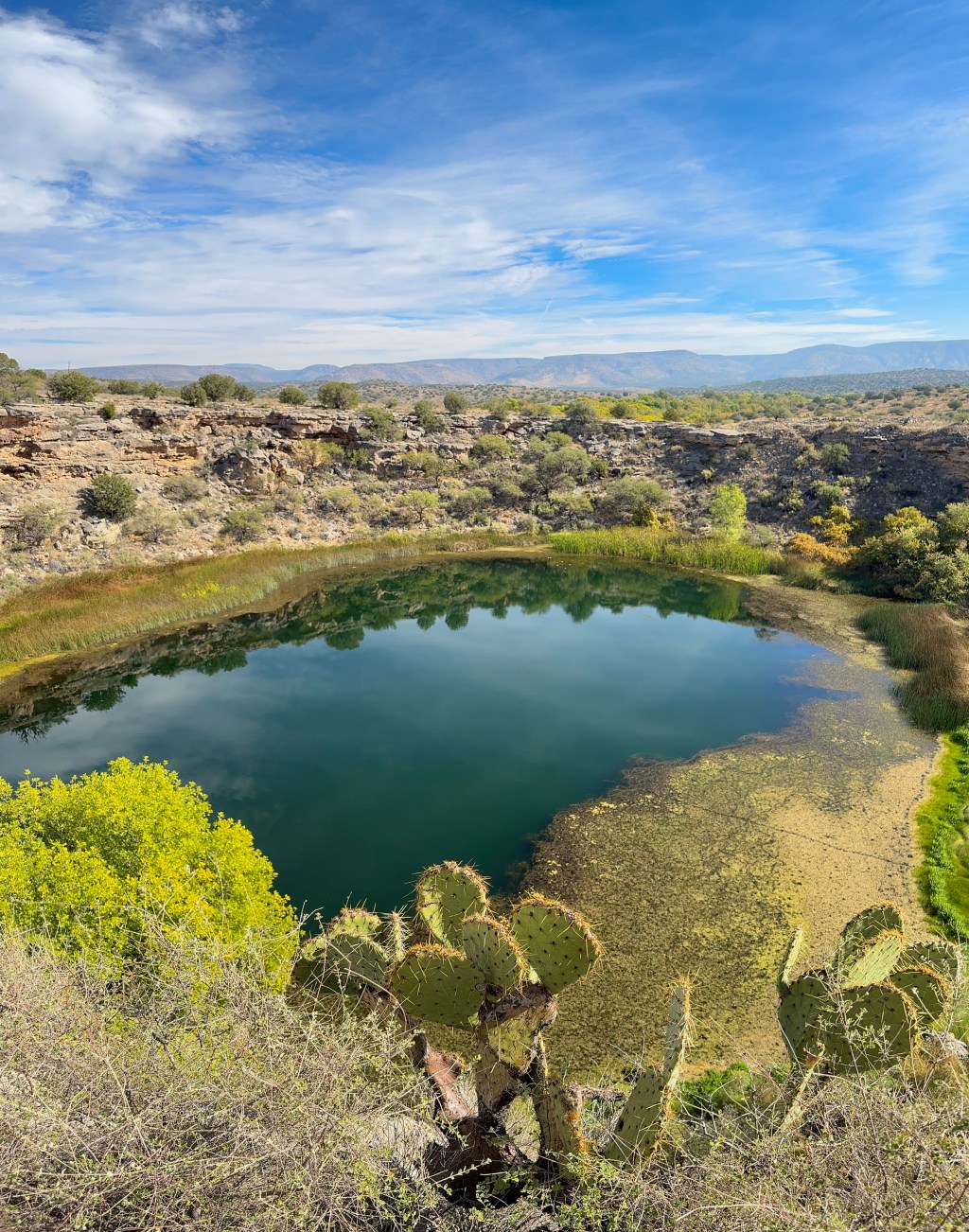
A surprising lake in the middle of the desert, Montezuma Well is a limestone sink with 15 million gallons of fresh water that has spent the last 10,000 years flowing underground from the high Colorado Plateau around Flagstaff.
-
Castle Model
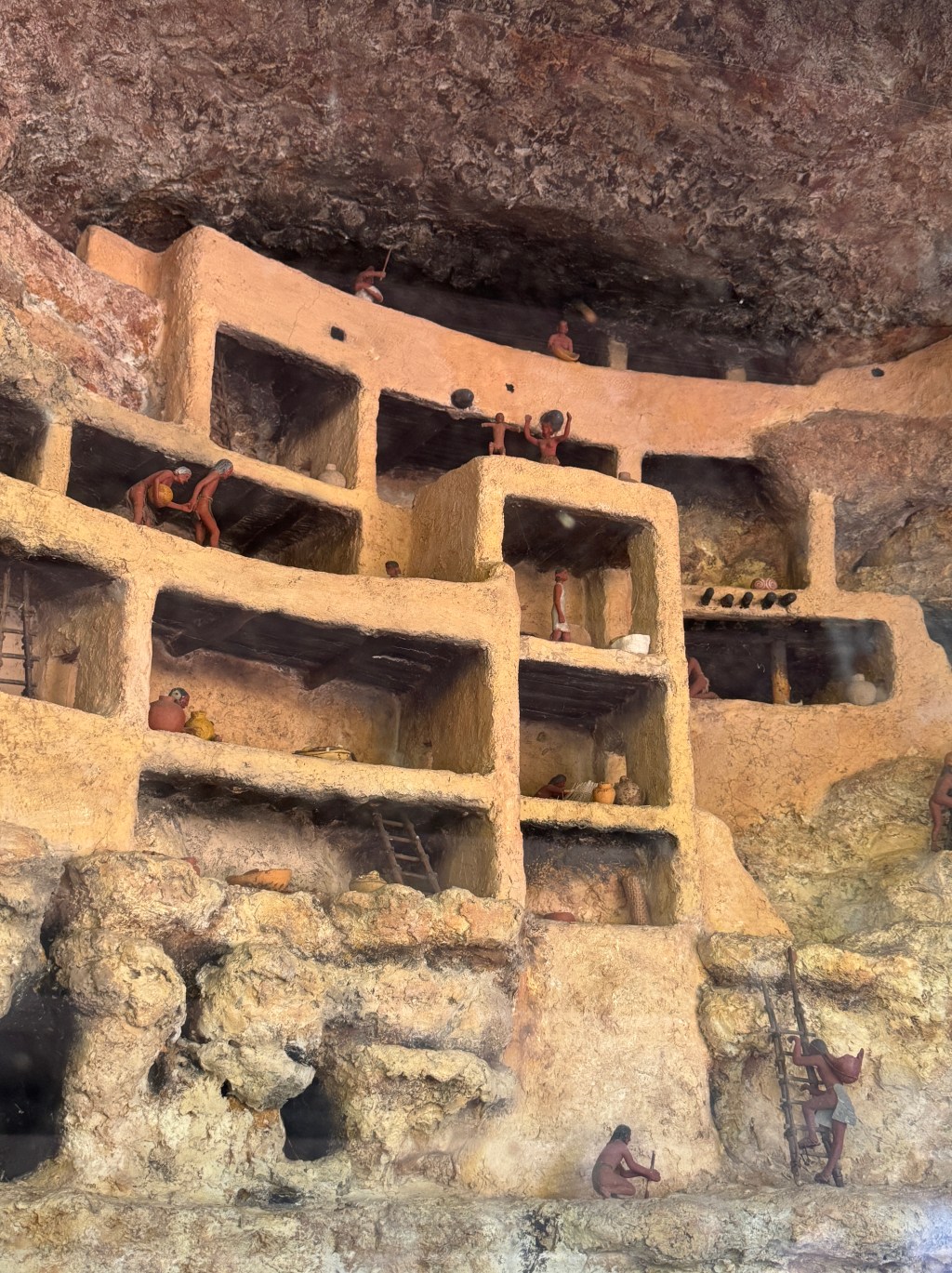
This reconstruction of the inside of Montezuma Castle reveals some of the different activities shared by the Southern Sinagua people who called it home in the 1300s. What we don’t know is why they abandoned the site; was it resource depletion, disease, group conflicts, or a changing climate?
-
Bricked In
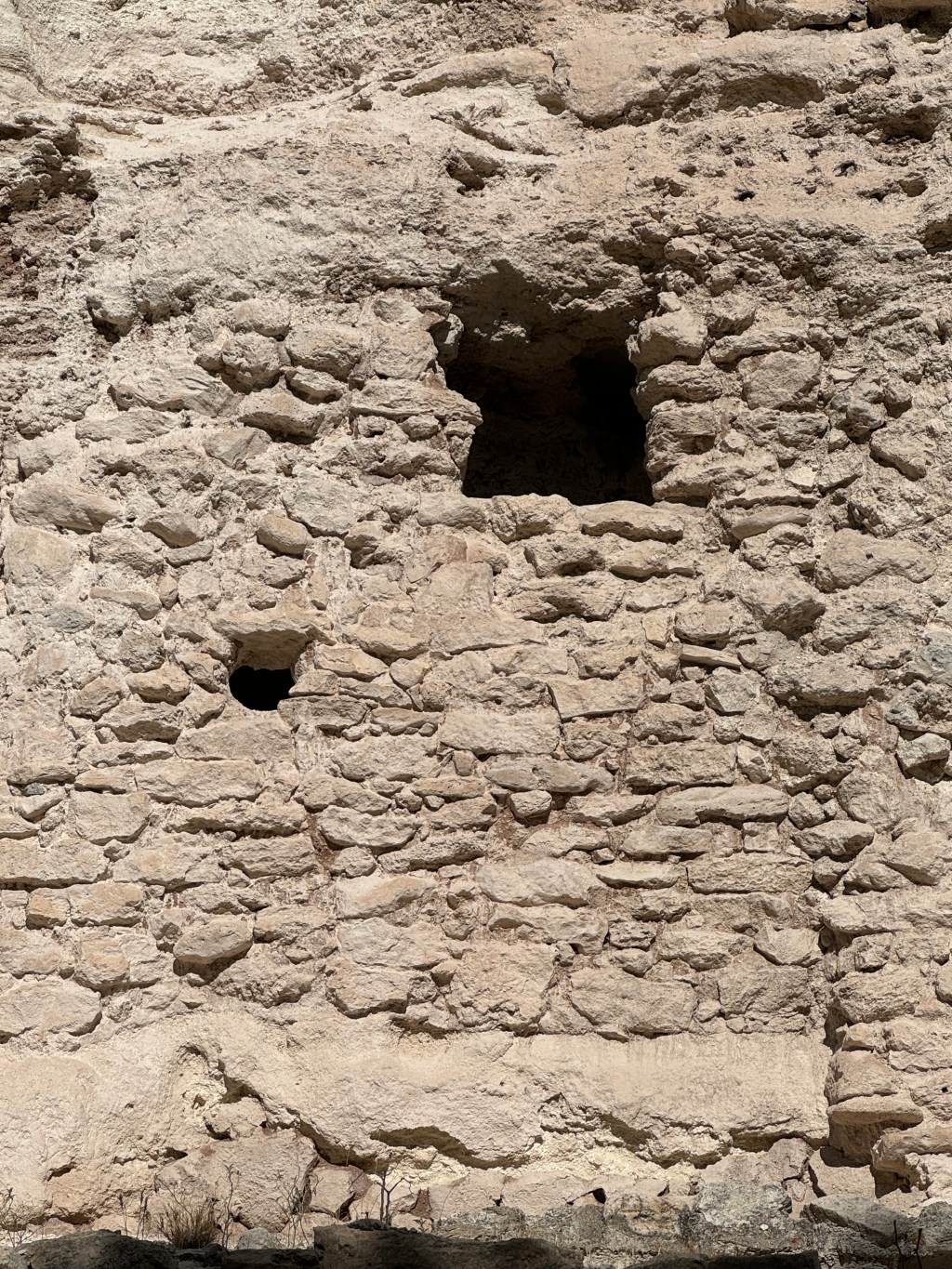
A well-preserved section of a five-level apartment structure at Montezuma Castle.
-
Post Holes
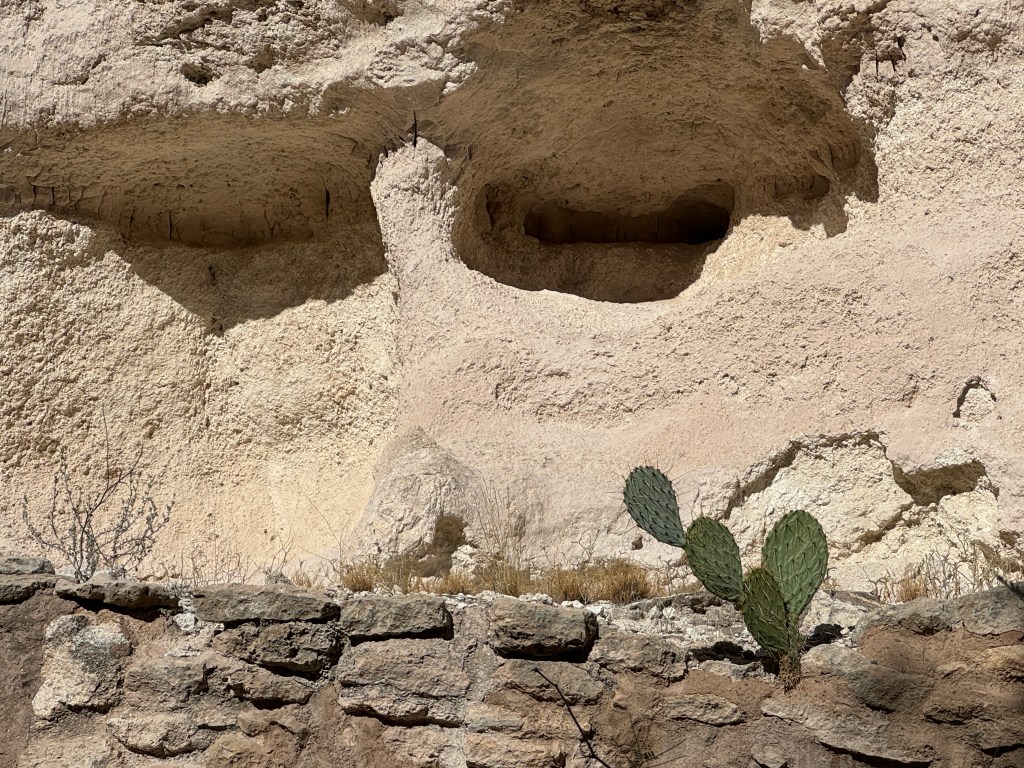
Indents in the limestone cliff show where wooden posts were placed for roofing of an multi-level apartment at Montezuma Castle.
-
Cliff House
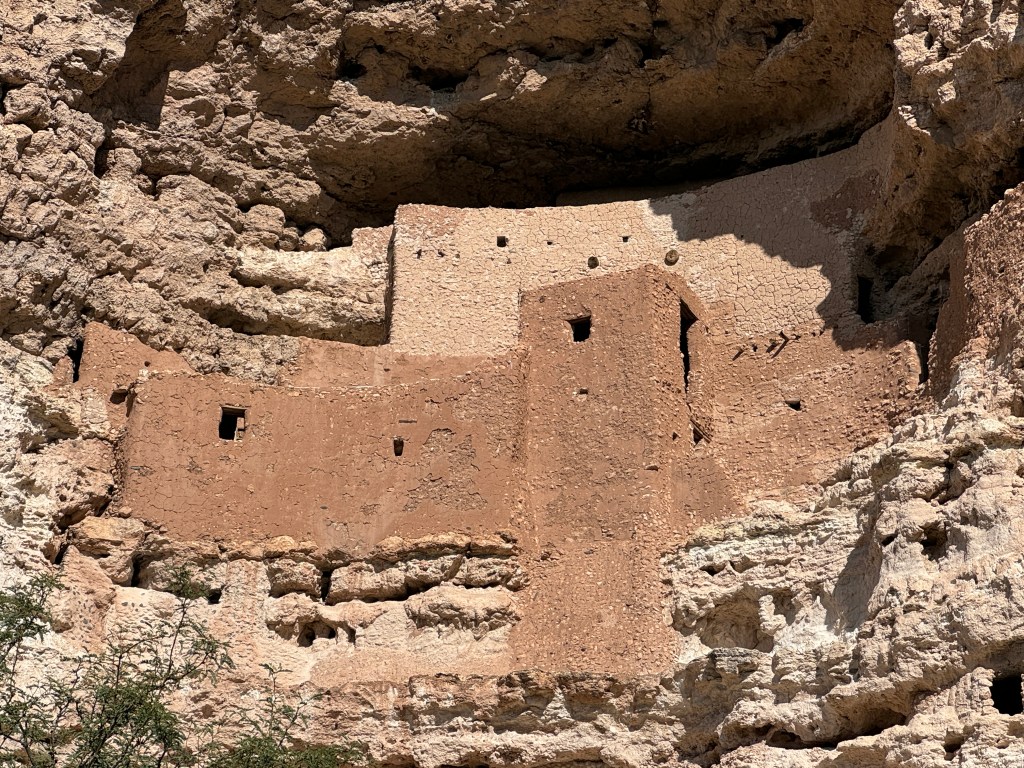
Montezuma Castle looks out over a wooded creek and the juniper-covered hills in the Verde Valley of central Arizona. Early American settlers assumed it was Aztec in origin, hence the name Montezuma.
-
Montezuma Castle
Elaine, Cooper and I visited Montezuma’s Castle National Monument one morning. The apartment pueblo under an overhanging cliff was built between 1100 and 1300 by Southern Sinagua people and then abandoned by the early 1400s.

-
Camouflage
Sitting near this tree in our campground, I noticed a small dark gray lizard climbing down the bark. When it stopped, it blended in perfectly. Can you find it?

-
Jail Door
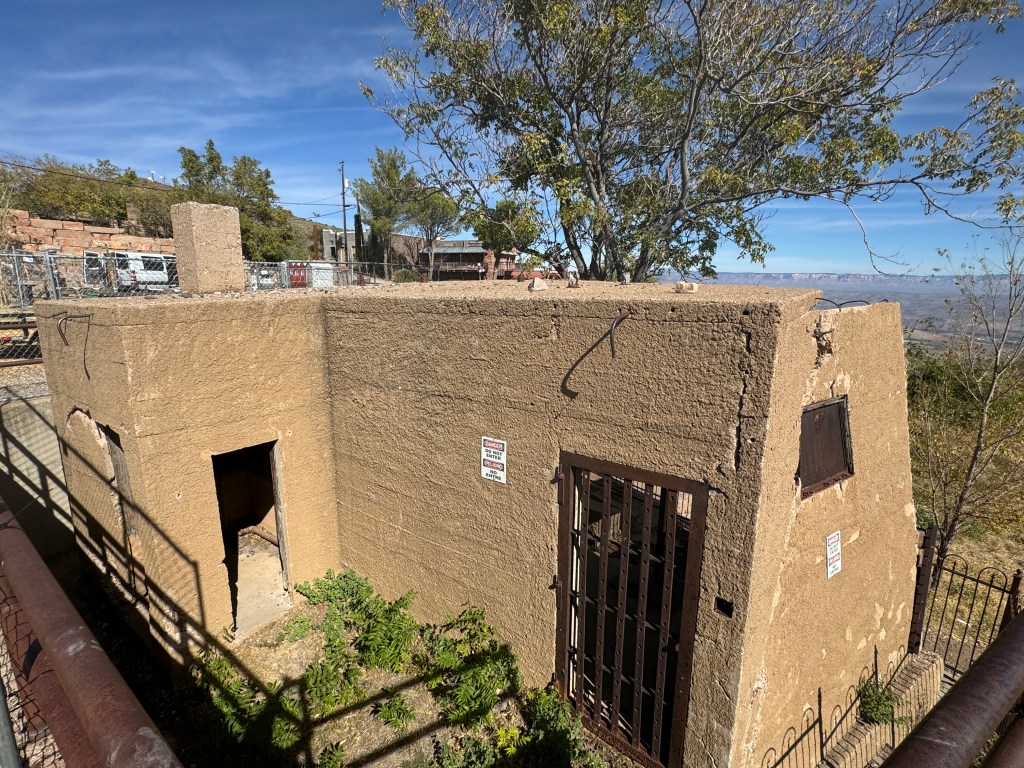
Jerome’s famous Sliding Jail no longer has a back wall after sliding down the mountainside early in the last century. The door still looks secure, but the cell is a bit draftier than in the old days.

-
Sliding Jail
A notable structure in Jerome is the famous Sliding Jail, which was located over 200 feet uphill from its current spot before the ground started sliding downslope.
-
Red Curtains
Double doors in an abandoned building in downtown Jerome are a reminder that it was once a thriving mining town offering rooms for single men. On the weekend day we visited, it was packed with tourists checking out the sights.

-
Jerome
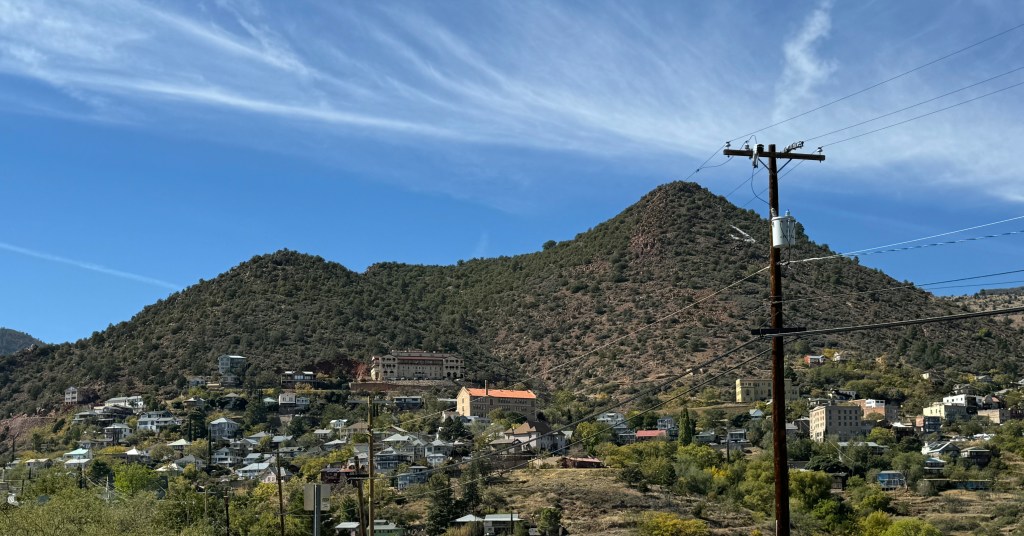
After winding up the steep hillside to Jerome, the old mining town climbs even higher up the slopes that yielded enough ore to draw 15,000 people here in its heyday. Now with just 500 residents, it’s a town of boutique shops, historic buildings and ghost tours.
-
Headframe Sign
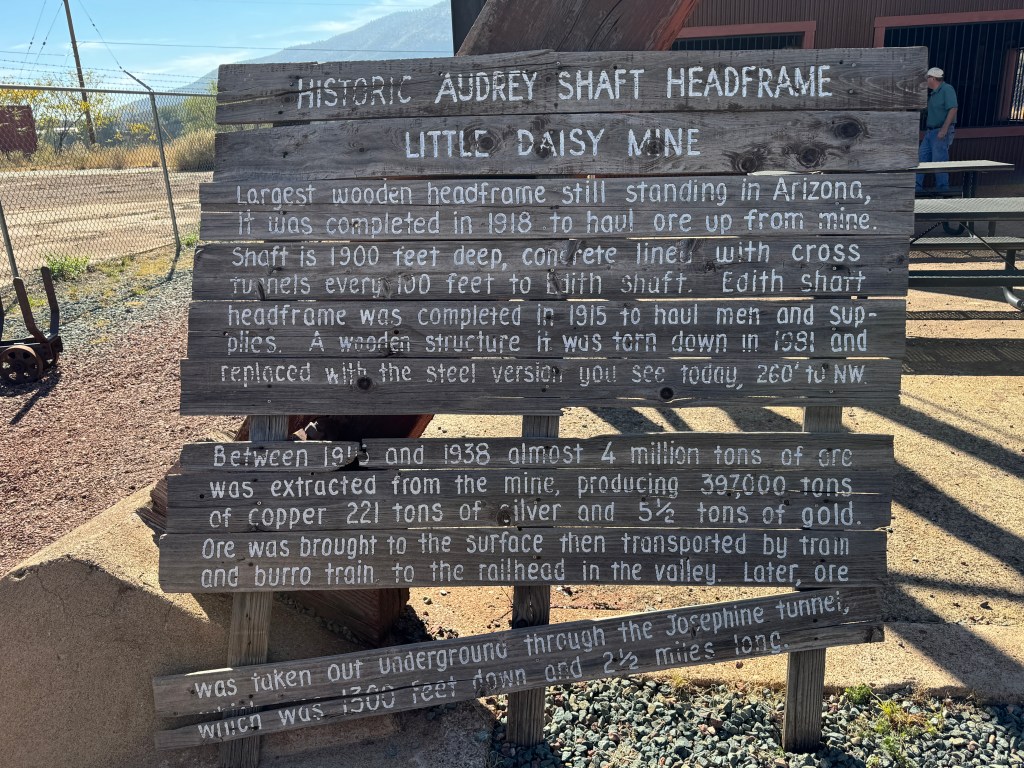
The Little Daisy Mine in Jerome, AZ was the source of nearly 400,000 tons of copper. But after pulling it up out of the ground, they had to use a burro train to transport it down several thousand feet to the valley below.
-
Audrey Shaft Headframe
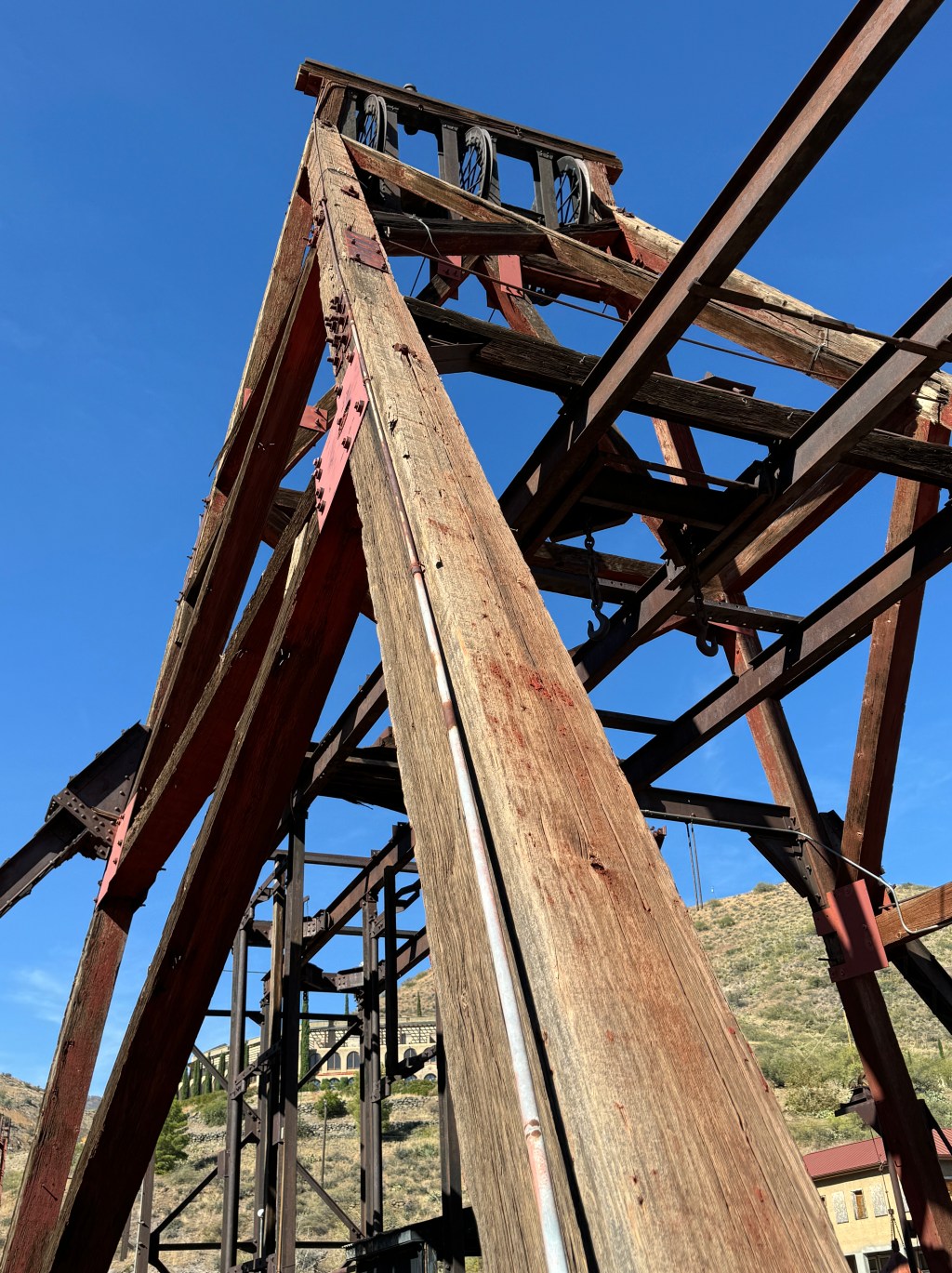
Visiting the mining town of Jerome, AZ, we stopped at the Audrey Shaft Headframe – the wooden structure above the Little Daisy Mine that produced millions of dollars of copper, silver and gold from 1910s to the 1930s. The shaft is over 1900 feet deep, although you can only see a few dozen feet down the…
-
Big Chair
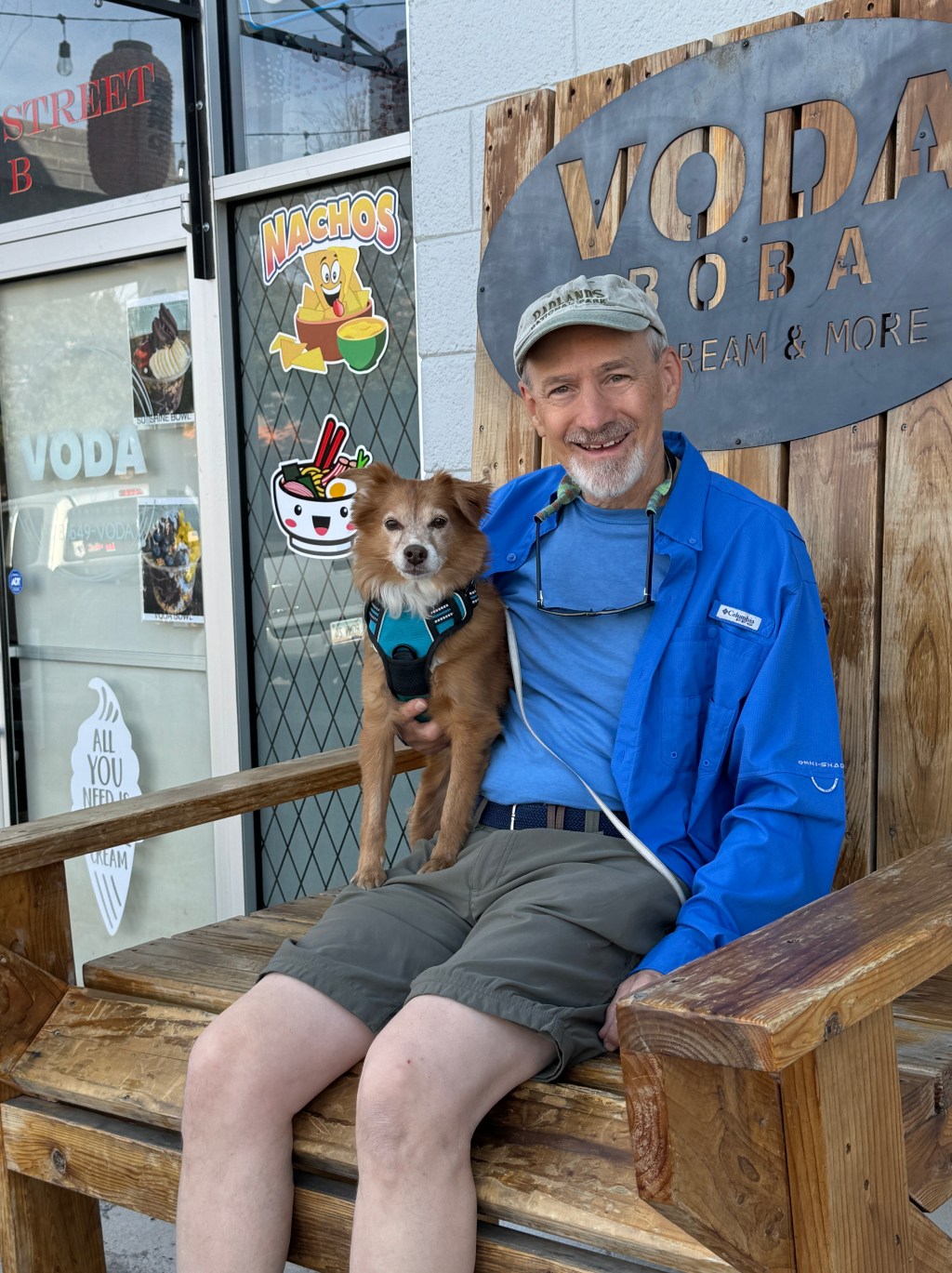
Here I am with Cooper in a big chair on the Main Street of Old Town Cottonwood, Arizona. Just because it was there.
-
The Copper State
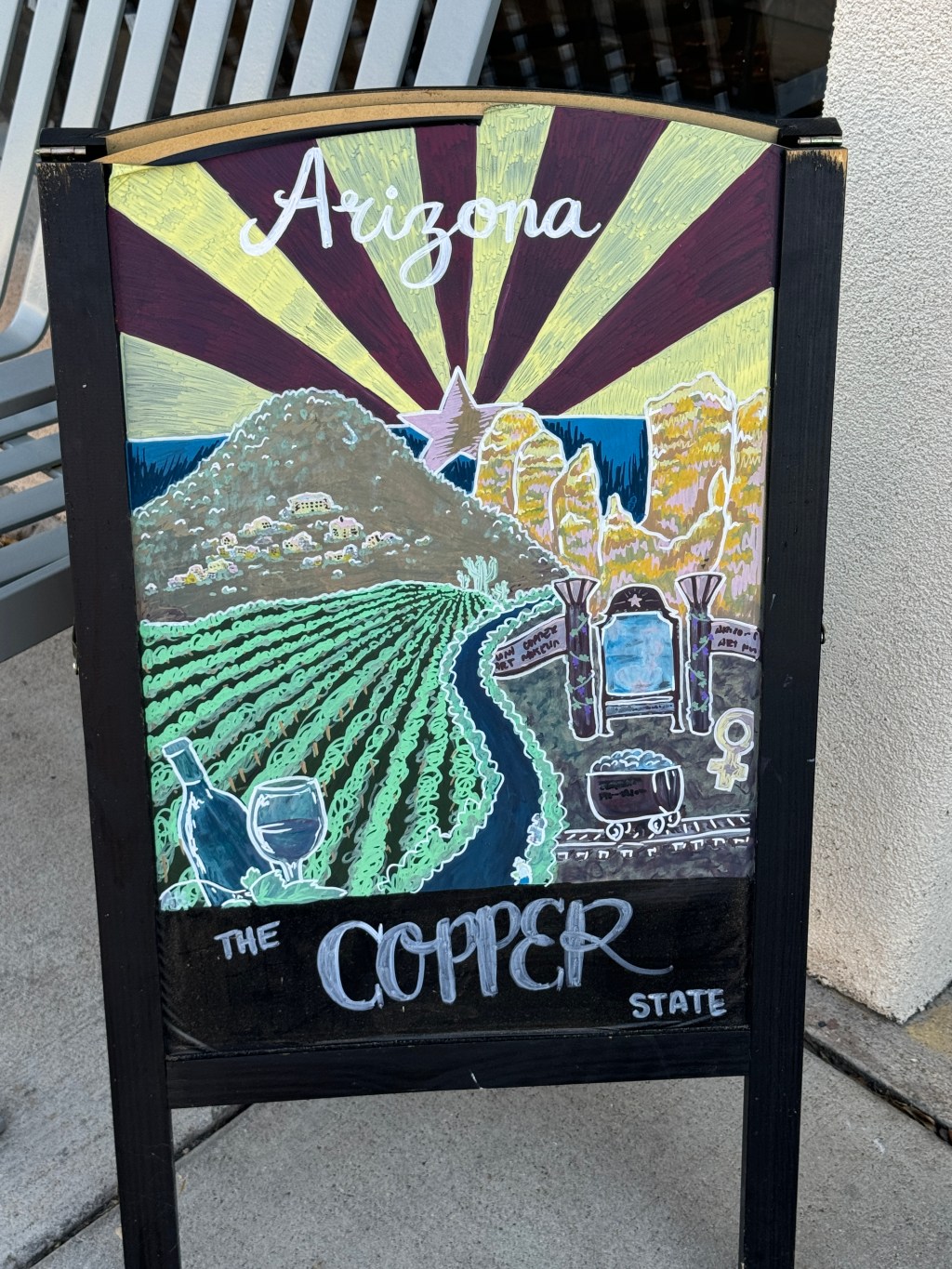
Old Town Cottonwood featured a Copper Store with this sign outside and interesting copper artwork (including copper splatter art) inside.
-
Silky Goats
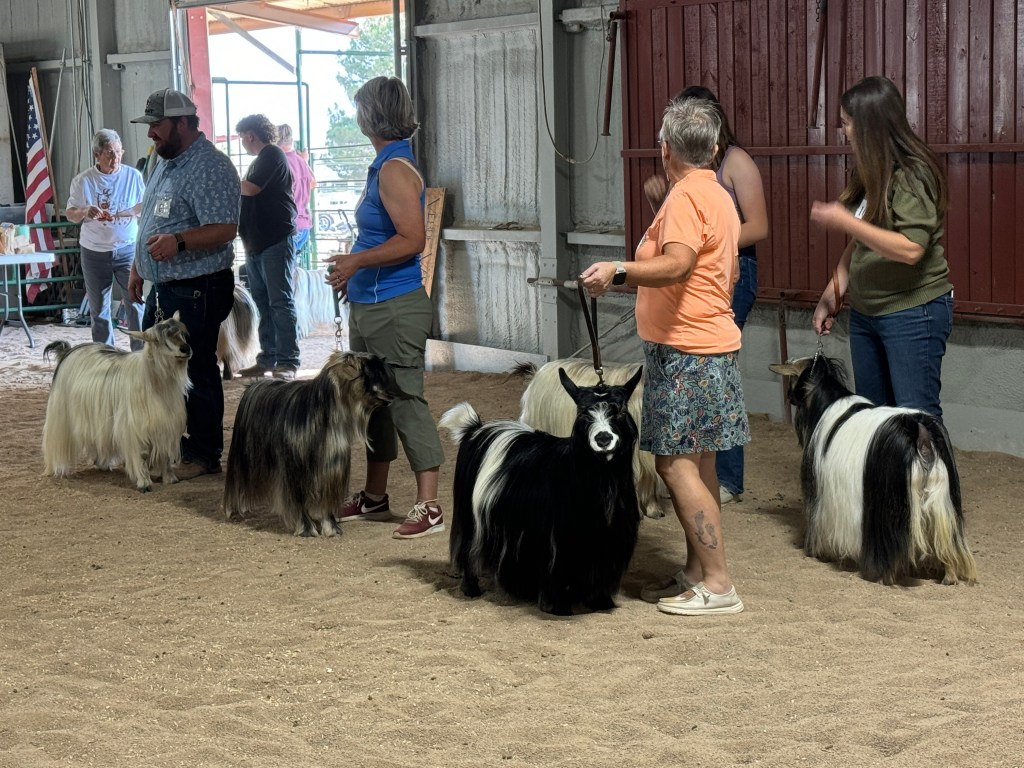
I wasn’t familiar with silky fainting goats until we walked into a barn at the Cottonwood Fall Festival and saw these goats being shown off by their owners. Like in a dog show, they were well trained and well groomed, including their goatees!
-
Quilts
Two of the quilts on display at the Cottonwood Fall Festival, kind of a mini county fair in this central Arizona community in the Verde Valley. Each ring of petals on the flower quilt has a different quilting pattern, while the embroidered gray heron stands out on a graded gray background.

-
Braids
Examples of the braided cords made with an Edison braiding machine. She made them by hand turning a crank to move the spools around a central point where the cord comes together. (Steam-powered braiding machines could produce yards of cord per minute.)

-
Braiding
Visiting the Fall Festival at the Cottonwood Fair Grounds on a Friday morning, we talked with a woman operating a braiding machine invented by Thomas Edison. Think of it as a tiny May Pole that twists 16 different threads together into a colorful cord.

-
Verde Valley Sunset 3
Sunset streamers turn red-orange as we enjoyed a beautiful evening over our campground in the Verde Valley.

 Words Are Inadequate